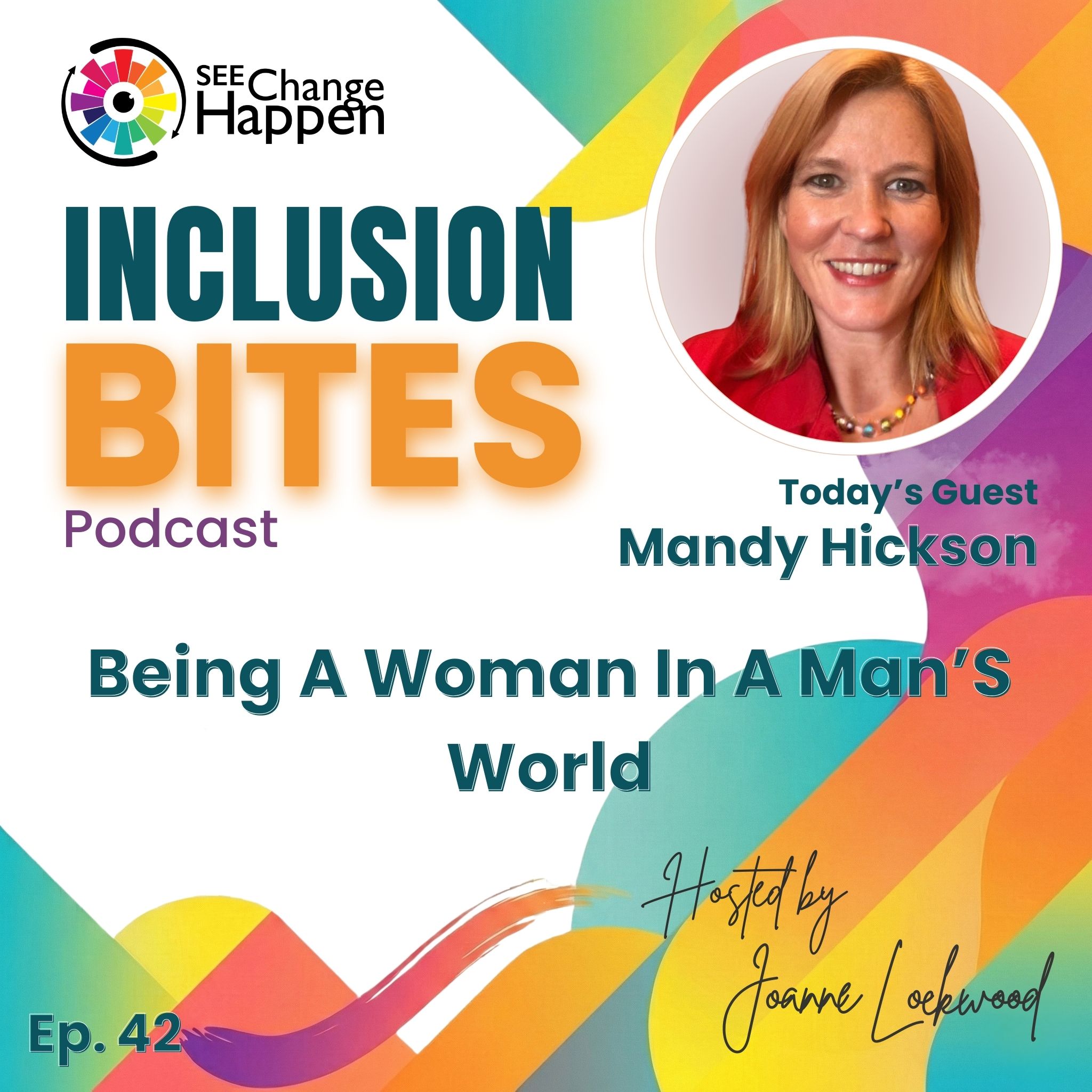
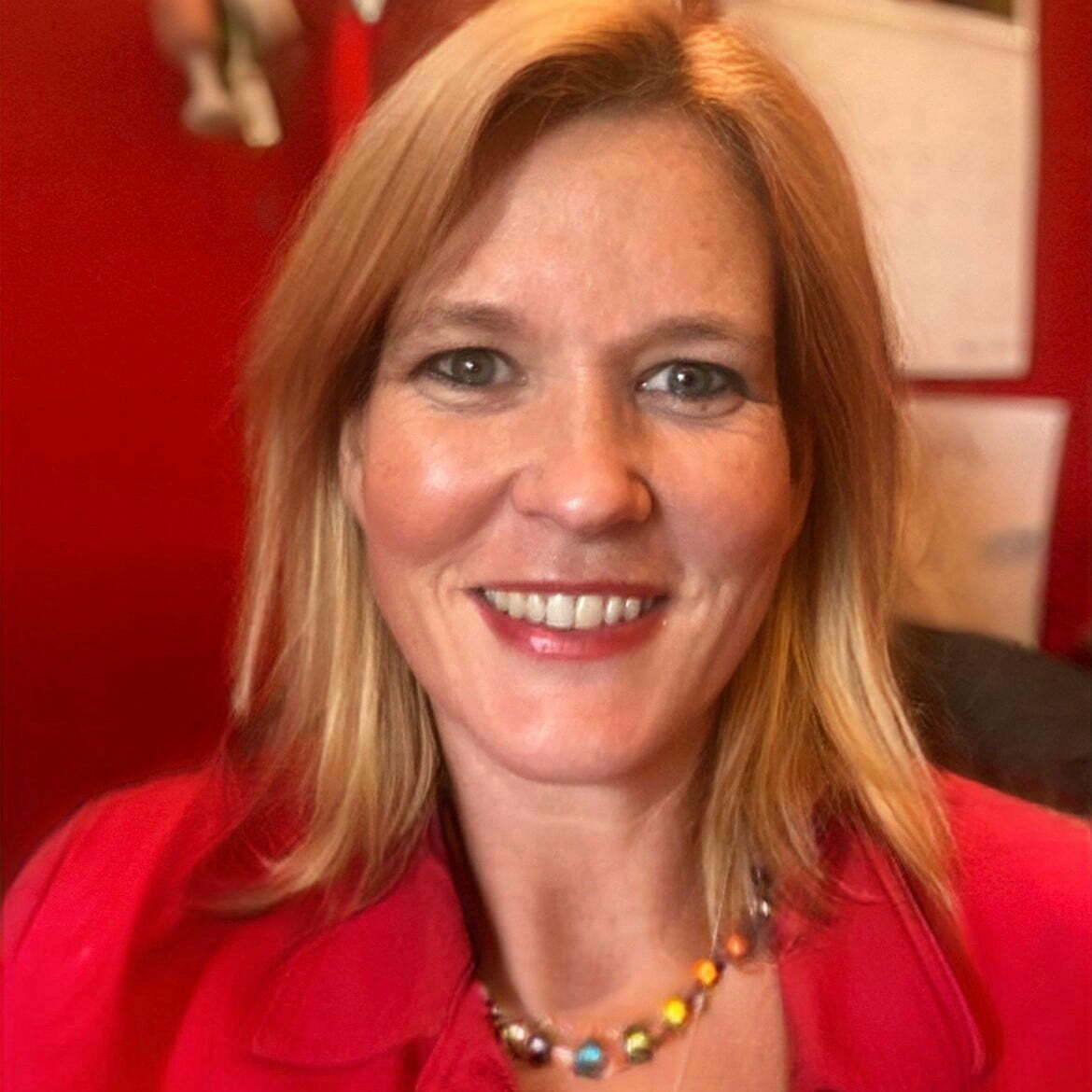
Mandy Hickson is a former Royal Air Force Tornado GR4 pilot, now keynote speaker and author of the best selling book an officer not a gentleman, D&I is incredibly important to her and she feels we still have some way to go
In this episode of Inclusion Bites, Joanne Lockwood speaks with Mandy Hickson about lived experience identity.
“I've always been who I am. What you see is what you get with me.”
Explore
Navigate this episode
Joanne Lockwoodhost
Hello, everyone. My name is Joanne Lockwood and I am your host for theInclusion Bites podcast. In this series, I have interviewed a number ofamazing people and simply had a conversation around the subject ofinclusion, belonging and generally making the world a better placefor everyone to thrive. If you'd like to join me in the future, then pleasedo drop me a line tojo.lockwood@seechangehappen.co.uk.That's S-E-E Change Happen dot co dot uk.You can catch up with all of the previous shows on itunes, Spotifyand the usual places. So plug in your headphones,grab a decaf and let's get going.Today is Episode 42 with a titlebeing a Woman in a Man's World. Ihave the absolute honour and privilege to be joined by MandyHickson. Mandy is a former Royal Air ForceTornado GR4 pilot. Now a keynote speakerand author. The best selling book. An officer,not a gentleman. And when I asked Mandy to describe hersuperpower, she said Authenticity.Hello, Mandy, welcome to the show. Hi, Joanne. What an
Mandy Hicksonguest
absolute pleasure it is to be here. Thanks so much for inviting me in. Yes,
Joanne Lockwoodhost
we've talked about it for a couple of months now, and finally, the Ducks arein a row. We all wanted to have it last week, and then
Mandy Hicksonguest
my son suddenly got a cancellation for his driving test, didn't he? WhichI would like to say he passed, so we can relaxin our house. Now, that's an achievement, because I hear that driving
Joanne Lockwoodhost
test waiting lists are around almost a year in some cases. It's hideous.
Mandy Hicksonguest
Yeah, I mean, he had failed a couple of times before because it'sjust been such a stagnated and awful sort of like training for themfor the whole year. And we had one booked in inSeptember, and then he literally got a cancellation because I was like it waslike a quick draw on this app where cancellations come up and it's like thefastest finger first. Well, I tell you what, I would be all over who Wantsto Be a Millionaire? I got it nailed within seconds.
Joanne Lockwoodhost
And he passed. That's the best thing.So you've spent a whole career being a woman ina man's world. What was that like? It's
Mandy Hicksonguest
fascinating. So I joined the Royal Air Force when I was21, back in 1994, which, gosh, it makes mefeel like it was aeons ago, especially when I speak to some of the youngergeneration and they go, I wasn't born then. I'm thinking, oh, really?And yet I was the second woman to fly the Tornado Gr Four on thefront line. So I sort of came through in that very first trancheof women that were allowed to fly fast jets and, yeah, itwas interesting. I never really massively struggled withthat sort of being a woman in a man's world, particularly in training,because I think the guys that I was going through were aband of brothers, they were my best friends. And Ididn't feel that I sort of stuck out, even though, realistically, looking back, I didstick out because I'm six foot tall and I've got a really loudlaugh. So regardless of gender, I stuck outanyway. But when I got to the squadron, I did start to notice itmore. Probably because they'd never had a woman flyingas a pilot on that squadron. And so of course there's going to be bigdifferences there. Well,
Joanne Lockwoodhost
I joined the Royal Air Force, actually in 1981. Oh, really?And I trained as a communicationsengineer. I worked on radar radio, and Iprobably actually trained on PTR1751, which is probably the radio you had in your Tornado.
Mandy Hicksonguest
Wow. I used to repair those. And then lastly I worked for Plessy
Joanne Lockwoodhost
Avionics who manufactured those, and I used to service the testequipment in some of the third line hangers that used tosupport hotels. So yeah, I never got muchcloser than watched them taking off, lift off from the runway, whichis an impressive sight when they put the afterburners on, just punch their way out.It's like absolutely incredible. There's nothing quite like that feeling, actually. And
Mandy Hicksonguest
people often sort of said, oh, what was it like that first trip? And thatfirst trip is literally seared into the memory bank of justlighting the burners, because you've done lots of practising in the simulator, and then whenyou do it for real, you're thinking, oh, yeah, I'm used to the environment becauseI've been in the simulator, so I know a while. The switches are and thenyou put these throttles forward and you click them into burner,and it's that thrust. I think it's about two G force of lateralacceleration. I think the closest I'd ever describe it asis there's a roller coaster at Thorpe Parkand I can't even remember what it's called now, stealth. And it literally just asa wingover. That's it. The ride lasts for I think it's 7 secondsand people queue up for 2 hours. And you're thinking why? Well, the reasonis because it's as close as you'll ever get to taking off in a fastjet. Really? Wow. I remember back
Joanne Lockwoodhost
in I was talking about the early eighty S, and there wasstill the male Air Force andthe women's Royal Air Force, the WAFs, and it was still separated.Women weren't allowed to go on the front line, they weren't allowed to fight, theyweren't allowed to go on ships in the Navy. It was a verydifferent world back in those eighty s, and probably you just came in justafter that site change. I don't know when it actually changed, to be honest, Joanne,
Mandy Hicksonguest
I'm not sure what the date was when actually it went from being theWRF to the RAF as a whole, actually.But I'm really proud in some ways ofall the services. But the RAF was the first of all the threeservices to have full inclusivity forgenders on every single role. So every role wasopened up to women. And I just feelit's such a different place to work from. Probably what youexperienced certainly in the 1980s and actually what I experienced as well.I did see that changing throughout my time. One ofmy really close friends is gay andwhen he joined the Air Force at the same time as me, it was illegal.He actually had to say in his interview, they said, Are you gay? Andhe would absolutely categorically no I'm not. Because he was desperateto be a fast jet pilot. And as he was saying it, he's thinking, Iabsolutely categorically am and I'm going to have to basicallyhave this awful world where I'm livingcloseted. I can't be true to my own identity, and the stress that brings tothe workplace is enormous. Well, in fact to your whole life is enormous, isn'tit? Completely. So I was the early eighty s,
Joanne Lockwoodhost
and I certainly wouldn't be able to have been transin those days. I certainly wouldn't be able to be an open about that. Andit wasn't a kind of passive if you're gay, you're in trouble. It was kindof an active rooting out of people who were gay, wasn't it? It was veryproactive and the Special Investigation Bureau would come down and they'dgrill you. It wasn't like being abit ostracised. You would literally were you could be arrested.
Mandy Hicksonguest
I don't think actually they would definitely kick you out and you potentially couldlose your pension rights and things like that. But it evenhad that if you went to the doctor with an issue that theyhad the rights to outknow, they've taken this oath to not share any of the things thatthey hear, and of course they could do it asmean. It was horrific when you think about that. I know that there's a lady,Caroline, who I don't know if you've come across her, andshe was one of the first women that transitioned in theAir Force. Caroline Lawson. Yes.Must have gone through an incredibly challengingtime and I think it's fantastic.So have you interviewed her at all? I haven't, no. She's
Joanne Lockwoodhost
in America at the moment, I believe. I'm not sure what she's doing, but Isee some of her posts on Facebook and I'm in touch with a few peoplein the Marines, few people in the army, people who areex EMT drivers and things like that. So yeah, I'm intouch with a few people who are in the services now and whoprobably went through that early stage of their career beingcloseted as a trans person, whichyeah, is a real struggle. And I can imagine thatthat freedom of civic life again allows youto burst out. Yeah, absolutely. And I think I
Mandy Hicksonguest
know that when I used to speak to my friend, and he would say hisbiggest fear was being outed. Somepeople's fear is spiders being outed, because it was thatfeeling of loss, of control, that you're doing something that you're passionateabout, that you know you're good at, you're at the top of your game, andyet somebody could take that all away bychoosing to out you. Andeven when the rules change, he didn't actively comeout for about a year just because he just didn't feelhappy to do that yet. And then culture started to changeenormously, and thank goodness he did and could be histrue self. But the stress that creates isenormous. Yeah, as you say, the
Joanne Lockwoodhost
culture change does take a while to permeate. You can't just change the law, changethe rules, change regulations, and if it snaps into place no,you've got that old school thinking, haven't you? But that's the same in any organisation,
Mandy Hicksonguest
isn't it? I mean, if you look at, say, blameculture, let's look at aviation as a whole. They havetransitioned from a blame culture in the 1990s, whereby wenever learned anything, to a really open learningculture now. But that does not happen overnight. You can't just write apolicy, as you say, change the Queen's regulations and say, okay, everyone's going tobe abide by these rules, because ultimately, people have gotpreconceived ideas. That's the way it alwayswas. And it's only as you start to see new bloodcoming through, I think, and also thatyou start to see evidence of, for example, a woman in a man'sworld, she can do the job just as well as the men. Yes. It doesn'tmake any gender is irrelevant, and it really is. And it was only when youstart to see that going through, that people started to sort of change their mindsetas well. So did you find that
Joanne Lockwoodhost
as an early woman in that environment, that you were still coming across avery male only environment in terms of bunksbarracks, messes and things? Yeah, completely,
Mandy Hicksonguest
utterly. I mean, when I used to go out to the Gulf, becauseI served on Operation well, three different operations out inIraq, basically, we were all in thisport cabin, basically, together with this awful air conditioning system. Iwon't even go through that. But, I mean, we were all in there together. Again,that didn't massively bother me. There was one toilet at the endof each corridor. No male, no female. You'vegot 39 men and me, so you're not going to have a toilet to yourself.Again, didn't bother me. When you're queuing for the showers, you'reall standing in your towels waiting for the two showers, andI've just got a towel wrapped around the top half and they've just got runaround the bottom half. And again, I'd just be standing, having conversationswith them and it didn't see to bother me. The one thing that Idid not like waspurposeful, slightly vindictive actions,and that is the thing I cannot tolerate. So every timeI went out to the Gulf, I was always given the room by thewe have a pre deployment group that go out there and it's a bit ofa joke. I mean, the men had a lot of pornography on the walls, fairenough, everyone's choice is their own, but they would always give the room withthe most pornography on the walls, to me, literallyplastered. It was like wallpaper and the ceiling. And I'd walk in and go, oh,really? Again? And they did it three years running. And I would stripall the porn off the walls, put it all in a pile outside the doorand yell porns up. The firsttime I just thought, oh, gosh, that was unlucky that I got that room.Well, it wasn't unlucky that I got it the second and the third year,and the guy in the room next door who'ssitting there in a room with no pornography on the walls andthings like that annoyed me. And there was a fewoccasions with very sort of slight underhand comments,a little bit of bullying started. And I'll be reallyhonest, on my first tour out there, it really got to me becauseI'd worked so hard to achieve this goal. Five years of themost intensive flying training pretty much anywhere in the world, you get to flyon operations, you're out there, you're thinking, I've made it. And then it's themost lonely world you can ever imagine becausemale and female conversation is really different. And there was onlyso much football and politics I wanted to talk about, and I'd besort of craving female conversation. And at the time, it wasbefore mobile phones, and we had this 120 minutes phone call that you could use,you could split it up, but it was like on a card. And I wouldring my boyfriend, who I'm now married to my husband, and I go, you havegot three minutes, I need to speak to women for the rest of the time.And I go, I'm fine. Everything okay with you. Goodbye. And then I'd be straighton to just talk to me about some normal stuff, like just normalconversation. And I found that probably hitme harder, bizarrely than most things actually out there.
Joanne Lockwoodhost
Yeah, I can remember my time in thefield service sort of side. It was a very blokey, beery,rugby clubby type mentality all the time.Lots of male humour and male banter going on. And how did you feel? Did
Mandy Hicksonguest
you feel you fitted into that? At the time, I was
Joanne Lockwoodhost
1617, 1819, sort of years old.I had confusion in my head, but at that timein my life, I guess it didn't really bother me.I was already socialised into that environment and you just get on with it.I think one of the things of basic training is it strips away yourindependent thinking. Some of it, isn't it? You get up, the tannoygoes off, you jump out of bed, you get in the shower, you do everything,you make your bed up, you get on the playground or you get on anddo whatever you've got to do. So there is not a time to think. You'realways being driven. Yeah, I think that is very fair thing to say, actually, is
Mandy Hicksonguest
that I did realise that at one pointwe were in America and we were on a big exercise and I was wearinga dress and we were going out for dinner as a squadron, and I'd madequite an effort. I mean, you and I earlier were just talking about makeup. I'dactually put some makeup on, which was like, oh, my goodness, I wasn'twearing the flying suit, the grow bag. And one of theguys, sort of, who was a French guy, said, oh, Mandy, you're looking beautiful. Andthe guy next to me went, Slapped. And went, you can't say that to Mandy,she's one of the boys. And he turned back with this sort of Gaelic shrugand went, You Brits, you have so much to learn about women.And it was a really lovely moment, though, because it became, in my own mind,probably quite a pivotal moment. I think up to that point,I hadn't realised just how much I hadtried to be one of the boys. And you mentioneda really poignant word right at the start. Fittingin, belonging. There's two very different things on thereand I know that when we talk about things like diversity,inclusion, diversity is what we have and inclusion is what we dowith it, isn't it? And I think up to that point, I had beentrying desperately to fit in. I was being moreblokey than I probably should have done. I was swearingso much more, I was drinking a lot morethan I would have probably done normally in a differentcareer. And I was just sort of in that wholealpha male blokey environment. And when this guy said,she's one of the boys, I suddenly thought, oh, mygoodness, I actually am trying too hard to be one of the boys. AndI think it was in that point I realised that I had toactively make a decision not to be one of theboys, but to maintain who I was. I still wanted to be awoman, but just in a man's world. And I could do that, butit was going to take a little bit more strength of character to find thatbelonging rather than just fitting in. That's
Joanne Lockwoodhost
really interesting you say that because when I went through the early stages ofmy own transition, I found mixing in allfemale groups. I found it really awkward to start withbecause the conversations wasn't just theconversation. It's the way women talk to each other is so completely different andalien to the way men talk to each other. And it took me a longwhile to resocialize myself into an environment where I could be one of thegirls, because I felt an outsider to start with. And Iremember probably about a year or two in using the wordwe as we women. And I felt really selfconscious about looking around, is anyone going to call me out on this?And I felt so kind of relaxed afterwards, because I'dsuddenly accepted that I was part of we, not part ofother. And that was a real build. So I can only equate towhat you were saying is you always felt the outsider in the we,
Joanne Lockwoodhost
if you like. Yeah. And I think when you're going through it, you
Mandy Hicksonguest
don't really realise it so much. It's only when youstart to leave that environment. And yours is a lot more recent thanmine. So, I mean, mine was sort of 20 odd years ago now, andI think doing what I do now as a speaker. And actually, when I wrotemy book, it was very cathartic in many ways, and alot of people say that, don't they, when they write books, that it becomes quitea cathartic experience, because you're going through all of those memories and you'rereliving that time. And I can onlyimagine, actually, because you're so right. Women's conversationis so different and it'sfascinating. I see it when, bizarrely,my husband, he really enjoys female conversationprobably more than male conversation. And if I'm going on a girl's night out, healways goes, Can't I come? Because he really muchprefers it, because he just said, women speak about so manymore interesting things. And I think that is changing a bitmore now as men arerealising they don't have to be this alpha male character, they don't have to bethis grower, testosterone filled individual. They can be themselvesand therefore they can say, I hope, more and more. And that's why I loveit that mental health is so high on the agenda these days, because people aresaying, Actually, I'm feeling really low, and it opens up their dialoguerather than everything, you know, and it's muchmore sort of frivolous, not very deep conversation. Yeah. It's
Joanne Lockwoodhost
very superficial, isn't it? I'm all right. You're all right? We haven't a beer typestuff, isn't, isn't it? Exactly. Seen the football recently and it's know,
Mandy Hicksonguest
whereas Craig always goes, oh, I love it. Women get straight in there andthey get sort of know, really into deep conversations muchmore. Yeah. And even men talking about their children is much more
Joanne Lockwoodhost
functional, sort of I took them to the rugby, I took them to here, andit was almost like the things you did with them, rather than how they're succeedingor how they're thriving, how they're growing and developing. I love the fact that you're
Mandy Hicksonguest
using all those positive words, whereas often when I've described I'mliving with teens. So, yeah, I'm like,what a nightmare. Have they managed to not be excluded from school?He actually finishes tomorrow and all I'm just thinkingof is no more seeing the school's phone number coming upon my phone, thinking, what's he done this time? Myheart foot drops every time. My daughter
Joanne Lockwoodhost
is 30 inJanuary. She gets married in six weeks.
Mandy Hicksonguest
Did she get a booking okay? Yes, she had to cancel last
Joanne Lockwoodhost
year. They had to postpone it a year. And she's got a hold fora date next year. Right. Fingers crossed. This is PlanA and everything's going to happen in five weeks time, so it's lookinggood. A white wedding or white wedding?Yes, white wedding. She's got it all planned. She's got 70 guests ina converted barn with all the drapes and the chairbacks and beautiful.So I'm going to be giving her away in a kind of anontraditional way, which is fantastic.
Mandy Hicksonguest
Yeah. No, that is great, isn't it? Yeah, I'm very
Joanne Lockwoodhost
proud. I'm really proud of her. She's an amazing independent.She's a self made as anyone is self made. She's built her own career,she's a manager of an early years, not reallya playgroup early years education establishment that takes children from twoyears upwards as a manager. So shetrains people on boards people, fires people, mentors and looks afterpeople and deals with parents. So, yeah, she's got her owncareer. That you learn and you realise very quickly it's all about the people
Mandy Hicksonguest
managing the people, isn't it? Rather than just the business. It is.
Joanne Lockwoodhost
My son is 25, so I'm well beyond he's anIt consultant, so he works for a big company.Working almost exclusively, remotely at the moment is a remoteonly good stuff.Yeah, I'm well beyond hiding the homework.I've got all those memories of getting these phone calls.We think we put your child back on the rails and have this big conversation,this big expectation setting, and you think, Right, we've cracked it this time,and you just assume everything's smooth again. It's not, is it? No, never. My husband,
Mandy Hicksonguest
I the whole time going, what have we done so wrong? But all I'mthinking upon thinking is, they were both really nice before the teens and I'm surethey'll both come back. And in fact, my older son, we're seeing in fact, we'reseeing signs of them both coming back. No, I do.Jest. But there have been challenging times,especially in lockdown. I think everything was justput under a magnifying glass, wasn't it? Of course, suddenly you'vegot teenage boys that are designed to not want to bewith their parents and here you are. Anyone fancy a game ofRisk? It's like, Why would we want to do that?
Joanne Lockwoodhost
I spent, what, four years away after school,joined the RAF and then came out and then came back to living with myparents. And that was the worst thing I ever did, because we're not designed tofly and come back again. No, I know, and I think that was the worst.
Mandy Hicksonguest
So many are struggling at the moment, isn't it? When they're boot, they call themthe boomerang generation, isn't it? Because it's just a nightmare withuniversity fees to pay back andtrying to save any money for a deposit and everything is really tough, reallytough for them. So, going back to your time in the
Joanne Lockwoodhost
RAF, you obviously held officer rank, soyou automatically had authority over a number of people, and that respectcomes with the rank, et cetera. But did you ever find that you were beingmaybe seated differently as a femaleofficer? Did people not take you as seriously? Did theranks still recognise you as an officer at that time? I'll be honest,
Mandy Hicksonguest
no, I didn't, actually. I think I was really quite lucky onthat respect, to be honest. JoanneI think for myself, I know it's going to sounda bit funny. Height helps. I'm quite alarger than life character. And so Ithink when you're six foot tall, you come across asbeing very confident as well that you almost commanda level that's not sort of if you'refive foot tall and perhaps you're a lot quieter, that's quite hard if you'rethen taking on an entire or talking to an entire group of men. So Inever really had a problem with that. And I think when I got to theof, we talked about authenticity being really important. I've always beenwho I am. What you see is what you get with me. Andit's been really nice, actually, recently, because when I left the AirForce, I started doing keynote speaking, andone of the best pieces of advice I ever got was this from this guy,Alan Chambers, and he was an Arctic explorer, ex Royal Marine, oh,great, great character. And I was talking to him and I said, how doI get into becoming a speaker? And he just said to me two words. AndI was, you know, thinking of, like, the names of agents. He went beyourself. And I went, oh, God, is there not more to it than that? Hegoes, no, honestly, all people want is authenticity. Andit's been one of the things that I've just kept in the back of mymind at all times is, when you're on the stage, don't pretend to be somebodyyou're not. Don't suddenly change your voice. Don'tsuddenly not be Mandy from Manchester, just bewho you are. And guess what? People love who you arebecause they can spot when people are faking itimmediately. And the one thing I always get is, oh, my goodness,you're identical to how you are on a podcast, or, oh, you'reidentical to how you are when I met you at this event, and I think,just be who you are the whole way through. And A, it takes the stressaway, doesn't it? I mean, that must have been for yourselfwhen you transitioned to suddenly be able to say, I cannow be authentically, who I am. That must havebeen a huge relief. It was. But it
Joanne Lockwoodhost
also came with its own set of anxieties because I knew I could standon stage. I knew I used to do a lot of afternoon speaking because youwere. The Roundtable, weren't you? I was the National President of the Roundtable,so I was used to wearing a black tie, going toBlokey Stag events in the afternoon.Yeah, so I was used to all that. So I knew I could speak.People told me I was entertaining and funny and witty and alsoengaging, so I kind of knew I could do it, but could I doit on stage in a dress? Yeah.Did I feel authentic or was Ipretending to be somebody else? And then it took me a long while to realisethat this really was me and I became comfortable. And Ithink I remember having a conversation with yourself probably four years ago. No,
Mandy Hicksonguest
I remember it at a time. Just before I started speaking. And you probably told
Joanne Lockwoodhost
me to be authentic, be yourself. And I think a mutual friend,Rachel Morders, who you saw,I saw her speak one day and someone in the audience asked her how shegot into public speaking and she flippantly replied, put it in yourLinkedIn profile and go for it. And that's the advice I kind oftook as well. I thought, well, put professional speaker on your LinkedIn profile,just be it. I was in twominds at the time. A, could I get on stage and addressand speak? Will I be taken seriously? And also myvoice, I was really self conscious about my voice being quite deep, quite resonant,feeling my chest. And I thought about voice coaching and Ithought, if I take my voice away, I'm doing itfor somebody else because this is my voice. I don't mind it, okay? Itgets annoying when I get misgendered on the phone a few times, but now Iuse it to my advantage because I can create that shock and awevalue when I'm on stage. I let the audiencehang for 3 seconds before I speak and they go, Whoa, where didthat come from? I was expecting this female voice to come out of themicrophone and it was a boom.
Mandy Hicksonguest
I think it is. I love that power of the surprise. Imean, often when I'm speaking at big events, I'll say to thecompany, how much are you going to advertise this? And they say, oh,we'll advertise. I said, how about you say we have got a fast jetpilot coming in to speak to us, but you don't give the name. Theygo, oh. And then I will be queuing up, literallygetting a coffee. Everyone will be like, mulling around and I was standing and I'llbe standing in a queue and there'll be these two women perhaps talking like therewas on one occasion, and I heard them go, oh, God, fast jetpilot coming. Oh, my God. They're always really fit. Really fit. Gorgeousblokes eight. Not always inmy valued opinion, but there you go. And I just thought, this isfascinating. And I love the fact that if you don'tsay what gender you are when you walk on the stage, they say, welcome tostage flight lifter Mandy Hickson. Everyone goes and youalmost I love can make it. My first question. Guys, girls, standup. Who was expecting a man? And I said, Please be honest.The whole audience just stand up. And I love thatbecause you just think, I don't mean to do it. I doit all the time. We were working onthis big event and it was with an engineering company and we'd beendoing this like a Myers Briggs. It's called the strengthdevelopment index. And I was looking at all these profiles and they were allalmost within a five pence piece. Everyone they had recruited were exactly the sameprofile, apart from one person that was so far right onextreme leadership and dominance. And I went, oh, I wonderwhat he's like. And then it's a she. And I thought,Mandy, you're the know, I can't believe you'vedone that. But we do it and it's this unconscious biasisn't so it's a great way to be able to and it's not that you'recatching people out, of course it's not, but itjust reminds people that we are doing that, thatwe do do it all the time. Back in the day when we used to
Joanne Lockwoodhost
be able to fly commercially, it seems like a lifetime ago. I know, but backin the day when we could fly, I remember sitting next to a female sortof colleague in my network and she's also a DNIprofessional. And we're sitting on the plane, just strapped ourselves in and the pilot cameover and it was a female voice. And a fewseconds passed and this female colleague turned to me and said, I know I'm aDNI professional, but I now feel more nervous because we've got a femalepilot.I still feel that it's still out there and womenaren't any less biassed against women than menare. No. Well, I'll tell you what I mean. I was on a
Mandy Hicksonguest
flight and it was an all female flight deck, and theysaid, and this is your captain. It was a female. And they said, My firstofficer is a female. I was like, yes. And then I was like, Whyare you, like, cheering so much? It's because actually,Easyjet Carolyn McCall, when she was the CEO of Easyjet, made it hermission to try to go from 7% female on the flight deck to12%. And she didn't succeed. So there's a reason thatwe still assume it's going to be a man is because in 90% of thetime, it will be.It's just that you're conditioned to do that. And I think we're conditionedfrom such an early stage of our lives, aren't we? And I'll neverforget I love this video. It was made by Inspiring The Future, whichis a charity I do a lot of work with, about trying to change,create role models for young children.And they went into a primary school, a fast jet pilot,surgeon and a firefighter, and they asked all the childrento draw a picture of these people and namethem, and all of them named them a man's name. Then thethree women went out, got dressed in all their kit, came in and they went,Why are you dressed up like that? And they went, no, we are it. Weare them. I am a surgeon, I am a firefighter, I am a fastjet pilot. And then they had a whole chat about it and it was reallypositive. And then my friend, that was thefighter pilot left, one little girl said to her, when you goback, are you going to have to give your husband his uniformback? It was like, oh, my gosh, have we completelymissed the whole point of this? That's how ingrained itis, isn't it? It doesn't matter that you've got someonethat's showing people, people are stillcontacting me. I mean, the book has been wonderful for that, to be honest, Joanne,is because it's opened up a dialogue know, I'mgetting youngsters, contacting me all the time on Instagram, which is, quite frankly,an unknown thing to me. So I'm having to work out how to use Instagrambecause I'm rubbish at that one. I can do Twitter and Facebook, but I waslike, Instagram? This is a new thing, newfangledmedium, and they contact me on it all the time.And it's been really interesting because some people sortof saying, I'm going to careers advisors and they're going, oh, I would havenever thought that of that as a woman's job. These arecareers guidance. People still saying those sorts of commentsfind it shocking. Is that why it's so difficult
Joanne Lockwoodhost
for the CEO of Easyjet to go from nine to twelve?Do we still have this problem where young women, young girls are beingsocialised around genderedexpectations for them? Yeah, I think so. And I just
Mandy Hicksonguest
mean, I know that must have been about six years ago, Iwas asked, would I be the subject of a book? And I was like, oh,yeah, I'd love to be. How exciting. And they did a primary school series andit was called Tara Bins Explores. I mean, I'm not sure, it's quite a strangename. And it was basically imagine Mr Ben of ourera as a little girl, she goes into a dressing up boxand she puts on a pilot's uniform, and she comes out and shegoes on a mission. And it was basically but allof them were Stem related or like real typicalmale jobs, and they just said, we want to just startactually putting that gender stereotype to bed and actually havingthis little girl as the explorer that goes off, and she does all these verymale jobs. And I think that's the age that we need to start gettingthem at. I agree. I talked
Joanne Lockwoodhost
to a lot of people about having pre parenting classes, not aboutthe big ball and the Lamar's classes, all this kind of like but it'sabout how to bring up your children with equal opportunities, equalexpectations, and not force gender onto your children.We almost need to train, preparents on how they can createthese equal opportunities, because so many parents bring that bias intotheir lives. I remember talking to other parents wherethey're automatically steering their boys or their girls into different directions.
Mandy Hicksonguest
But I do find that fascinating, and I think that opens a whole I knowthat I can't remember who it was. I think it was the lovely twins, andI can't remember what their names are. The two doctors on television. Yes.You know who I mean? Xander and the other.And they had these babies, and theybasically put these babies and then they put slightly older children, like four and fiveyear olds in to play with the babies. And two of the babies were dressedin pink and two were blue. And these little childreninstantly started giving the girls, thepink ones, the dolls to play with. Well,actually, they'd swapped the genders round, and it was fascinatingthat it was one of the boys that was dressed in pink,actually. He was very happy with the doll, but the other one kept on goingstraight back and crawling across to get to the cars. And it was justabout this. Even at the age of three and four, we're tryingto get them to play with you're not letting your children almost evenas four year olds and five year olds that were playing with them when theyweren't letting them play with what they wanted to. They were trying toinstil their stereotype onto a babybecause of what it's dressed. A blue T shirt with a
Joanne Lockwoodhost
soldier on it or a pink T shirt with a fair I know, aprincess on it. Exactly. There you go. We do it all the
Mandy Hicksonguest
time. Yeah. But I've certainly noticed in the last four years,
Joanne Lockwoodhost
I hang around more in female only groups, or most of myday, say, context, tend to be female. And I'm so much more enlightenedas to the breadth of women out there doing all these differentroles. Whereas maybe in my previous life, I was so blinkeredto think it was only a man's world. And now the way I look atit now is it's actually a very female world out there.But the struggle is finding that acceptance or finding that door that could beopened. They say living in the shoes, don't they? And say, until you've lived in
Mandy Hicksonguest
the shoes, you've never experienced it. Have you read the book?I should get a commission from this man, Matthew Sayeed's book,Rebel Ideas. It's a really I've not read it. No,
Joanne Lockwoodhost
but he's also got black box thinking as well, hasn't he? Yeah, he wrote the
Mandy Hicksonguest
other book. He does, which I really enjoyed. But then he's written rebel ideas. It'sall about cognitive diversity, and it's how much we focusedon cultural and gender and all the different diversities, but actuallyhaving cognitive diversity about people that think differently. And he just gave lotsand lots of different examples where people haven't lived in the shoes of somebodyelse, you can never imagine what it's like. So evenif, for example, if you're in a wheelchair because you are injured,and you finally start to try to make a tube journey, andyou realise only then that actually there's only a certain amount ofdistance you can get on the tube because some stations you just can'taccess. And yet you would never have known that had you not livedas that person. And I think you saying that when you're aman, you're living in a certain world. And my husband spends the wholetime saying, Why is it all about women? What about male?And I'm like, Because actually, it's been all about men for so many years. Andactually, if you look at just how far women havechange the dialogue over the last 2030 years,momentum is on our side, but the males have not changedtheirs. So it's all about the rate of change is what we're seeing,as opposed to where we're at. I think,yeah, I was going to. Cast my mind back to when
Joanne Lockwoodhost
women got the vote. Okay, I wasn't there, obviously, I can't cast myown mind that far. But the narrative around it, and if youread the narrative, at the time, it was men allowedwomen to vote. And that sounds really insulting, but atthe time, men were the only people who could vote. Men were the only peoplein Parliament, men were the only people in the upper class who had anysay. Therefore, it had to be the people withprivilege that opened the door and allow women to vote. AndI often say this to people that when we're trying to get gender equality, it'snot women talking about gender equality, it's when men talk about genderequality. We need the people who hold the power, who hold the privilege, whether that'sstraight people, whether that's white people, whether that's men, whoever that privilege is, to openthe door. Otherwise, we becomethe marauding mob with pitchforks outside, trying tostorm the castle and be let in. Of course, all they do then is pouroil in your head and put the drawbridge up. So we have to approach thecastle in a more open dialogue and engage with the people of privilegeto allow us into the castle. And that's the challenge we have atthe moment. It's creating situation wheremen, white men, don't feel threatened bydiversity, by inclusion, because they don't feel it's for them. And that's the realchallenge I'm seeing at the moment, is men are getting scared because they're being minoritizedeffectively. That's how they feel. Yeah, absolutely. And in fact, because
Mandy Hicksonguest
one of the questions I always get asked when I do my speeches is, cana woman have it all? And I say, well, what is all? And theanswer is probably not, by the way, you can't. I don't thinkthere will be. I love who was it? Oh,cheryl Sandberg. Lean in and she talks about life not being this ladder, but itbeing a jungle gym. And I think it's so she said, grow some strongnails and hands to cling onto the cargo net at certain times.But it's a lovely analogy that we're not just going up. But my bigpoint is that, like you say, we're not going to see true changeuntil the men want it too, so you're not going to getequal. Well, this was pre COVID times. You saywe want flexible working until the men want the flexible working,until the men want those same parental rights asmaternity, as maternity leave, until we seethat, then you don't get change because they werestill in that position of a majority who are therefore makingthe decisions. And I love the fact we are seeing, I mean, someincredibly powerful women. And over the last year, when you lookat how many more female leaders there are on the world stage,I just love it. It's been happening quietly andsubtly in lockdown and we've emerged and it's like, oh,yes, there's been a quiet revolt taking on the worldand I'm not even a huge women's liberal or anything like that.I wouldn't particularly consider myself a feministuntil I feel that there is amisalignment, until I feel that actually something isnot right. And then I do feel quite indignant aboutno. Yeah, I completely agree. And I love the way you said it's about this
Joanne Lockwoodhost
jungle gym, because if we're not careful, it's like the MaryPorter's book, work like a Woman rather than working like a man. Can womenhave it all? Well, they can have all that they want. Yeah, exactly. I don'tnecessarily want the same things. Success forme now is nothing like success for me 20 years ago. WhatI want today, and some of that comes through maturity, age, thefact that my children have moved on. You want different things as you growolder anyway. And some of it's also come from my real life and my gender.I have a different view of what is important and necessary.It's more sufficient based rather than acquisition based.Have I got enough for me for now, for us? Can we survive? Are wehappy? Happiness is more important than stuff. Okay,it's age, but also I think women can have all they want.
Mandy Hicksonguest
Yeah, it's also don't you think though, John, it's about acceptingas to where you are. So you mentioned Rachel Mornter earlier. SoRachel is a really good friend of mine and when I left the AirForce I was speaking at an event with her and we got soexcited because we'd therefore decided to set up a company and it's called Inspiring Womenfor Work. It was all about. It wasn't meant to be justparticularly just about women getting back to work, but we were just really aware thatwhen you've been out of work for some time, be it throughmaternity or illness or a carer or whatever itis, when you're going back, you've lost that level of confidence. Andconfidence is like a muscle, and we need just to exercise it.And so we set about launching this business andone of the things we got all these life coaches to come along, all thesewomen came up to the course and then we also did sort oflike potential careers, things that might work. One of the bigtakeaways for me is about accepting that whereyou want to be at your time of life is not always where you didwant to be in the past. So it could be workingin Tesco's is where you want to be and that isfine, it's getting your head around that just because atone point you wanted to be CEO of a blue chipcompany, it doesn't mean that that's what you want now. And I thinkfor myself when I was in the Air Force it was allabout the flying, it was about being the best version I could be andthen once I had children I was then mumand I had to be a mum as know I didn't havegrandparents living locally I very much had to makethat situation work. My husband was in the know, he was away allthe time and I couldn't just be going back to the front line and flyingin Afghanistan going, well, my career is everything oh, by the way, who's looking afteryour two boys? Well, quite frankly, somebodyknow it's that whole levels of responsibility and I had to change reallymy own. And I talk about choosing your flight pathbecause we constantly change our flight path as we're goingthrough life. So true.
Joanne Lockwoodhost
I'm not saying every man, but many men have the luxury ofbeing to say someone will look after the children, I don't haveto. There's almost like the default position. If a man isn't going to look afterchildren, that's okay. But the buck stops often with a mother. Andagain, there are plenty of relationships where that's not the case. And I'm not sayingevery case, but there are so many opportunities where men have the opportunity tosay, I can walk out, and I can go and do my career. Andthe buck stops with my wife, my partner, whoever it may be. Andthat does, as you say, alters people's flight paths, alterspeople's ambitions in life as well. Because actually,I would probably guess that seeing your children developand grow was actually more important to you than elements of yourcareer. Flying a fast jet is one thing, but seeing children learn to read, write,and grow is a completely different experience, isn't it? Yeah, it is.
Mandy Hicksonguest
And I think it was interesting, really, because then when I left theAir Force, I had done all my training to become an airline pilot, and I'dassumed I would go into that because that's what everyonedoes who has been a pilot in the Air Force 99%become airline pilots. And I thought, well, that's what I would do. And it wasonly through a very fortuitous conversation, I'll be honest, rather drunkenly at adinner party when I was sharing a story about being shot at by a surfaceto air missile in Iraq, as you do as a live party moment.When the conversation hit a lull, I slipped itin, and there was someone at the table who said, oh, my goodness,have you ever thought about becoming a speaker? And I said,what is a speaker? Because in the Air Force, we didn't exactly have a lotof motivational speakers. And also, this was ten years ago, and I don't think itwas seen as quite as such a big thing. Well, I certainly knew nothing aboutit, and they gave me an opportunity to speak at an event, and I justspoke for 20 minutes, all on cue cards. And it was the crappiest speech I'veever delivered in my life, because I was reading these cue cards about my ownlife. I mean, really, do you not know it?And actually, from that moment, I've never had a cue card since andnever read from a script, ever. My husband always goes, how do younot do that? And I go, oh, just write a bullet. And I have literallyfour bullets on my hand. And that'll be know, that'll be the speech.But going back to Rachel's point know, do you put itout there? How do you become a speaker? Basically, somebody said to me after that,and what do you do? I said, I'm a keynote speaker. I delivered120 minutes speech, and I started saying, I am a speaker.And it was in a ski shallow. And they went, oh, my goodness, we're afterone. Can you do an event in a week's time or something like that? Iwas like, yes, I can. And that was it. I was then aspeaker. So you know what? Say it. It's amazing whathappens. And then a year later, someone starts paying you real money.On this first event. She said, well, obviously we'll pay you. And I said, youget paid to talk about yourself? Oh, my God, this is arevelation. It's like my dream world.Sorry, does that sound a bit fickle?Nothing happier. Most of the speakers that you probably know and I
Joanne Lockwoodhost
probably know, we probably feel the same, to be ableto share your passion with people and get rewarded forit's no different to someone who writes a book and earns money from a book,or people who stand in a pulpit and give asermon. It's no different to politicians standing on the dispatch box.We're just getting paid to share our knowledge, aren't we? You are. And I think
Mandy Hicksonguest
one thing that's really dawned on me as well, which I don't think I'd everreally grasped, was just the power of the storytelling.And I think this is what you and I talked about really early doors,when you said, this is what's happening, I'm transitioningand I'm really worried. And I was like, but you've got all the same storiesand that story is incredibly powerful. And I wasspeaking it was a police event, actually, it was a diversity eventfor the police force. And there was a wonderful lady, Nell,and she was talking about her transition. And afterwards I shared mystory and she just said to me, I feel so inspiredby I failed so many different points in my know andI was very lucky to get to do what I did.And we were chatting afterwards and then a year later, she sort of said tome, mandy, you've inspired me to follow my dream. And I said, and what wasthat? And she said, you said to me a really poignant thing. Your entire lifeup to now has been about your gender, about living in the wrongbody. Now you've transitioned. There's almost agap there now. It's like you're there now. And I said,So what is your passion? And she said sailing. And I was like,Get qualified, get out there. And she sent me a picture of her as aday skipper and she said, I've done it, Mandy. And I was just like,yes. Do you know what? It was such a poignant moment. It wasa wonderful picture of Nell as a day skippersailing her boat. And it just made merealise that now was the time to start living as who I was nowthat I could be my true self. Yeah,
Joanne Lockwoodhost
I've got a similar feeling. It was a caseof I often say, when people ask me whotransition themselves, going through that euphoric,scared, whatever stage it is, I said, but the ultimate aim of transitioningis for life to be ordinary. Yeah, it justbecomes life. You get up in the morning and your biggest thing is what's theweather that detects what shoes you're going to wear, the weather, and ifyou detect what shoes you're going to wear, whether you wear a skirt or apair of trousers, or whether you're going to wear a coat. So the weather becomesa key factor. And then where am I going today? Am I walking across London?Right? I need to wear shoes. I can walk across London. So life dictatesthe stuff that you get on with, not this confusion in your head, allthe stuff that's going on in your life. For me, it was hearing one voicein my head. It was like being completely all the parts of me were justaligned to one voice. That was when I woke up one day and went,wow, it's so peaceful in here.That's when I knew I'd arrived at the point I needed to be, when itwas just I could shut my eyes and there was no noise and Ididn't have any things in my head. And that's the ultimate aim for me, wasfinding that tranquilly, that alignment, and life justbecame ordinary. I then ended up the same problems that everybody else didearning a living, getting the shopping, driving the car. Yeah,
Mandy Hicksonguest
absolutely. And I completely understand that.I don't know how much help there is, because surelywhat you're going through foryour mental health state at that point is just unbelievable, isn'tit? Is there much help on that side aswell? I think most people who are going through would say
Joanne Lockwoodhost
it's inadequate. The waiting times for gender clinics are toolong, there's a lack of knowledge at primary care, GP,CCG level. We kind of expect theNHS to be experts on people inside andout. The reality is that NHS people are just people.If they've not come across trans people or gender diverse people, then theyhaven't. So, yes, they're person centric,yes, they deeply care, but if they haven't got experience, they haven't got experience. AndI think many trans people, gender diverse, nonbinary people, have a higherexpectation of what should be available than actually is. So I'dlike to see that change, more gender support. Yeah. And it'll come, but,yeah, I'd say woefully inadequate in people who are trainedand available to counsel ata reasonable cost and a reasonable waiting time. Yeah,
Mandy Hicksonguest
no, I can only imagine that, actually, because I justthink the stress that you're under and I certainly know thattalking to my friend that was living in the closet, in the ref,his brain was just constantly that stress bucket wasfull before you've even come to work. How can you do your job on topof that? And it is very hard, isn't it? Yeah. You try and have conversations
Joanne Lockwoodhost
about what you did at the weekend, or are you looking forward to getting married,having kids? And you've then got to have this entire backstory.Everything you do has to have another story and you have toweave and what have I told people? It slips outand it becomes so complex.The other thing I realised was I got this point where I wokeup one day for the first time in my life. I have no secrets fromanybody. I'm an open book. My biggest secret isout. Yeah. It's no secret. I'm nothiding anything anymore. Yeah. And that's quite catharticliberating. And I can imagine that's been very, very well
Mandy Hicksonguest
received, hasn't it, as a speaker as well, for yourself, Joanne. Yeah,
Joanne Lockwoodhost
I had the advantage that I think that I took part of Channel Four documentary,which broadcast two years ago. So that whole process was like writing a book forme. It was basically turning myself inside out to four or 5 millionpeople who watched it or whatever. So that was very powerful and it got meused to talking about myself. And the other golden rule as a speaker is youtalk from the scar, not from the wound. So you've got to be talkingabout all the anguish you've got. You almost like narrate thehistory of it. Yes. So I think I healed myself. I found myself,and now I can talk about my life in a narration pointof view, rather than being inside the problem, which is quitepowerful and it is well received. People want to hear the story. There's a lotof empathy out there, a lot of compassion. And people want to know how todo better, how they support. Some of the most moving times I get iswhen someone who's listened to a talk will get in the chat afterwards, or comeup and see me afterwards and say, my son, my daughter is transitioning,or My wife partner husband's transitioned.So there's always one person or two people in the audience, virtuallyeverywhere I go, who has a trans rated story. And just tohave them come up and say thanks. Thank you, Joanne. It's been really great seeingyou here, bringing acceptance, bringing visibility. So that'swhat motivates me sometimes, is to get that just thatthank you. If you like. Yeah. And I think, as well,
Mandy Hicksonguest
talking openly about it as you do is just fantastic, isn't it?Because I think so many other people would. I'm through it now.I just want to get on with my life. I don't want to constantly haveto make that my life now, which is in some ways what you aredoing, because you're constantly talking about it, doing sohow are we ever going to change the dialogue? Itis about changing culture, and the only way wedo about that is having understanding, having acceptance.And you know what? You can't be what you can't see,you can't feel it, you can't have that emotion. And it's quite hard to beempathetic if you've never met somebody or talk to them.I remember, actually, I must have been about 16, and this is hilarious, because Iwent. As my friend would say, I'll be the judge of that. But I wentwith my mum. So my mum was a single mum bringing up her two girls.She was six foot tall. My sister was six foot one and I was sixfoot. My mum said, I'm never going to meet any men,so she joined the Tall Person's Club. Now, I mean,I can't even imagine what was going through them anyway.For women, you had to be six foot to join, and for men, you hadto be about, I don't know, 7ft or something. And we walked in and thefirst person I met was someone that wastransitioning. And I was 16 and I had never metanybody and I ended up sitting next to them at the dinner.And it was really enlightening becausewe were talking aboutjust sort of falling in love, holding hands, sayinggoodbye to someone at a train station, you know, and all ofthose little things. And he said, you know, that's what I want to do. Butit was the fact that I had no understanding of the conceptof what you had to do to transition,of living as a woman. Is it for two years or something? It was then,anyway, a lot of. The gender identity
Joanne Lockwoodhost
clinic process and name change andto be accepted, there was a lot of gatekeeping. And two years was alwaysseen as this test of test of character. If you couldn't do it for twoyears, you were kidding, sort of thing. So that was always the mental blockand that has improved a bit. But there's still a lot of gatekeepingaround this two year mentality. Yeah. And I remember talking to them,
Mandy Hicksonguest
they found it really tough, but it was my firstexperience and I think, my goodness, it shaped how Iwould therefore be able to grow up and have anacceptance and an understanding, because I'd spoken to someone, I'dspent time with them and I think that's really important. So I think what you'redoing is essential. Yeah. And in the way
Joanne Lockwoodhost
you did your career, you were one, as you say, the second onlyever female pilot with Gr Four in the front line. Thatwas a trend setting as well. And I'm sure many pilotssince have benefited from that, or otherpeople in the Air Force who are women have also benefited from that rolemodel experience. And we'll do what we do. You hope so.
Mandy Hicksonguest
And at the time, you don't really think that you're being apioneer, you're just doing what you want to do. But it's onlyafterwards when you look back and you think, yeah, actually, we werechanging the dialogue, we were changing mindsets andbehaviours. And that is really important.And especially when I get the emails that I get daily from some of theyoungsters who have read my book and said, thank you, thank you for doingwhat you've done, because it's enabling me to do what I want to do. Now,
Joanne Lockwoodhost
you mentioned your book a couple of times. You want to just make sure thatthe title do you want to give a quick synopsis of your book for people
Joanne Lockwoodhost
who don't know it? Very happy to. It
Mandy Hicksonguest
was called it is called an officer, not a gentleman. It was goingto be called Bird's Eye View, but I was told that that wasn't allowed,wasn't probably politically correct enough, but actually,it's a female perspective on fast jet training.The highs, the lows, the emotional roller coaster of it. AndI think it really sits very closely and hand in hand with myspeech, because when I actually do my keynote speeches, it's not about being awoman in a man's world, bizarrely, it's about being a fast jet pilot. Whereasthis gives perhaps more of an insight into the impostor syndrome thatI felt at times, some of the struggles we went through. Ilost friends on squadrons who died inaircraft crashes and really just givingan actual real life account of theintensity of fast jet training as well. It's brutal attimes. And I think just having that insight into somethingand I think I've sold just coming up for 8000copies, it went to the number one bestseller on Amazon for booksin aviation, and it's been on the market almostfor a year in June. And I've been blown away, actually,by the comments it's received globally, which has beenwonderful. I often see great comments on LinkedIn,
Joanne Lockwoodhost
where you've spoken, you've talked about your book, and I see the warmth and passionthat people and the high regard people hold you and turn out. I haven't readit yet, but I will one day, I promise, on audiobook. Just do it on
Mandy Hicksonguest
the way. Can I get it on audible? Can I?I narrated it myself, actually, which was, again, I found that really quiteemotional, actually. I was reading it and I was doing it in the studio downin the New Forest to a guy that had never done an audiobookrecording before. And we were doing it and I wastelling quite a funny story. At one point, he just burst out laughing. He went,I'm so sorry, we're going to have to record that bit again. But again, itwas a really I enjoyed I actually enjoyed being able to be the one thattold my story for audiobook. Yeah.
Joanne Lockwoodhost
Okay, well, I'm definitely going to go on to Audible and find that now. Ican't wait to listen to it. I keep saying I will. I will dothat. Brilliant. Thank you. I can'tbelieve we've been talking for an hour already. Incredible.
Mandy Hicksonguest
We both had a cup of tea in our hand as well. You see. Itwas a sort of cup of tea in the chat. Yes, it was. It was
Joanne Lockwoodhost
a quick coffee or cup of tea between friends. Sohow can people get hold of you. If they're looking for a keynote speaker, theywant to find out more about you. Where's the best place to find you? To
Mandy Hicksonguest
be honest, I'm everywhere. Someone said, oh, my goodness, Mandy, you like a bad smellat the moment. So I'm all over different social media. So if you just lookup Mandy Hickson, I've got my own YouTube channel. I'mon LinkedIn, Instagram, Twitter, Facebookand I'm on either as Mandy Hickson or Mandy Hickson Speaker. Andmy website's, Hickson Ltd. SoHicksonLimited.com. And that's got all the information that you couldpossibly want about me. And it has. I checked it out just before we
Joanne Lockwoodhost
started recording and, yes, it's definitely there. So, fantastic.Well, thank you to you, the listener, for tuning in and listening,for making it this far and getting to the end. If you've got any friendsor colleagues, please share the Inclusion Bites podcast. That'sB-I-T-E-S. I've got a number of other exciting guests linedup that I'm sure you'll be inspired by over the next few weeks and months.And, of course, if you'd like to be a guest, if you'd like to inspirethe audience, then please do get in contact. And if you've got any suggestionson how we can improve, I'd also love to hear from you. Tojo.lockwood@seechangehappen.co uk.Finally, my name is Joanne Lockwood and it's been absolute pleasure to hostthis podcast for you today. Catch you next time. Bye.
Maintaining Identity in a Male-Dominated EnvironmentStorytelling as a Tool for ChangeGender Stereotypes and Societal Expectations
Mandy Hickson, a former Royal Air Force Tornado GR4 pilot, joins Joanne Lockwood to talk about being one of the first women allowed to fly fast jets on the front line and what it meant to build a career in a strongly male-coded culture.
They explore the difference between fitting in and belonging, including the pressure to become “one of the boys,” the realities of life on deployment, and the impact of subtle bullying and exclusion. Mandy reflects on learning to hold onto her identity and authenticity while still succeeding in an intense performance environment.
The conversation also widens into culture change: how rules and policies can shift faster than mindsets, how unconscious bias shapes expectations from childhood to the workplace, and why meaningful progress often requires those with privilege and power to actively support change.
Joanne shares parts of her own transition experience, including the relief of living without secrecy, the importance of visibility and storytelling, and the challenges of accessing adequate gender-related healthcare support. The episode closes with Mandy’s reflections on confidence, changing priorities across life stages, and how her book and speaking work aim to inspire others to follow their own path.
“I suddenly thought, oh, my goodness, I actually am trying too hard to be one of the boys. And I think it was in that point I realised that I had to actively make a decision not to be one of the boys, but to maintain who I was. I still wanted to be a woman, but just in a man's world.”
“How do I get into becoming a speaker? And he just said to me two words. He went be yourself. And I went, oh, God, is there not more to it than that? He goes, no, honestly, all people want is authenticity.”
“They went into a primary school, a fast jet pilot, surgeon and a firefighter, and they asked all the children to draw a picture of these people and name them, and all of them named them a man's name. Then the three women went out, got dressed in all their kit, came in and they went, Why are you dressed up like that? And they went, no, we are it. We are them. I am a surgeon, I am a firefighter, I am a fast jet pilot.”
“We're not going to see true change until the men want it too, so you're not going to get equal...you say we want flexible working until the men want the flexible working, until the men want those same parental rights as maternity, as maternity leave, until we see that, then you don't get change.”
“One of the big takeaways for me is about accepting that where you want to be at your time of life is not always where you did want to be in the past.”
“Your entire life up to now has been about your gender, about living in the wrong body. Now you've transitioned. There's almost a gap there now. It's like you're there now. And I said, So what is your passion? And she said sailing.”
The realisation that trying too hard to fit in with male colleagues can lead to losing one's identity, and the importance of maintaining authenticity.
The nuanced differences in communication styles between men and women, and how this can impact workplace dynamics.
The evolving norms around masculinity, including the increasing acceptance of men expressing emotions and prioritising mental health.
The transition from a military career to becoming a motivational speaker and the value of storytelling in inspiring others.
The mental health challenges of living a double life and the liberating impact of coming out as one’s true self.
Addressing ingrained gender biases in career choices and how early exposure to diverse role models can challenge stereotypes.
The importance of choosing one's "flight path" in life, embracing personal growth and adjusting priorities as life stages change.
One thing to remember
Embracing Authenticity in a Gendered World: The episode illuminates the importance of maintaining one's authentic self in environments where one is a minority. Both Mandy Hickson and Joanne Lockwood share deeply personal experiences underscoring that true belonging and effectiveness come from embracing who you are, rather than conforming to expected norms. Their conversations reveal how authenticity fosters deeper connections, challenges ingrained biases, and paves the way for meaningful cultural and organisational change.
Questions this episode helps answer
Reflecting on Mandy Hickson’s experience, how can women in male-dominated fields maintain their authenticity while still fitting in with their colleagues?
Joanne Lockwood shared her initial awkwardness in all-female groups after transitioning. How important is it to have peer support during significant personal transitions, and what impact does it have on one's professional life?
Mandy and Joanne noted differences in communication styles between men and women. Do you believe these differences affect workplace dynamics and productivity?
Given the evolving norms around masculinity and increased acceptance of men expressing emotions, how can workplaces support this shift to create a more inclusive environment for all genders?
Mandy’s journey from an RAF pilot to a motivational speaker began with a storytelling moment at a dinner party. How can personal stories and experiences be utilised effectively in professional growth and public speaking?
Both Mandy and Joanne discussed the challenges their children face, from lockdowns to career milestones. How can parents balance their professional lives with the demands of parenting, especially in changing societal contexts?
Explore topics
Ideas from this episode
Maintaining Identity in a Male-Dominated Environment
My conversation with Mandy Hickson opened with her pivotal experience during an exercise in America. She realised she had been attempting to fit in with her male colleagues by swearing and drinking excessively—behaviours not true to her natural self.
Storytelling as a Tool for Change
Another fascinating topic we explored was the transformative power of storytelling. Mandy transitioned from an RAF pilot to a motivational speaker almost serendipitously, inspired by a suggestion during a dinner party.
Gender Stereotypes and Societal Expectations
Our dialogue also ventured into the realm of gender stereotypes and societal expectations. Mandy recounted her experiences in the RAF, confronting ingrained stereotypes and advocating for a diverse representation of women in traditionally male roles.
Learn
Frequently asked questions
Who was the guest on this episode of the Inclusion Bites Podcast?
The guest on this episode was Mandy Hickson, a former Royal Air Force Tornado GR4 pilot and now a motivational speaker.
What pivotal moment did Mandy Hickson discuss about her time in the RAF?
Mandy discussed a pivotal moment during an exercise in America where she realised she had been trying too hard to fit in with her male colleagues by swearing more and drinking heavily. This led to her decision to maintain her identity as a woman in a male-dominated environment.
How did Joanne Lockwood relate to Mandy Hickson's experience?
Joanne shared her experience of transitioning and initially feeling awkward in all-female groups, similar to Mandy's struggle to fit in. She recounted the moment she felt truly accepted as part of "we women."
What were some communication differences observed between men and women discussed in the episode?
Both Mandy and Joanne observed that women's conversations often engage more deeply and cover a broader range of topics. Mandy noted that her husband enjoys these deep and diverse conversations.
What societal changes regarding masculinity were discussed?
The discussion touched on changing norms around masculinity, including increased acceptance of men expressing emotions and a greater awareness of mental health.
What were some challenges Mandy faced as a woman in a male-dominated field?
Mandy recounted dealing with male-dominated environments in the Gulf, shared living quarters, and encountering vindictive actions like receiving rooms filled with excessive pornography. She also felt lonely due to the lack of female conversations during her first tour.
Share this episode
Heard something worth passing on? Send this conversation to someone who needs to hear it.