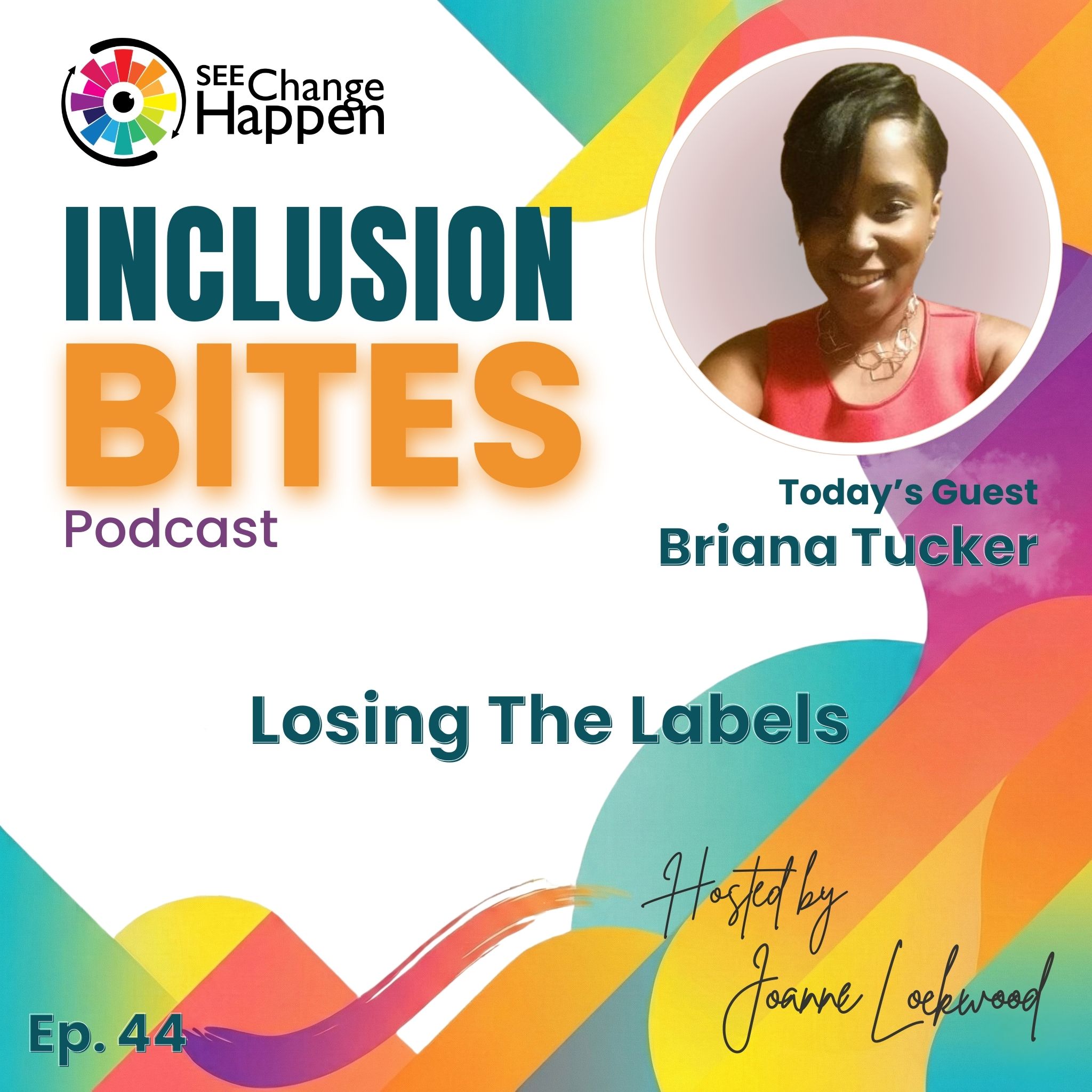
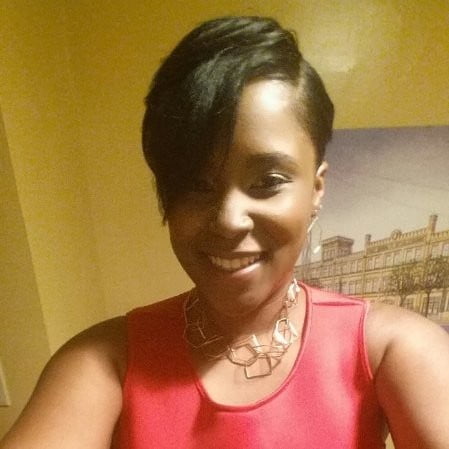
As a woman Briana was taught at a very young age how to avoid harassment and certain labels. As a woman of colour that is amplified by showing you how to scale back your ethnic personality to avoid being seen as ignorant, confrontational or aggressive.
In this episode of Inclusion Bites, Joanne Lockwood speaks with Briana Tucker about lived experience identity.
“I can't even say it's just black, unfortunately. It's anything different.”
Explore
Navigate this episode
Joanne Lockwoodhost
Hello everyone. My name is Joanne Lockwood and I am your host for theInclusion Bites podcast. In this series, I've interviewed anumber of amazing people who have simply had a conversation around thesubject of inclusion, belonging and generally making the worlda better place for everyone to thrive. If you would like to join me inthe future then please do drop me a line tojo.lockwood@seechangehappen.co.uk.That's S-E-E Change Happen dot co dotuk. You can catch up with all of the previous shows on iTunes,Spotify and the usual places. So plug inyour headphones, grab a decaf And let's getgoing. Today is episode 44.The title. Losing the labels. And I havethe absolute honour and privilege to be joined by Brianna Tucker.Brianna helps her clients streamline their operations through educationaland process improvement techniques. When I asked Brianna todescribe her superpower, she said it is her listening skillsand ability to see through all of the fog. Hello,Brianna. Welcome to the show. Hi, Joanne.
Briana Tuckerguest
Thanks for having me on the show today. I'm really excited tojust chat with you and just have fun.
Joanne Lockwoodhost
So where are you based? I am based in
Briana Tuckerguest
Jo. I am based in Wisconsin.Actually, I am probably 30 minutes from a major city,Milwaukee. And, it's absolutely beautifuloutside, which is rare for us because it's usually cold. We don't reallyget summer. So I'm gladthat I got to be in Milwaukee instead of where I'm actuallyliving at, which is Hartford, Wisconsin. But
Joanne Lockwoodhost
in the UK, you know, we have rain, we have sun. We don't get muchsun, then we get more rain and we'd be wind. Jo, weather for usis is variable. And I think we've had about in the middle of our middleof our summer, we've had 3 days of heat. That's our summer. So we're makingwe're making a question. I could probably survive over there because it's about the same
Briana Tuckerguest
here in Wisconsin. Excellent.
Joanne Lockwoodhost
So when we're chatting earlier, you we we settled on the title of this podcastof of losing the labels. Tell me about why that's whatwhy that's passionate for you. Yeah. Jo,
Briana Tuckerguest
my experience as a woman of colour inWisconsin, has been crazy.There's often times Jo much pressure on usto act a certain way, respond a certain way,look a certain way. And with that,there's so many labels of what's good versus bad,what's derogatory versus what is positive.Even, you know, just defining what derogatory is. It's just socomplex that it gives you thisuneasy feeling and this anxious feeling of what am I doingwrong now? Because you're so afraid of what label you're goingto get, whether it's you're ignorant or you are too aggressiveor you're, you know, justjust all around a bad it's a bad feeling that people getwhen, you know, they have these labels and especially on blackwomen here. It's very it's not easyto, avoid thosethose labels of angry black woman. Andso you go through so many different trainings andcourses on how to walk, talk, wear yourhair, what makeup to wear, how to wear your makeup, what jewelry towear, even how to enunciate your words, ina particular way. So, you know, it would belife changing to have that moment to not be definedby any one thing and just being able to be yourselfunapologetically.
Joanne Lockwoodhost
Wow. Do you think do you think it's you said as ablack woman, do you live in a mainly whitedistrict or white town? Well, the town I'm in now is
Briana Tuckerguest
predominantly white. Believe it or not, we have alot of diversity in Milwaukee and especially Madison and probablyeven the Appleton area as well. But people don't really talkabout it because it is a predominantly white state, butthere's so many disparities with the income that the only thing peoplehear about Wisconsin is how racist we are. Butwe do have tons of diversity here. It's just,unfortunately, nobody knows about it because they only hear about that badlabel of the racist state.
Joanne Lockwoodhost
I'd never heard that myself. No. I mean, that's a surprise.
Briana Tuckerguest
That's like everybody whenever you say you're from Milwaukee,there's 2 things you hear. There's black people there, andthen you also hear, isn't that the most racist stateand city in the world? And I'm like, well, I don't know if it's inthe world, but I know that we are very segregated, butno different than any other state or city.
Joanne Lockwoodhost
So you're kind of middle America that this that in that in thatzone. Is that right in the is that right in the red zoneYeah. Vertically, is it? Exactly. We're usually,
Briana Tuckerguest
one of the states that makes that final decision, or we have a veryhigh influence on how things go, especially during,the presidential election. Jo
Joanne Lockwoodhost
is there is there a lot of poverty in your area, or is it ais it working spouse? In the city I live in now,
Briana Tuckerguest
there is not a lot of impoverishment. But in the city ofMilwaukee, yeah, definitely. But it also issiloed to certain zip codes in certain areas.Like, you can literally drive down the street and seethe transition of impoverishment to, you know,an affluent area just by driving down one block, youknow, in the same direction. And that just
Joanne Lockwoodhost
those those those districts aren't just black districts or they're white areas ofimpoverished as well, are there? Not as
Briana Tuckerguest
much, honestly. It's mainly minorities. And and that'sjust not black people. That's Hispanics. Andthe the Hmong community, it'sminorities in general. Wow.
Joanne Lockwoodhost
So you talk as a as a as a black woman intersectionally that,yeah, a lot going on in terms of your life and your history and yourbackground. Yeah. How much do you thinkyou're influenced by being black versus being a woman, or do you think there'sthere's equal oppression going on in both parts?
Briana Tuckerguest
Well, I guess for each person, it'sdifferent. For me, I can say that I've felt moreoppression from my blackness than I have from being awoman. Being a womanhas been actually a bonus in some situations becausepeople want that, again, a label of being diverse.And so they love the fact that I am a woman,but my blackness intimidates them. And that's a word that'soften used when referring to, especially, people of colourin general. Jo you think there's a lot of white
Joanne Lockwoodhost
fragility where people are are kinda scared of ofof having their privilege challenged and Yeah. Threatened by the presence of blackpeople. Is that Oh, yeah. Is that the culture? Well and I I can't say
Briana Tuckerguest
that that's necessarily the culture, but that's definitely something thatyou feel as a person of colour here in Wisconsin.You, you, go throughdifferent experiences where people blatantly tell you and itand show you why theydon't like you. And usually, it's because of the colour of your skin.
Joanne Lockwoodhost
Jo it's not not subtle racism. It's overt and in yourface. Overt. Yeah. I have gone on interviews
Briana Tuckerguest
in which the managers have called me backafter the interview and told me, we don't hire your kind here.So, yeah, it's it's blatant. It'snot covered up in any way, shape, or form. They arevery direct. And it depends on the company too.Right? Like, you know, that's not the experience with everything, butin most cases, for myself, I've hadpeople blatantly tell me or even when I went to college, I'll neverforget, my advisor told methat he was not going to waste his time on mebecause I was a black female, and the onlything that was gonna happen is I was gonna drop out and have a wholebunch of babies and lay on my back. So he waswasting his time by trying to encourage me to become anengineer. So, yeah, it'sblatant. It's raw and direct. And so if you don't havetough skin, it'll kill youemotionally. Is this is this 2020? This is not Rosa Parks. This is
Joanne Lockwoodhost
not 1950 show. No. Exactly. This this shitstill happens? Yes. Wow. Yes.I mean, when we talk about racism in the UK, a lot of it ismore systemic and structural rather than in your face. I'm notsaying in your face doesn't happen. Right. But it doesn't happen to thesame extent. You know, I'm I'm completely blown away by theover experience you've had. Oh, yeah. Or even
Briana Tuckerguest
another experience for me that is, like,I guess, ingrained and burned into my memoryis when Barack Obama got elected the first time.There was a group of white supremacists driving next to me,as I was on my way to visit a friend to celebrate, you know, thatBarack Obama had won the election because that was a huge deal here inthe United States or just anywhere in general.And the cops helped the white supremacists try to tipover my car. AndI I my car actually did tip over on 2 wheels,but thankfully, I don't know if it was the wind or whatever, but itknocked me back onto all fours and I was able to speed upenough that I could kinda disguise myself in traffic.And that's the only reason why I'm still here. But it'sblatant. It's not it's nothidden at all. There's no buffer in mostcases. I'm really struggling to
Joanne Lockwoodhost
find words. This is this isa new concept to me. I I mean, you hear aboutit. You see the press, especially in the in thewake of George Floyd's murder and some of the riots, someof the was it the Tulsa? I saw some stuff in Tulsa and the massacrethere. And I've never heard a conversation withsomebody who is telling me like it is forthem. This is eye opening and earopening and Oh, thank you. It's it's incredible. I mean,I don't mean that in a it's incredible howhow powerful that is. And Yeah. Andhow I think coming from middle classUnited Kingdom, we're so buffered from this experience that you have, andit's just to us, it's kind of TV and Hollywood. Right. Butit's real, isn't it? Yeah. It's very real. I
Briana Tuckerguest
mean, like I said in the beginning,there is an immense amount of pressure and Ican say that as, you know, just from my own experience,where you are constantly living in a state of survivalmode, where you're trying to figure out, okay, what do I do? Where do Igo? How do I get there? Do I travel by myself,or do I have to travel with other people? And what kinds of other peopleam I traveling with? Because I can't have too many white people, otherwise, theylook suspicious. And I can't have too many black people because that looks suspicious.So I have to have, like, a ratio of peoplearound me that looks diverse so that I'm safe. And eventhen, I'm still not safe because if I say something thatfeels or can be perceived as aggressive orintimidating, I still could lose my life.
Joanne Lockwoodhost
You say, if you're with too many white people, that's also not safe?
Briana Tuckerguest
That's also not safe. Really?Because it depends on, 1, who the white people are,where we're going, and in some, like,I've had instances where, because I went to a I hada very unique experience growing up. My mother,is an amazing person and she was a teacher in the publicschool system for Milwaukee. And she placed mybrother and I in private schools. And Jo, when I wentto high school, it was a predominantly white,affluent high school. And here I am living in impoverishment.Jo, I got to see both worlds firsthand.And I will never forget the day that we, whichwas bad on my part, but I snuck outwith my friends and we went to lunch off campus.And, we got stopped by the cops and thecops pulled me out of the car. Andthey told me that I don't belong with myfriends. And Jo, they tried to put me in thepolice car and luckily, one of my good friends waslike, Jo, she has to go back to school. She goes to school with us.And I had to show them my ID card just to show them thatI really did go to that high school because most people know thatthat's a very affluent high school. And once Ishowed him my ID card, he was like, Yeah, just be safernext time. And then, I got back in the car and we wentback to school. So, yeah, it'svery real. It's something that youI don't know that a lot of people think of because as awoman of colour, it's something that we don't usually talk about. You just kinda
Briana Tuckerguest
live it and put all these rules in your headof what should I do, what shouldn't I do. Andhope and pray that it that'll keep you safe to see the next day.But there's no there's no actualconfirmation that that will, you know, because you do havesituations like Breonna Taylor. And that hit me harderthan anything because I'm like, Breonna Taylor is very close tothe name Joanne Tucker. And how hard isthat to know that even in my own home, I might not be safe?And that's the one place that I'm supposed to feel safe.And here I am living Joanne experience where Iam consistently thinking, prayingand just beingstrategic all day, every day to make sure that Idon't do anything that may appear aggressive,rude, or too ethnic or urbanis another phrase that they use here. Just so that I could make it tosee the next day and I can see my family and my loved ones.So it's very real andpowerful even today.
Joanne Lockwoodhost
So a random knock at the door at nightmust have Freaks me the hell out. Yeah. Freaks me out.
Briana Tuckerguest
So you don't feel safe in your home? You don't feel safe in your car?
Joanne Lockwoodhost
No. You didn't feel safe on the street? You didn't feel safe in the shop?
Briana Tuckerguest
No. And I I can't tell you,how many times. And actually,it's so bad to the point where you don't even acknowledgeit yourself until someone else sees it. BecauseI was actually shopping with a good friend ofmine and she's white.And we were at a store,and the store clerks consistentlyfollowed me around. And I'm so used to it that itdidn't bother me, but it bothered my friend becauseshe was like, hey, what's what's going on? Why is this happening?And I'm like, do you not see my skin?Do you not see what they see? Theythink I'm gonna steal. They think I'm going to dosomething or destroy something because there's suchnegative inner or negative images of people ofcolour here that they don't trust us tojust come into a store and shop. And thatperson consistently followed me, and then they called forthe casual clothsecurity and police officer to follow me until we got out of thestore. So it's all day everyday to the point where you just do stuffnaturally. It's not even a second thought anymore.
Joanne Lockwoodhost
This is so ingrained in the white mentalitythat white is good and black is bad is is ingrained at thecore, isn't it? Yeah. This is not a this is not like acasual thing. This is like No. A real deep held belief Yeah.They are better. You are you are worse. Yeah. And like I said,
Briana Tuckerguest
I can't even say it's just black, unfortunately. It's anythingdifferent. Hispanic or Chinese. Anything different. Far east.
Joanne Lockwoodhost
Yeah. Anything different.So what about other communities? The LGBTcommunity presumably is is different, is it? Yep.
Briana Tuckerguest
And here, that's, you know, you have certain conservativecities that that's not okay. You don't openlyexpress your love to someone if you are within theLGBTQ community in certain cities becausethey will let you know that that's notappropriate according to them. So,yeah, it's anything different. Being a woman and
Joanne Lockwoodhost
being gay or being trans is, like,what that is I I I don't
Briana Tuckerguest
even know if I have the words of how muchanxiety that that brings to mejust thinking about what that person may go through.Because especially when it comes to being someone that might be transor gay, men and women getthat horribly. Like, they're isolated. Theyare spoken down to and justridiculed and they experience so much somuch hardship just in general because that's not something thatyou are allowed to do. It's very conservative.
Joanne Lockwoodhost
So the people that are there that you believe to protect you, thegovernment, the state, the police,
Briana Tuckerguest
they're they're not they're they're they're institutionally part of the problem, aren't
Joanne Lockwoodhost
they? They're there. Yeah. Like, Jo. I I
Briana Tuckerguest
rely and I'm sure I can save that for atleast a lot of the people that I know. We rely on each other.I've my first mind would never be to call the copsif I was in a a bad situation. It would be to call certainrelatives or, you know, my mom or certain friendsthat I have. I would never call the police first. Theywould be the probably the last people that I would call.And even with lawyers, you know, my brother, unfortunately, hehad a bad experience with lawyers where the lawyer was just like, hey, you're gonnago to jail either way, so just take the plea. You know, that'sa very real experience. And so,no, you you just don't trust any government officialsor any people that are within government because it'sa pattern of, hey, you'renot actually going to help me. You're only going to help yourself.
Joanne Lockwoodhost
That's a white judge, a white jury, white lawyers. In
Briana Tuckerguest
lost cases. Yeah. The white press have already found you
Joanne Lockwoodhost
guilty? Yep. Exactly.This sounds like a a story out of the 1800,not a 2020 story. This this isI mean, I I had a belief that at least things were better than theywere. This sounds like Jo progress has been made in decades. No. Infact, worse. No. Yeah. It it's
Briana Tuckerguest
I will say, we saw a huge shift herein the United States, you know.And it doesn't mean by any means that Trumpinfluenced any of those things. But during his electiontime, people became more aggressive. Whereas priorto that, and actually, I would say even with Barack Obamawith how many threats he had to his life betweenthose two presidents, we saw a huge influxof, blatant racism being increasedopposed to suppressed. And, the wayin the violence, the acts of violence is crazy.Like, it it's not necessarily that it didn't happen before those 2presidents, but it definitely got worse duringthose 2 those 3 terms or whatever.So, yeah, it just So it it
Joanne Lockwoodhost
prodded that white fragility and and and gave them a acommon reason to fight back against therising of black people or something. Is that is that how it seemed? Yeah.
Briana Tuckerguest
I'm How dare black people have have rights? How dare black people dare to have
Joanne Lockwoodhost
a president? Well and and again, it wasn't
Briana Tuckerguest
just black people. It was how dare,them legalize different, you know, themarriage of 2 same sex couples or,you know, how dare they allow differentthings to occur that we don't like? If it's not a conservativething, how dare they? We don't like that. We want itto be conservative. Hence, this sort of demonization
Joanne Lockwoodhost
of liberal, any anything that is liberal or progressiveseen as anti church, anti Christian,anti family values. Yep. Exactly.
Briana Tuckerguest
Exactly. But but your community have a faith, a religion,
Joanne Lockwoodhost
family values. Yeah. You you don'tostracize people who are different from your faith, do you? You you Well,
Briana Tuckerguest
I will say that I was raised in a Christian house, so myfather was actually a minister. Jo I wasa preacher's kid, but II actually ended up growing up to become spiritual.I don't identify within the Christian community anymore just because Ididn't feel comfortable ostracizing people that didn't look likeme, and especially, people that identifiedwithin the LGBTQ community because my experience inwas that people that were within that community, they were someof the greatest people. And I couldn't imaginehow a God that I believe in wouldostracize them and choose me, even if Iwas, you know, the worst person in the world, but they werethe greatest person in the world. I couldn't make that connection. Icouldn't understand how that could happen. SoI I still obviously, you know, know a lot about the Christian faith,the Catholic faith, because I grew up in Catholic schools. Butmyself, personally, I identify as spiritual just becauseI couldn't I I truly tooklove my neighbor as myself, literal. I I wouldlove myself unconditionally. So I the only thing I can do is loveeverybody else that same way and show them that same respect. Andespecially with some of my experiences,if that's my story and every person is anindividual book Joanne an individual story, Idon't know what their story is. I can only see the cover.So I I don't wanna doanything that's disrespectful or hurtful orthat ostracizes other people, especially because I don'tknow their story. I don't know what happened to them in their, you know,previous life or in the past. So Ialways that's just how I chose to live my life isjust be respectful and kind and loving to everybody becausewe all deserve it. Yeah. I'm
Joanne Lockwoodhost
I'm certainly not religious, but I do have a kindof spirituality, and I I believe in that inner innervoice, that inner calm, that more Buddhist, I suppose, as a sort of amantra. But you're right, that love our neighboras you'd love yourself sort of religionMy interpretation is that religion doesn't shouldn't teach you to hate or itdoesn't teach you to hate. Right. That's a human thing, isn't it? That's a humanthing. Yep. Judge judgment is a is a humanthing, not a not a a spiritual godly thing.
Briana Tuckerguest
Right. And for me too, it was, if we're all createdin his image, then we're all great. We'reall amazing in our own And none of us are mistakes. And none ofus are mistakes. We're not we're not mistakes, are we? Right. Everything is perfect.
Joanne Lockwoodhost
So Right. So As I say, I there's so manyso many challenges and and contrary messagesin in text. I I I I'm I'm quite comfortable beingspiritual, not religious. And Yeah. Likewise.Jo you you your your business,Browning, BC, is it? Yeah. Browning Business Consulting.
Briana Tuckerguest
Mhmm. Yeah. What what what is your you
Joanne Lockwoodhost
you you've got a DNI, focus. What what is it you'redoing? What working with companies? Yeah. So, actually, there's
Briana Tuckerguest
there are 2 different companies. Browning Business Consulting,I focus on process improvement. And, essentially,what I do is I work with my clients to lay a goodfoundation so that they understand what are my operations.I need to be able to always answer the 5 questions, who,what, when, where, and why. You know, like,and you start with the what. What are you trying to accomplish?Okay? Who do you need in order to accomplish that?How are they going to help you? When should theyhelp you? And why are they important to thatprocess? So helping them criticallythink and make sure that every decision they're making operationallyanswers those 5 questions so that it is a strategicway of how they do their operations. And, you know, you're alsogiving that view of, is this efficient, is thisnot efficient opposed to right or wrong?That has been, you know, what's really catapultedmy clients into business growth and development. And itmakes it simple opposed to, you know, trying to speak fromthis academia level. It brings itpersonal and something easily relatable. And then, I havea partnership with someone that's, in HR herein the States. She's amazing. And it'scalled DE and I Associates. I mean, Advocates. I'msorry. And there, what we're doing iswe are utilizing the local talent thatare already in diversity and inclusion. I know that I amnot an expert in that realm. I know what my lived experienceis, but I can't speak for everyone. And I know that there are peoplethat have actually taken the time to educate themselves,to go through the different trainings, and etcetera Jo that theycan appropriately treat, teach those subjects, helppeople understand the difference between conscious and unconsciousbiases. So we usethose subject matter experts to kind of take peoplethrough diversity school. So you go through a coupleof different workshops with different subject matter experts.It's not just one, you're going through multiple. Andthen my partner and I are working with you strategically to make sure,one, you are inclusive in your hiring processbecause she's an HR expert and real like I said,she's absolutely brilliant. Jo she helps them make surethat their job descriptions are written in a waythat is inclusive for everyone. And then I, on the other
Briana Tuckerguest
side, come in and help you look at your operations andsee, okay, are you doing things in a waythat is accessible for other people and notjust the typical, hey, I am,you know, maybe able-bodied person or I'm aperson that's able to visually see things easily.So 2 different businesses, but kinda the the same thing.And obviously, with my own personal business, I just tryto, do my best to incorporate the things thatI'm doing for the DE and I business within my Browning BusinessConsulting Business. And making sure that people understandthat for me and Browning Business ConsultingBusiness Consulting, diversity is more than justa word. It's it's an ex it'smy lived experience. And so, as aperson, you are going to be treated only as a person. I amnot going to do anything to youor disrespect you or talk down to youor demean you or try to make itseem as if I'm so educated and you're not. I'mgoing to make sure that your experience is theopposite of what I experienced.
Joanne Lockwoodhost
I love that you start with the the what. Because whenI consult with clients around DEI,I always start with what are you trying to achieve? Yeah. And thennext question I ask is why does it matter to you? Right. Because if youdon't know what you're trying to achieve and why it matters, there's no point inembarking on the journey. You know, you talk about the where. I talkabout the direction of travel, the speed of travel. But unless you know whatyou're trying to achieve, you never know if you've got there. Right. Jo and youhave to get you have to understand why it matters to you as well asa business and as a person. So I think that's a great starting point,and I use that without putting in the words you did.And it's it's it's very powerful to to reallyroot it in that what. What are you trying to achieve? Yeah. Andthen everything should fit into place. As you say, if you answer those questionsinto my order, it starts fitting into place. Yeah. Right.
Briana Tuckerguest
Well, because I noticed, with my work asa employee,that in most cases, we wehave a list of tasks. Right? But we never really understand thewhole story behind those tasks. We're just doingthem. And so, things aren't done efficiently because it's justlike we're checking off a checklist and making sure things are getting done.Whereas, if you're critically answering those questions, thenyou're starting to think, okay, how do these tasks relate to oneanother? And are these tasks even necessary in order toaccomplish what we're trying to accomplish? Becauseusually, in business, there's multilevels. Right? You haveyour, you have your business goals,and then you have your operational goals. And then
Briana Tuckerguest
within those operational goals, you'll probably have even more goalsas far as like how you accomplish those different tabs. And so,when you break it down and you just start from the bottom upbecause in most cases, that's what people do.And you look at how everything relates to one another, youcan see that domino effect of how this one taskleads to everything else being accomplished.So I found that starting with, you know,letting them look at their operations andanalyzing how are how's everything getting done? Who'shelping you to get these things done? Then that starts them on apath of starting to look at everything that they're doingbecause they're putting it into practice and then they're also able to see the benefitsof, okay, I answered these 5 questionsand now, I'm realizing that there's some things that I couldprobably clean up to make it more efficient And itjust, you know, kind of naturally promotesthat continuous improvement type environment.
Joanne Lockwoodhost
Do you ever get frustrated that you find yourselftalking to the converted, the echo chamber, because thepeople you work with are already woke. They're already thinking inthis way. Sometimes, it's it we we actuallywanna bang the heads together with the people who aren't in the room, the peoplewho aren't engaging, people who aren't listening. Because, generally, I'm sure the many ofthe companies you work with are already on the right path anyway. They're already thinkingin that more diverse, more inclusive way.
Briana Tuckerguest
Yes. As far as diversity, yes, theyare. As far as their operations on the other hand, it's,
Joanne Lockwoodhost
you know Okay. It's still a little bit different
Briana Tuckerguest
because they're not answering those critical questions.They are kinda just taking it day by day andsurviving. So, you know, similar to me, they're just working each andevery day. And most of my clients have been smaller businesses, soit's easier to control, you know, how diverse yourcompany is. And to your point, yes. In Inmost of the cases, my clients have been peoplethat even if they don'twant to have this super diverseculture, they are at least able to know thatrespecting that is important and you have to do that in order to bemy client because I won't tolerate anything outside of that.So, yeah. Like I said, to to that point,I'm talking to people that already feel andacknowledge the same thing that I do as far as diversity, but we still gottaclean up their operations. For sure.
Joanne Lockwoodhost
People often ask me, do I experience a lot of biasabout my own identity in business and the world theworld I work in? Right. And generally, I don't. Thereason is Interesting. People people know who I am.I don't hide who I am. Okay. It's kind of right in my identityright out there in the middle. So people who come to me come to mebecause of who I am. So people who don't come to me,maybe don't come to me because of who I am, but then I don't hearthem. All I hear is the people who do wanna work with me. So II I have a very positive experience in life becauseI only ever work with people who wanna work with me. And then they cometo me. So Right. I I suppose I that's a privilege I haveis that by being professionally trans, Iavoid I avoid that that that stigma of of tryingto hide it or cover it or Right. Ormask it. I just I'm out there front and center, then that creates its ownmarket. So I I realized a while ago that I I am privileged.I'm not I'm not a, I don't have anotherrole, if you like. I'm not an account and I'm not acodeveloper. So trying to get over that job whilstbeing trans. I have the privilege of being professionally trans, whichmeans that's what you get. Yep. That's what you're getting. I don't Idon't that's what you're gonna get. So in a way, it's asuperpower or at least it's Yeah. It is.
Briana Tuckerguest
It definitely is. And
Joanne Lockwoodhost
I I guess you're working with mainly black ownedbusinesses. So being black helps you with those businesses, isit? Well, actually, I my most of
Briana Tuckerguest
my clients are white. So Wow. Okay.You know? Does that go against the, the grain in terms
Joanne Lockwoodhost
of the societal expectations? I mean, it it's,you know, from when you were talking earlier, it sounded like you are more likelyto be rejected, but there's obviously a community or aside side of your society that is open is is inclusive.Yeah. Ironically, none of my clients live in
Briana Tuckerguest
Wisconsin. But Okay.
Joanne Lockwoodhost
Okay. So outside of the borders. That's pretty much Yeah. They're outside of the
Briana Tuckerguest
borders. They're, you know, East Coast, Southwest,part of the United States. Jo, I thinkobviously, and that's another thing that's kind of interesting,I guess, about the United States is the way peopleembrace cultures and diversity in different areasis crazy. You can literally actually seeand feel how even city by citywithin some of the states that, you know, diversity isaccepted or not. Jo, yeah,ironically, most of my clients have been white, whitewomen, ironically. Well,
Joanne Lockwoodhost
that's fantastic, isn't it? That's Yeah. It means you yeah.So has has the world changed where you arelocally in the last 18 months since George Floyd orhas it got, you know, heightened awareness? I think it's
Briana Tuckerguest
more heightened awareness. I believe that,more people are starting to acknowledge those experienceswhere prior to George Floyd and moreso Breonna Taylor as well, thatit was kind of like like you were saying earlier, where it's things that youfeel like it just happens on TV. It's not something that actually happensto you. And I know that in Wisconsin, we've had,other victims similar to, Breonna Taylorand George Floyd that have experienced that andthey, you know, sued the city and etcetera. So I think it'sthe awareness has become stronger.Mhmm. And there's obviously some people thatstill say, hey, you guys are making this up. But there's alot more people saying, I don't even think Irealized what was going on because I felt likethis was just something in the history books.And they're taking those actionable steps to tryto unlearn some of those unconscious biases that theydidn't even realize they had. So it's it's beenboth negative and positive, I guess.
Joanne Lockwoodhost
Are they conscious or unconscious? Oh, yeah. A lot of thesesound like a brain has a brain. Hate, isn't it? Yeah? It's Culturalhate. It's both.
Briana Tuckerguest
And that the biggest difference is the acknowledgement of it.Right? Because in some cases, yes,you are raised a certain way. You might be raised to thinklike, I remember one person toldme that, she was raised to think that black people wereinherently ignorant and that, you know,Hispanic people were inherently hardworkers and that they were only good for labor work.And she didn't realize that that was somethingwrong, that that that's not something you should think aboutthose people. You should just get to know them as individuals.So it's she she knew that that was there, butshe also didn't understand how thatthought or that bias affected the rest of her life andhow she treated people. So it's a combination.
Joanne Lockwoodhost
I'm still struggling to find some words after listening to you speakall the time. It's such a different worldthat you're telling me about that I had no appreciation existed.As I all I've seen is the Hollywood representation, the CNNrepresentation. Well and now you know a real person that
Briana Tuckerguest
has experienced that consistently throughout her entirelife. I mean, the storiesare endless even from I rememberor another example, I should say, of how thingshappen here is I typically wear protective styling formy hair. I absolutely love my hair. It'snaturally curly, coily, brown hair, andit actually turns red too, believe it ornot. And I had an experience where Iwore my hair in its natural state. And a whitewoman thought that it was beautiful and tried to touch my hair, and Itold her no. And basically,to make a long story short, I almost lost myjob because I told her no. She reported me andsaid that I was, again, aggressive, rude,disrespectful, all because I wouldn't allow her to touch my naturalhair because I knew, hey, you know, black hairis beautiful, but it takes a lot of work for us to maintain itand protect it and, you know, make sure that it's healthy. And I'm like,literally, this is a 2 to 3 day process to get myhair the the way that it needs to be. So I don't want youtouching my hair because that means I have to start this process over, and Iusually only do that on weekends. And how about just respect the factthat I need personal space and respect thatthat I want my personal space. But yeah,she reported me and said that I was being rude and aggressiveand mean. And thankfully, again, other peoplecame and said, hey, that wasn't the situation.Like, Brianna just said Jo. And thelady continued to try to touch her hair and she said no again. And theneventually, Brianna walked away. But that'skind of the story here, or at least for me is,I have so many experiences where if it wasn't forother people validating the experience that I was living,no one would believe me.
Joanne Lockwoodhost
I mean, I've got black friends in the UK, and they tellme they're often getting people touched in their hair or askingabout the hair. The hair is always a big deal. Yeah. And it's it'sanother micro question. It just becomes a kind of, oh, here we go again, doesn'tit? Yep. Exactly. Exactly.
Briana Tuckerguest
And and like I said, the the irony is even when you sayno, it's like, I don't care that you saidno. I'm gonna do it anyway because that's what I wanna do.
Joanne Lockwoodhost
Jo you feel that you're having to complyand allowing white people effectively takeover your take over and tell you what you can and can't do, and theyfeel they got rights to it? Exactly. That's exactly how it is. I
Briana Tuckerguest
mean, even like you said earlier with, you know,even within the health care system or whatever, it's more of,hey, I'm the white person. You're gonna tell I'm gonna tell you what youshould do and you're just gonna do it. And if you don't do it andyou don't comply, then this is what's gonna happen to you. Even downto healthcare, I mean, there's been instances where I've had toadvocate for myself by hopping from doctor to doctor to doctorto doctor because, hey, this doctor overhere said, Jo, that's not what it is. You'refine. You're allowed to tolerate that. OrJo, you shouldn't get this because you're just tryingto get more drugs, so you can sell the drugs orso you can take the drugs. So it'sthat constant, I'm going to tell you what you need, opposedto listening to what I'm saying andacknowledging that my experience or whatever I'm telling youis what it is for me.
Joanne Lockwoodhost
I mean, again, listen to the incredible stories aroundthis white or privileged entitlement that occurs,and it it occurs in the UK, but never to the extent you describeit. Is there optimism for the future? I mean, can you seethings changing? Oh, definitely. I would
Briana Tuckerguest
say, especially here in Wisconsin, I have seenquite a bit, like I was talking about earlier where, you know, thatconscious, unconscious bias combination is beingacknowledged now. And so a lot of people arewanting to have those conversations to see, okay,what have we been doing? Because similar to you, it's like, I'mso disconnected from this and there's things that I'm doing that I don't evenrealize I'm doing. I wanna learn. Jo I feellike between, you know, us allgrowing together and seeingdifferent experiences and being open to have those conversations.And, you know, just people willing to educate themselvesas well. Right? Like, not relying on those minority,communities even within LGBTQ. Like,we're not gonna rely on that community to educate us on howthey should be respected. We're also going to do the research forourselves and make sure that we're askingquestions and not being afraid to ask ask those questions andhave those tough conversations. But it's definitely starting tohappen. And so I feel like, you know, I may notsee it in my lifetime, but I know thatit's going to happen sooner than later because people areactively doing things now to try to make thingsbetter later. Even in Milwaukee?Even in Milwaukee. We're actively doing thingsnow to try to make things better.A lot more different initiatives, a lotmore auditing as far as, like, HR is concernedto see are we truly diverse? Are we truly inclusive?Have we ever had any experiences where peoplefelt isolated? There's more companiestrying to incorporate holistic,approaches to healthcare. So including thingslike therapy sessions or support groups and,you know, different groups to advocate for the rightsof all humans. Jo, yeah. Even here,I mean, it's they're baby steps,but even baby steps are good steps. They're all steps. They allcount. Yeah. I I
Joanne Lockwoodhost
agree that we can all walk away from the problem,but we may not be able to change the world on our own, but wecan change the world around us. So if we choosenot to make a difference, then we're letting it we're letting it pass forsomebody else to take over. So I think we all gotta be the 1. Andif we're all the one, that makes a difference. Yeah. And that difference adds becomescumulative, doesn't it? Exactly. That's what we can all do. Yeah.When people say, what can I do? We you can change yourself. That sort ofthing. Exactly. Yep. And we infect other people with thisinclusion virus. Right.
Briana Tuckerguest
Exactly. You know? Spread it everywhere. Yeah. And
Briana Tuckerguest
and the thing that I've learned to embrace too, even formyself is being okay withknowing that you're not going to understand everything. I'mnever going to understand what your life is like as a trans womanbecause that's not my lived experience. And evenmy experience to another black woman's experience, I'm not going tounderstand that because that wasn't my experience. But I am opento, you know, just hearing your story if you're willingto share, respecting your space, and respectingyour voice. And as long as we all just startthere with, like I said, asking thosequestions, even if they're hard or even if they may notcome out the right way, you know, because that's the other big fear isthat, hey, I might ask you a question that technically is inappropriate and Idon't want it to be inappropriate, but I I'm I'mcurious. I wanna know. So kind of a a two waystreet, right, where I'm willing to beopen to have those questions and comments andconversations, but I'm also expecting you to do thesame thing. And if we all kinda commit to justthat basic thing, yeah, it can changetremendously. Yep. Do the work.Do the work. Do the work. You can do the work yourself.Yep. I agree. I think too often people
Joanne Lockwoodhost
put too much reliance on otherpeople Oh, yes. To do the education, to tell me howtell me where I'm going wrong. Right. I mean, YouTube, thatyou can watch tens and thousands of hours of YouTube if you want livedexperience and wanna hear, if you wanna ask a question. Yeah. I mean,
Briana Tuckerguest
there's and believe it or not, there's so manyshared stories similar to mine from all differentcommunities on even something as simple as TikTok, which isone minute, you know, in most cases. Or if you are aperson that you love to read books, there are tons ofeducational books on, you know, being supportiveand and breaking down those conscious and unconscious biases.So, yeah, there's too many resources now for usnot to take some onus on ourselves and do the work.
Joanne Lockwoodhost
Well, I can't believe we've been talking for almost an hour. That's incredible.
Briana Tuckerguest
Thank you so much. You made it so easy. Iappreciate that. I know you were a bit worried at the beginning whether we
Joanne Lockwoodhost
could talk for an hour, but I I knew we'd find some words and Yeah.
Briana Tuckerguest
I definitely was. I was completely freaking out becauseI thought, what the heck am I gonna say? And to sucha a audience that has heard so many great speakers prior tome, it was like, man, this is pressure.They're exciting. But it was amazing.
Joanne Lockwoodhost
You're right out there on the the people I've interviewed,and this is right up there in terms of personal impact. This is right upthere in in yeah. I've I feel moved. You've almost reducedme to tears on a couple of occasions. So, yeah, you you have youhave made me the one who who has learned fromthis and I I really I've been this so much. I'vevalued what you said so much and, You are way too kind.
Briana Tuckerguest
I'm just No. Sharing my story so that other peopleknow that they're not by themselves because Yeah. We don't talk aboutit and that's part of the problem. So, evenif I don't have someone. Someone listening to my story, that opens up becauseI'm sure even in the UK, people just probably haven't sharedtheir story because it's so taboo to do. So, evenif maybe they listen to it and they become more braveto let their voice shine, that's that in and ofitself is huge to me and I appreciate you justsaying that and acknowledging my experience. So thank you.
Joanne Lockwoodhost
Okay. Thank you. How could people get a hold of you if theywanna find out more? Sure. They can reach me. I am on
Briana Tuckerguest
Instagram, Facebook, and LinkedIn. My usernameon all three platforms is bbiz,B-B-I-Z, Consulting. And my website isactually the same. It's bbizconsulting.com.
Joanne Lockwoodhost
Fantastic. I'll put those in the show notes that there there as well.Thank you so much. So a huge thank you for the listeners fortuning in, for listening, for making it to the end. And I'msure, like me, you could have listened for another hour or so.This has been amazing. So do keep do subscribe,because you'll hear future episodes of the Inclusion Bites podcast. That'sB-I-T-E-S. Tell your friends. Tell your colleagues so they can share
Joanne Lockwoodhost
in these stories as well. I've got a number of other exciting guests linedup that I'm sure you'll be equally inspired by over the next few weeksmonths. Of course, if you'd like to be a guest, please let me know.And I'd always welcome feedback, suggestions on future shows, and how we canimprove this to jo.lockwood@seechangehappen.co.uk.And finally, my name is Joanne Lockwood. It's been an absolute pleasure tohost this podcast for you today. Catch you next time. Bye.
Unconditional Love and RespectRacial Discrimination and Personal ExperiencesDiversity in Business Operations
Briana Tucker describes what it feels like to live under constant scrutiny as a woman of colour in Wisconsin, where everyday situations can carry the risk of being stereotyped, labelled, or treated as a threat. She shares stark examples of overt racism and how assumptions about “aggression”, professionalism, and even hair and appearance shape what feels safe at work, in public, and at home.
Joanne and Briana explore how labels and bias operate at both individual and institutional levels, including policing, healthcare, hiring, and education. They discuss the emotional and practical labour involved in staying safe, the role of allies validating experiences, and why people must take responsibility for their own learning rather than relying on marginalised communities to educate them.
The conversation also touches on faith, spirituality, and finding ways to move from heightened awareness to action. Briana closes by sharing her consulting work in process improvement and DEI advocacy, and why she wants a future where people can live without being defined by stereotypes and can show up as themselves, unapologetically.
“Because I was actually shopping with a good friend of mine and she's white. And we were at a store, and the store clerks consistently followed me around. And I'm so used to it that it didn't bother me, but it bothered my friend because she was like, hey, what's what's going on? Why is this happening? And I'm like, do you not see my skin? Do you not see what they see? They think I'm gonna steal. They think I'm going to do something or destroy something because there's such negative inner or negative images of people of colour here that they don't trust us to just come into a store and shop.”
“I don't identify within the Christian community anymore just because I didn't feel comfortable ostracising people that didn't look like me, and especially, people that identified within the LGBTQ community because my experience in was that people that were within that community, they were some of the greatest people. And I couldn't imagine how a God that I believe in would ostracise them and choose me, even if I was, you know, the worst person in the world, but they were the greatest person in the world.”
“Helping them critically think and make sure that every decision they're making operationally answers those 5 questions so that it is a strategic way of how they do their operations.”
“So we use those subject matter experts to kind of take people through diversity school. So you go through a couple of different workshops with different subject matter experts. It's not just one, you're going through multiple. And then my partner and I are working with you strategically to make sure, one, you are inclusive in your hiring process because she's an HR expert and real like I said, she's absolutely brilliant.”
“I found that starting with, you know, letting them look at their operations and analyzing how are how's everything getting done? Who's helping you to get these things done? Then that starts them on a path of starting to look at everything that they're doing because they're putting it into practice and then they're also able to see the benefits of, okay, I answered these 5 questions and now, I'm realising that there's some things that I could probably clean up to make it more efficient.”
“And I had an experience where I wore my hair in its natural state. And a white woman thought that it was beautiful and tried to touch my hair, and I told her no. And basically, to make a long story short, I almost lost my job because I told her no.”
“I'm never going to understand what your life is like as a trans woman because that's not my lived experience. And even my experience to another black woman's experience, I'm not going to understand that because that wasn't my experience. But I am open to, you know, just hearing your story if you're willing to share, respecting your space, and respecting your voice.”
The significance of recognising everyone as having their own individual stories and the impact of unconditional love and respect in fostering inclusivity.
The definition and distinction of spirituality, focusing on love and non-judgement as human teachings rather than divine.
How businesses can enhance efficiency by analysing operations from the bottom up and identifying task interconnections.
The pervasive reality of direct racism and the emotional toll it takes on daily life.
Practical strategies to educate oneself about diversity and inclusion, leveraging resources like YouTube, TikTok, and educational books.
The entrenched racial and economic disparities in predominantly white areas and their impact on minority communities.
The call for personal responsibility in effecting change and respecting diverse experiences, emphasising self-education over reliance on minority communities for learning.
One thing to remember
In episode 44 of "The Inclusion Bites Podcast," titled "Losing the Labels," the central message revolves around the profound significance of unconditional love, respect, and recognising individual stories, particularly in combating stereotypes and discrimination faced by black women like Brianna Tucker. The discussion brings to light the nuanced realities of racial biases and structural inequalities, emphasising the importance of self-education and proactive engagement in fostering inclusive environments.
Questions this episode helps answer
Brianna Tucker emphasises the importance of recognising individuals as having unique stories and experiences. How can workplaces and communities foster environments where everyone's stories are valued and heard?
Both Joanne Lockwood and Brianna Tucker discussed spirituality in relation to love and non-judgement. How can this perspective be integrated into diversity and inclusion initiatives to create more inclusive cultures?
Brianna Tucker shared her experiences of direct racism in the United States. What are some of the key differences between overt and systemic racism, and how can both be effectively addressed within organisations?
The episode highlighted the prevalence of racial and gender biases in professional settings. What are some actionable steps that companies can take to mitigate these biases and encourage diverse hiring practices?
Brianna discusses the emotional toll of needing to always act strategically to avoid negative perceptions. How can organisations support the mental health and well-being of their employees who might be facing similar pressures?
The episode touched on the impact of societal conservatism on the LGBTQ community. What role can businesses play in creating safe and inclusive spaces for LGBTQ individuals, particularly in conservative areas?
Explore topics
Ideas from this episode
Unconditional Love and Respect
Our dialogue began with Brianna sharing the significance of unconditional love and respect towards others. Recognising that each person has their own unique story and background, Brianna emphasised the necessity of treating everyone with dignity and understanding, regardless of their circumstances.
Racial Discrimination and Personal Experiences
The conversation then took a more personal turn as Brianna opened up about her experiences with racial discrimination in the United States. Her recount of explicit racism, from employers stating they wouldn't hire people like her to incidents involving racial hostility, was nothing short of eye-opening.
Diversity in Business Operations
Turning to a more strategic focus, Brianna delved into how she integrates diversity into business operations through her ventures, Browning Business Consulting and DE&I Advocates. By partnering with HR experts, she aims to enhance diversity and inclusion, ensuring businesses aren't just ticking boxes but fostering genuine inclusivity.
Learn
Frequently asked questions
Who are the hosts and guests in this episode of the Inclusion Bites Podcast?
The episode "Losing the Labels" features Joanne Lockwood as the host and Brianna Tucker as the guest. Joanne is the founder of SEE Change Happen, and Brianna operates Browning Business Consulting and DE&I Advocates.
What are the main themes discussed in this episode?
The episode explores the importance of unconditional love and respect, recognising individual stories, spirituality focused on human values of love and non-judgement, and overcoming societal labels and stereotypes, particularly for black women.
What businesses does Brianna Tucker operate, and what are their focuses?
Brianna Tucker operates Browning Business Consulting, which focuses on process improvement and strategic operations, and DE&I Advocates, which enhances diversity and inclusion in workplaces by partnering with HR experts.
How does Browning Business Consulting help businesses?
Browning Business Consulting streamlines business processes by answering critical operational questions—who, what, when, where, and why—to improve efficiency and encourage critical thinking beyond mere checklists.
What services does DE&I Advocates provide?
DE&I Advocates educates clients on diversity, inclusion, and unconscious biases, aiming to create inclusive hiring practices and operational efficiency by leveraging local experts.
What personal experiences of racism does Brianna Tucker share in the episode?
Brianna shares numerous experiences, including direct racism at work, discouragement from pursuing engineering due to her race and gender, and surviving racial hostility post-Barack Obama's election. She also describes the constant state of caution she lives in to avoid perceptions of suspicion or threat.
Share this episode
Heard something worth passing on? Send this conversation to someone who needs to hear it.