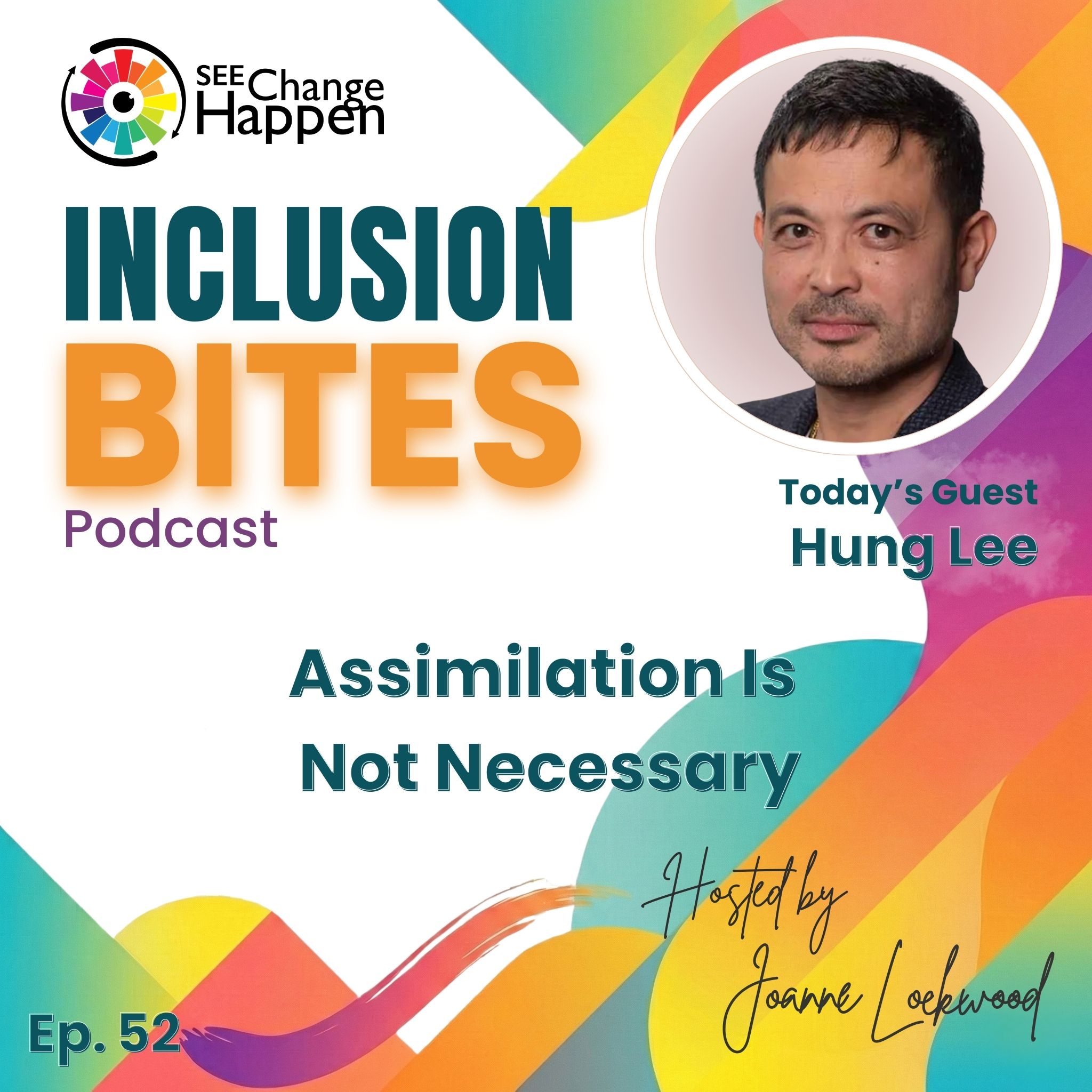
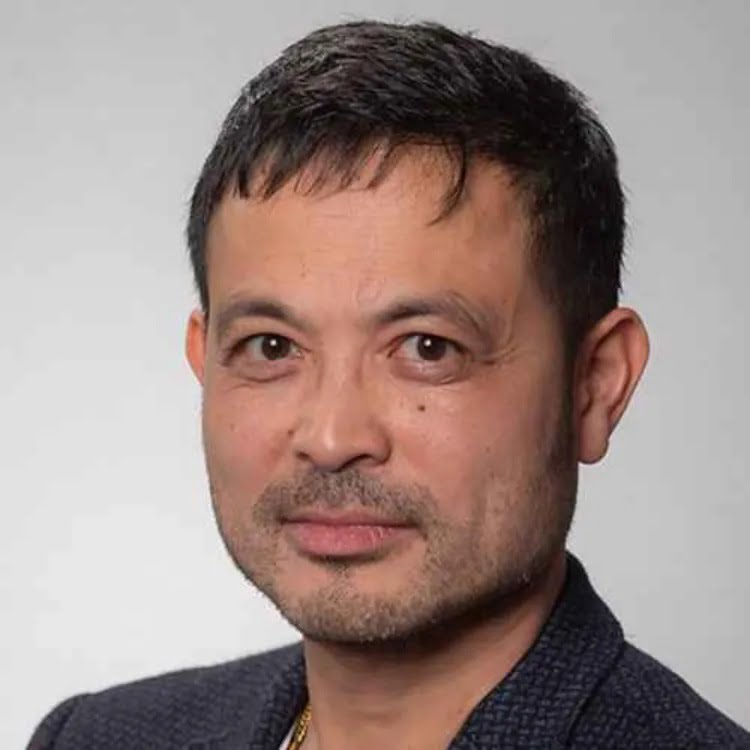
Hung, who is a “triple immigrant”, believes that there is no truth, only consensus, and the manner in which we collectively cope with this revelation will define how gentle or cruel our future humanity is going to be.
In this episode of Inclusion Bites, Joanne Lockwood speaks with Hung Lee about lived experience identity.
Hello everyone my name is Joanne Lockwood and I am your host for the Inclusion Bites podcast. In this series I have interviewed a number of amazing people and simply had a conversation about the subject of inclusion belonging and generally making the world a better place for everyone to thrive if like to join me in the future then please do drop me a line to jo.lockwood@seechangehappen.co.uk that's S E E Change Happen dot co dot uk. You'll be a catch up with all of the previous shows on itunes, spotify and the usual places. So plug your headphones grab a decaf and let's get going. Today is episode 52 with the title "Assimilation is not necessary" and I have the absolute honor and privilege to be joined by my good friend "Hung Lee". Hung describes himself as someone who is the curator of Recruiting Brainfood. When I asked home to describe his superpower, he said "I can see pointless futures". Hello Hung, welcome to the show
Hung Leeguest
Jo, Thank you so much for inviting me onto the show I'm very very pleased to be speaking with you very honored to be part of this amazing series. So great to be having this conversation with you.
Joanne Lockwoodhost
Awesome! Awesome I've been a guest on your brain food live several times says it's real honor to have you back so we were talking at the Green moon before we went live here about your your heritage and how you said assimilation is not necessary for you. So what's that what he mean by that.
Hung Leeguest
Ah, you know what? it's it's It's an interesting challenge for anybody that has lived in a different country I think you know if you if you're born in 1 place. Um, or you form an ethnic background that is not native to a certain country and you end up living in that country. Um, you know you do have all kinds of. Ah, pressures Incentives Motivations ah to Assimilate. Um and generally speaking I think that you know of course you need to ah learn. Ah the social rules you need to obey the cultural values you need to kind of really get involved with how. Ah, society and culture works in in your local in the in the country you live in? Um, but it may be that you will never be fully ah fully part of that group without caveat. Um, and that's an okay position to be In. Um I Think. Sometimes when you're growing up as I did as a school kid you know is ah a slightly different school kid and ah in a very wide working class and just post-industrial sort of place. Um that that you know you you don't want to be Isolated. It's quite difficult as a child I think not to to be that child on the outside you know. That's why kids can stick in groups. That's why bullying develops because you know I think most of the time the bullies don't want to be the person bullied so they end up preemptive striking on someone else. Um, so it's an uncomfortable position to be in um and that was you know, generally an experience I think most um. You know, ah visible minorities. Ah I would I would imagine might experience. Um and and there's a big driver there to say look how can I belong better to avoid this pressure. You know I remember being a school saying you know I Ah don't actually want to be Chinese um because I'm getting bullied for it. Um, you know I remember very clearly that was the case you know, washing your face making sure it goes whiter you know stuff like this you see when I was five 6 years old Really really young because you you don't understand things like this you get you get mocked for instance for your color of your skin. Ah by kids. You don't know any better. You know that I certainly don't ah bear them any um animosity. Ah, now I dare say I didn't bear too much animosity to them then um, but you know they're saying that you're dirty. Um you know and you go home and you try and wash your face. Um, and that's what you do as a kid in that era. You know, um so that ends up being you know. That can go in a wrong direction for you. Um, because there's a lot of potential for bitterness there. Um, you know if you get to a point For instance where you know you you realize that you're not going to be fully accepted.Actually let's let's take this back to there's 2 paths you can go down I think when you confront it with this at a very young age where you're not prepared to deal with it and there's no training as you get through this as I say 5 6 7 years old that that type of age is at number 1 you you overcorrect to become like hyperassimilated right. Yeah, like you end up being like an exaggerated version of the people who are bullying you um, and I think that's when in fact, you might end up being such a bullies. Um, you end up just massively overcorrecting um and you know that I don't think is ah a potentially good space to be. Um, and the other way people can deal with it is the the over correctt the other way and you end up rejecting the host culture that rejected you um and you end up sort of being a critic of it or or even worse like an antagonist towards it. Um, and sometimes you can see that emerge as well. Where. You know you've grown up in 1 place, you've been confronted with this strange situation where you know you've been repelled by this community that you think you should be part of um and your response is okay if you don't like love me I don't love you. That's quite a normal experience. Anybody's gone through the period of rejection. Ah, has that sort of it still doesn't go away right? I mean ah, even as you go older you you kind of recognize what that emotion is and you realize you know what it's it's okay to be rejected and I guess the title of this talk. It's okay, not to assimilate is is exactly that it's kind of okay to to not fully belong. Um, because I think the wrong choice is is to either overcorrect and be hyper assimilated. Um because truth is you probably will never belong and you can spend your entire life trying to prove it or otherwise um or if you turn into a hostile to the host environment. Ah, that is the route towards um you know being a permanent marginalized person almost a a marginalization that perhaps you've embraced um and maybe even you revel in. Um and you know, ah this is obviously something that doesn't happen to many people but it is noticeable. That you know when you look at instances of radicalization in the uk you know people who have have gone and and and ah been radicalized in more of a sense. Um, typically they're second -generation immigrants like me in other words, they they speak like us. Um, you know 4 lines was brilliant. Brilliant movie I don't know have if you' seen it joe but it was ah it was a everyone's seen it right? amazing and everyone but they were all like from yorkshire what you know, but that was exactly it. The reason why they were radicalized is because they grew up here first. Generation immigrants are never radical.
Hung Leeguest
Um, because they accept. They'll never be fully accepted. Um, it's when you've grown up here and you get rejected by the host community that you know you you can't justify that rejection. That's when you can overcorrect and become super negative and potentially be hostile and like I say these days very easy to get radicalized. So. Yeah I Guess what I'm saying when you know assimilation isn't all that is to say of course you should assimilate. But you know what don't kill yourself and don't kill anybody else if ah if that assimilation isn't complete. That's simply a fact of life. Um, it's a fact of who you are. It's a fact of your journey that you and your family have made. Um, and there's no reason why you should be resentful for that.
Joanne Lockwoodhost
I As as you're talking now I was just thinking about you know I talk about belongingness in the workplace and you've just talked about belongingness in in the culture and society and as you were talking about that I was thinking how we can see different types of people you almost using the model you just described in our work. So There's the person who is engaged feels that sense of belonging then we got the people that are kind of like meh in the middle kind of okay, nothing special and then we have the actively disengaged and the analogy I heard recently was the active actively disengaged person or just. Scratch up a bit of paper and throw it on the floor walk off, they won't even think about it. The kind of the person's kind of mayor. Okay, we see that bit of paper on the floor notice it and just walk past and leave it but the person feels that center belonging in that sense of Community. We'll see that bit of paper pick it up and. Um, find a bin and put it and throw it away and I think that's what you're saying here is when you think about when you're engaged in in society in the community and unless you feel that sense of belonging you're you're never gonna feel part of the community and I'm not talk about assimilation here I'm just talking about that that culture rad element that we talk about so often.
Hung Leeguest
Yeah there's different parallels. You know I mean everyone's worked in a company where there's malconents. Um, you know people who are you can see that they're actively, ah sabotaging um initiatives you know that they're doing everything. They're basically trying to communicate. They don't want to be here. Um, and in um, in a company of course. Um the difference I guess is that you know the person can leave and join another company. Um, slightly different when you're talking about a wider culture because that person may not be able to leave it. Um, and so they just end up curdling their bitterness. Ah, to a point where you know it can just be super super negative. Um, so so that's an urgent issue. Um, and it's an urgent issue. You know in sense of how we think about creating ah the environment where everybody has a chance to ah belong to a certain extent. Um, like I think a big part of the problem. Is that we present an unrealistic possibility. Um, to say it is possible to be um, universally inclusive to 1 hundred percent level. Um, ah to to be able to say oh you know we're going to this is good. We're going to guarantee this to be the case. What I'm saying from my own experience as ah as a you know ethnic minority. Let's say in uk certainly an immigrant as well. Uk is my third country I lived in so you know I've I've had experiences of not being in in in this place. Um, or not so so-called belonging in this space is that I don't think we should hang that. Sort of we shouldn't set ourselves that standard. Um, you know we should accept. We should try and increase inclusivity. That's the journey. We're all on ah but to assume that you can be 1 hundred percent inclusive to 1 hundred percent of the people 1 hundred percent of the time I don't think that's ever going to leave the ideation period. You know that's not realistic. Um, and we need to just have the sense look we're we're moving towards this. Um and you know that that forward progress in itself I think maybe might be enough.
Joanne Lockwoodhost
Yeah, and I think companies make this mistake as well where they're trying to be inclusive for all, they end up I don't know either constrained or by the impossibility of the task or or then you become open to. Extreme views when you're trying to include all views. Sometimes there there are views of the periphery either hard right? Hard left and sometimes those views ah drown out the kind of centrist views which are often the most the most prevalent and we see that in Society. We see that often in the workplace. So say you you can't. I think the the the paradox of tolerance. You know you have to be intolerant of the intolerant and then you as an organization as society. We need to work out. What is the message the the underlying tone of of who we are and ah we we would expect people to fill inclusion within that zone. And if you're outside of that then you will feel less inclusion. Um and out of it. We we can't change it I don't think.
Hung Leeguest
Yeah, absolutely I mean as you say the paradox of diversity at paradox tolerance that is something we should all actually study up on and and learn what that is um, you know for folks listening to this. Definitely if you're going to emerge from this chat for whatever reason just google paradox of tolerance and that will tell you. You know at what point do you draw the line and that's basically the situation I actually don't think that terminology helps Joe I got be honest when we talk about inclusion for instance, um, that in itself is a bit of an oxymoron because we we recognize implicitly the certain things we do not include. Um, in the same way when we talk about diversity. Um, implicitly, there's certain things that we will not tolerate. Um, so I don't think the terminology helps because the terminology tells us that yes is universally inclusive and universally diverse. That's not the case. Um, what community is and what? um, ah, any social organization is they're formed at the gate. You know there is a barrier um between who is in and who is out um and like it or not what we do is that we create some sort of gate and we say. If you if you agree to these principles these values these laws. Ah these cultural morals. Whatever it is then you know you may be in group. Um, but there is always an outgroup. Um and the question is what is that outgroup and are you comfortable with kind of being hostile to that group of people. Um, that's the social reality that's evolutionary reality. Um, and I think in many cases the ah conversations in d and I I think have not recognized that um and they're still kind of ah pouring towards an abstraction that isn't ever going to connect with reality. Um, and you know to terminology doesn't help us there.
Joanne Lockwoodhost
I agree I think a lot of people see dni as a phrase they don't necessarily understand the outcome or the output of a positive experience now I talk about positive people experiences and that's what we're trying to generate. We're trying to create environments where people feel. They have the ability to thrive the government at the moment talk about leveling up which is recognizing that some people need more help more assistance whether that's regional infrastructure. Whatever that is to better succeed and yeah, looking at the North southh divide looking at how at different regions of the uk. Need more support and investment infrastructure and also recognize that some people we we we can talk about disabled parking space or accessible parking spaces outside of shots parent parking spaces giving people the facilities to help them survive and thrive in a better way in their experience. So. That's what we're trying to really do. It's not just about inclusion diversity we're recognizing the needs of individuals or the needs of groups and communities and giving them that equity and I think that's that's what we often miss. It's around the equity side and and the sense of belonging is I feel past something bigger I feel that alignment I don't feel. As you as you put it sort of rejecting the host culture rejecting the the culture where I am I'm I'm not assimilated because I want to bring myself to work I want to bring myself into the community recognize who I am but I feel very much that I'm celebrated for that. Not tolerated for that.
Hung Leeguest
Yeah, and you know what? the the idea that people are rejecting the host culture in it is itself part of politics these days. Um I mean there is ah there is a ah Strand within d I that does reject the host culture. Um, you know these are the people that. Ah, to talk a lot about white supremacy for instance, um, or people who talk about colonial structures and stuff like this I I occasionally talk about these things. Um because those structures are historical and they're real. Um, the question is what do you do about that. Um, you know what do you do about the outcomes at ground level when you know. That a person that is speaking in a certain way gone through a certain path is going to have ah the significantly different life opportunities in someone who's born a different place. We only have to look at our own sort of government. Um, you know there's. Like almost every prime minister. The u k has ever had has gone to eton all right? Um, you know a single private school. So yeah, we can't really talk the story. Ah when things are self-evident in this way in super important and prominent spaces. So. Um, yes, there is a strand to say. Um, yeah, we we have an unjust system. We have an unjust world. Let's say that's all true. What do we do about it. Um, you know what are the best techniques to provide the best outcomes for his met for the most people. Um hopefully without ah you know, ah too much. Ah, pain in the switching of it. Um, and I think that's that's where I'm sitting a little bit like what what is the pain to switch this because sometimes that's worth thinking about. Um there's a lot of younger people particularly are very much like you know, let's overturn everything and start from scratch and zero and stuff like this and I'm thinking you know what. Ah, revolutions typically don't end well um, and and typically ah they can be extraordinarily painful and in fact, you'll find if you ever speak to anybody who's gone through a revolution. Um, they actually would be very conservative about some of the things that you're advocating for. Um, so. I'm an incrementalist. Um I do believe you can change in in in in in moments and steps. Um I don't think it's about systemic overhaul. it's about it's about kind of ah, ah moderating and modifying the system from ground up. Um, and if the system is resistant truly resistant. It can't actually ah do anything other than than to to sit where it is and suppress then it's about creating a parallel structure rather than try and destroy it. You just you know, create something that you would prefer to do differently.
Hung Leeguest
And you know, enjoy that space and eventually if if ah that space has enough support. Ah the the old structures might simply disappear. Um, because of lack of interest and lack of use.
Joanne Lockwoodhost
I remember being in Poland in the late ninety s so that's what less than 20 years after the the fall of the berlin wall etc, etc and I met lekfoenza who was instrumental in the solidarity movement in the shipyard. Who is credited as being 1 of the people that bought significant change to eastern europe and the fall of the Berley war and all that time and but I was talking to my polish friends and whilst the world saw lechroen as his saviour this hero this this. This person that bought this radical change. He was almost demonized in the country because he bought poverty food shortages worse than under the communist rule. So it was a generational change that had to occur but in the meantime the pain whilst it was worth It was caused.
Hung Leeguest
Rock.
Joanne Lockwoodhost
The the people at the time think actually it wasn't so bad after all and we look we look back now and you have to make we look at how apartheid fell in South africa we look at but the the significant changes we had to make in Northern ireland how the peace process worked. You have to kind of sometimes you have to be radical to bring change but I also agree that sometimes the evolution and incremental approach can work better where the fundamentals aren't completely broken.
Hung Leeguest
There's a lot of survivor bias to that I think um, you know in other words, let's say you have a revolution. Um, it's devastating. Um, but the people who are devastated. It are gone ah for whatever reason. Um, and then the people who stay are the ones that can build if you like the new the new zion um that's the dream for any kind of person who's a political political politically activated. They want to see a revolution all the bad guys that irredeemable let's get rid of them. Um, in whatever reason you know? Ah, however, we how which way that happens and then let's build a new paradise um I think that's naive. Um, and I I think it doesn't take into account that the human cost of doing that is hugely significant. Um, and you do need to account for those people that lose out um big part of the problem I think we have in in culture today is that is this type of conversations we have where. Ah, we have ah people who definitely want to have um you know revolutionary change the tide of incrementalism they've lost faith in it which I totally understand you know I get that. Ah that sense. Um, and then you have people that are ah resistant to it because they recognize oh if this does change then actually my current position where we might call that privilege somebody but some some other observers might understand that to be privileged. They will defend that privilege. Of course they would um you know and no 1 would willingly give up their. They they're plus points in society um without some sort of compensation or without some sort of potential for them to get even more plus points in this new world. So you have this clash between ah left and right um, and and sadly what I'm seeing is that ah it just seems that. Um, we're spiraling into ah into negativity ah to the point where it might be very very difficult to pull back I mean we're in U K we saw the Brexit scenario. Um I'm sure most of us would look at this now and think oh my goodness that was probably a bad idea to have that vote. It was so divisive. Um, ah you know how are we ever going to get beyond this um, but of course it's going to keep trundling forward. Um, and you know the forces are aligned um, you know you can see ah, there's a reason why the conservatives are consistently delivered as the ah government of this country. Um, much to the astonishment by the way of a lot of people on social media. A lot of people in o media were like were stunned like how can this happen? Um, well you know, maybe um, it's the case that in terms of their cultural positioning. Um, even though you may find that abhorrent.
Hung Leeguest
Um, ah actually chimes with yeah more people than not in this country. Um, now if that is the case we need to really think about this because if we continue to agitate for revolutionary change. Um oftentimes. That's just simply means being outside of. Ah, control of that change. We're just going to be in opposition. Um, ah for forever. Um, and in the meantime ah the right wing will bet down and continue to um, ah to create their constituents in whatever way. Um, you know we can see for instance. Um, and it's now gone super political right. But um, we can see for instance that there's a perception in in conservative politics and probably true for any politics is that the way in which you create lefties is to send them all to university um, certainly a cynic cynical take. On ah, Blair's attempt to widen higher higher education is ah what? what he's doing is actually trying to create more future labor voters which probably is true. Um, that is the outcome and then of course you now start seeing people like rune schnap saying you know what. Ah, our problem with h h she v drivers shortage is because blair sent them all to university they should be driving trucks. Um, and you can understand what the it's hardly a subtext right? Amazing. He's literally telling you um, higher education creates lefties. Um that working men's jobs creates rightties. Um, and so. Let's say we have the conservatives in power they've been power last twenty years or so haven't they um yeah sometimes I thought ridiculous long period of time. Um, despite the fact there's all kinds of crap that's gone through big financial crash ah Brexit covered mishandling all this stuff they still there right? And if you went out and did an election today. They will still be delivered as the biggest party in in in in the government. Um in in in parliament and more question right? There's no, even not even a question that they would not be the biggest party so we need to ask ourselves some real questions like okay if if the the baseline people believe this how is it that that is the case. Um, um, what is it? That's really important to those people because um, it is quite alarming that you know traditionally working class ah regions have now gone to the conservatives. Um, you know places where I'm from the northeast that's like gone to the conservatives how you know the conservatives don't speak. Natively to that population. Ah, but they've managed to do it. Um, and and I think the reason why they've done it is because they're they're culturally and socially conservative. Um, and that speaks to those regions. Um whereas labor have turned into ah basically culturally progressive.But that speaks to people in Metropolitan centers that have typically gone through a university process. Um, and we I'm a university person. Um, ah I'm kind of progressive and I live in a big Metropolitan space but we then cluster in these Metropolitan spaces which doesn't actually deliver the votes um into. Ah, this flawed system that we have you know it's not about popular vote. It's about where those votes are distributed um, and so oh as well? Well and good. You're living in Manchester london and newcastle big cities like that. But you know what? ah surrounding all those big cities. There are actually you know 25 more seats. Ah, that gold culturally conservative people who message culturally conservatively. Um, so you know we ah in the the world people who are listening to this podcast show. Ah probably would lean on social progressive side I would imagine. Um, but I don't think ah tactically we've we've got a right at all I think our tactics are absolutely fucking embarrassing. Um and they're obviously wrong. Um, and they're obviously going to put us in a position where we get Marginalized. We need to get be smarter and understand how this political system works um and moderate. Um, our communication to to talk to the people that are rejecting ah rejecting a lot of the ideas that we have.
Joanne Lockwoodhost
Um, ah I grew a lot of the insight there. Yeah you hit now on the head and a lot of it and coming back to what we talking about a little bit earlier about privilege and also this in in order to bring change often. People are impatient and they want to bring. Rapid change and I find what happens maybe in the world of workplace or when think about dni as a sort of kind of ah ah, ah topic is that what happens is when you're challenged ah your privilege is challenged. You tend to retreat back into your castle. You tend to pull the drawbridge up, you tend to start defending yourself. You know arrows over the bamparts boiling oil onto the people trying to attack you so you're you're defending and what we don't often do is because we haven't got the patience for change is we don't start a dialogue. We don't discuss. Why we need the people in the castle to come and meet us on the drawbridge and get around the table and and have lunch and have a chat about what's going on. We end up polarizing into these 2 camps the I've got it and you want it camp and then we end up with this argument about as you I think as you said people feel they're going to lose something and leveling up becomes. People perceive and they're leveling down. Yeah when you have privilege when you have access to social capital you fill that by giving to somebody else. You're losing yourself. You're you're giving something away and I think a lot of the change we're trying to bring is dialogue based conversational Evolutionary change. But this. But but almost persuaded that we need to be on the edge. We need to be either hard right or hard left and it's having these conversations and I think our politics in this country is also based on the same left or right hard left hard right? and the center ground is doesn't seem to have a voice.
Hung Leeguest
It. It's always the case when there's these points of of conflict that the center ground disappears because you end up perceived by both sides as some sort of compromiser right? so. So So let's say you're left and right or whatever it is generally speaking. Most people are in the middle I think most sensible people I would say everywhere in the planet are probably generally. You know what live and let live. What's the big Deal. You know we I understand that everything I feel is not the same as everything another person feels but we can probably find a way to get Along. It's not that big a deal. Um, However, we get tugged into these extreme positions. Um, by as you say the most active and most louded voices. Um, and the truth is the people on the edges tend to care about it more. Um, and so they are more active So in terms of their prominence and discourse they become um, ah much more ah prominent than their numbers might suggest. This is the noisy minority idea. But I think it generally applies. Um, ah you know someone who goes and Joins a a political group for instance, a political party some sort of advocacy group or whatever they probably care a lot. Um, Ah, but that's actually a small percentage of the people. Um in the country most people in the country do not actually orientate their lives around politics. Um, or social change. They orientate their lives around what they're doing their family. Their friends, their hobbies Their you know their work all this type of stuff and yes, they'll go out and vote and yes, they care about things but not as Much. Um and what happens is you get these. Ah, extremists now I don't only use the word extremists in a dirt dog. True way. But as we're presenting this as a spectrum people at the extreme edges of it tend to be hyper motivativated Um, ah to all of these things. To an extent that actually all those other elements of life is now subjugated to this mission that they're On. They're very much like oh,, there's nothing else going on in their lives other than this this advocacy or this bad posture. This political position they have and they end up. Um, ah amplified obviously with the technologies. The communication tech that we now have um and become very visible and powerful. Um Narrative shapers um in in the world that we're at um and of course we now understand how it works online where you know? yeah, inevitably you end up.
Hung Leeguest
Ah, engaging positively with content that you um, emotionally resonates with you. So. In other words, you get to see more of that and then before you know it, you're in some sort of ah echo chamber where all you're doing is getting validation for your beliefs. Um, and once you have that echo chamber going. Basically you have an internal competition within the people in the echo chamber right? So if I've joined some sort of echo chamber of whatever political ah social description. Um, there will be an internal competition within that group as to who is the the the best. Or the most committed person with the ideology. Um, and it's ah it's basically a race to purity. Um, so anybody who has a dissenting view or anybody who might actually I broadly am aligned with what you're saying but have you thought about this you get hammered down. Um, and that is true whether you join whatever group you want to join like go and go and join a go and join surrestitiously go and join a right-wing group. You know, have you done that um, high have um, it's quite interesting. Um because you can start seeing okay actually anybody with Dis descending group gets Hammered. It's like very similar policing. Um, to what you would find in a left-wing group and it's just the condition of um, ah this sense that you know people who feel really have access to the truth. So here's a few things I think I want to share firstly when you become ideological like this. Um, there's a few things that need to happen before before you're able to become ideological like I say most people are not this way but it's possible to become this way and the people who are this way tend to be the noisiest number 1 you need to believe there's such a thing as an objective truth. But you need to believe it's actually objective. There is an objective truth out there. It's not all about you know, social complexity. There's a truth. Um, so you need to believe that secondly you need to believe you have access to that truth um, in other words, there is a truth and you can actually see it. Thirdly. You need to be a person that thinks you know what? it's unique that I can see it and actually lots of people can't see it but I have this access to the truth fourthly, you need to see you right? I need to then evangelize about the truth because there's people out there that obviously don't know the truth I'm going to tell them that fifthly. Are people and you then think that people that know the truth but Deny the truth. They're the people that need to be destroyed and that is the route to being ah ah, any kind of extremist that is the path that you take those five conditions need to apply? um, now knowing all of this.Least this is my theory. This is my version of the truth a metatruth if you like um is to say you know what we need to have more doubt Joe you know, but we need to have more doubt we need to go and approach. Ah you know the world that we see and and not be so damn certain about things. Um, not be so damn sure that that's the case. Um because the truth is you can't access the objective truth. It is all just the story. You're telling mainly to yourself. Um, and you've got to tell yourself a better story. Um, but don't ever forget. That it is a story It's not the truth. You can't see it.
Joanne Lockwoodhost
I Love that I Love that I listen to what you said about yet, you joined ah a a far right? extremist group I actually subscribe to articles and newsletters from an extreme radical feminist group who are. Ah, heart transexclusionary and I I dip myself into this kool-aid. Um every every so often and read their letters read their news articles listen to their podcasts watch some of their blog stuff and and. I Find it really hard not to trigger and to get and but I feel. It's always important not to sit in my own Echo Chamber I have to hear the other truths the other opinions and I'm not saying I want to be assimilated into that I want to I want to go down those those rabbit holes. But I need to understand what the rabbit holes are but what people are saying so that my truth is tested as often as I can with other truths or other views and as as ah, as a as a quote or a saying by Paul Sappho which is strong opinions weekly held and that is about having your view.
Hung Leeguest
Right.
Joanne Lockwoodhost
But not holding it so tight that you can't let go and then the creative doubt is challenging yourself looking for information that doesn't fit proving yourself wrong rather going see I'm right? It's those why questions? Why do I think that and that's extremely important to balance the world.
Hung Leeguest
Do you know what that this 1 thing that is is is useful to think about when it is with ideas is that too many people I think become personally attached or emotionally attached to those ideas so much so it becomes part of their identity. Um, which is why you know people end up. Label self labeling right? I am an ist of some type um and and that is part of their identity clearly the ideas are part of their identity I've always resisted this. Um and the reason why is because I think ideas are tools to use the tools that you use to interpret the world. Um, but they ah. Fairly disposable tools if you find a better idea. You need to put the old idea down and pick up the better tool. Um, that is the journey towards trying to find a better way rather than holding fast to an idea and then you know, shutting yourself off from other inputs because you know you've emotionally committed to this position. Um, I think that's ah generally ah generally it's an error. Ah but I understand why people make it because it means that you don't need to think so much it sex like unfortunate 1 of the the weird sort of ah I guess I'm fortunate in the sense I enjoy thinking. Um, you know the activity of pondering things things like yeah I spent time doing that as man to them and ah but I know that's not always the case for a lot of people and it's not the case for me in certain topics certain topics I don't want to think anymore or just shut it off and get on with other things I want to think about um and I think with regards to politics oftentimes people. Don't enjoy exploring these things they want to commit early to this thing shut off the brain waves and never think about it again because that's there. That's that's how how their life is as you get older by the way to or ages and but as you get older typically your energy goes down and your effort in terms of constantly trying to re. Examine the world also Declines which is why you know why? my grandma is super conservative why everyone's grandma super conservative because at some point she got too tired about it and doesn't want to think about these things anymore she she wants to spend the rest of her time you know doing things that she enjoys totally human, totally understandable. Um, ah, but that we now understand it. Um, I think we need to apply that understanding to some of the conversations and dialogues. We're seeing online or even in person it's happening. Whatever it is and and realize okay how can I contribute positively to this. How can i. You know, ah not contribute negatively because it's it's probably easier to contribute negatively than it is positively I'm afraid to say.
Joanne Lockwoodhost
It's it's destructively negatively rather than constructively negatively isn't it I mean you think about science science is the art of of doubt isn't it almost because science is basically a sequential set of theories. People are trying to test and disprove. Even the people that create the theory spend their entire life trying to disprove the theory in order to to test whether the theory is valid like Einstein equals m c squared. It's still only a theory and as science has evolved Technologies evolved. There's a refinement in there. There's a different perspectives but at the quantum level of physics and things so there are anomalies in there. So I think if we can apply what we do with science an evolution of of truth in that in that sphere to the evolution of truth in the social sphere as well. That would allow us as a society to evolve and not be be be forced to the edges all the time. Yeah, we were allowed to explore those truths.
Hung Leeguest
Yeah're absolutely right? I mean um science is not obviously without its own ideal ideal ideologies. Um, you know science of was it the something. Ah ah Thomas kuhn wrote the book. About the scientific revolutions and there there is emotional commitment to certain ideologies that you have based on science even einstein himself might arguably be the case when he had that conversation with niils bohr about quantum physics and all the rest of it. However, um, at root. Of all of the ideologies we can choose from at root the concept of look. It's constantly about experimentation. It's constantly about. Can we prove it and can we use it as a predictive value that makes for me the basic principles of science of of have much more sympathy towards um than ah things that are a little bit little bit more axiomatic. Um, which are typically as a result of some great thinker write something down. Um, and then that thing becomes untelligible. Um, it's it's really interesting to see how you know the the gap Between. Ah, religious ideology and political ideology actually disappears when you take it into it with that lens. Um, it's usually some great hero that has an interpretation of the world as it is they write it down and then that book becomes like the the unchallllengable truth. Um, for me, there's not a huge amount of difference between someone who thumps the bible and says this is how it is ah Joe is it possible to stop this call momentarily and ah, there's there's ah, a basically a delivery I got to pick up give me a sec is that okay, 1 sec.
Joanne Lockwoodhost
Okay, yeah, so I just nipped off to pick up his delivery so we'll ah ah there he is. He's I near he's asked the door. He's letting the people him I should be back in the site having go.
Hung Leeguest
Are. Yeah, the mid time.All right? that was exciting. The only reason why I'd interrupt you Joe is because I'm I'm basically taking an order of a toy dinosaur that I'm giving to my my nephew for his fifth birthday. Um, as like an essential essential item that needs to be collected. It's like I can't not collect this thing.
Joanne Lockwoodhost
I have all this podcast. It's 1 take no cuts. So if you your mum phones you have a dog on your lab or the Amazon person delivers then it is part of the podcast is is the world like.
Hung Leeguest
Um, so anyway, yeah.Yeah, amazing. They there you go but in real life there. Um anyway, what I was saying there was not a huge amount of difference between your tub thumping bible preacher and some you know young marxist who talks about Das kapedal all the time they're still committed to this great Thinker or this book that they think is true. Um, ah, but really, it's a version of a possible truth that is deeply flawed and what we have to do is like mature human beings to recognize those facts and be comfortable with that. Um, but ambiguity ah be comfortable with the fact that we can't truly know what's out there. Um I think it's a deeply humbling thing. To to to to take that position because it makes you curious about the world and it makes you kind of want to explore what possible ah stuff is out there rather than ah over commit um to something that someone has said.
Joanne Lockwoodhost
Yeah I noticed but when when you've completed the show notes beginning. Um for this, you put your superpower down is I can see pointless futures. What do you mean by that as your superpower. What's what's the pointless futures you you are.
Hung Leeguest
All right? So I'm going to refer to something I don't think I've ever told anybody but I think this is ah also 1 of those unprovable truths right? Um, but but I've I've stopped trying to prove or disprove this. Um I've just learned to accept that this may be the case.
Joanne Lockwoodhost
Fare into.
Hung Leeguest
Um, but the the reality is I generally believe I've ah've predicted the future. Um, not in terms of me being a futurologist but literally I've seen the vision of it in a prophetic way. Um, however, um, these instance instances or episodes are always like ridiculously trivial. Um, ah that have no impact to anybody whatsoever. So there'll be a scene that I've foreseen um, that has no sort of there's literally there. There's no consequence to this you be like oh yeah, I saw this person walk into this room. It would be something like that I see it and then it happens. Joe is decades down line and that thing has occurred and I'm thinking okay did I actually you know predict that that pointless future. It's pointless because it's useless right? that literally ah that that foresight has given me no access to anything um and it potentially can put you into some sort of um. Existential crisis because it does it then mean know the world is fixed and life is all predestined or what I don't think about that. There's no point of me speculating I don't have the ah intelligence to figure it out and I just accept it as what it is. So yeah, it's a pointless future and it's a point of superbo.
Joanne Lockwoodhost
That's really interesting when I was a lot younger. So in my late teens early Twenty s I used to have these kind of as you say these premonition type foreseeing an event that suddenly came to pass and I got kind of quite I don't know confused by the whole thing because. Certain certain things occurred and I knew what the person was going to tell me I knew what was going to happen I I almost for foretold my my undoing in a particular job and I I had no belief that I would go past a certain date and that came to pass so I could never see myself. In the future I could only ever see myself stopping at some point and I had this premonition that I would die in a fireball in a a light Aircraft a 2 C to type light Aircraft and so I've always avoided any opportunity. To go in a a small aircraft. Um, and this is since the age of Nineteen Twenty I'm not saying I'm afraid of flying I'm not saying I'm afraid of a light Aircraft I've just got this vision of going up with a puff of smoke in a.
Hung Leeguest
I would I would thoroughly recommend you stay with your rule of not entering into that type of that type of vehicle Joe um, you know don't do it? well.
Joanne Lockwoodhost
Yeah, it's your action bit irrational and it's like the way I prove myself wrong is to supply in an aircraft but that I might prove myself right? It's like ah.
Hung Leeguest
Exactly There's no point in demonstrating the proof of it. It's like yeah, just take the easy it take the take the Rat The rational choice is not to take an irrational risk. So yeah, don't do it.
Joanne Lockwoodhost
My my last. My last words would be oh shit I was right.
Hung Leeguest
Yeah, exactly what does that give you you know I mean you're not winning out life. You're ending it. So yeah, don't do that? um.
Joanne Lockwoodhost
Yeah, but I mean fortunately I think as as I've grown older and I guess because as you as you get older you you get more lived experiences. There's so much going on in your head. Maybe you don't have the opportunity to sort of think those things are unusual I don't know. But I can tend to predict lines in in Movies. You know when they're talking. But then that's just understanding language understanding how people write movies. You know you can almost predict the next line sometimes and I'm often doing that people go hey' you know we're gonna say that I just well it just felt like the right thing to say next? Um, whether that's a premonition or whether it's just being.
Hung Leeguest
E.
Joanne Lockwoodhost
In the moment and understanding language constructs and and how people talk to each other. So um, but no I get the idea that you can kind of have this pointless premonition of of something that is insignificant and maybe maybe we are maybe are we are We are just in the matrix win The matrix.
Hung Leeguest
Always trivial. Yeah, always trivial.
Joanne Lockwoodhost
And this whole existence is ah is is made up in our own spare heads or whatever. Yeah.
Hung Leeguest
That's that is that is a distinct possibility and that's okay as well. You know it's like they shouldn't give us any angst. That's just how it is. Um, yeah yeah.
Joanne Lockwoodhost
Like I'm cool with it all right? My reality is still good I'm not I'm not telling the fact that I that my reality is a reality within a reality. It doesn't matter. It's still my reality but so you started your brain food. Well it starts off as a.
Hung Leeguest
Exactly right? exactly right.
Joanne Lockwoodhost
And eign in the old days now a blog and then you curate it into a kind of weekly newsletter. How how did that come about how did you set about ideating that.
Hung Leeguest
You know what it was 1 of those where the it was a personal problem. It was it was a case where essentially the the the internet just got too big. Um you know, got too big to process too big to to to Manage. Ah, no 1 could actually you you encountered great content all the time but you could never retrieve it or you could never consume it when you found it I still I still think that's a prevalent thing to to this day where you know you, you might be. Get involved with something. Um, you know you might discover something online. It's amazing. Um, but right now you're in the middle of something you can't read it and you know you never go back to it is is gone and that was like deeply frustrating to me for a long time because I thought you know what there's an educational pca that could really help me understand this topic a bit better. Um, and I ended up just starting to bookmark things and archiving it and I think I'm a bit of a taxonomist at heart in the sense you know I like to label things and make sure I can retrieve it properly and all I was doing this out of habit and then I realized over time that I'd actually built up a really good database that was actually organized. Um, ah for you know, hey child recruiting type topics I thought wow this is actually really useful. Um, and it just occurred to me to think. Okay, if this is useful to me that maybe it could be useful to others. What's the ah, easiest way in which I can make this accessible to other people. And and yeah, it's just simply case look why don't I just write a newsletter and pick out a couple of these items. Um, just more openly share what I was doing anyway and if people want to read it and great if they don't it's also great. Um, and you know maybe it help somebody and and that's basically how brain food brain food started.
Joanne Lockwoodhost
I Remember having conversation with you butll yield to back when you sort of gave me your kind of ethos and rules. You know it. It always has to go out at the same time every week it has to have the same format has to be dependable has to be consistent so people know what recruiting brain food is. Doesn't go and have a special one week do something different. It's always the same which gives it that reliable comfortable feeling doesn't it I read it probably once or twice a month I dive in it I happen to be free on a Sunday morning I flick through a look some of the articles that extracted from that on linkedin and I know what I'm gonna get. And it's it is dependable doesn't it.
Hung Leeguest
It is and and that there's I think this is just about you know? Um, what the world is so busy. Everyone is attention. So the competition for attention is just the ah you know, extremely. Challenging I mean if people are still listening to this conversation of forty nine minutes in you know, that's actually really good that they're still here because there's all kinds of other distractions out there. Um, so I realize that you know 1 of the things that you want to do when you're trying to build audience is to is to create ah a very. A steady rhythm. Ah you need to be super consistent and that's for 2 reasons number 1 you got to make it easy for you to do Um, and once you kind of make something into a routine for yourself then actually the production of it becomes easier to do because it's a thing um think about going to the gym or something or starting some sort of regular exercise. That's a classic example of when if you're episodically doing things. You're never going to get there because every time you have this traumatic decision making thing saying can I be bothered to go to the gym. Um, and you know more than not you going to say no can I involve it and you won't do it? Um, but if you remove it from your decision making. Next sort of cortex is like literally you're doing it because that's what you do on Sunday morning or whatever it is then it suddenly becomes less mental work. It's no longer a decision you make. So I think for anybody building audience or building content. You stick get a rhythm stick to the cadence and do it um, because then you take it out of your decision making. Ah, matrix so to speak and it becomes something that you can consistently deliver the second side of the reason why consistency values obviously are the reader side. Um, because the reader knows to expect this thing at this point. Um, and I first came to to realize this when um, you know I got habituated. To newsletters I was subscribing to that were similarly regular and I noticed I read those and not the ones that were irregular um because the ir regulargular ones? What's the difference between that and another email. Um, so I thought right I started reading certain emails newsletters sent at a certain time I realized I've got to do the same with brain food. In the same way I've habituated myself as the producer of this newsletter I've got to habituate the audience as the consumer of the newsletter. They should also you know consume this because that's what they do on a Sunday morning or do in a Monday morning or whatever it is. They want to read it because obviously it sits in the inbox. Um, but um, but yeah, it's got to be consistent all the way through it seems to me a very clear pattern in terms of if you're ah, a content creator or curator. Ah, you generally want to have a cadence to it. Um, rather than sporadically do things.
Joanne Lockwoodhost
So you didn't set out well 200 old episodes ago is it around 200 you at now. Is it.
Hung Leeguest
2 6 seven I think 2 14 goes out this Sunday. So yeah, it's been a five years plus you know, long time.
Joanne Lockwoodhost
So today 1 this wasn't this was kind of like a side hustle. This was like a curiosity thing. Did you ever imagine it was going to turn into sort of like the main gig. Um.
Hung Leeguest
No, no, no no at all I mean there was no ambition of this type. Um, it wasn't even a thing I like I say I was habitually doing the archiving anyway. Um, and this was more or less so I might as well make it open. Um, yeah, the first six months there was like literally no 1 reading it. Maybe I remember it was like you're getting a 1 plus subscriber it was like an exciting thing. Um, and then next day you get minus to oh going backwards. What's what I what am I doing but then you remember look you're not doing extra work. You're doing this anyway, it's just like. Your newsletter It's like extra is a little bit extra but it's not a huge um but then you start getting like comments from subscribers that are you know, getting value from it. They really enjoy it and do ah those types of things when you start getting that type of feedback. That's when you realize you know what you're actually contributing something positive here. Um, and you need to keep going. Um, so so yeah there wasn't any plan for this to be the main thing. Um I remember for a first time when and I didn't even understand that it could be a business in any way. Um, ah you know First. Ah, first. But first time people were trying to sponsor it I was like no like what do you mean? sponsor it I didn't even couldn't even compute. Um, what they were talking about. Um but then I realized oh um, this actually might help solve another type of problem. Um, because now that this audience is is here and they're reading this. Um, ah this content or they're listening to a podcast or watching the live stream or whatnot. Um that audience might be super relevant to ah companies that want to speak to that audience in a non-intrusive way. Um, you know they don't want to go and bang down the doors with like massive email campaigns or cold callinging these days or whatever. Ah, but maybe they can align a little bit with brain food as ah, as ah, as ah as a partner. Um and and be able to build brand and awareness and you know, ah those types of good things with this audience so you know that's how it suddenly became something initially. Ah, some like to have money and then it became oh maybe I could self- sustain it and then you know 3 years or so ago. Maybe even along on that. Um it became this couldnt should be the main thing.
Joanne Lockwoodhost
Um, because you've evolved into the you have a live um webinar type. You have crowdcast on a Friday now regular clock quirk and you bring a whole host of guests from ah across the industry actually giving people a voice who probably wouldn't have had. Stage time or opportunity. Otherwise.
Hung Leeguest
Yeah, absolutely so so its it's actually a really challenging format I mean I realize this myself but because it's like firstly's every week so remember I've got this cadence right? So it's it's 1 of the problems of doing a cadence is actually it becomes like quite a fixed thing. Ah, the second problem is that it's a multi-gues multi ah guest show. So it's not like just getting 1 person in it's like 3 four people maybe more sometimes in this 1 show which means like tons of extra work almost recruiting these people to do it? Um, so yeah, it's a lot of effort but at the same time. Um, it's supported very much by the fact that the newsletter had built up this audience over time. So the the webinar basically came in at ah least 2 years after the Newsletter. So by that time. There was lots of people are already into the newsletter and it became easier then to then have conversations with people and say. You know what would you like to talk about this? Um, and you know there's an online community as well which we talk about it so often. A good place where conversations can get to get seeded or ideas can be tested. Um and then people who tend to you know. Be committed or passionate about a topic you make a mental note of it and think you know what that person could be interesting if we ever did this type of show. Um, and you know this person actually says something really smart. Let's get that person in immediately and then that's basically how um you know the acquisition of guests of you want to call it that way. Works. Um. In in terms of do you want to it kind of naturally becomes um, diverse I think if that's the approach. So I think where a lot of shows struggle is when um, they ah set up. They don't have a discursive start to it in other words, they pre-plan everything and the thing. Who can we get for this topic and they go and try and you know basically sell the pitch in um and that's hard work. You know you got to then pitch the ah the idea why is it worth this person's time. Yeah ya yada yada and the conversion rate I assume might be quite low which is why companies actually. Um, have agencies that specifically do this right? Um, you know there people that book ah guest for podcasts and stuff. Ah, that's actually a big enough problem for this to be a full-time industry for a full-time business for a lot of companies. So my my approach is to say look if you start having conversations almost never stop having conversations you're going to encounter lots of people that want to say something um and those are the people that you know you should invite on. You don't need to necessarily look for expertise 1 of the 1 of the things that is very true about brain food. Live.Ah, is that it's not there to solve a problem per se I'm not saying you know what listen to this expert. It's going to solve it for you. Um, we're going. We're setting the stage for a conversation to happen and from there there might be some like decent ideas that you could use um and and suddenly it becomes more accessible to people who might not. Walk around thinking themselves as experts like yeah I kind of do this this hour I do it that is enough. Ah for you to be. You know a great guest for brave through live.
Joanne Lockwoodhost
Yeah, a similar ethos that I developed with this podcast I ah deliberately don't gate. Keep anybody who wants to come on I say they say what do you want me to talk about I said but if you want to talk about is is is your show I'd like to hear your view of the world on whatever that may be and that way i. I'm not in charge of of having any bias judging anybody I just trawl the net and say who'd like to be a guest and everyone the same form in everyone does the same process and if you want to be on. You're almost welcome and and I think that that I've had some fantastic conversations with people I wouldn't have had conversation before yes I Terry pick a few and say oh.
Hung Leeguest
A.
Joanne Lockwoodhost
Would you like to ever go 1 day and they say yeah yeah, I'd love to but often it's it's organic people to say yeah I'd love to have go and I always ask each guest if they've got recommendations for other people I get I get some good leads and and invite them as well. So yeah I think that's really really important is to.
Hung Leeguest
Yeah.
Joanne Lockwoodhost
Let the audience choose if the audience wants to be part of it as well. And ah yeah, get a variety play the difference. So I can't believe an hour's up. Well we're just almost at the hour already I mean the time frame passed. You've been absolutely fantastic and I've but I've enjoyed the conversation Mentally how could people get hold of you. What's the best way of.
Hung Leeguest
Yeah, absolutely right.
Joanne Lockwoodhost
Of Chatten dehung if you want to if you've liked likely you heard.
Hung Leeguest
Um, yeah I definitely subscribe to newsletter is recruiting bravefood dot com. Um, typically I'm able to communicate with people that subscribe because it's the same email you use to just talk to me so I'm there otherwise just. Just just find me online and basically on ah, almost every sort of social platform and I try my best to interact with people on those places even though, ah you know sometimes there's hidden inboxes which are hard to look at I just looked at Twitter that has like 2 inboxes right? and I realize oh no. Like 25 messages on 1 inbox I literally didn't realize it was there. Um, so yeah, recruiting bonefoo dot com that's the best place to get updates. Best place to get the newsletter and of course connect with me as well on there.
Joanne Lockwoodhost
Yeah, and and the audience for that typically is In-house Agency Rpo Recruiters Hr topic. It discussed all over the spectrum of of people isn't it and and.
Hung Leeguest
That's it It basically anybody that cares about the concept of hiring people. Um and working with them in in a social organization typically a company. Um, that's the the sort of things I typically talk about there.
Joanne Lockwoodhost
Fantastic! Brilliant. So. Thank you so much. So a huge thank you to you the listeners for tuning in and getting this far. Please do subscribe if you're not already subscribed to future episodes of the inclusion bytes podcast b I t yes, please tell your friends tell your colleagues if you've enjoyed this. I've also got a number of exciting guests lined up in future weeks that I'm sure you'd be also inspired by and of course if you'd like to be a guest. You're most welcome. Please let me know welcome any feedback and suggestions on future shows and how I can improve to Joe dot lockwood a cj chapman dot cok. So finally, my name is Joanne awkward and its be an absolute pleasure to host this podcast for you today. Catch you next time. Bye.
Embracing Premonitions and Rational ChoicesThe Power of Ideas and Philosophical InquiryAssimilation and Belonging in Diverse Societies
Hung Lee, curator of Recruiting Brainfood, joins Joanne Lockwood to unpack the pressures many people feel to assimilate when living in a country where their ethnic background is not considered “native”. Drawing on his childhood experiences of bullying and attempts to “fit in”, Hung describes how early rejection can create a powerful drive to belong — and how that drive can lead to two unhelpful extremes: hyper-assimilation or outright rejection of the surrounding culture.
The conversation widens from personal lived experience into how belonging functions in workplaces and societies. Joanne and Hung discuss why organisations can struggle with the promise of being inclusive “for everyone” all of the time, and how polarisation and the “noisy minority” can distort dialogue. They explore ideas like the paradox of tolerance, the role of values and boundaries in any community, and the importance of sustained dialogue rather than defensive reactions when privilege or identity is challenged.
They also reflect on certainty, ideology, echo chambers, and the value of doubt as a tool for healthier debate and better decision-making. The episode closes with Hung sharing how Recruiting Brainfood began as a personal curation habit, and why consistency and community have been central to building an engaged audience over time.
“And I guess the title of this talk, it's okay not to assimilate, is is exactly that. It's kind of okay to to not fully belong, because I think the wrong choice is is to either overcorrect and be hyper assimilated, because truth is you probably will never belong, and you can spend your entire life trying to prove it otherwise.”
“I don't think we should hang that sort of we shouldn't set ourselves that standard. You know, we should accept we should try and increase inclusivity. That's the journey we're all on. But to assume that you can be 100% inclusive to a 100% of the people, 100% of the time, I don't think that's ever gonna leave the ideation period.”
“There’s a perception in conservative politics and probably true for any politics is that the way in which you create lefties is to send them all to university.”
“They orientate their lives around what they're doing, their family, their friends, their hobbies, their, you know, their work, all this type of stuff, and, yes, they'll go out and vote, and, yes, they care about things, but not as much.”
“At some point, she got too tired about it and doesn't wanna think about these things anymore. She wants to spend the rest of her time, you know, doing things that she enjoys.”
“But if you remove it from your decision making next, sort of cortex, it's like literally you're doing it because that's what you do on Sunday morning or whatever it is, then it suddenly becomes less mental work.”
“As it seems to me a very clear pattern in terms of if you're a content creator or curator, you generally want to have a cadence to it, rather than sporadically do things.”
The balance between preserving one's cultural identity and navigating societal pressures to assimilate.
The emotional and psychological impacts of being a visible minority in a different ethnic context.
Insights into managing and overcoming the human tendency to become emotionally attached to ideas and ideologies.
The role of consistent engagement in building trust and reliability in audience interactions.
The intersection of radical change versus incremental improvements in societal and workplace inclusivity.
Practical approaches to fostering equity and creating thriving environments for diverse communities.
Understanding the paradox of tolerance and the challenges it poses for creating truly inclusive spaces.
One thing to remember
The episode "Assimilation is not Necessary" with Hung Lee emphasises the importance of finding balance in one's identity and experiences without succumbing to the pressure of complete assimilation. It highlights the value of consistency, open dialogue, and the healthy questioning of ideas and ideologies to foster an inclusive society. Moreover, it underlines the critical role of incremental change over radical upheavals for sustainable progress, especially in the realms of diversity, equity, and inclusion (DE&I).
Questions this episode helps answer
Joanne Lockwood discusses her experiences with premonitions during her youth. How do you think these experiences shaped her perspective on taking risks and making decisions in life?
Hung Lee supports Joanne's rule about avoiding light aircraft due to her premonitions. Do you believe it's rational to make life decisions based on unprovable premonitions?
The episode delves into philosophical ideas about reality, including the concept of living in a "matrix." How do these discussions about personal realities and contentment resonate with you and your understanding of life?
Hung Lee stresses the importance of consistency in his "BrainFood" newsletter for building a dependable audience. How does this principle apply to your personal or professional projects?
Hung Lee mentions that people often become emotionally attached to their ideas, which can limit their openness to new perspectives. Can you share a personal experience where changing an idea or belief led to positive growth?
Both Joanne and Hung discuss the importance of questioning personal beliefs to avoid echo chambers. What strategies do you use to expose yourself to different perspectives and foster critical thinking?
Explore topics
Ideas from this episode
Embracing Premonitions and Rational Choices
In our riveting conversation, Hung Lee and I touched upon the fascinating yet sometimes eerie world of premonitions. Reflecting on my own experiences with premonitory visions and the rational decisions stemming from them, I wondered about their true nature and the balance between intuition and logic.
The Power of Ideas and Philosophical Inquiry
Our dialogue seamlessly transitioned into the realm of ideas and their intrinsic value. Hung Lee shared his unique perspective on the emotional attachment people often have to their ideas, urging a more fluid and adaptable approach to thinking.
Assimilation and Belonging in Diverse Societies
Another pivotal topic was the pressures and realities of assimilation, particularly for individuals in cultures different from their origins. Hung Lee shared his personal experiences and broader observations on how society navigates the ever-present tension between inclusivity and belonging.
Learn
Frequently asked questions
What personal experiences does Joanne Lockwood discuss in this episode?
Joanne Lockwood shares her experiences with premonitions during her youth, including predictions about life events and avoiding light aircraft due to a vision of dying in a crash. She also reflects on her ability to predict movie lines and ponders whether it’s due to premonition or an understanding of language and writing.
What advice does Hung Lee offer regarding premonitions?
Hung Lee advises Joanne to adhere to her rule of avoiding light aircraft, deeming it rational to avoid unnecessary risks.
How did Hung Lee start his "BrainFood" newsletter?
Hung Lee began the "BrainFood" newsletter as a way to manage overwhelming internet content. It started as a solution to organise and curate HR and recruitment topics, evolving into a consistent and dependable resource for readers.
What approach does Hung Lee take towards ideas and ideologies?
Hung Lee views ideas as tools for interpreting the world, which should be replaceable if better ones are found. He cautions against becoming emotionally attached to ideas as it can close off other viewpoints, advocating for enjoying the process of thinking and maintaining a curiosity about the world.
What does Joanne Lockwood say about scientific inquiry?
Joanne Lockwood highlights that science involves continually questioning and testing theories. She believes this process should be applied to societal truths to facilitate evolution and recognises the emotional attachment people have to scientific ideologies.
How does this episode address the concept of assimilation?
Hung Lee shares his personal experiences with the pressures of assimilation, especially as a visible minority. He discusses the challenges individuals face, either by over-assimilating or by rejecting the host culture, and stresses the acceptance of not completely belonging as part of one's identity without resentment.
Share this episode
Heard something worth passing on? Send this conversation to someone who needs to hear it.