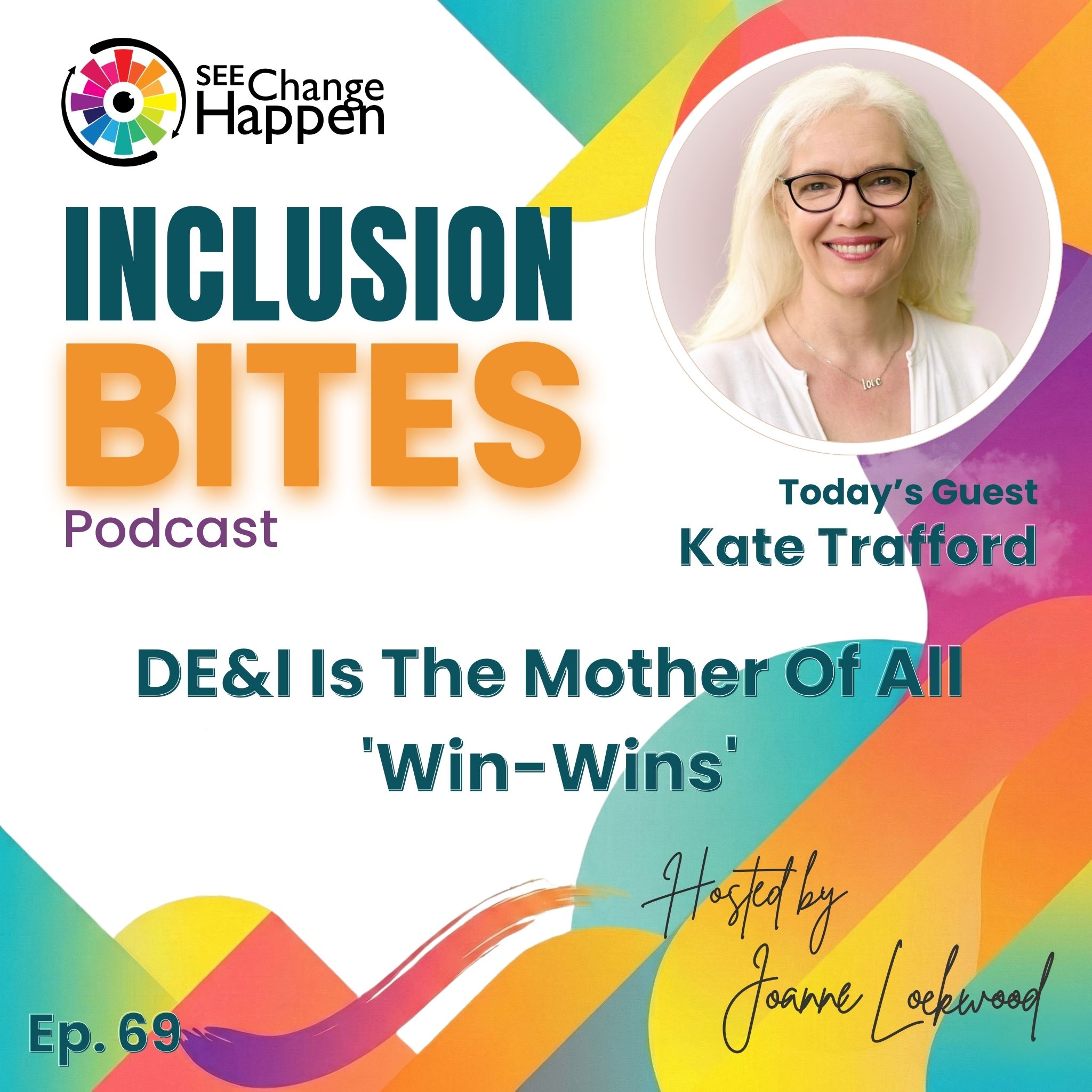
In this episode, Joanne Lockwood and Kate Trafford explore the importance of diversity of thought, the power of inclusive leadership, and the transformative potential of going beyond compromise to optimize outcomes.
In this episode of Inclusion Bites, Joanne Lockwood speaks with Kate Trafford about workplace culture systems.
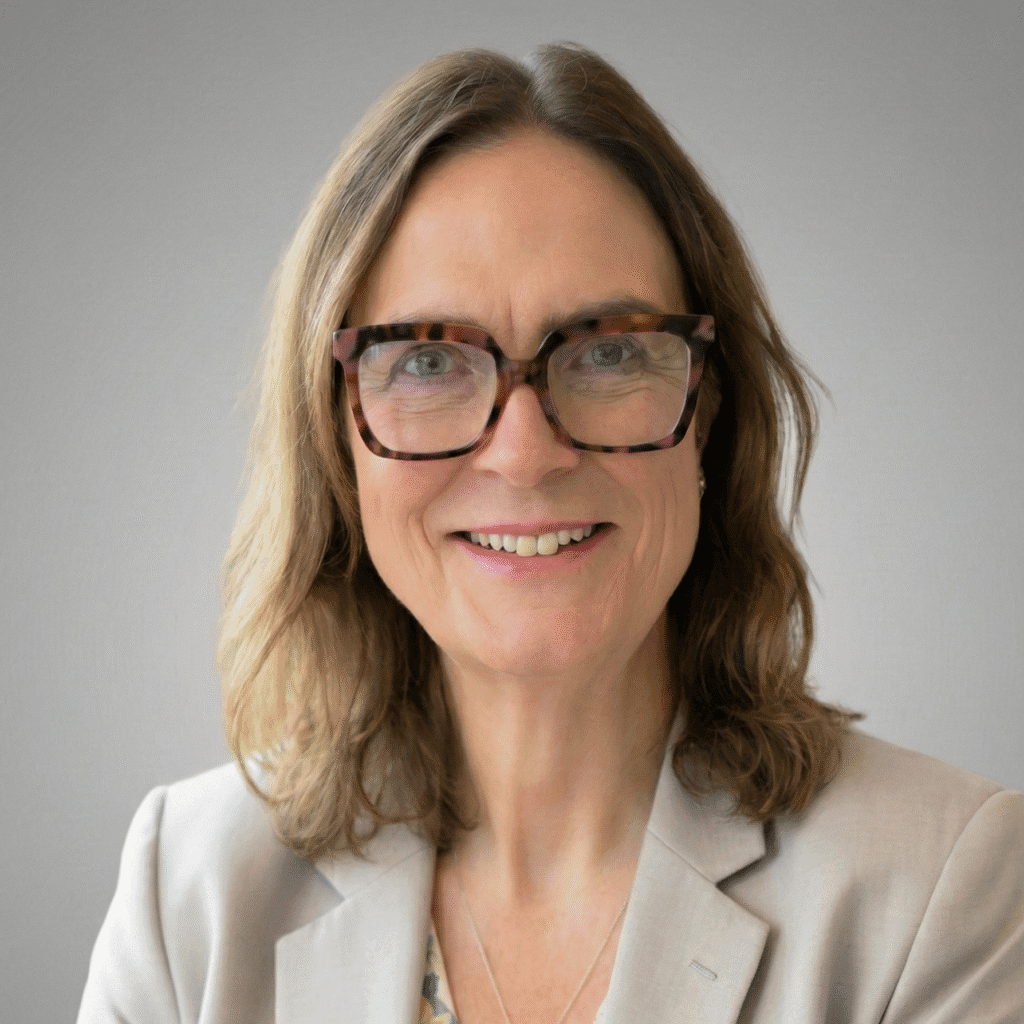
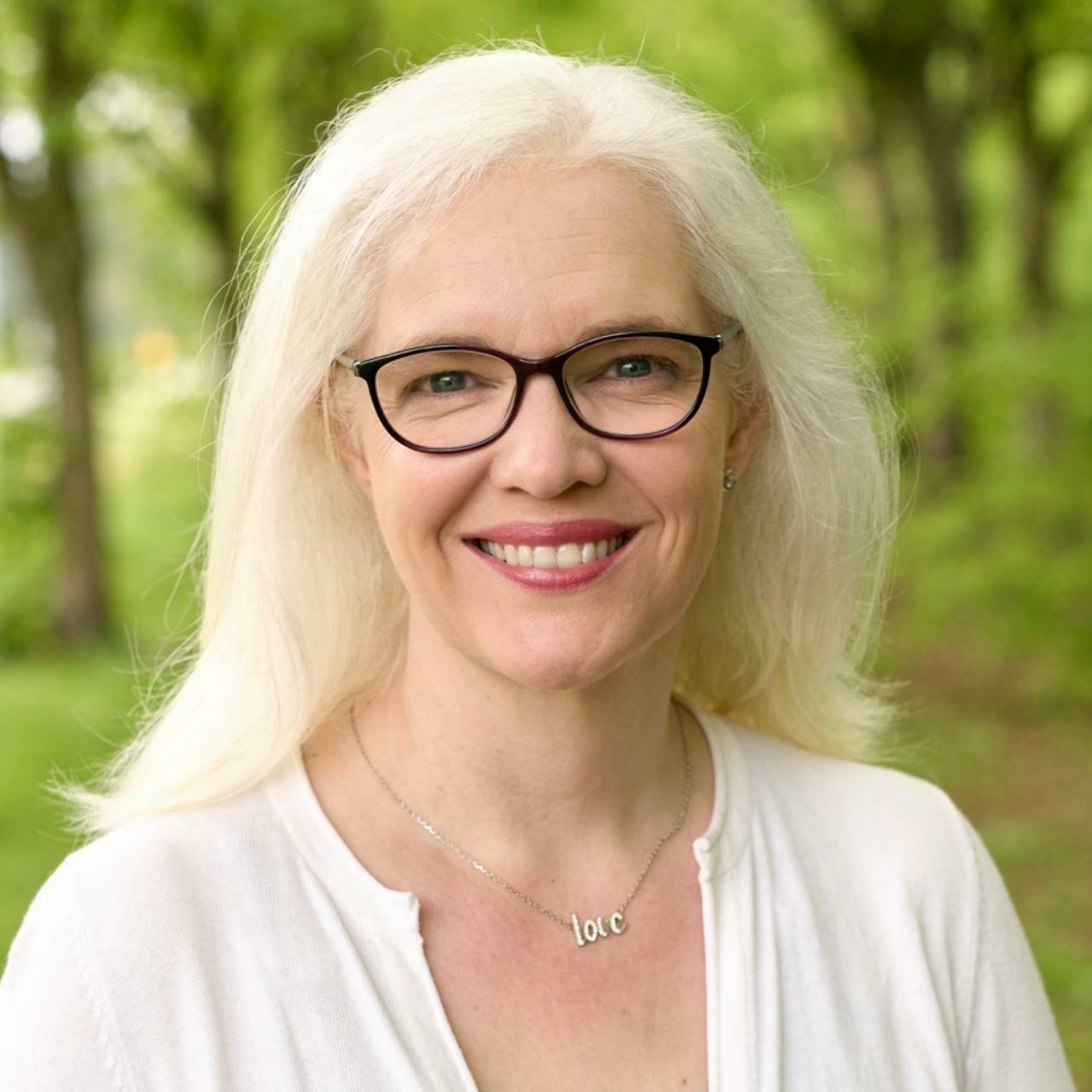
Hello everyone my name is Joanne Lockwood and I'm your host the inclusion bites podcast in this series I have interviewed a number of amazing people and simply had a conversation about the subject of inclusion belonging and generally making the world a better place for everyone to thrive. Like to join me in the future then please do drop me align to Jo Dot Lockwood Sd change happen dot code uk that's swlychangehadotcodedotuk. You can catch up with all of the previous shows on Itunes Spotify and the usual places so plug in the headphones. Grab aff and let's get going today is episode 69 with the title d e and I is the mother of all winwins and I have the absolute honor and privilege to welcome Kate Trafford Kate describes herself as a master coach author and Ted speaker on the subject of authentic success. She supports individuals on their journey of self-discovery so they can become all that they have the potential to be when I asked Kate to describe her superpower. She said it's. Seeing the brilliance in others and reflecting it back and helping people to recognize their own uniqueness and to see its value in the world. Hello Kate welcome to the show.
Kate Traffordguest
Hello Joanne thank you so much for inviting me along.
Joanne Lockwoodhost
Absolute pleasure I mean it's I would like to say it's been a long time since we've spoken but we were spent a weekend or long a very long weekend in Dublin recently for a speaker's conference and we and that was mean both and we both come back with a bit of a.
Kate Traffordguest
We did the global speaker summit. Yeah, ah.
Joanne Lockwoodhost
Ah, not Covid type Covid. So so.
Kate Traffordguest
Right? Yeah, it's been an interesting few weeks but you've got a little button. You've just told me you've got a little cuff button which is very clever I might need to get myself one of those for the future.
Joanne Lockwoodhost
They're very useful. They are very useful. The Kate tell me what do you mean by DE and I is the mother of all win-wins.
Kate Traffordguest
Well I think that so um, D and I as a subject is often positioned in business as this extra thing we have to think about that quite honestly, we'd rather not have to think about right up there with health and safety everything else. We know it's a good Thing. We know it Matters. We know it's important, but it's often framed as being a cost on our time our energy our finances and so on and I just do not see it that way at all I think that the most successful teams are. Always diverse teams. They're always teams that draw in as many perspectives as possible and help to create an environment where people can be themselves and can bring the best of themselves to the business. So when you create that kind of safe space where people can show up as who they really are even if that's not the norm if that's not the mainstream or the majority then you create the conditions under which that optimal performance can actually happen. So It's a win for the individuals and it's a win for the team and the business themselves. It is genuinely the mother of all win-wins.
Joanne Lockwoodhost
I could yeah I'm not I'm not gonna disagree with that because I I talk about this as you know that that's my chosen subject if if I sat back to our mastermind I will be talking about exactly this So I'm I'm not at all gonna argue with what your perspective is on that I think it's fantastic and.
Kate Traffordguest
Are.
Joanne Lockwoodhost
To give this ah today some context, um vihi sunak became our new prime minister this morning he met King Charles and we now have a new leader our first leader of indian asian descent and.
Kate Traffordguest
And Ted.Um, yes.
Joanne Lockwoodhost
I see many people on Linkedin and other platforms talking about how it's amazing that we have someone from um, underrepted marginalized non-white british background now as our leader that is diversity isn't it.
Kate Traffordguest
I absolutely is and I think the the additional value that comes from a perspective like that is that often individuals like Hrishi Suna and you know many other sort of criteria that we could speak to here jo um, but um, often have had to. Develop the ability to see the world through multiple lenses right? So um, so he's british asian heritage there's 1 interface. There's one boundary. There's one and sort of if you like ah sort of and. Parallel cultures if you like that. He's no doubt been navigating in his entire lives and I think when you have that ah need initially and subsequently ability to look at the world through multiple lenses. It makes you a more well-rounded thinker and I for 1 really vote for well-rounded thinking in our leaders whether that's in politics or in business.
Joanne Lockwoodhost
Yeah, hear here I completely but we we can't fall into the trap of saying if someone looks different. They think different. Um, lets trust our previous prime minister of 44 days filled her leadership team full of.
Kate Traffordguest
No.
Joanne Lockwoodhost
Optically different people and it didn't necessarily bring a cohesive um, balanced team did it? yeah.
Kate Traffordguest
No, and I think that is a trout that businesses can fall into as well. I think we we recruit in our own likeness as a well-established principle. But what do we mean by Likeness and and quite often. It's ideology that drives that. Ah, maybe even character traits rather than anything to do with ah protected characteristics for example, like Race or gender. So I think what we end up with quite often at the top of organizations is a lack of diversity of thinking a diversity of perspectives. And um, and that is very very dangerous because almost by definition if ah if everybody's sitting around the leadership table is is looking in the same or a similar direction. It's behind you. You know they're right behind you. There's all of this stuff that nobody is paying attention to and the people. Wider in the organization can see it but the people at the top can't and so um and that drives of course the culture of the organization. So quite often. For example when I'm I'm coaching. I tend to coach the emerging leaders of an organization. The people who are making that transition from their senior management role into their first big leadership role and 1 of the the areas of nervousness is quite often. You know do I do I fit the molds. Do i.Belong around this table and in order to make that assessment. What people are looking at is like am I like these people right does am I going to fit in and one of the things that I I always love to explore with them is why it is so important to not be like. The people around the table to find your own um your own authentic leadership style in order to contribute to fill the gaps to to fill any blind spots around the table and of course it does take courage. It takes confidence. To be able to do that. But when you see yourself as the most introverted in a room full of extroverts or you know the lone female in ah ah, a room full of male leaders or whatever that difference might be is just to acknowledge that that there are. There's already enough by Definition. There's already enough people in the majority. So It doesn't really add any more value to join them there and just to be willing to see it as even more important that you're around the table not in spite of your difference but because of it.
Joanne Lockwoodhost
Yeah, and that actually reminds me of a saying isn't it. It's ah you hire me because I'm different but then you fire me because I don't fit in. It's kind of that is's this desire for difference but because we focus so much on culture fit. You know you need to fit.
Kate Traffordguest
That's right.
Joanne Lockwoodhost
The culture the either the lad culture the drinky culture the boozy culture. The banter culture. Um, and sometimes when you are coming from an underrepresented ah background or yeah and I hate to say women are underrepresented because we're half of the ah half of the species. Um, but often we are underrepresented in so many rooms and navigating that to fit in and be accepted is a real challenge because we have to blend Somehow don't we sometimes well.
Kate Traffordguest
Um, yeah.
Kate Traffordguest
Well, we absolutely do and and then there will also be times where that's not possible. So you, you're reminding me you, you're sending me way back here. Jo um, my my actual. Ah, starting my career was my original professional background was actually engineering believe it or not so my first degree was chemical engineering I qualified as the charters engineer I was working in the the nuclear industry at the time actually and um and I was the lone female in. Most of the rooms that I was in certainly when I went on site. Um I was there werent there when weren't any even any women's toilets. There wasn't a woman woman's basic uniform for me to wear. Um, that's I'm going back a bit now. It's different now. But. But that was true then and at first I found that really oh gosh it was um, ah, can't even find the right word for for the intensity of the gaze.Um, that that it was a very strange experience as as a young woman in my first professional role. But then I realized that actually um, what that did is it. It meant that I I had people's attention by definition right? Um, so. Thought about that and I thought ok so I already have people's attention. What do I want to do with that now I think the certain number of things that come with that like I held myself to very very high standards for example because of that scrutiny. Um and i. You know, real sort of striving for excellence which has kind of stayed with me I think even from from that early career. Um, and that's about meeting the norms that matter to you right? So the fitting in element that you're alluding to you know meet the norms that matter. Um. But then where where you think you have a different perspective and you can bring something different. It's it's being willing to graciously challenge those norms so you mentioned you know the boost culture. For example I remember having a really interesting rich conversation. Ah, few years ago with 1 of my clients who was um, a ah muslim client who was not part of the drinks after work culture and and the way that.Almost everything that the organization wanted to celebrate or do any kind of team bonding or anything like that. It always revolved around alcohol and they felt very uncomfortable. Um even sort of flagging that that wasn't appropriate for them. But. They actually became the the sort of the source of different opportunities and so on which then drove ah more of a wellness perspective in the organization and so on so it does take courage to um. To help to create an environment where you can go Beyond fitting in and feel like you truly belong and so we all need to Flex. We all need to flex personality style etc and when we first arrive in a situation. But if you want to stay then it's about. Doing what you need to do and can contribute not just for yourself. But for the people like you and who will follow on from you to create that more inclusive culture where everybody has as you said in the introduction Joanne you know everybody has the chance. To flourish and thrive.
Joanne Lockwoodhost
Yeah I like that because I think as human beings we have kind of like a a foundational responsibility of ah compliance to the rule set and whatever when whatever team we're in either societal or the laws. The team dynamics.
Kate Traffordguest
Yes.
Joanne Lockwoodhost
If We are a I referr as a a gifted jerk the jerk overrides our gift doesn't it was we become a purse that is hard to be around disruptive for the Team. We no longer a team player about how fantastic I am my job.. It's always going to detract for me. So It's It's trying to find that way of of ah. Fitting into that foundational layer but putting our icing on the top of it that and the sparkles and the sprinkly bits. That's our personality we're Doing. We're doing what's expected with our own personality but recognizing the dynamics of the environment we're in as well.
Kate Traffordguest
Absolutely and you know this is where um I often at the way I think think about this is I Really like my life to be as drama free as possible, right? And now if I and I'm I'm sure some of your listeners will feel this anyway. Um, who needs the drama right. Um, but in order to have ah that kind of peace of mind that that Joyful journey then it's like okay so I'm not going to contribute to the drama wherever possible. So if there is something that I need to challenge I Want to do that in a way that is respectful that is. That is inclusive of the mindset and perspective of whoever or the collective that I'm talking to and so on because um, it's much more likely then that you'll actually be heard.Right? So if it's rather that you're doing this and that doesn't work for me me versus you kind of dynamic people shut down. You know the the shields come up then and you trigger a lot of defensiveness in my experience whereas. If in actual fact, you say we've we've got something going on here that isn't working for all of us. So if it's the we the Us the hour instead of the me versus you or the us versus them then it stays relatively drama free and actually you can connect and collaborate in a way that allows exciting. New ideas and solutions to Emerge. You know you used a very interesting word. There. Ah disruptive. Okay, and the word disruptive often has really quite negative. Connotations doesn't it but actually it is also disruption is of course. The the basis of all innovation right? We have to challenge and disrupt it we want to grow to learn if we're at our organization to innovate and to add even more value for our customers and stakeholders and and that involves In fact, requires. Some degree of disruption I think it's about having the social skills. The empathy, um, the ability to do that perspective taking we talked about in in relation to Hrishi sunac at the start of the call.All of that allows us to test to challenge and disrupt in a way that is healthy and ah uplifting and inclusive rather than there being a big drama fast that we all then have to recover from and get past.
Joanne Lockwoodhost
Completely complete a drama fest I like that it's a drama fest. It's ah I just thinking about a massiveive field. Lots of lots of ah thespians in a field intense acting out things.
Kate Traffordguest
Yeah.Um, you see that's the kind of Drama fest I would totally vote for but you know just the day to day drama and which in organizations you know, quite often. A lot of that is because people are bored or frustrated.
Joanne Lockwoodhost
And.
Kate Traffordguest
They feel like they haven't got the level of control or autonomy over their work or their lives. They're not respected. They're not feeling respected and so on and so not necessarily knowingly and consciously but certainly unconsciously then it's quite possible that we can Create. Drama and disruption just to just kind of feel alive for a bit of variety and um, and of course there's always a backlash on that and but quite often as I say it's not done knowingly or consciously. It's it's done to to just have some energy in the system.
Joanne Lockwoodhost
And.
Kate Traffordguest
And that's why in organizations and for leaders. It's so important that we give people healthy outlets to express themselves to have that autonomy over their work to contribute suggestions to challenge the status quo and and so on because then it gets challenged. Ah, channeled in a way that is a win-win that does benefit the organization as well as the individual.
Joanne Lockwoodhost
I Like that it changed in status Quo and I think often that that's the power of perspective isn't it because we all we all perceive things subtly differently. Ah, the example I always use is we go into a polling booth with a little stubby pencil and a little sheet of paper across with boxes on it and we all have to tick a box when we draw the curtain behind us and ah we don't all tick the same box. The reason we take the same box is we all have a different perspective on who the best candidate is and.
Kate Traffordguest
E.That's right.
Joanne Lockwoodhost
The hope The reasons we believe that are often diverse and different based on our lived experience. So it's really really important that we we we recognize that not everybody is going to agree with us or we're not going to agree with everybody else is how we challenge that and I ah picked up on the fact that you in the nuclear industry you an engineer chemist. Um.And I've I've always thought yeah I always talk about the fact that science as a discipline as a profession is about trying to disprove or challenge and test take a theory pull it apart take a theory pull it apart, try and break it try and try and exceed it try and better it try and fight another perspective I think.
Kate Traffordguest
Gap.
Joanne Lockwoodhost
We do that in some of these big disciplines engineering and and we're testing things out all the time for a better way. A more efficient way a cheaper way more fuel efficientcient probably in today's language but ah we don't often do that when we're having conversations with each other. Do we? we we want to be right? A confirmation bias are.
Kate Traffordguest
E.
Joanne Lockwoodhost
Are sunk cost buyers. All these things kick in we want to be right.
Kate Traffordguest
Absolutely 100% and I think what's really interesting about that is that when when in science Ted we tend to think about science or many of us tend to think about science as being a body of knowledge and it's got these subcategories you physics and. Chemistry and so on and and and it's the body of knowledge. But it's actually it's a scientific approach. It's a methodology so it's a way of thinking and it has challenge. It has doubt skepticism a whole host of interesting things actually baked in that if you apply it to. Um, more broadly to some of the challenges that we face in our in our work and in our world um can be incredibly useful. So um, if if somebody says to you and oh gosh I probably shouldn't even raise this subject but a couple of years ago when something kicked off in a big way. Ah, globally, um, you know this of course turned into a very heated debate um with all kinds of different perspectives and if you believed 1 thing you were a sheep and if you believed something else. You were in a cult and and. You know that's the other thing that happens here. Joanna think is that we we label each other um in ways that are inherently hurtful um and and then we expect people to agree with us and and quite frankly, good luck with that one. Um.
Kate Traffordguest
I'm a huge fan of something you're probably very familiar with the nonviolent communication and this this idea that we can have really difficult conversations. We can disagree agreeably because. You don't have to agree with what somebody's saying but you do have to understand it and in my view if you want to progress in any kind of ah difficult conversation if you want to resolve conflict or whatever it it is that one of the absolute foundational sort of principles of that. Is you have to afford people their Dignity. You have to let them be right? and until you've really really understood and then actually it's far more powerful quite often to come in with questions than it is to come in with your own answers.
Joanne Lockwoodhost
And.
Kate Traffordguest
You know because quite often if some if you have a perspective that is different if you can see something that you believe may well be ah, a bit of a blind spot for another person. Um, they want to thank you for pointing that blind spot out. But if you ask questions where they come to that conclusion themselves and they have a bit of an a-ha um moment then they will call you illuminating or insightful or whatever. The word may be and so there is huge power in having. Difficult conversations difficult conversations don't have to be difficult. They can be very rich and rewarding and nourishing.
Joanne Lockwoodhost
Yeah, and that's that's all about as you say questioning a perspective not an outcome or an opinion because once you get to the outcome or the opinion you're arguing often polarized views if you don't agree and people are very.
Kate Traffordguest
Yes, yes.
Joanne Lockwoodhost
People tend to be entrenched because they've got they've got investment into their view either. They've had that view for a long time. Their their tribe. The people that hang out with agree with them and the kind of it's a mantra in their life So to to gets on to change. Their view is really really tricky. But if I kind of said your perspective if I can stand. The fact that you're black The fact that you're brown means that you've been through this challenge in your life. You've had this upbringing this cultural awareness that you've you've developed that is different to my white British view of the world. Then I I may and I may not understand the output or the or the decision but I can understand.
Kate Traffordguest
And.
Joanne Lockwoodhost
Your view is different to mine because and by having this conversation. You say it's interesting. Tell me why you think that or what in your life has if it given you that perspective or why Why did you think that that would work better than this way and then allowing people to explore.
Kate Traffordguest
Exactly And and when you do that a number of really interesting things happen and firstly you have then more information and you may well find at some point in that conversation that the thing that you wanted to shall we say. Educate the other person around from your own perspective that in actual fact, you were the one with the blind spot and by being willing to be open minded open hearted and and receptive yourself to make sure that you're as well informed as possible before you offer anything in return then you've got. As I Always like to say to my most of my clients are still technical professionals and their leaders. That's my kind of main main circles that I move in and so I'll use words like data I'll say if you more questions you ask that ask the more data you have from which to progress the conversation. You know. And that's certainly true, but the other thing that happens when you're willing to ask questions to stay open-minded and open-hearted is that as human beings we are We are reciprocal by nature and most people are far more. Ready and willing and able to listen and listen really well when they themselves feel heard so you create the conditions within where that recip reciprocity can happen you create the conditions where once somebody is.Has shared as fully as possible and that they are then ready to listen to you and that's when a very authentic genuine exchange can happen which can be incredibly exciting and rich and and wonderful for for everybody. Who's involved I mean you and I but Joan we just saw an incredible example of that at the conference we were in at ah, just a few weeks ago with Jo Berry who was one of the keynote speakers there whose father died who was an mp who her father died in. The brighton bombing years ago and she was sharing from the stage her experience her own extraordinary journey for um, coming into what is now the most incredible relationship with. The main man who was responsible for orchestrating what happened and they now travel the world together brokering peace now that might be an extreme example. But I think sometimes the extreme examples can. Show us what is possible on a ah smaller scale for all of us if we are willing to lean in with curiosity and respect and afford people their dignity and ask questions and create.Sense of safety that is necessary for authentic shown to happen.
Joanne Lockwoodhost
Yeah, um I often say that you can't be right and happy all the time Sometimes if you're trying to create a positive resolution. You don't need to be right and the other person doesn't need to be right? Sometimes the middle ground.
Kate Traffordguest
A.
Joanne Lockwoodhost
And often compromise is where nobody wins but I'd like to think good compromise is where you both feel that your respect your your dignity hass been maintained and the the bigger. The bigger picture is worth it for the compromise and I think we will talk about that certainly with with Jo Berry I think what she was saying was basically. She could have carried this anger. She could have carried this venom inside her all her life. She could ah she could have carried on promoting it. But what she by doing that she would have actually been demonizing the people who had different views and perspectives in her in the same way they were demonizing her so that cycle of hate.
Kate Traffordguest
M.
Joanne Lockwoodhost
Ah, cycle of immunization has to be broken by having conversations and living on the edge either right left top or bottom you somehow have to shuffle towards that middle ground where there are compromises and some of them are tough people on both sides died people. Both. Both sides lost loved ones you know we look at look at apartheid we look at South Africa we look at Nasa Mandela we look at all those kind of things North Ireland cover we'd see all these big conflicts. You think well, how can we get to a point where we going to sit down have these conversations and we don't need to be right? We just need to move on from this in a way that we can all live with it.
Kate Traffordguest
Um, a.
Joanne Lockwoodhost
And sometimes we need to put a stakee in around and say well what happened before this date has happened what happens after this date we can decide what that is I think that was what the power that Jo Joe's message and I found that really incredible. So.
Kate Traffordguest
Um, definitely and if I could just add something to that Joanne I think that as well you use the word compromise there and I agree with you that that is sometimes absolutely necessary. But I think that what we saw in. That situation and and many of the others that you mentioned like the peace and reconciliation process in South Africa for example is what we see there is people going beyond compromise into what I would call optimize which which is is a higher level of resolution. It's a deeper. Level of resolution. So I think that um when you have to set aside at least temporarily your preconceived ideas of truth what you actually have the opportunity to discover is the deeper level of truth. Where you can agree. So if you take something like the situation in ah in Ireland for example, the good Friday agreement was brokered by Senator Bishop Mitchell and others on on the understanding that there were certain things that everybody wants it. Everybody wanted to to stop losing sons and brothers and and and so you know there were so many things that everybody wanted and it was on the basis of reaching the the things that were true for everybody at that deeply foundational level that that those individuals were able to.
Kate Traffordguest
Build back up to something and reach an agreement after so literally centuries of bloodshed and and Discord So I think ah for the rest of us mere mortals.You know the kinds of challenges that we face on a day-to-day basis some of which are very real and very Painful. Don't get me wrong? Um, but I think that if it's possible at that level then it's it's possible in the world. It's possible for us too and so I think it's. This idea of going Beyond Compromise Yeah Compromise Compromise sometimes can be ah everybody walks away unhappy everybody walks away with half of what they wanted and unhappy and that's not the kind of compromise that I'm a fan of. But if what you're compromising around is your fixed idea of what needs to happen for me to be in agreement with you I need X you need y I could never accept that you end up with that dialogue of the deaf where there's all kinds of talking and not an awful lot of listening happening then um.
Joanne Lockwoodhost
Um.
Kate Traffordguest
that's that's toxic it's it's not ever going to get to a point where the best you can hope for in that situation is everybody gets exhausted and agrees to to call it a day whereas if you're willing to let go of the form that the solution takes. If you say there are certain criteria that I have that must be honored that must be met. These are my must have criteria and if what you want and what you're proposing isn't acceptable to me. And what I'm proposing is unacceptable to you then we need to find that you know the the third way as it's called in negotiation we have to find a new way that meets all our criteria and ah quite often in business people say oh we haven't got time for that right. But it's actually truer to say you haven't got time not to because it is a huge drain on time and energy and money and other resources when conflict bubbles unresolved.
Joanne Lockwoodhost
It's what it's one of the traits of transformational leadership isn't it where what we're doing is we're painting a picture and creating a vision of of of great of fantastic. Ah or where we want to take things and Gabriel would have to to meet that picture rather than focusing on.Necessarily where we are today is where we want to be tomorrow and then trying to create that shared vision about what we all want and I think as you're saying that it's not compromise it's it's it's focusing wholeheartedly on the things that bind us together not things that tear us apart and I think the example you used was. We want to stop losing our loved ones we want stability we want economic growth. We want. We want to feel that our lives can move on. We want to unpause our country again and and move forward. So I guess those things are really really powerful and then you avoid having discussions about what you.
Kate Traffordguest
Um, yeah.That 6 Yeah.
Joanne Lockwoodhost
Want and of the negative and the the conflict I've statementd and I I going to I'm going to use an example in my own life my marriage and when we've been through difficult times we focused on the horizon. What do we want when we're 80 what do we want when we're 70 and being happy being together enjoying each other's company is what we can agree. We do want then we quite easily say okay, we don't need to keep discussing or on this particular point because it doesn't get us to our goal. And our goal is being together forever and being happy so we can then pause that conversation saying we're not giving up. We're not brushing under the carpet. We're just saying that conversation doesn't get us to where we want to be and we found that works for us.
Kate Traffordguest
Absolutely and I think there's something very powerful in what you shared there about that is extremely useful in business as well as in our personal lives and and that is that sometimes if you can create that vision for What success really will look like and sound like and feel like when we get there. Um, and that's why I'm not a huge fan of vision statements in business because they tend to gather dust in a drawer somewhere um or or be on the wall but completely ignored but I am a huge fan of shared vision. What I would call dream destination. You know if we were to allow ourselves to really want what we really want what would that look like and sound like and feel like and quite often when individuals and teams tap into that authentic vision. It's so extraordinary. It's so beautiful that it's actually beyond words but everybody knows. What it is now if you can tune yourself to that if you can tap into that then the strategy comes from reverse engineering that if that's where we want to be in 5 years time where would where might we be in 3 years time where might we be two years a year from now and so on. And then we can plan in more detail for the short term and the other aspect of that as well is that what that does is it embraces the uncertainties of life. So right now. Ah we are facing a.
Kate Traffordguest
Ah, unprecedented level of change and turmoil. Economically, you know the aftermath of the the covid situation which is clearly not yet over as we both know. Ah you know all of this uncertainty. You know what's the jargon being in the vcca world the volatile uncertainty you know, complex. Ambiguous, um, and that is only accelerating and amplifying um all of the time. So some of our old and traditional approaches to to planning and um ah moving forward individually Anna's businesses just won't cuts it. Um. But thinking about it in terms of how can we think at least about the sort of the the magical milestones that we want to rendezvous with. We might not know how we're going to get there. We might not know what we're going to encounter along the way. We might not know what the roadblocks and obstacles are going to be but we do know that we will encounter obstacles and we do know that we will encounter robblox and we do know that that will we will have to reroute every now and again and so on so we can take certainty from our process. Even when we can't take certainty from our actual plans. You know the sort of the action plans with lots of eyes dotted and ts crossed and I think this is one of the profound opportunities of leadership really is to when people around you are uncertain and afraid.And actually you as the leader don't have the answers that they would love you to have for them is actually what you can offer them is certainty in your process. This is how this is what we're moving towards. This is how we're going to approach it and you may even be here are a number of scenarios that we think. Are likely we can't know at this stage which scenario is going to play out but we know it's most likely going to be 1 of the following 2 or 3 and so on and you can give a great deal of um of certainty and sense of safety and help people to tap into their courage. By by being really as clear as possible about what you do and what you don't know and you'll process them moving forward.
Joanne Lockwoodhost
Yeah, ah sorry I justniggering there because what's going through my head is these sound bites and we're living in a certain times butre Also living in unprecedented times and I'm I'm beginning to wonder whether. The world has ever had certain times you know as a human species we're in a constant cycle of evolution change external factors. So Are we living it more on certain times we've ever done at are we are we just using an unprecedented amount of ah of the word unprecedented because.
Kate Traffordguest
Well yeah.
Kate Traffordguest
Well certainly it. It has become an overused word I Even as I approached saying that word a few moments ago to I felt it coming of him a mouth and going. Oh please, don't use that word. Oh I can't think of a better one in time here we go. Um.
Joanne Lockwoodhost
Yeah.
Kate Traffordguest
But what I would say to you is yes of course you know as the old saying goes change is the only constant and but where what I think is different about the experience that we're having collectively now and this was happening pre-covid and is the impact of technology and ah working practices and so on mean that the. The pace of change has definitely changed and you know even I was having a conversation and as part of a briefing for ah a talent development program I'm involved with now and we're just in the setup phase and ah the. H r leader who I was speaking with made what was just a ah statement of the profoundly obvious but you know one of those like things the penny just hadn't dropped for me and she said um. Some of the the roles that this group you're going to be working with the roles that they will be fulfilling for us 5 years from now might not exist right now right? Probably most of the roles. Ah, certainly that they'll be delivering for us as a business ten years from now don't exist right now. How do you plan for that. So but what you can do is as we were just saying is you can plan for the process. You can you can embrace the uncertainty as actually opportunity so instead of what most of us were taught to do and particularly people you know my age school was decades ago for me.Um, ah, progress was all about um, controlling the variables. It was all about um, making you know, planning ahead. Um it was. It was relatively rigid and predict and control was was pretty much what I was trained for and and many people who I think who went through school at the same time as me. Um, and. Predict and control just won't cut it these days. How can you predict and control. What can't be predicted or controlled. But what you can do is look at the fundamental life skills and business skills that set somebody up for success in that ever-changing environment and you know. Um, foresight in trusting your intuition um being able to flex being ah opportunistic in the best sense of the word right? Yeah capitalizing on opportunity when you spot it having a healthy risk appetite. Those kinds of things and embracing all of that uncertainty because whilst we have perhaps been trained to think of uncertainty as being a threat. It's also of the basis of all opportunity um, anything that is not yet decided is of course filled with Possibility. And I don't think many of us have been encouraged to embrace the upside of uncertainty and to to scan the horizon for opportunity that's coming because everything's in a state of Flux not in spite of the fact that everything.Is in a state of flux.
Joanne Lockwoodhost
And what you're saying there puts responsibility onto our leaders to ensure the culture of organizations is such that those attributes can thr flourish throw ah flourish and thrive we need psychological safety. We need the ability. Take risks. We need the ability to learn from our mistakes we need thebilities to be encouraged that sort of thing um too often is say we we're in a commander control type of Environment. We're expected to have certainty but we you said we want people to Flex. We want people to.Be resilient. We want people. We want to understand people's mental health. What? what triggers they will have what what support we can put into workplaces to encourage people to be yeah artisans we we don't want people to be autonomans anymore. We want them to be artisans to be self-creative. Um. Like the matthewiah black bos thinking we want people to be empowered at the point of inception or delivery or inspiration to better come up with ideas without having to refer back up the chain all the time. So that's the agile modern world you say completely I completely agree. By the year twenty thirty it was that 80% of the roles that will exist haven't yet been created or even ideated yeah uber deliver uber eats um, ah Facebook ah, all these technologies Amazon they've they've been born and created really in the last ten years and
Kate Traffordguest
There you go.
Joanne Lockwoodhost
People's businesses. People's lives are now ruled and governed by them and we'd never predicted that we ah to be ah, a social media specialist wasn't a role five six years ago um
Kate Traffordguest
Exactly and you you mentioned it as you quite rightly say it does put a great deal of responsibility on on our leaders and you just very eloquently said, what? what we now need from our leaders. Um, and I think it's It's really important to acknowledge that for many very well-established leaders. This is deeply uncomfortable. It's deeply unsettling because what they were originally recognized and rewarded for and what got them where they are right now is the opposite of what ever many aspects of what you've just. And so it is also about that having you know what Carol Dweck would call a growth mindset throughout your career. Not this idea that you go through a training program and then some kind of professional fast track and and then you manage then you lead etc and it's all. Um, it's all predicated on the basis that you that there is a right way of doing things and and all of that kind of thing and instead see it as um as I like to say I want to have my l plates my learner plates firmly fixed front and back for the rest of my life. And I really sincerely mean that um, but that's ah, that's something that I cultivated. It's something that I've learned to do. It's something that I've embraced and experienced for myself. The upside of being willing to lean into uncertainty and to lean in to the discomfort and the not-knowing.But for a lot of our very established leaders. That's not what they've been recognized and rewarded for and you know I'm happy that there are there are safe spaces for those individuals as well quite often within their own organization. It can be as the saying goes lonely at the top. And it can. That's why executive coaching is is um, you know such a well-established resource because we all need that safe space within which to sanity check our thinking and to to test our ideas and so on and then of course there are um Chief executive groups and and so On. Ah, vestage and others that um, that helped to create that that ah supportive challenge. Um, where very senior leaders can can grow and learn and I think it's that learning culture that growth mindset being ah not only held individually. But. Encouraged and embedded throughout an organization. That's really going to build the kind of genuine resilience and that we need resilience is really resilience is another one of those like overused words over the last couple of years a course for all kinds of reasons but is quite often used in a way that makes me. Personally quite uncomfortable because it seems to suggest that we all need to toughen up and brace ourselves against the world and that being resilient is somehow getting better at doing that better braced but tougher or whatever.
Joanne Lockwoodhost
App.
Kate Traffordguest
And when we do that when we toughen up in the name of resiliency we sacrifice unwittingly often sacrifice some of the best of ourselves because when you don't let anything in you Also don't let a lot of the good stuff Out. You lose your nuance. You lose your sensitivity you lose perspective. In many many ways and I think that there is a there is a ah different approach to resilience which is one I would much rather advocate for which is really recognizing and rooting yourself very firmly in your authentic strength. And what you are uniquely positioned to bring to the business to your team to your loved ones and so on because that gives you ah um, ah the kind of resilience tenacity. Um, you know stick with it nurse That. We'll see you through all kinds of situations because when you are deeply connected to who you really are and you have made a commitment to bring that to the world to the best of your ability. You do become an unstoppable force of nature and whilst there is.
Joanne Lockwoodhost
And.
Kate Traffordguest
Ah,, there's a limit to that of course and we do need to still be very mindful of our our well-being people who like you and I who have a very strong sense of purpose in our work are not immune to burnout. Okay, we have to perhaps remember that sometimes and but certainly feeling like you are. Part of something that's bigger than you that you're contributing to something that matters that it matters that it's you. That's there and not a another similarly qualified person. This is the stuff of life. This is what allows us to feel like the right person in the right place at the right time. And that's the kind of resilience that I personally love to advocate for.
Joanne Lockwoodhost
Yeah I I like the phrase I come if is the 80 s or 90 s we called it bounce back ability and that for me, it doesn't imply that you're you're rigid like a stake in the ground and you unbendable or like a concrete structure is recognizing that sometimes like a tree like a plant.
Kate Traffordguest
Yes.There.
Joanne Lockwoodhost
You need to adapt to the environment bend in the wind by bending by flexing by being reactive to the environment. You don't snap. You don't break your you design you building in that that bounce back ability or or the other way I like to look at is a to of those toys weeels bubblebble but they don't fall down see.
Kate Traffordguest
That's right.Exactly.
Joanne Lockwoodhost
Ah, but a boxer will recoil and absorb the punch not stand there and soak the punch up without recoiling. So our resilience has to be based on um a dynamic foundation where we can adapt to the surroundings not trying to be Rigid resilience is not that rigidity. It's about being adapted.
Kate Traffordguest
No, at.
Joanne Lockwoodhost
And but having that sense of I can get back up again I can keep doing this and I think that's meant the mentor res resistance and the physical resilience. We've got to blend both eyes and emotional.
Kate Traffordguest
Ah, exactly and I'm absolutely and I I'm so happy that we're actually speaking about this John because I don't think this is something that is talked about often enough and. And the the real discourse even on Linkedin and other places where you and I enjoy hanging out. Um is is often in that sort of like you know when the going gets tough the tough get going and all of that kind of mindset and whilst there's a place for that I think it's overplayed. And and I also think it's ah sometimes used by some organizations as an excuse to not put the appropriate guardrails in in place to protect their staff. You know it's it's like expecting people to wear their resilience as some kind of badge of honor. Which then means it's not psychologically safe for them to acknowledge when they are overwhelmed or struggling. They can't act knowledge when they've made made a mistake or had some kind of near miss and it stores up all kinds of problems and. When I work with very senior leaders. 1 of the things that I hear over and over again, you know like over 20 years I've been doing what I'm doing these days Joan and what I hear over and over again is 1 of the most challenging things the more seen you go is that you don't hear the truth.
Kate Traffordguest
Anywhere near often enough that that what's really going on in the organization is sanitized sanitized at each level of the organization and therefore the message is so distorted or diluted by the time it reaches the most senior leaders that actually they then don't have the data they need. To make intelligent decisions on behalf of the organization and so um, it's what we were saying earlier about the importance of psychological safety creating a space where people can offer their ideas can acknowledge when something isn't Working. Can speak to their struggles and ask for help in a way that may actually then play out as helpful for others that is the kind of organizational resiliency. That means that we can get through the toughest of times.
Joanne Lockwoodhost
And I think as well as what you're saying there. But yeah, there's often this filtering out of of what's going on upwards and that you layout outside filter I think we also have to recognize that that can happen in reverse where leaders try and summarize or optimize or.
Kate Traffordguest
Are.
Joanne Lockwoodhost
We can't tell our people this because they'll get worried or concerned so there's kind of this um chinese whispers in both directions on what chinese woves and we we have to kind of get leaders more used to well using that the power of the diversity of their team with. Accurate information and data as we talked about data is important if I if I tell 10 people my problem with all of the things that are in my head my parameters I've got 10 people solving that problem. But if I filter my problem down to one solution or one thought all I can have is 10 people working on my view. Not the view. That's.
Kate Traffordguest
Um, a.
Joanne Lockwoodhost
Bigger than me so we have to get used to be able to use that ah power of our networks that may be we may need to have humility. We may need to have vulnerability. We may need to say as a leader I don't know I need help I need you as my team to to solve this with me here's all my here's all my facts here's all my data.
Kate Traffordguest
That's right.
Joanne Lockwoodhost
And none of my opinions because we've got to make sure we had none of my opinions come with those otherwise all we do is we we get the group think we get their sort of ah all the but bicycling again. So that's the challenge I think if we can get ah the proper 2 way trust open communications.
Kate Traffordguest
It is.
Joanne Lockwoodhost
Vulnerability in both directions psychological safeties. We can both learn. We can both explore these things. There's no stupid answer. There's just ideas we're exploring that's where organizations who are doing this kind of agile thinking are far more able to as you as you said earlier able to respond to the demands of twenty thirty to 2035
Kate Traffordguest
Definitely and that's where that's where masterminding and mentoring can also come in because um, if you're in an organization if somebody's listening to this right now and they're thinking Oh my goodness. We've definitely not got that where I'm working.Um, there's There's really not that sense of trust and psychological safety does that mean I need to leave No what it means is that in the short to medium term you need to find that or create that for yourself elsewhere right? So that you have got that. Um, opportunity to share in a safe environment where you'll be celebrated for your willingness to acknowledge that you haven't got all of the answers and actually you know ah tap into the hive mind and and all of that good stuff and that might be a group as in group masterminding or it might be working. With a mentor and the more senior you go I think the more useful it can be if your mentor is not in your own organization. But even at relatively Junior levels relatively early in your career I think one of the powerful things people people quite often will ask me. For my recommended or suggested Criteria for finding a mentor or approaching a mentor and there's quite a few things on that list. But ah the number one for me is it can't be somebody is in your life management. Not unless there is. Redable skill and hat management being done by that. But that by that senior individual because it's very very difficult for them to not have at least some kind of vested interest in the choices that you're going to make going forward. So um, it's if even if you're my manager.Is absolutely wonderful and supports your growth and your career as well as your ah productive contribution I still advocate wholeheartedly for people working with a mentor and it may be more than 1 mentor for different aspects of where they're looking to grow. Learn and progress.
Joanne Lockwoodhost
And that's exactly the reason why you'd never teach a family member to learn to drive.
Kate Traffordguest
Oh absolutely definitely I delegated that one to somebody with dual controls. Ah.
Joanne Lockwoodhost
But yes, he man your controls I think they put on the back of the card. Don't they um yeah completely and because it it's it's not always It can be hard to take instruction or guidance from so from people, it's even harder to take. Ah, constructive feedback from someone who's close to you the closer you are the harder it is because because you end up with emotional I think when you were talking earlier about this what vastly more connected world. We're not just connected by facts and events which we maybe were in this. You know we were getting video reels in the second world war. This was what's going on. We understood what was in our events but we're now getting connected in terms of emotions. All of our all of our social media posts have emotions connected every gif every emoji communicates nonverbally an emotion about how we're feeling. And that is the the power what we have at the moment we we are more emotionally connected with each other in a positive or negative way which again affects our resilience accepts our mental health but it affects all parts of our being beyond maybe just a physical thing I think that's where we maybe. 20 yeah, the 2022 person has more emotional drains than ever before and I think that's that's what our bodies were never really designed for our brains weren't designed for that mental resilience. So I think emotional connection is is good in a way. But.
Kate Traffordguest
Definitely yes.
Joanne Lockwoodhost
Detached emotional connection is draining.
Kate Traffordguest
Absolutely And that's of course we see that on social media as you were saying early and how easy it is to end up in an echo Chamber Um, without even realizing it because and the algorithms will show you more of whatever you've been watching and listening to. Um, That's why if you if you just spend your life watching cat videos Guess what? you're going to have a feed full of cat videos. But it's the same with it with your political views with your your views on the climate and what's happening for our planet and so on and so it's really important to. Just to have that perspective that says I am whenever I come onto one of these platforms I am not seeing what everybody else is seeing I am seeing more of what I've seen before and that's why we our politics has become so polarized. It's why there is you know. That kind of similar polarity and and duality in in so many other fields where where which runs counter to what you and I were discussing earlier where we're we're saying is actually when you get the diversity of perspectives around the table with a. A we focus we need to resolve this. We have this challenge. We have this issue and everybody's perspective is seen as valid and useful. That's when the new solutions. Emerge not the new solution Solutions. Do not emerg from the dialogue of the death.
Joanne Lockwoodhost
I know okay, this has been amazing. We've been yacking away now for over an hour um and I know that I want to keep talking to you and I'm sure our listeners want to keep talking to so how can people get hold of you.
Kate Traffordguest
Wow. Ah.Well my ah speaking of social media I guess my home base on social media is definitely Linkedin. So if anybody would like to connect with me there I would absolutely love to hear from your listeners I'm on there as Kate Trafford ah fpsa and um. And that's where I love to share my also they could if they so choose take a little look at my recently published book which is called get their love here and it's really all about how to set that vision for your future that authentic vision that is true to who you really are. And not the ideas of success and in life and career that you were trained for and very much in in keeping with many of the subjects we've touched on today is is like how can you achieve big things and have a hell of a good time along the way. Um, so if people would be interested in that. Um, then it's get their love here and that's available on Amazon and in all good bookstores.
Joanne Lockwoodhost
In all good bookstores ah pop down to water stands or W Smith find it on the shelf is it number one of the best sellers it.
Kate Traffordguest
Absolutely now. But but well by by order. Ah they have to order in if it was for for those stores but online bookstores is very well represented and as say you can order it in there. If you want to sign Copy. You can order it directly from me of course that's katetrafford.com.
Joanne Lockwoodhost
Oh kate treor dot com excellent I can feel a um, a Christmas present coming up for a loved 1 coming up under no doubt I'll share I'll share it with him as well. Fantastic Kate Amazing thank you
Kate Traffordguest
Ah, wonderful. Lovely.
Joanne Lockwoodhost
Thank you so much inspirational as always? Um, so Wow! A huge thank you to you? The listener listeners hopefully for tuning in getting this far I Really appreciate it your support means so much to me.
Kate Traffordguest
Thank you.
Joanne Lockwoodhost
Please do subscribe if you're not ready to keep updated on the future episodes of the inclusion Bites podcast That's B I T Yes, please tell your friends and colleagues share the love of have a number of other exciting guests I mean they can't be more exciting I'm sure but who who knows who knows you have to tune in to find out.
Kate Traffordguest
Are.
Joanne Lockwoodhost
Lined up for over the next few weeks and months to give you even more inspiration. Of course, if you'd like to be a guest yourself if you listen to this think I could do that then please do drop me line and of course any other feedback suggestions how we can improve if you think we can improve I'd love to hear it just email me joe.lockwood at see change happen. Dot coded u k and finally it is my pleasure to say my name is Joanne Lockwood and I have been your host for this podcast today. Catch you next time. Bye.
Joanne Lockwood is joined by master coach and author Kate Trafford to explore why diversity, equity and inclusion should be seen as a “mother of all win-wins” rather than an added business cost.
They discuss what it takes to build environments where people can bring their best selves to work, including psychological safety, belonging and the courage to challenge norms without creating “drama.” Kate shares examples from her early career as the only woman in many engineering settings, and the pair unpack how difference can strengthen teams when it’s welcomed rather than forced into “culture fit.”
The conversation also examines leadership in uncertainty: moving beyond rigid predict-and-control planning toward shared vision, clear process, learning cultures and growth mindset. Along the way they touch on respectful dialogue, asking better questions, and how healthier ways of challenging the status quo can drive innovation while supporting wellbeing and resilience.
“If everybody's sitting around the leadership table is looking in the same or a similar direction, it's behind you. There's all of this stuff that nobody is paying attention to.”
“At first I found that really, oh gosh, it was, oh, I can't even find the right word for the intensity of the gaze. That it was a very strange experience as a young woman in my first professional role. But then I realized that actually, what that did is it meant that I had people's attention by definition, right?”
“Disruption is, of course, the basis of all innovation, right? We have to challenge and disrupt. If we want to grow, to learn, if we're our organization, to innovate, to add even more value for our customers and stakeholders.”
“There is huge power in having difficult conversations. Difficult conversations don't have to be difficult. They can be very rich and rewarding and nourishing.”
“And by being willing to be open-minded, open-hearted, and receptive yourself, to make sure that you're as well-informed as possible before you offer anything in return, then you've got, as I always like to say to my, most of my clients are still technical professionals and their leaders.”
“I think that what we saw in that situation and many of the others that you mentioned, like the peace and reconciliation process in South Africa, for example, is what we see there is people going beyond compromise into what I would call optimise, which is a higher level of resolution. It's a deeper level of resolution.”
“It's all predicated on the basis that there is a right way of doing things and all of that kind of thing. And instead, see it as, as I like to say, I want to have my L plates, my learner plates, firmly fixed front and back for the rest of my life. And I really sincerely mean that. But that's something that I cultivated, it's something that I've learned to do, it's something that I've embraced and experienced for myself, the upside of being willing to lean into uncertainty and to lean in to the discomfort and the not knowing.”
“It's not psychologically safe for them to acknowledge when they are overwhelmed or struggling. They can't acknowledge when they've made a mistake or had some kind of near miss, and it stores up all kinds of problems.”
True diversity is not just about having people who look different, but about inviting diverse thinking and perspectives to the table, filling the gaps and blind spots at the leadership level.
Questions this episode helps answer
How can creating a shared vision, rather than just a vision statement, positively impact both personal and business success?
How can reverse engineering be used as a strategy for planning and setting milestones in an ever-changing world?
Why is it important for leaders to offer certainty and a process-oriented approach, even when they don't have all the answers?
How can we foster a drama-free environment and promote respectful communication and inclusivity in challenging or addressing issues?
How can disruption be a positive driver for growth, learning, and innovation in organizations?
Why is psychological safety crucial in creating an environment where people can offer ideas, acknowledge failures, and ask for help?
Explore topics
Ideas from this episode
Workplace Culture Systems
Psychological Safety
Belonging
Authenticity
Change & Transformation
Resilience
Learn
Frequently asked questions
How can we create a vision for success in both business and personal life?
The speaker emphasizes the need for shared visions rather than vision statements that often go ignored. Shared visions involve everyone and create a common understanding of success.
What is reverse engineering, and how can it help with planning and setting milestones?
Reverse engineering is a strategy where you start with the end goal in mind and work backward to set smaller milestones. This approach helps in breaking down complex goals into manageable tasks.
How can leaders offer certainty in a rapidly changing world, even when they don't have all the answers?
Leaders can provide certainty through their process and approach, fostering an environment of trust. They can communicate openly, acknowledge uncertainties, and be transparent about their decision-making processes.
Is drama-free communication important in addressing challenging issues?
Yes, drama-free communication is crucial. It promotes respectful and inclusive conversations, enabling effective problem-solving and collaboration.
How can disruption be positive for growth and innovation?
Disruption can be a driver for growth, learning, and innovation by challenging the status quo and adding value to existing systems. It encourages new perspectives and approaches.
Why is psychological safety important in organizations?
Psychological safety creates a space where individuals feel safe to offer their ideas, acknowledge when something isn't working, and ask for help. It fosters a resilient and inclusive environment.
Share this episode
Heard something worth passing on? Send this conversation to someone who needs to hear it.