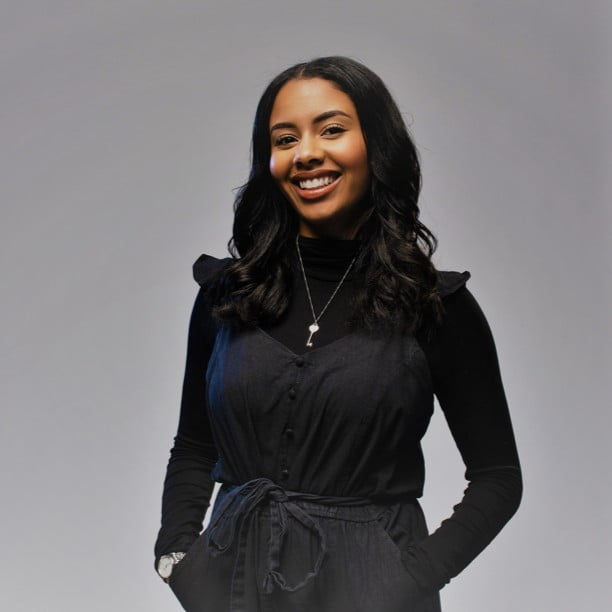
Exploring the complexities of race, socioeconomic status, and the challenges of being a minority in the workplace, Holly Straker-Humphreys shares her experiences and insights on fostering inclusion and driving change.
In this episode of Inclusion Bites, Joanne Lockwood speaks with Holly Straker-Humphreys about lived experience identity.
“Your uniqueness can be your superpower and get you to places that you thought it might hold you back.”
Explore
Navigate this episode
Joanne Lockwoodhost
Hello, everyone. My name is Joanne Lockwood, and I'm your host for theInclusion Bites Podcast. In this series, I have interviewed a numberof amazing people. I simply had the conversation around the subject ofinclusion, belonging and generally making the world a betterplace for everyone to thrive. If you'd like to join me in the future,then please do drop me a line toJo.Lockwood@seechangehappen.co.ukthat's SEE Change Happen dot co dotuk. You can catch up with all of the previous shows oniTunes, Spotify and the usual places,so plug in your headphones, grab a decaf andlet's get going. Today is Episode78 with the title Too White to BeBlack and Too Black to Be White.And I have the absolute honour and privilege to welcome Holly StrakerHumphreys. Holly describes herself as an inclusionleader and when I asked Holly to describe her superpower,she said that her strange talent is for writing effectiveemails and complaints to companies. Herbest achievement was an email to the CEO of Dyson to challengethem on how they perpetuated idealizations of Westernbeauty in the way they talked about their hair care products andstigmatised Afro hair as a problem.Hello, Holly, welcome to the show. Hi, Joanne. Thank
Holly Straker-Humphreysguest
you so much for having me. I sound like a bit of a loser, don'tI? No, not at all. We've known each other
Joanne Lockwoodhost
a few years now and I would never put you in any category like that,so, no, you're an amazing and wonderful person, so no,not at all. So holly, this episodeisn't titled too White to Be Black and Too Black To Be White.Why, does that mean something to you?
Holly Straker-Humphreysguest
Yeah, I'm turning 30 thisyear. Wow. Yeah, I need to get myself on board withthat. And I would say it's probablyonly the last two, three, fouryears where I felt trulycomfortable in being me and trulycomfortable in knowing who I am,what I stand for, my identity.So I guess if we take that right back to the beginning andmaybe why I wasn't comfortable.So I am mixed race.I am half white, so my dadis white British, and my mum is ofBeijing descent, so from Barbados. That's wheremy mom's family is from. And I've grownup in North Leeds, which is a relativelyaffluent area in Leeds. Quite a middle class area.Attended predominantly whiteschools throughout my childhood.And I think, looking back, youonly know what you know. Right? So I guess that was just the environmentthat I was used to, but there was probablyalways something that made me feel like,why aren't I just fitting in here? And it'snot that. I had loads of great friends, Ihad an amazing childhood. Like, I was like serial packetnuclear family, so I could notcomplain about any of my experiences. I never hadany particularly negative experiences around theway that I looked or my identity, it was justsomething inside me just didn't always click, probably,particularly when I was older. And then ifyou flip to more of the blackside of my identity, Ihave a massive big Beijing Caribbean familyand we have super strongfamily values. There's a lot of Sunday get togethers aroundfood and it'll be a Sunday night at 06:00 and everyone'sdancing in the kitchen. We have such good, positive energyin our family. Like my family is everything.But we often get comments. So me and mybrother around our accents, how we speak, where welived, like ingest from our family, we're verycomical family. We'll make jokes out ofeach other a lot. But I guess that's where the sentimentof two white to be black and two blacks to bewhite came from. You just didn't quite fit in either community.And growing up and even where I am now.I think it takes you a long time when you are ofmixed heritage to really understand how to beyou happily in the middle and how you can appreciateand value both sides of your identity or multiple sides ofyour identity butstill feel like youbelong somewhere and find your people. Soyeah, I just have a lot of memories of going tovisit my white grandparents in thecountryside and sitting in a countryside pub and me and my brother being theonly non white people and my mum as well, andthen going to visit my mum'sparents in Hare Hills, which is quite an ethnicallydiverse area in Leeds, and just feeling, oh, this isn't quitewhat I'm used to. So it was just almost two worlds coming togetherand where do I fit in the middle of it?So, yeah, that's how I describe where that's comefrom. I think you described yourself
Joanne Lockwoodhost
as feeling you have a see of privilegebecause of maybe your accent, because ofyour barely light brownskin. You feel you havebenefited from some of the characteristics as well as the affluentarea you grew up in. Oh, God. Yeah. I
Holly Straker-Humphreysguest
think I straighten my hairnow. I think particularly, probably becauseI work in a corporate environment, it just feels better. Iwish I didn't feel that way, but it does.The way that I speak doesn't soundparticularly different to other people in a corporate environment.Obviously, as you mentioned, quite lightskin. I've always had both my parents wentto Diversity, so I've always had that kind ofaccess and education and I guessaspiration from them as well. So there's somuch this is why it's quite a strangethere's a lot at play here, because if you took my life onpaper, it's been wonderful, but still, that sense ofbelonging was missing for quite some time.So, yeah, it's a complex one because I'vehad brilliant childhood, amazing access toopportunities, I've been able to excel my career,but still, there was something that was always missing for me in termsof really understanding and feeling comfortable inwho I was. You've mentioned your
Joanne Lockwoodhost
hair a couple of times. What, once in your superpower about the complaint toCo Dyson,how much pressure do you feelthat you're self imposing around the way yourhair looks? Or is there a genuinediscrimination against Afrostyle hair in the workplace, in society?
Holly Straker-Humphreysguest
Well, I guess you don't have to look far in the research to find,yes, there is, in terms of how people are treated atschool, being discriminated, put inexclusion for certain natural Afrohairstyles. And then similarly at work, people havebeen directly discriminated against for how theirhair is. But I guess for me, I amlucky to have not experienced either of those things.I guess for me it's been a lot more subtle,but I know from some research that's been donearound how we experience issues around race, sometimes the subtlethings can be more damaging psychologicallybecause it's harder to pinpoint, harder to understand. It is. It allin my head? Is it just me? So, like,going back to being at school, we used to get onthe bus and go to swimming with the whole class and everyone was like, oh,washing the hair after swimming. And it's like, oh, no way.Afro hair wash as a child is a two to three houractivity on a Sunday night, usually with your mumscreaming, smacking you with the hairbrush.And it kind of just started tolay these little seeds around, feelingdirty or not feeling asother kids could just go in the shower, wash their hair, come out andI don't think anyone ever actually said anythingnot explicit, but it just started with that. And then when youlay over, kind of like skin tone and things like that, I think Ijust subconsciously started to buildthis slightly negative perception. And then you moveinto like at lunchtime, let's all braid our hair. And it's like, oh,no, the bubble stuck in my hair. You can't just get that brush through myhair because it will snap. It's just those little subtlethings. And then I think, as I've gotolder, the programmes that you watch ontelevision, the adverts that you see, you neversee hair that looks like mine ina positive way. It's always allthe adverts on TV are antifreezecombat. That frizz smoothen your hair.Growing up at my age, I'd never really seenanyone have hairlike mine and it be really appreciated, maybeapart from Melby and the Spice Girls. Now I'm thinking backon it, and I do idolise her quite a lot. She has fab hair,
Joanne Lockwoodhost
doesn't she? I've always been envious of her hair. And anybody with thatkind of real bouncy, big Afro, e, kind ofcurly, is very powerful. I thinkmovie stars with it and it's a very power cut. I
Holly Straker-Humphreysguest
think and I guess I could probably see that,but for the environment that I was in, it just didn't feelright. And I know when I started going to jobinterviews and I would always straighten my hair, I justdid not feel comfortable. And this is why, I think,looking at the impact ofinclusion across and how it's embedded insocietal structures is so powerful, becausenobody as a child was ever explicitly racist to me, saidthere's anything wrong with the colour of my skin. I had a brilliantchildhood, like, we're surrounded by plenty of black people frommy family, but still there was something thatjust did not make me feel proud of the way thatI looked, particularly in terms of my hair,powerful. So the work you're doing now is
Joanne Lockwoodhost
in corporate environments around theinclusion, belonging, dei, whichever acronym you prefer.Do you think your heritage, your mixed heritage andyour lived experience gives you an additional superpower of insightinto that environment? I think
Holly Straker-Humphreysguest
so, yeah. I think I have alwaysseen myself as because I've had that kind ofsocioeconomic privilege, I've managed to getmyself to a point in my career I actually never thought Iwould. And so I feel quite a heavyresponsibility as awoman of colour, in quite a seniorcorporate role, to use my power,position, experience to upliftothers who maybe just do not get that opportunity becauseof the networks they exist in, access tofinancial resources, even just generalrole models and aspirations. Like, the famous thing is hard to bewhat you can't see. I knowpeople can feel quite uncomfortable, and rightly so, of being thattoken black person that's on every career site orevery recruitment poster. And I get that,like, we shouldn't be there. However, I've always been quitecomfortable in being that person because Iknow that for me, that would have made adifference, seeing someone like me. So I almost seeit as a bit of a duty and responsibility,not in a negative way. I feelquite empowered by being able to do thatand I do quite a lot of mentoring, specificallypeople from minority backgrounds. And it's a consistenttheme around just not quite feeling likeyou fit in confidence, identity.And once you can help connectpeople with others like them, or just shift that mindset around,your uniqueness can be yoursuperpower and get you to places that you thought it mighthold you back. I've seen people progressmassively, both in their careers, but personally, just in termsof confidence, values, understanding who they are.And I think it took me awhile in my first corporatejobs to understand that my different perspectivewasn't weird or wrong, it actuallywas really valuable. And as soon as I started to use my voice in thatway, I was like, oh, wow, maybethis could get me somewhere. And the more confident I did with that, themore confident I was with that, the faster my careerexcelled. But I guess you've got to work to get to thatpoint. It's not as easy to just turn up to work one day and belike, right, I'm a constant black female, let me go and take on the worldand give all my ideas. I really had tofind my people at work, get that kind ofgirl gang around me to support and empower meand uplift my voice, find managers that reallytruly believe me and pushed me, and find other peoplewho looked like me to share theexperiences with and keep pushing ourselves.So, yeah, there's a lot of work and you areworking against systems and structures as well.We can't discount that.But I have seen people get there and it's an amazing thing andthat's what drives me in my role against allthe crap that we also have to deal with. Joanne, you'll know, as aninclusion specialist. Yeah, just
Joanne Lockwoodhost
picking up a few things you said there you had to get your girl gangtogether to give you that confidence, to give you that boost and to sort ofalmost like challenge the incumbent or challenge the monoculture.And as you were saying, I thought, well,all that's there already is the boy gang, so it's notlike they've done anything different. They've got their own tribe, they've got their own boygang, their own white boy clan, andthey inherently have this superpower about them because they're amplifying each otherand it's just the way things have been, because that's been the incumbent culture, ifyou like. So you're doing no different, getting yourown amplifier, supporters and mentors aroundyou that are going to look after your needs.And I often findthat it's not a fault of the privilegedpeople who have incumbent, they're just unaware thatthat's how they're operating and they're not aware that people don'thave the same access to the opportunity because they just see the opportunity,it's in the air they breathe. Yeah. You only know what
Holly Straker-Humphreysguest
you know and what your experience is, so why wouldyou think any different? And the more I talk to
Joanne Lockwoodhost
people in the kind of the dei space, inclusion space,you realise that most people have impostor syndrome. Mostpeople have worry about not being good enough, whether it's around theiridentity, whether it's about their capability. And so what you saidthere is often we think about themindset of the we call it the marginalisedcandidate, or the marginalised person or the minority person,whatever that terminology really means. It's kind of a crass way of describing it.But the mindset of people who aren't the defaulttends to be one that impostor syndrome exists, or the access to the networksthat exists, the access to information doesn't exist. And it's really hard to break thatdown and create those support structures in organisations toempower, as you're saying, those mental programmes those fast track programmes. Thoseare awareness programmes. Yeah,
Holly Straker-Humphreysguest
completely. And what you were just talking about there bringsmy mum to mind, actually, who my mom is a little bit of asuperpower within a superwoman within herself,and I carry some of her within me interms of shegrew up predominantly in Hair Hills, which,as I mentioned, was an ethnically diverse area.My grandparents had moved over from Barbados,so part of that generation of coming over from the Caribbean. But mymom was kind of found her way in a lot of quite white environments.So she worked in a university, she went to university,worked in a lot of corporate organisations.And she's always said she loves to be that only blackwoman in the room, almost to prove everything wrong,prove the status quo that I'm here and I can do this. And Ithink I carry that a little bit. I almost can get alittle bit of a thrill of walking into a meeting room, meeting a newexecutive, and I'm not only amixed race woman, but also I look quite young. Istill get ID for paracetamol in the supermarketand I think that's 16. So there we go.And I've got a northern accent. My voicesounds relatively young as well, and people kind of look at me and atthe start, they're not really listening. You can tell with body languageand then by the end, they're like, oh, shit, she maybe knows what she'stalking about. And I get a bit of a thrill from that in thatprove people wrong. And I think you cantake a lot of fire and drive from workingagainst some of the systems that we havein society. So I've definitely got that from my mom.And she'll listen to this and she'll love this because sheloves getting a mention. Yeah, you're so right. And
Joanne Lockwoodhost
I think when you have apowerful voice in the room that has a differentperspective, it's hard not to listen, although some peoplechoose not to listen, but a lot of people do listen. And I hear whatyou're saying about being the only person in the room. Ioften am the only person in the room who's trans. Andif I see another trans person in the room, I get a bit jealous, go,Hang on a minute, this is my space, I want to be the only person,I want to be the one kind of pathiva sort of thing. But, no,it's also from psychological safety point of view, it's really, really hard sometimesto know you're the only person in the room, know that you're going toend up having certain questions or certainconversations with people all the time. They'll want your opinion onsomething. Can I not be transferred one day? Do I have to talk aboutbeing a black woman all the time? Can I just not talk about beingsomething else? There is a lot of pressure for you to be representative, isn'tthere? Yeah, completely. And I think there's
Holly Straker-Humphreysguest
also that pressure that a lot of people feel of when you arethe first and only one, if you don'tdo an amazing job, like, have you ruinedthat perception of the whole community? So you carry a lotof that weight as well because we know that that's how people think, oh, we'vegot the first black Prime Minister, for example. Ifthey're not great, then that changes the perceptionof the whole black community and whether they can do a good job of beinga Prime Minister, for example. So I think you carry a lot ofthat weight as well, to really prove you're not just therefor you, you're there for all of your people.
Joanne Lockwoodhost
Yes, I know what you mean.I suppose I'm guilty of it. If I see somebody else who'strans or nonbinary or gender diverse,misrepresenting my view of the world, I think, hang on a minute,you don't speak for me, you're damaging my brand.
Holly Straker-Humphreysguest
Yeah, I get that completely, but I guess that's justhow society and people, we'velumped everyone together under these labels, sothat's how it plays out. So
Joanne Lockwoodhost
I often hear from people one of the biggest barriers to inclusion is thefear of getting it wrong. Either doing the wrong thing, saying the wrong thing,causing a microaggression inadvertent. So do youscare people by being here?
Holly Straker-Humphreysguest
I hope not. I think I've alwayshad feedback and I'm only going basedon this, that I can oftenbreak down some of that fear byproviding people a bit of a safe space to comewith challenges, perceptions, ideas andnot place judgement, but help them appreciate the otherperspective. So, particularly in my lastrole, I worked so closely with our entire extendedleadership team and exact leadership team andbuilt really close relationships with each of them to bethat safe space. So if they're going on a company town hall and they don'tknow, should they say BAME orshould they not, like I'm the place that they can come and testout those test outthe ways that they should shouldn't speak their ideas, what they're thinking,how to approach things. But I completelyget the fear. Like, the way that socialmedia can come and take you down and cancel you nowis wild. And I get it because people aretired, people are angry, people have been throughthis stuff over and over again, so I get thatside of things. However, I think it's nothelpful. Like, we need these people ifwe want to see things change, like, we have to work withthem. So I always take the approach ofbuilding close relationships withthese types of people to be able to understand their fears,understand what's been their life experience. Because sometimespeople hold things that have happened to them that they feel arejust as important as an issue around race, for example.And they haven't necessarily had the educationaround how some of those issues aresystemic and ingrained in society. So they can't understandwhy that maybe holds a little more weight around a certain conversationor has more impact for an individual. SoI definitely like to say that Ihopefully don't make people fearful. However, I think on theflip side, in roles like ours, you alsodo have to be ready to make people feel a little uncomfortable. You'vegot to call things out, you've got to challenge them andit's quite hard to find that balance, Ithink. So yeah.
Joanne Lockwoodhost
An interesting one,interestingly. Use the word perspective and I think that's really, really valuable.It's about understanding a perspective. We often want to beright. Wars anddisagreements and divorces and whatever oftenstarted by the desire or the need to be right,whereas we don't spend enough time understanding whysomebody thinks something or what their lived experience is. Andthe example I often use is we go into the voting booth with a littlebit of paper and our stubby little pencil and we tick the box based onthe candidate that we believe is going to be the best person. And we don'ttick the same box, we all tick the box that resonates with us.And it's not that we're right or wrong, it's just that we have a perspectiveon why we believe that person could do the best job. Andit's so important in my view, not toargue about outcomes but discuss perspectives, because we don't have toagree, but we can understand why someone thinks something.And that's a hard challenge. I'm so with
Holly Straker-Humphreysguest
you on that and I think one of the biggestfundamental change in my own perspective.So growing up in quite a middle classenvironment, I used to enjoywatching crappy things on Channel Four and ChannelFive around, what are they called? Likebenefits fraudsters and all of thoseridiculously dramatisedTV shows,obviously that then fuels your mind full ofcrap around perceptions around these groups of people that I maybedidn't come across in day to day life because of the environment that I wasin. And then I met Jack,who is my now husband, who grew up ina completely different socioeconomicenvironment, so grew up in the more deprived areasof Leeds andjust spending time with him, hearing hisexperiences about growing up. And whywould a young twelve year old male smash up a bus stopwith a brick? Orwhy would people be on benefits and not be able to get a jobbecause their mental health is so poor, because of the povertythat they're living in. Just understanding that perspective honestlychanged my life. And it was quite weird becauseon paper you would see Jack as a CIS straightwhite male and me as a woman of colour and you wouldassume certain things about how we might fare in societywhen actually it was quite the opposite. And I thinksocioeconomic status is like the missing piece whenwe talk about inclusion because it's such a big driver and itintersects across all the different demographics, but it alwaysseems to be missing in inclusion conversations. So Iknow that growing up as a moody, strappy teenager,watching all of those crappy TV shows, and I'd bemouthing off on Facebook statuses about an engagingconversations about certain groups and then meeting Jack, I was like, oh mygosh, wow. And interestingly, he's had thesame experience understanding the lives of middle classpeople. Not everyone's, I don't know if I can swear on this podcast,not everyone's a middle class who doesn't give a shitabout who doesn't care aboutissues that he might have experienced, or just because theydrive a certain car with a nice house doesn't mean they're an idiot.So it's been a really interestingexperience to bring our worldtogether and I think we are both better people because ofit. And I also feel like I can do myjob so much better because I personallyhave gone through a process of shifting and changing myperspective. So when I need to work with leaders to help them understandthe experiences of women within their business and the challenges thatthey might face in their career and how that particularleaders actions and behaviours might be impacting, that like helpingthem shift that perspective. I feel like I can go aboutthat in quite an effective way because I've personally gonethrough that. Andeven as a mixed racefemale, I've got a couple of hidden disabilities that I'll throw in there aswell. It does not make me perfect and doesnot make me be able to be an advocate for all ofinclusion. No matter who we are, everybody has toeducate themselves because we only know our worlds and what weknow. So, yeah, I think that wasalso quite a profound experiencefor me in terms of perspective.
Joanne Lockwoodhost
Yeah, I completely agree that we speak through our ownlens and our own privilege and our own characteristics, our own lived experience.And as a di professional, I think we both learnedover the years that to know the lens through which we speakand ensure that we do the work, we put the hardgraft in to understand other perspectives and don't end up with face value.And I'm a great believer in talking about cultural intelligenceand it is about that lifelong learning to getperspectives of people. And, as you say, the way the mediademonise the Tories as aclass, or the benefits goungers, orthe striking nurses, we want to sell clicks andmedia and we're trying to influence and themedia works on divide and conquer, as does the government,I think. Exactly. It's understanding what the game ofplay is and choosing not to play that game and try andnavigate through it. Exactly. We're just playing into the
Holly Straker-Humphreysguest
hands of what they want to create when actually theonly people losing out are as humanbeings. Yeah. I mean, you really got to look at what?
Joanne Lockwoodhost
Reality shows like I'm a Slave to Get Me Out Of Here and LoveIsland. They're trying to pitch you against each other and theydeliberately create scenarios to create tension becausethere's lots of studies. If you put humans in a group, the conflict doesn'talways arise. Most people will just get on with each other and youbuild a community. So unless you put a disruptor in there, there's notelly. It's just ten people getting on with each other,looking out for each other and having a bit of a laugh. So you've gotto put Matt Hancock in the jungle to create that disruption.You got to starve people and make them fight for foodin order to get their animal instincts out, because by default,they don't exist. And as a society, we would geton with each other a lot better if it wasn't beingstoked by the media and sometimes by thegovernment creating the division.
Holly Straker-Humphreysguest
Yeah. I always say money rules the world.
Joanne Lockwoodhost
It does influence and power. Yeah. Peoplewanting more of it. And even in theutopian world, there's always somebody who rules the world, isn't there,that keeps the utopia intact.What do you think the biggest challenges that organisationsface? I know that when we worked together at your previouscompany that you had some veryforward thinking ways of measuring and embeddingsystems and process around EDI and inclusion into the organisation.What are organisations failing to do, if you like? Now.
Holly Straker-Humphreysguest
I think some of my views andexperiences might be quite different to what other EDIprofessionals might think. But if you typically lookat some of the reading around what are the best thingsthat organisations can do to embed or start a deistrategy? It's always get some employeeresource groups together and get an exec sponsor. Like they're the twothings that will often come up. And I thinkwith that first one around employee resource groups, thereis so much power in bringing people together who facesimilar challenges to have each other's back,informally mentor each other, like just findingyour people, finding your community, as I've talked about. However,what I don't quite agree with is thenputting it on that marginalised community to thenfix the problems that they experience in the workplace forfree on top of their day job. That then probablytakes time away from their day job. Meaning they maybe thenaren't able to perform at their best enrol and then how does that impact theircareer? And sometimes with limited budget aswell, and also limited experiencein skill and knowledge, in some of the things that are really needed tomake a change, like people policy orrecruitment or change management,all of those. Things. And I think we've kind ofjust in a lot of places,bucketed dei into this nice thing to do. Andif we've got these groups and we're talking about it and we've got something thatwe can put on our career site or in our annual report, thenthat's fine. But is that really going to drive the changethat we want to see? No. And withthe second point I made around exec sponsors,they can have equally so much power if you've got asenior voice at the table driving this piece ofwork, like, you can make phenomenal change. However, what about therest of the leadership team? Isn't it just part of every single one oftheir roles to be an advocate, an ally, asponsor, be role modelling the right behaviours andactions, setting the tone for what the organisation should be? And I think it'svery easy to put all the responsibility for thatonto one individual, rather than how are they all taking thatinto their everyday teams, departments, lives, job?And are they collectively as a leadership team, talking abouthow dei impacts the business goals? Or is it justbecause we've got that one person that goes to the monthly meetingwith the employee resource groups, then we're good, it's just notgood enough. And you go toJoanne, you will know this. You go to so many webinarsand talks and people sit and their first question they askis, Why are we still here? Why haven't we seen any change? Andit's because we're doing a rubbish job. Like we're not puttingthe right resource expertise, strategymetrics around what we want to see.And I think equally, if you look wider, weknow that the workplace is just one piece of theinclusion jigsaw. Like we're not getting the right support from the governmentaround, for example, shared parental leave, orlooking at increasing statutory paternitypay so that we can reshift the balance around parentalresponsibilities and how that impacts the careers of women. Likewe're not as a wider society, we saythese things and we stand up and we say we care about inclusion andthen our actions do the opposite.So I think it's something that everyCEO would probably stand up on a town hall orthey'd get asked in a slider, is it a priority? And they'd say, yes,but are they necessarily putting the infrastructure behind that tomake it work and really,truly realising the benefits and potential that they could getwithin their organisation if they seriouslyaddress their challenges? No. SoI think as a society we can doa lot better with this, but where's the appetite to do that?
Joanne Lockwoodhost
Do you think that many organisations and I don't want to generaliseas EI professionals, we should never generalise or stereotype.I'm conscious about that. Do you think that a lot ofEDI professionals, staff networks endup being this sounds quite derogatorycoffee and cake on a Friday. Hashtagcelebrants, event organisers, beancounters. How many of this, how many of that have we got? Where are ourpay gaps? They're more operational andbackward looking rather than strategic and embeddedas part of the business. Or how do we get past that?
Holly Straker-Humphreysguest
Yeah, I think what I do not want toportray here is that staff networks haven't achieved amazingthings, because I know in some organisations, wow, they've really changedthe game and still do. But whether it's right for them to be doingthat on top of their role unpaid is my biggest bugbearhere. And I think you're right. I've seenexamples of places I've worked where that's what staff networkshave become in terms ofevents and comms driven, which that absolutelyhas a place like. We need that awareness, we need those safespaces for people to come together. Andthose events and things that people organise can sometimes be thecatalyst for a lot of change. What I'm saying is we need the restof the infrastructure to really drive the change around,applying a di lens over an entirepeople strategy, looking at where it fits into the business goals,picking apart all the systems and processes, having the right resourceand education in place to do that. So I thinkthey absolutely do have a place. It's just we're missing some of theother stuff that can really help driveand get us to the outcomes that we want to see.
Joanne Lockwoodhost
So is it all about the business case or is it alwaysabout doing the right thing for people? We see these polarised debateson LinkedIn and other platforms about people who are evangelical about it's notthe business case. You can't put the business case before people, other people go, no,hang on a minute, it's got to be the business case. Where do you siton the fence on that one? Interesting one.
Holly Straker-Humphreysguest
I probably put myself in the middle because, like,my personal values, Iam very strongly aligned in terms ofpeople getting access to opportunitiesand being uplifted andorganisations having a bit of responsibility to fix the problemsthat the world has created. So that's where I'd sit on that side.On the business case side, I don't think that should be the singledriver. However, I do think there is so muchopportunity that businesses are just not tapping into because theyhaven't got this broad perspective that actuallythose communities can also benefit from. So, for example,if we take accessibility, like iforganisations were thinking about accessibility first, thedisabled community would be benefiting more fromthe products and services that we get insociety. So whilst, yes, you don't want moneyto be the only driver of why we're thinking about the businesscase, but as a result of that, thecommunities that we're trying to help can also benefit. So Idon't think I'm one or the other, I think it fits quite nicely together. Andthat's where you mentioned at the beginning around myletter to Dyson. So I wanted to buythe Dyson air wrap. This was a couple of years ago and Iwas having a read, doing my research, and all of the copy was like,combat your frizzy hair. Or like, I can't rememberthe exact wording, but it was like, fight, fight, the frizz kindof phraseology.And I was just like, why on earth am Igoing to invest? Like, this hairdryer is not cheap. Why am Igoing to invest the hundreds of pounds in something that's,like, contradicting my identity? Like, it just doesn't make sense,it's a racist.So, like, you like but I really wanted thehairdryer, so that's why I wrote the letter, in terms of, like, just offering myperspective. And to be fair, they were great. I got invited to speak to themarketing director, they changed all of the language, soshout out to Dyson. However,it all kind of works together. Like if you're doing the right thing andbringing people into your organisation, giving them opportunities toprogress their career, do great work, be innovative, give their ideas,then the business case will speak for itself. Butthen also that community benefits on the other side of it, because I can buya hairdryer that really works well in terms of being ableto manage my Afro hair. So,yeah, I think you'll probably find me in the middle ofthat. I'm with you on that. What I always say is, if you think
Joanne Lockwoodhost
about the three dynamics compliance, I e thelaw, business case and the human factor. I always say if you get the humanfactor right, the business case and the compliance becomethey work. You don't have to focus on the business case, you just do theright thing for people and make sure people feel that positiveexperience and then the business case will fall out of that. And you can easilyquantify that by discretionary effort, empty seatcosts, retention. All those great things we knowcomes out of inclusion and belonging that we know we're going to get better from.I forget, frustrated when we see organisationswhere they maybe hit the maturity model on the dei curve and theystill talk about diversity, we got to get more diversity. And then theystart thinking about inclusion, they think about belonging, then they think aboutculture. I always want people to flip it on its head by saying, let's startwith culture. We get the culture right, we get our brand valuesright, we get our employee values right, then our culture comesbelonging. I feel aligned with the organisation. If I feel belonging, I'm goingto feel included. If I feel included, then there's a place for me. Therefore,the diversity will naturally permeate in thatenvironment. So I think often we see people tryingto hire their way out of a diversity problem or we got to do somediverse hiring. And I say, well, going to marketis the last thing you do once you've got everything else in theorganisation. Otherwise all you're doing is you're bringingnew fish into a dirty pond and that's what happens. They don'tthrive, they just get finrot and leave. Yeah,
Holly Straker-Humphreysguest
completely. I know that whenwe worked together, Joanne, that's exactly what we were doing so weran your journey to Conscious Inclusionworkshops and powerful Allyship workshopstop down from our senior leadership teamalong with giving them the opportunity toget a different perspective. So we did a reciprocal mentoring schemeas well that ran alongside that. So a memberof our leadership team was matched with someone from aminority group in the organisation, so that the leadership teammember could help uplift the person with theiradvice from their career and thenthey'd get to understand more about what life waslike at the organisation from a different perspective.And doing those things got us to sucha great place and you could feel the change. And thenI've moved on from that particular organisation now, but nowI know, as I was leaving, you started to see the shiftsin percentage increases in particular demographics.And externally, I think people felt the authenticityaround the change and we could clearly articulate the thingsthat we had done. To be able to call ourselves well, I didn't think youcan ever call yourself 100% inclusive, but to call ourselves anorganisation, that's really working towards building aninclusive environment, so I'm so with you on that. AndI think it can do so much damage becauseyou will hire all these people fromdifferent backgrounds and if you haven't got that environment right, they'll just leave orit'll cause conflict or they won't be able to perform at theirbest. And then you've proved some of thoseperceptions right that people might have around diversity isn'tactually valuable. It causes challenges and we're just doingit because we need to look good or look a certain way. So I thinkit can cause more damage than good if you don't go about it in theright way. Yeah, if you've read is
Joanne Lockwoodhost
it Lily Zeng's book deconstructed? Oh,
Holly Straker-Humphreysguest
I need to order that brilliant. I've got it on
Joanne Lockwoodhost
Audible and I was listening to it on the way I was driving to Manchesterthe other week, I had about 4 hours in a car each way. It's abouta twelve hour book on Audible. And one of the things thatstruck me and I don't know about you, but I follow them onLinkedIn and often engage with their posts. And one of thethings that they talked about waswe often worry about having one of everybody, a bit likeNoah's Ark. We need one of these, one of those in order to haverepresentation. So we need to have a black personin the room to talk about, et cetera. And what theysaid was that it's not just about having one of everybody, it's having totrust that the people who are in the roomhave your back and are thinking about you. So we can't necessarily represent everypermutation of intersectionality, but we can trust that the people whoare having the conversations have have your back andare considering you and are thinking about you and will talk to you. If theyneed more information, then that's got to be some of the objective. And I thinkwe often get too engrossed in ticking boxes and beancounting and not building trust and embeddingthose sort of systems. And I think that was quite sightful.I often talk about trust when we talk about employee engagement service,when we talk about data capture. That's what we can we canalmost measure trust, how well people engage with us, do they believe inus? Will they communicate with us? Andagain, within inclusion belonging, trust is a huge elementagainst psychological safety. Bring your whole self to work. It's about beingcomfortable with your peers and your colleagues, isn't it?
Holly Straker-Humphreysguest
Yeah, I really love that,how they've phrased that. Lily Zen is just likethe ultimate on LinkedIn. Likeanything they say, I'm like, yeah, take that in, write it down.
Joanne Lockwoodhost
She can be a bit Shelty, so I often have to philtre thesheltiness sometimes and often a lecture. Butyeah, the message they put out is alwayshelpful, always insightful.I'd advocate anyone follow themif they're on LinkedIn who want to find out more. And I don't often recommendbooks, but I have it on the shelf behind me and I have it onAudible as well, so I bought it twice.Again. Go back to LinkedIn. This is where I often get the temperaturegauge and the thermometer of the world. A lot ofdi practitioners are tired,they're exhausted, they're working, advanced, but they feel thisonslaught of walking through treacle every day.Do you feel that? How do we overcome that?How do we inspire di practitioners? Just brushit off and carry on? I definitely
Holly Straker-Humphreysguest
feel that and I think you cannot escape it.Either because you log off from work and thenyou'll put on the news, or there'll be something in a WhatsAppgroup chat. Because we have so much access to information now,things are being shared so much more, which is a positive thing,but also can be so mentally draining, youphysically cannot escape it. Andmy husband Jack is a family lawyer, he works incare, so kids thathave social services involvement. So, like, our dinner table chat is veryheavy and you almost see the cycle ofwhat the families he works with, experience and how thatplays out in terms of what I see in the working world.So it's everywhere.So, yeah, I definitely feel that. One thing thatI will always treasure is a coupleof colleagues that I worked with in my previous role. We have aWhatsApp chat called tired and Oppressed.And that's like our little safe space to runor to get advice, because someof the decisions that you have to make in our role, like, they're heavy, they'repeople's lives, and you could go one way or another. And even as aninclusion professional, I worry about being cancelled, like saying the wrongthing, so that's like my little safe spacewith a couple of colleagues and thenI really have to proactively managemy mental health and how I take care of myselfin terms of giving myself space to decompress fromsome of this. And I think as well, becauseyou're working on it, you're living it, but also, ifyou're part of a minority group, it's you and your life aswell. You experience these things day today anyway, so it's coming at you from all angles.So I will watch a lotof crappy reality TV after work, just as anescapism. Like, you've got to find your escape or go for a longwalk with my dog and just listen to music, or you've just got tohave those self care strategies in place because it's alot, it really is. And you can find yourself in themiddle of a spectrum of people who are like the world's twoPC. I just want to come to work, do my work and go home.This is ridiculous. Right through to our leadership teamshould have a black woman, someone whohas additional accessibility needs, someone who it should be 5050 gender split. Like, this isn't good enough. What are you doing?So you're getting attacked from bothsides. So it is absolutely a lot. Andyou've got to be quite resilient inthis role, I think.Resilient, but still carry empathy, still be able tochallenge. There's so many skills that I've had to learnand develop quite quickly and I think you need a goodnetwork of people around you to help you do that,because it is a lot. It is. And that's one
Joanne Lockwoodhost
of the reasons I liked in these podcasts, is you share lots of perspectives withlots of different people around a topic you care passionately around,and it allows you to listen to other people'schallenges as well, and other people's perspectives. And it means that it'snot just me, everybody else is going through this as well. And it iseasy, as you say, that it's too easyto take on your own characteristic andas a champion and then be thwarted by it, be ground down by it.And sometimes you have to have that pressure cooker release valve that says,let it go, I can't fix this and I need to turn the dial. Thenoise, if you looked at what's going on in the papers at the momentaround trans people, it would just push your mental health away.So you got to attenuate it and talk about somethingelse. So, yeah, it is exhausting.I think we also probably need to do as a society or a businesscommunity is to recognise Dei professionalsin the same way we recognise HR professionals. Maybe maybe theprofessionalism still hasn't matured yet around.We don't have a body like the CIPD. I'm not saying the CIPD is perfect,but we don't have a dei is differentin HR. I don't think it should report to HR or be part of HR.I think we can all have debates about whether talent acquisition, branding,marketing, HR all have this, as you say, cross directorate,Di impact. So Di needs to have its own voice andshould be in everyone's report, like health and safety and risk.It should be in everyone's report. And I think we need to helpprofessionalise the industry or the business community and give peoplesupport because it's still quite new, it's probably less than ten years old, really.In many cases. A lot of people get into it like they getinto recruiting because there was a vacancy and they got it.And I think we better training, better supportand move it on from being, as I said earlier,just parties and hashtags.It needs to be more tactical and strategic.That's my soapbox.We've talked for hours over the years and this has been another fascinatingconversation to dive a little bit deeper into your own perspective.So how can people get hold of you? If you'd like people to gethold of you, that is. Yeah, I know. That is fine. So
Holly Straker-Humphreysguest
you can find me on LinkedIn. Holly Streker Humphreys.I'm not a tweeter or anythinglike that. In fact, that is one of the things that I came off tosave my mental health, because it's just way too much.So feel free to connect with me on LinkedInand I'll be happy to chat to anyone, whether it'sjust someone who else who works in this industry, I think it's always goodto build our network, someone who's thinking about getting into the industryor someone who maybe completely disagrees with everything thatI've said. Good perspective. Yeah,
Joanne Lockwoodhost
I completely agree. It's great to be challenged and keep you on yourtoes. I completely agree. But that's fantastic. And I know we'reconnected and share insights from time to time as well. So. Thankyou, Holly. Also, thank you to you, the listeners, for tuningin, for listening to the end. Thank you. I really appreciate that. Ifyou're not already subscribed, please do subscribe on all the majorplatforms to keep updated on future episodes of theInclusion Bites podcast. That's B-I-T-E-S. . I try and releasethem weekly where I can tell your friends, tell yourcolleagues, please do share the love. I have a number of other exciting guestslined up that I'm sure you'd be equally inspired by over the next fewweeks, months and hopefully year is. Of course, if you think you would like tocome on the show inspire people. I'd love to hear from you as I wouldwelcome any comments, feedback and suggestions you may have on how I canimprove. So, finally, my name is Joanne Lockwood.It has been an absolute pleasure to host this podcast for you today.Catch you next time. Byebye.
Holly Straker-Humphreys reflects on growing up as a mixed-race woman in predominantly white spaces, and the long process of becoming comfortable “in the middle” of two worlds. She shares how subtle signals—especially around Afro hair, media representation, and workplace norms—shaped her sense of identity and belonging, even without overt racism.
From there, the conversation widens into what inclusion looks like in practice at work. Holly talks about the importance of community, mentoring and finding managers and peers who amplify your voice, alongside the pressures that come with being “the only one in the room.” Joanne and Holly explore psychological safety, the fear of getting it wrong, and how inclusion professionals can create spaces where leaders can learn without defensiveness while still being challenged.
They also critique common organisational approaches to DEI, including over-reliance on employee resource groups and token “exec sponsors” without the infrastructure, strategy, metrics and shared leadership accountability to make change stick. The episode closes with reflections on the emotional toll of inclusion work, the need for resilience and support networks, and how both personal lived experience and organisational systems have to shift if inclusion is to move beyond performative activity.
“It takes you a long time when you are of mixed heritage to really understand how to be you happily in the middle and how you can appreciate and value both sides of your identity or multiple sides of your identity but still feel like you belong somewhere and find your people.”
“I know from some research that's been done around how we experience issues around race, sometimes the subtle things can be more damaging psychologically because it's harder to pinpoint, harder to understand.”
Building an inclusive environment is important to retain diverse talent and prevent conflicts or low performance.
Questions this episode helps answer
How has Holly Straker-Humphreys' experience of socioeconomic privilege shaped her understanding of inclusion and representation?
In what ways did meeting her husband, who grew up in a deprived area, change Holly's perspective on the challenges faced by marginalized groups?
How does socioeconomic status contribute to the conversation around inclusion, and why is it often overlooked?
How can individuals from different backgrounds and identities educate themselves about different experiences and perspectives?
What role do podcasts and other media platforms play in helping people understand and empathize with the challenges faced by others?
How do issues like cancel culture and the fear of expressing opinions impact inclusion conversations and progress?
Explore topics
Ideas from this episode
Lived Experience Identity
Belonging
Authenticity
Change & Transformation
Psychological Safety
Allyship
Learn
Frequently asked questions
What is the role of socioeconomic status in inclusion conversations?
Socioeconomic status is a crucial factor that often gets overlooked in inclusion conversations. It can significantly impact opportunities and access to resources for individuals from marginalized backgrounds. Understanding and addressing socioeconomic disparities is essential for creating a more inclusive society.
How can I educate myself about different experiences and perspectives?
It is crucial for everyone, regardless of their background or identity, to educate themselves about different experiences and perspectives. Listening to podcasts, reading books, following diverse voices on social media, and engaging in meaningful conversations with people from diverse backgrounds can help broaden your understanding and empathy.
How can cancel culture impact mental health?
The noise and fear surrounding issues like cancel culture can have a significant impact on mental health. It's important to have a release valve and engage in discussions about different topics to alleviate the constant pressure and anxiety.
How can Diversity, Equity, and Inclusion (DEI) professionals be better supported?
DEI professionals should be recognized in the same way as HR professionals. DEI needs its own voice in business reports, and the industry needs better training and support to become more tactical and strategic in achieving meaningful change.
How can diversity initiatives be effective without reinforcing negative perceptions?
Diversity initiatives can do more harm than good if not approached correctly. It is essential to implement initiatives authentically and involve the entire leadership team in advocating, modeling the right behaviors, and taking ownership for driving change within organizations.
How can employee resource groups contribute to inclusivity?
Employee resource groups provide a safe space for people facing similar challenges to come together, find their community, and provide informal mentoring. They can help individuals feel supported and empowered while advocating for necessary changes within the workplace.
Share this episode
Heard something worth passing on? Send this conversation to someone who needs to hear it.