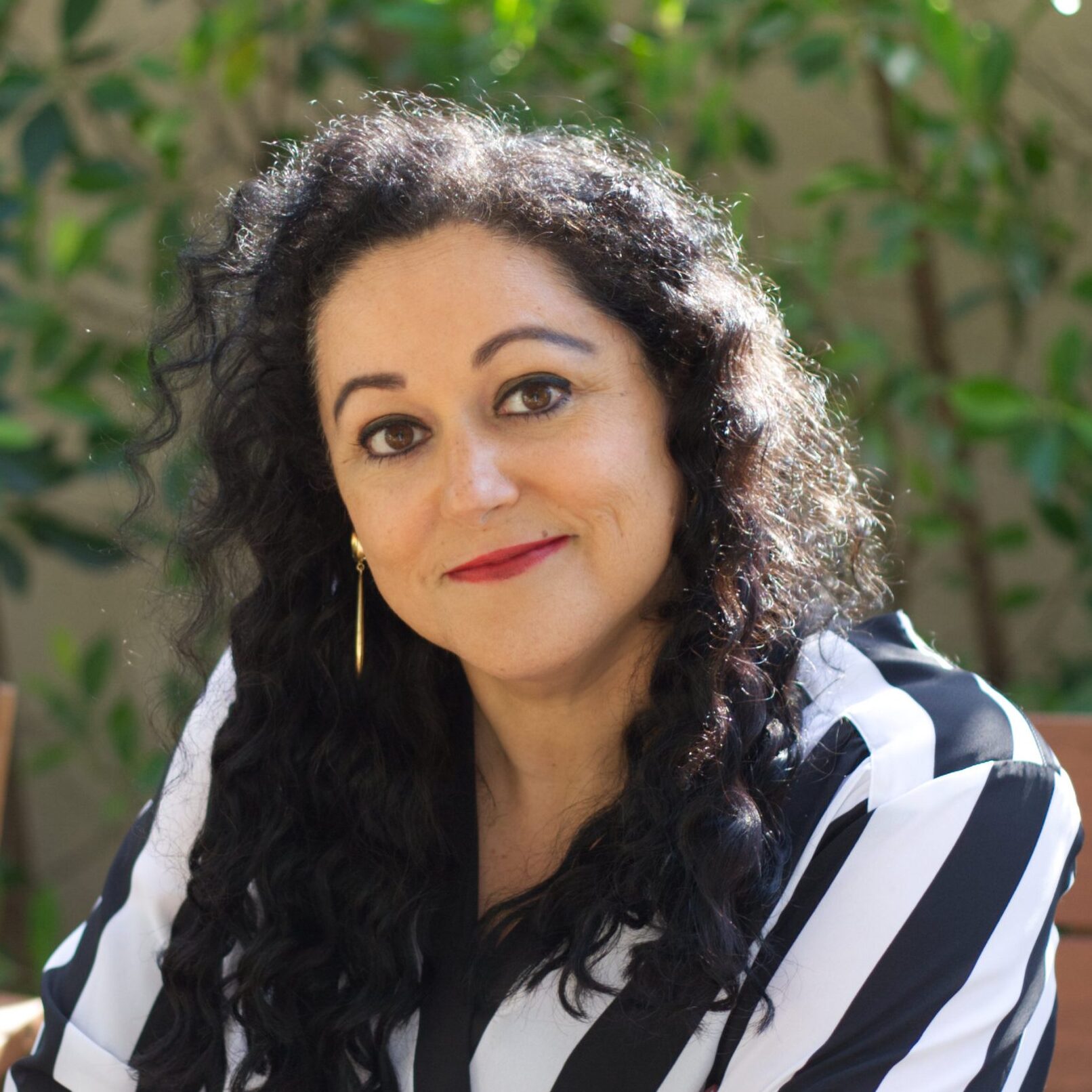
Exploring the historical portrayal of Arabs and Muslims in Hollywood, Evelyn Alsultany discusses the limits and possibilities of diversity work and the need for authentic representation to counteract one-dimensional stereotypes.
In this episode of Inclusion Bites, Joanne Lockwood speaks with Dr Evelyn Alsultany about workplace culture systems.
“Iraq actually had nothing to do with 911, but it led to over 150,000 Iraqi civilians being killed.”
Explore
Navigate this episode
Joanne Lockwoodhost
Hello, everyone. My name is Joanne Lockwood and I am your host for theInclusion Bites podcast. In this series, I have interviewed a numberof amazing people and simply had a conversation about the subject ofinclusion, belonging and generally making the world abetter place for everyone to thrive. If you'd like to join me in thefuture, then please do drop me a line to Joe dot Lockwood atseechangehappen.co.uk that's SEE Change Happen dotco dot uk. You can catch up withall of the previous shows on iTunes, Spotify and the usual places.So plug in your headphones, grab a decafand let's get going. Todayis Episode 79 with the titleHumanising Arabs and Muslims, andI have the absolute honour and privilege to welcome Evelyn Alsultany.Evelyn describes herself as a professor, authorand leading expert on the history of representations ofArabs Muslims in the US media. WhenI asked Evelyn to describe her superpower, she said that she has a warmpersonality and see makes others feel included.Hello, Evelyn, welcome to the show.
Dr Evelyn Alsultanyguest
Hi, Joanne. Thanks so much for having me.
Joanne Lockwoodhost
Pleasure. So, Evelyn, we were chatting in the green room before wegone live, the title HumanisingArabs and Muslims. Tell me more about that.
Dr Evelyn Alsultanyguest
So, Joanne, when you asked me what my superpower was, I was stumped onthat question and I reached out to two friends and one of themsaid, your superpower is Humanising, Arabs and Muslims.And the unfortunate part ofthis equation is that humanising is necessarybecause Arabs and Muslims have been dehumanisedfor so long in media representations,in government policies, in politician speeches.Many people think it started around 911, it intensified after911, butat least in the US, it's been part ofUS media representations for over 100 years.And so part of my mission is toboth Humanise Arabs and Muslims, but also to study theprocesses of dehumanisation. How does that even happen?And it happens to so many different communities in different ways.So, in my case, I have been studying Arabsand Muslims for over 20 years. Have they been represented in the media? Havethey been dehumanised? What are processes through which they can beincluded? What are efforts out there that seek tocreate more diverse and inclusive possibilitiesfor Arabs and Muslims? So you use the word
Joanne Lockwoodhost
dehumanise a couple of times andwe look at examples throughout history. As soon as weremove the humanity, as soon as we remove someone'sidentity like that, we treat them assubhuman, not human I e dehumanise, thenit gives us permission to treat peoplewithout without any respect. And that's what we're talking about here, isn'tit? That's exactly what we're talking about. When we
Dr Evelyn Alsultanyguest
dehumanise people, it allows us to justifynot giving those people rights, not treating them with respectand dignity. In the case of Arabs and Muslims, it includesjustifying going to war in Muslim majority countriesafter 911 that included Afghanistan and Iraq.And Iraq actually had nothing to do with 911,but it led to over 150,000 Iraqi civiliansbeing killed. So I often think what made that possiblefor the United States to go to war with acountry on the guise of 911 when there wasno connection to that, and to lead to suchdevastating outcomes that have such tremendousimpact on human life? So dehumanisation isnecessary. And it's not to say that the whole American public wasin favour of it. It was a very contentious moment. Some were in favour,some weren't. But dehumanising isnecessary to construct an enemy or to construct groups ofpeople as not worthy of the samerights as the dominant group.
Joanne Lockwoodhost
I suppose it's the same logic as when we think about animal welfare,because they're not humans, we have permission to eat them, to kill them,to not care about them. Anddehumanisation is effectively treating people asanimals or not having the same sentientrights. I run unconscious biasprivileged workshops. I hate the word unconscious bias. It doesn't work for me.But that's what people tend to refer it to as. And one of theexamples I use is I ask people to come up with words and phrasesthat you hear in the media, in the ether, that you're kind of pervasiveabout different people. And one of the questions I asked to come up withwords associated with Muslims, andnot one of them has ever come back and said, theperson next door not my friend.They always create this picture of someonefiring a semiautomatic machine gun in the air,firing bullets, chanting, wearinga turban or a hat, living in the desert in a tent. These are thewords they come out with. Not once if someone said,the person next door or anybodythat you know, or my friend in the room here.So that's what's? That we've been bombarded with that stuff all the time,aren't we? We have been bombarded. There is
Dr Evelyn Alsultanyguest
a book by the late scholar Jack Shaheenabout representations of Arabs in the history of Hollywood,and Arabs and Muslim identities have been coproduced as one and the same. Andright now we're finally in the process of disentangling and trying to explainto the public that Muslims, that is a religious identity, itis a very diverse group of people, and approximately 15 or20% of Muslims are actually Arab. But we have this Arab, Middle EasternMuslim construction that has come out of a historyof filmmaking. So Jackson, he wrote a book called Real Bad Arabs howHollywood Vilifies a People. And he looked at 100 years of filmmakingstarting in the early 19 hundreds. He looks at almosta thousand movies and he said, out of the thousand movies that represent Arabs,52 are even handed and twelve are positive.So by the time we get to 911, we've been consuming Hollywoodmovies that have been demonising Arabs for a very,very long time. And in terms of the exercise that you do inyour trainings, arab, Muslim, MiddleEastern, this identity category has been constructed as a threat tonational security. They're unamerican. They are athreat to us. They're fanatics, they're antiSemitic, they oppress their women. Sowe have this picture of who Muslims are.They're almost 2 billion Muslims in the world. And according to thislogic, 2 billion Muslims means that25% of the world's population is Muslim. So that meansthat 25% of the world's population would fall under this kind ofdescriptor. And some studies of thenews news reporting have shown there wasone study about the New York Times and how Muslimswere reported in the New York Times in the in the early2000s that showed that whenever there was a terrorist attack committed bya Muslim that it was described in a way in whichall Muslims bear collective responsibility. So we are allresponsible for an individual'saction. There's another study thatshowed the more media that we consume that showMuslims enacting violence, the more likely we are to supportwar in Muslim majority countries and policies that restrict Muslimcivil liberties. So a lot of my work has been on the mediato try to understand how thisinstitution that's so powerful, even though it's not makingpolicies, can be so influential in termsof, well, what do we see about Muslims in the media? What do we knowabout them? If we have this era of Muslim Middle Eastern conflation, whatdo we know about the Middle East? What are the stories we're getting? And alot of the stories are about have been historically aboutterrorism, about rich oil chic's are going to threaten theeconomy, about Oppressed veiled women.And so we have a very limited number of storiesthat we have been consuming repeatedly for a very longtime.
Joanne Lockwoodhost
I'm not intending to take the spotlight off of wisdoms andArabs here, but we look at the media.It wants to create good and bad, doesn't it? That's what sells clicks,polarisation. Since the early movies, we've had a good person anda bad person having a fight. And you look atearly, okay, some of it was Charlie Chaplin. Some of that was kind offairly sort of innocence, but it quickly moved on toWesterns cowboys and Indians.White is good, native, indigenousAmerican people, bad, savages,decency, all those sort of then that played out in theAllies and Nazis, the kind of Tommy's andJerry's, east and West, ColdWar, Soviets versus America. Wehad good and bad, didn't we? AndMuslims and Arabs are fitting into that same narrative. Good andbad, white is good, everybody else is bad.Dehumanised, as you say, savages painted,painted in a bad light. And that's not just in the US. It'sacross certainly the English speaking Western world and probablythroughout Europe as well. Yes, the good
Dr Evelyn Alsultanyguest
guy and the bad guy. It is a verycommon theme. What's interestingrecently is that Hollywood has started creatingmore complex portrayals. Andso after 911, when it came toArabs and Muslims, we start seeing terroriststorylines that instead of this one dimensional terrorist badguy, where I think about movies like TrueLies that Arnold Schwarzenegger was in in the 1990s,or the siege with Denzel Washingtonthat portray Arab Muslims as terrorists, when the bad guy dies,you celebrate in the audience. You're applauding. It's a good thing. Yeah, I getto get the bad guy. Get the bad arab. But morerecently, writers and producers have been trying tocreate more complicated characters. So we have ArabMuslim characters who are terrorists, who are given an elaboratebackstory, as if it's supposed tocompensate for this long history. So one example that comesto my mind is Jack Ryan on AmazonPrime during season one, there was an Arab Muslim badguy. And we learned that when he was a child in anArab country, I think it was in Syria that the US. Sent dronestrikes and killed his family. So he grew up without his family.That did not make him a terrorist. He moved to France and he was veryeducated and smart, and he couldn't get a job because of anti Arab andantimuslim racism. And that didn't turn him into a terrorist. But then heended up going to jail. And while he was in jail, he converted to Islamand became actually he was Muslim, but he reconnected to hisMuslim identity in a whole new way. Exactly.
Dr Evelyn Alsultanyguest
He became radicalised. So we have these complicatedbackstories, and then the question is, is this helping? Okay,it's better than the one dimensional. You're getting some kind of backstory,but you're still having a story about Arabs and Muslims asterrorists. And the other development after 911 was thepatriotic Arab or Muslim Americans, which would be acharacter who works for the CIA or the FBI, who's helping the UnitedStates fight against terrorism. And in this Jack Ryan episode,there is a black Muslim CIA agentwho's he's part of the CIA team, and he isthere to counteract the Muslimterrorists to show that there are patriotic ones, too. And in myresearch, what I found is that even though it seems positiveand yes, it's better that it's still a very limitedimagining of who Muslims can be. So you can begood in the context of terrorism if you are proUS policies, if you work for government agencies,but then what if you're just a person?
Joanne Lockwoodhost
Yeah, the news the other week aboutthere were a number of people executed in Saudiin one day or something, and there was a big story.But it's not the same story when theUS. Are executing people in prisons day in, day out.Well, that's all right. They're bad people.Again, it's that dual standard that dual narrative, isn't it?
Dr Evelyn Alsultanyguest
It really is. I think that's a great examplethat we have the best death penalty in the US,but it's not headline news around the world. Look at these barbaric Americanskilling people. But in other countries, that practise the deathpenalty. It's a symbol. It symbolises how barbaric theyare, how undemocratic they are. Guantanamo
Joanne Lockwoodhost
Bay was a travesty.It's such a travesty. It had to be offshored into a different countryto make it palatable, to protectthe world from terrorists. Andyet my understanding is that many, many people who areheld there have been released after many years with no evidence,no change, no trial, no nothing, just formaybe being Arab or Muslim in the wrong place.
Dr Evelyn Alsultanyguest
Exactly. Held for years, bites destroyed, nocharges. And then the question is, what makes that possible? How is itpossible? So it's all of this messaging, all of thedehumanisation, because the idea is, well, they're Muslimmen, so if they're not guilty of terrorism, they must be guilty of something else.Whether it's oppressing women or being anti American or anti Semitic, theymust be guilty of something, even if it's notwhat they are purportedly being held for.
Joanne Lockwoodhost
I was reading something the other day, I think it wasno, it was on the radio. It was George Takaiof Star Trek Fame. Sulu and StarTrek. He was talking about how he was ayoung American at the time ofPearl Harbour, and his entire communitiesaround him were rounded up because they hadJapanese descent. And again, they were dehumanised. Sothey were shipped off to concentration camps, effectively within the USand just purely because they had Japanese heritage.And the white people got scared.It's very similar. Kind of rounding up. Yes. After
Dr Evelyn Alsultanyguest
911, many people said, we're at this new moment, we're notrounding up all Arabs and Muslims like we did with Japanese Americans.We're enlightened, we've change. But it seemedthat the technology had change because you could surveil peoplemore easily. And then there were instances like theGuantanamo Bay one that you mentioned, wherepeople were picked up and locked upindefinitely for years and years. So it wasn'teverybody in the way that it was for Japanese Americans during World WarII, but the idea that we hadevolved and we weren't doing that anymore because we were a bettercountry,I'm not buying that. With Abu Grey prisonand the USA Patriot Act and these wars that have killedcountless numbers of people, so much death, so muchdestruction, but a lot of itwas made possible through some quoteunquote positive images of Arabs and Muslims. There were a lotof TV shows after 911 that had the feeling ofremorse. We're so sorry that we haveto discriminate, we're against racial profiling, but giventhe emergency we're in, given the national security crisis, wedon't want to racially profile, but we have to. So there werenarratives like, we are against torture. We're the United States. We're againsttorture. But because of the state of national securitythat we're in, we have no choice. So there was a particular kind oflogic that was saying, that's not us, but we have nochoice. We're going to enactracist, violent policiesbecause it has to be justified under the emergency situation that we'rein.
Joanne Lockwoodhost
A couple of years ago. So, 2020, we had the murder ofGeorge Floyd and the big Black Lives Mattermovement. Lots ofoutcry, lots of public trial, thepolice officer that murdered him, lots ofshakara shows that it still ingrainedracism in much of the US and in many states. It hasn't changed muchsince the 50s or 40s. Hasthe Muslim Arab community benefited atall from this? Or is it BlackLives Matter, but not Brown Lives? I do
Dr Evelyn Alsultanyguest
think Muslims have benefited. SoI've written a book called Broken the Failed Promise of MuslimInclusion that looks at how Muslims have come to be includedin diversity politics. And one of the waysthat it has become possible is through a recognition ofIslamophobia as a problem. So even though Islamophobia is old,very old, so in the UK, apparentlyit was recognised in the late 1990s because the running MeadTrust wrote a report on Islamophobia. And thenthis idea of Islamophobia became part of the lexicon in the UK. Frommy understanding in the US, we didn't start using Islamophobia till around 2010.And it's around that timethat diversity, equity, inclusion language is on therise. George Floyd from a few years ago.Oscar so white controversy. AndI think Donald Trump's presidencyled to a reaction from people that wasunprecedented that people saw. Itseems to me that people don't act unless discrimination is explicitand in your face. So even though we know that weare in a society that has been constructed toprivilege white, male, cisgender,heterosexual, able bodied, neurotypical, etcetera, we only act when we see somethinghorrific happen. And so I think I've been thinkingabout George Floyd. Like, George Floyd led tosome changes. Like, finally, I don't have to see Aunt Jemima in the grocery storeor Uncle Ben. Finally, theWashington Redskins changed their name, even though it was decadesof people protesting it. So I've had moments like, why now? What change?We've seen many black people be killed on television,recorded. But it was this that led tounprecedented response and change. And I think it's because of DonaldTrump that he represented this explicit,in your face discrimination, and it led people towant to do something about it. So Muslims have benefited from awhirlwind of different events coming together, from recognisingIslamophobia to George Floyd to Donald Trump saying, Muslimban. Oscar So White the riseof diversity, which I see also as thefall of affirmative action and diversity, inclusion, equity,inclusion, coming to replace that. And I think diversity,equity, inclusion, on the one hand, allows for groupswho are not part of affirmative action to be included, whetherit's Muslim, LGBTQ, people who aredisabled, so it widens thepossibilities of inclusion, but at the same time, itcould also be further divorced froma social justice or restorative justiceobjective. So a lot of what I've been thinkingabout is what are the limits and possibilities of the diversitywork that we are doing today?
Joanne Lockwoodhost
I agree that Trump certainly catalysednot only his supporters, but also his anti supporters, the peoplewho are seeing what's going on. Butthat era of Trump spread across Europe, it spread into the UK. Weended up with our government being a bit more,a lot more right wing. We've seen that rise of that right winganti wokeness all the way across Europe and other parts of the country,brazil and lots of other countries. It's rising up.Trumpism hasn't gone away, has it? It's still there. Imean, Bites didn't win a landslide.It was fighting to the last couple of states. And wasit the Florida governor? Is it DeSantos? Correct.He's talking about banning EDItraining in all government institutions, defunding it, basically, to try andstamp it out.Critical race theory is what he calls it, isn't it? Trying to stamp out criticalrace theory, ban the word intersectionality, this kindof phraseology. So the world's not safe yet, is it?We haven't woken up and gone, we've escaped, we're still right init. Yeah, we are not. No, we are not
Dr Evelyn Alsultanyguest
safe. I do think we're in a different moment than we haveever been in terms ofinclusion, and I think that's been made possible through these moments ofcrisis where people respond. In my book, I call itcrisis diversity, where there's an event, let's say Muslim ban.And again, what's interesting to me is we had the USAPatriot Act, we had special registration war in Iraq, warin Afghanistan, Guantanamo Bay prison. But Muslimban led to an unprecedented response. It's not to say that peopledidn't react, respond, protest, those other things, but it was in alevel that I've never witnessed before, and I do think it was because ofDonald Trump, but it led to corporationsissuing statements, universities, including Muslims, anddiversity plans. All of us who do work, and I actually wanted to ask youabout this around crisis diversity, that something happens and thenthose of us who do work in the area we're called upon, we have togive lectures and we're happy to do it, but it's exhausting. All of a sudden,there's interest in this thing that we've been working on for a very long time.The crisis passes and then things get quiet andthen the next crisis comes along and thenyour phone's ringing off the hook again. And I was wondering if you experience thatas well. If there's like, an event, for sure.
Joanne Lockwoodhost
There'S a term that we would often use in the DNI space aroundperformative. So, as you say,this crisis diversity, this reaction, the Black Lives Matter,we had the rape, murder and kidnapping and rape,murder and kidnap of a young woman in this country by a police officer.So we had a lot of pushback. It was kind of a me too, violenceagainst women and girls. We did a lot of talking about this. We raised theissues. We'd start to talk about it. Trans rights, LGBTrights. Again, classic examples. Everyone loves to paint,change their logo once a year. They love to say what they're doing. They're aBlack History Month for us. It's in October for us.It's Black History Month now, in February for you right now, october for us. Thisis our LGBT history month now. Soeveryone wants to do the right thing, and everyone can latch ontohashtags to do stuff, but how dowe make it sticky? How do we make it a habit andembedded? And there seems to be a lackof the trouble sometimes is weend up in an echo chamber. We're corralled as aminority candidate, characteristic, a marginalised group or voiceless group,whatever it may be, and we're fed this kind of,yeah, it's going to go away, it's going to be nice, we're going to sortstuff out. Then they just shut the door on us, and they carry on doingtheir own thing. And we're left there talking amongst each other, thinking, yes, we'remaking change, but the only people actually hearing that isour own community. We're not getting the white people in the room, not getting themen in the room, not getting the able bodied. You mentionedearlier about the neurotypical, and I think hang on a minute. I'm sure some ofthe people who are having these troubles are not neurotypical.There's a whole spectrum of diversity going on. There's some people here,but we've got to get the people who can bring change into the room.That's the politicians, that's the people in power, that's the allies. We gotto get in there, not just have conversations, our communities, because the trans community cango and have a conversation. The queer community can. The Muslim community can.
Dr Evelyn Alsultanyguest
Yes. Black community, yes. But unless it breaks
Joanne Lockwoodhost
out into the mainstream, we're just talking to ourselves. I
Dr Evelyn Alsultanyguest
agree. This is one of my big concerns aroundcrisis diversity, that they are opportunities, becauseduring this period after 911 that I described wherewe had this sorrowful messaging, people were under the impression thatwe were in a quote unquote post race era. We were on thecusp of electing a black man to be president, and finally we did.So I don't think that George Floyd would have been possible underObama or even Biden because it gives certain peoplea sense of security and peacefulness,and it did take someone like Trump togalvanise people into unprecedented action. ButI do think that this cycle ofwe see the problem because there's a crisis, the crisis is ahistorical one, it's a momentary crisis, just clues us in andreminds us that it's there. So, in terms of long term solution,I mean, I'm not saying anything new here, but we need to look at theroot causes. And a lot of the root causes are aroundcenturies of creating a society with this normative identitywhere whoever's not in that normative identity is on the margins, meant tofeel bad. You're from the over the hill. Yeah.
Joanne Lockwoodhost
You're a danger. That bias, that protections. Wehave anyone who's different to us is a threat. Exactly.Certainly the British and half the Europeans before America was eventhought about were going to the HolyLand of the Holy Wars. Andthey were probably half French, half German mongrel Saxonsat the time, not British as such. They were just the mongrels ofEurope going to the Holy Land to sort of to fight for Christianityand the righteous. And that was setting theMuslims and Arabs as heathens, wasn't it, at that time there. And that'sRichard the Lionheart, was that 1400 something, 1300 something?It's been going back way before then, hasn't it? That kind of the Moorsand that kind of the black peoplewho are Muslim or from that part of Africa,murdered Christ or something, got the blame for that.That's what we're building on. And this is centuries and centuries,even almost 1000 years of this going on. Exactly.
Dr Evelyn Alsultanyguest
Very long history. And so I think about Hollywood, andHollywood responded to the Muslim ban and created Muslim characters outside of thecontext of terrorism. Many and it was beenamazing to see some are better than others. But there was aconcerted effort and we finally have charactersin TV shows. There's a show called 911Lone Star and there's a female firefighter. She wears a hijab,she's a firefighter. Part of the team. Amazingcharacter. Orange Is The New Blackincluded a prison inmate. Alison Abdullah loved it.So we have a black Muslim prison. Inmate, trans characters, we have brown characters, we
Joanne Lockwoodhost
had lesbian characters, we had straight characters, old characters, young characters.
Dr Evelyn Alsultanyguest
Yes. Yeah. We had a whole heap of different
Joanne Lockwoodhost
characters in that. I thought it was an amazing series. I think in
Dr Evelyn Alsultanyguest
Hollywood we are at a diversifying moment and they're alsonoticing with Black Panther and Crazy Rich Asians, that you can even makemoney doing that being more inclusive and diverse.
Joanne Lockwoodhost
Welcome to Wakanda. Yes. And crazy, rich,Asians. I watched that on Teller the other night. That's a fantastic film as well.
Dr Evelyn Alsultanyguest
Yeah. There's a Canadian TV show called sortof about a Pakistani Muslim transgender personin Canada. It's an amazing it's about a person.We are lady parts out of the UK. It's my favourite,about five Muslim women joining a punk rock band. So we'reseeing some productions that are actually written by Muslimsand makes all the difference when you actually have people of the identity telling theirown stories. So I think we're at an important openingpoint. It's just hard to I don't have a crystal ball, so I don't knowwhere it's going. But I feel nervous aboutour tendency to be open to change or enactchange only when there's an explicit and evidentcrisis. Are white men under
Joanne Lockwoodhost
threat? They think they are. Yeah, they
Joanne Lockwoodhost
do, don't they? If we look at the birth rates aregoing down in most of the world that can be putdown to impair women. Women not wanting to bea person's property or just a baby machine. They want to have their family.Later. We see the rise of something called the incel movement. I don'tknow if you have that in the US. This is the enforcedcelibacy. It's men believing that women are the problem, which is why they're not havingsex, having babies. Women are denying them access to theirrights to have sex whenever they want it. We alsosee people talking about people use the phrase globalmajority. So white people globally in a minority compared with others. Wesee Islam being one of the fastest growing religions in theworld. Okay? We got China, we got India with massivepopulations. Most of the world isn't white.And are people feeling threatened? So the men are feeling threatened by the riseof female empowerment, rise of LGBT. So straight men are gettingeven more squeezed and then white men are thinking, Hang on a minute.Brown, black, brown. People of colour are getting all thisassistance, all this motion. What about me? Whatabout my lives matter? Is that what we're saying? We're seeing thispushback. I think that
Dr Evelyn Alsultanyguest
the way you described it. It just makes me think that it's moreabout power than identity. Right. Because diversity, equityand inclusion. Yes. We're trying to right historical wrongs andtrying to include people who have been marginalised. But it doesn't mean that white peoplearen't included. White people have always been included. They will continue to beincluded. But it's about powerand anxiety around losing being thenormative. I guess if you're used to that for so long,how do you give it up? There's a great quote, and I don't know who
Joanne Lockwoodhost
said it, but it's something like online,when you're used to privilege equality, feels like oppression.
Dr Evelyn Alsultanyguest
Yes. So it's almost this feeling that I'm giving
Joanne Lockwoodhost
something up to allow you in. WhenI apply for a job and there are more people who aren't like me, they'reonly there to make up the numbers and I should be getting the job. Inow have to share it with a black person or a woman or a gayperson. Whereas normally white straight men used to get these jobs andnow you're denying me, making it harder for me. That's kind of the perception sometimes,isn't it? Yeah. I love. That quote. It's a great
Dr Evelyn Alsultanyguest
quote. Very wellbeing. It says a lot about whatwhite privilege is. You don't see it.It's so normalised that you don't see it. But the
Joanne Lockwoodhost
pushback is often that they've had a tough life, as wellas many white people who live in trailer parks, whohave low income, no income,unemployable, for whatever reason. So they think, Hang on a minute, whatabout me? I've got nothing as well. I'm not privileged.But there's a lack of concept betweenbecause their lack of their lack of privilege has got nothing to do with theirskin colour. Their lack of privilege is for other socioeconomic reasons,whereas what we're talking about here is because of your skin colour, because of yourfaith, which is something you're born into.
Dr Evelyn Alsultanyguest
Yes. And equality doesn't mean that we're out to marginalisewhite people or saying that all white people have great livesjust because they're white. We're human. We all struggle. We all struggle
Joanne Lockwoodhost
with something. We've all got something in our past, something in our current,something in our future that means we're going to struggle. It doesn't mean tosay we still have our base privilege that we fall back on.
Dr Evelyn Alsultanyguest
Yeah, you can't get through life without struggle. It's notlife. So we are where we are.
Joanne Lockwoodhost
It's not fair, it's not right, as you say, the dehumanisation,as you say, there's a level of awareness andimprovement, post GeorgeFloyd, post COVID.But as I often say on this infinite journey,we may have come a long way, but there's still a long way to go.
Dr Evelyn Alsultanyguest
Yeah, I agree. Right now, in terms of humanisingMuslims, there are five shows that come to mind, two of them that I justmentioned. We are lady parts and sort of we have Rami onHulu, Mo on Netflix and Ms. Marvel, which isabout Disney Plus. Yeah. Disneyplus. And those shows, for me, show the way.And I think for many other communities, there are a handful of shows thatare like, finally we see ourselves represented in some way andit's so important. But as you mentioned, there is a verypowerful opposition out there, so it's not a smoothsailing situation. I feel like those who are on the left who care aboutdiversity tend to respond to crisis and then let the balldrop, and then we have those on the right, like DeSantis, whoare trying to prevent it. And what I find particularlyinteresting is that diversity is on the risebecause people hate affirmative action. In the United States,it's on the decline. But it was created in the 1960s asacknowledgment. Yes, we've had policies forcenturies that have privileged white people, so we're going to instituteaffirmative action to try to get moremarginalised groups, particularly black and NativeAmerican, Latino and Asian, have moreopportunities. From the very beginning, there wasopposition, and right now it's on thedecline. And I think people who care about diversity have embraced diversity.And there's a scholar in England called Sarah Ahmed who saysthat diversity is a feel good solution. Affirmative action doesn'tsound good, people don't like it, but diversity feels good. We're diverse, we're inclusive, welike it, everyone's included. But what I've been noticing isthat in the process of diversity, even thoughmore groups can be included, who should be included? Thatthere is an easy watering down that takes place to make itpalatable. So you've heard this manytimes. Diversity is good for education, which great. It is.Diversity is good for business. Okay, that's great too.And we're doing that to say to people, even if you don't like it, youshould like it because you might profit or it might enhance your education, it mightmake you more profitable in the global marketplace. But whenwe start doing that, the restorative justice piecefalls out of the conversation. And so are we doingdiversity to make money? Are we doingdiversity to feel good? Or are we doingit to actually acknowledge a history that'sbeen damaging, exclusive, oppressiveto many different groups of people? And is that our project or isour project to be palatable andfell? Diversity. I always
Joanne Lockwoodhost
come from the start that there are different sorts of people in thisworld that resonate with different messages.And that's the diversity of people's thinking and true. Ialways harp back to I think it's Greek philosophy orAristotle, the Lagos Ethos andpathos, the logic, the emotion, and thecompliance, if you like. So we got to comply with the law. We got laws,we got to treat people fairly because the law says so. And there'sa business case, there's a logic. It makes great sense to do this becauseit's but then you've got the human factor. This is the right thing to do.I want to be treated right. We want to be treated fairly.Hopefully, most of us are born and work as goodpeople. We are inherently good people. We don't wake up to benasty specifically. So we want to be treated right. We reallyinherently want to treat others right. But what happens is we don't, forwhatever reason, we have a bad hair day, we kick the cat, we get cutup at the light, suddenly our personality changes. But I always maintain that if wecan get the human side right, get the inclusion right, get the cultureright, make the world of work a better place for everybody, where people canthrive, out of that comes the business case. Out of thatcomes the compliance, rather than the compliance and the business case being the lead.They're fantastic byproducts of just being decent humanbeings, those things happen. You represent your customers, yourepresent society, you represent each other. People come tohigh levels of psychological safety. All of that happens. Andthen your bottom line will go up because you're a decent company employingwith decent culture. So I was sort of saying, well, yeah, let'slook at those three pillars, but recognise that the human factor has to be thelead. Everything else happens because of that.
Dr Evelyn Alsultanyguest
I like what you said about diversity of thinking. So, in a sense, whatever ittakes to reach you. And what's interesting is that evenwith the diverse pitches to get people on board, that evenwith all of that, there is still fierce opposition. Eventhough diversity is more palatable, there is still fierce opposition.
Joanne Lockwoodhost
Bites work. Monoculture has worked for centuries. It'slike white people in charge. It was always good. Now we got brownand black and people of colour involved. It's not so good,it's not so white. So it's almost like the statusquo seems to work. When men are in charge, itworks. If we get women involved, it gets all emotional and complicated,isn't it? I mean, this is kind of what's happening. We're disrupting people'sthinking. It's like so much easier when we just got to think about one thingwhite men. It's easy. Yeah, it was easier when we had these
Dr Evelyn Alsultanyguest
categories. Don't get me wrong, I'm not
Joanne Lockwoodhost
demonising men or white men, because we need everyvoice in the conversation. It's just the stereotype ofthat personal privilege. Maybe we're using. And I don't want to be accusedof demonising another group of people, because I'm not.
Dr Evelyn Alsultanyguest
Yes, me too.
Joanne Lockwoodhost
We're on this journey. So how do we persuadegood people, good organisations,to make a difference? What can we do? In terms oftalk specifically about the Arab Muslim communities, what can wedo? And I think you quoted five TV programmesthat's out of many thousand, they're great.That's not a great ratio, really, is it? No, it's got
Dr Evelyn Alsultanyguest
it's really not.A lot of my work is on the media, so when I think about theimpact of media in terms of how important it is for us to seeourselves, it matters so much. And formany years, I've heard executives in Hollywood say, oh, it's justentertainment, it's not policy, but it'sso powerful. So one of thevisions is that we just need more stories. So if wehave this terrorism story that we've seen repeated overand over again, then in terms of humanising Muslims, weneed many, many stories of Muslims. There are 2 billion in the world,so five stories doesn't represent the whole Muslim community. Andthere's also a lot of pressure on those five filmTV makers. That doesn't represent me, that represents you. That doesn't representme. So there's so much pressure to represent everyone and it's notpossible. So my vision is that we need so many stories that theterror story is one story. Just one story. Imean, when we see a whiteserial killer represented, we don't think white people need totake collective responsibility for this one person. It's one story. We have somany stories about white people as heroes, as villains, that itdoesn't change how we understand that whitepeople are a very diverse group of people, but with Muslims oh,yeah, terrorist fanatic, it sticks. Andso, regarding the world of the media,I think stories are so powerful, so we need more and more stories,ideally written by when you said that.
Joanne Lockwoodhost
When we tell stories about Muslim Arab people,it sticks. I think the issue is it's already in theperson's mind. It's not like a new thought that's sticking, it'san old thought that's being reinforced and layered upon and layered upon.So that's the trouble. It's how do we get down that stack andtake out that original thoughtthey've had about the association? That heavybias that's the change we've got is making. We're probably notgoing to solve the problem with people over the age of 40 or50. How do we stop that occurringin our new generations, our children? I thinkthat's where the hard work has to be done in our children emergingteaching. I agree with you. Maybe the parent agegroup, because if you're a parent, you're bringing the education. So if you can getto the people now having children, 25 to 30 yearolds, if we can hit that generation, make sure thatgeneration is educating their children, we can start changing thenarrative in schools, in kindergartens. Isthat something that's going to we got to write ourselves off and say, it's nevergoing to be fixed in my generation. How do we fix it fornext? Yes, because I agree. The problem is not one
Dr Evelyn Alsultanyguest
TV show, it's the repetition, it's the confirmation, oh, I already knowthis about these people and that confirmed it. And it's the repetition that's sodangerous. And I do think there is hope. There isgenerational hope. There is hope that the next generation.Someone was telling me recently that their kid is used to seeingdiverse people on television and that he'sstill in a situation where if he sees a non white character on TV,he's like, come in the room and look at what's on television. And his kidsare like, yeah, whatever. So he was making the case that for hiskids, diversity is normal and it'shard for foreign to me. So maybe with the nextgeneration, we. Might they talk about their gender, they talk about their
Joanne Lockwoodhost
sexuality, they talk about each other's culture. They're just friends or
Dr Evelyn Alsultanyguest
pronouns is every day. No big deal. So that's
Joanne Lockwoodhost
where I see the hope. And we all want change.I think the last World Economic Forum was talking about, beforewe can get gender equality, they talk about they were talking about2075. I think they was talking aboutthat's, what, 60 years or something like that? You think, well, hang on a minute,gender equality is going to take 60 or 70 years. Even if we halfthat, it's going to take till 2040 something. You think, Hang on, aminute, I'll be 90, then maybe I'm a bit older,but you think, Hang on a minute. I don't want to wait 20,30, 40 years for a leverage gender equality. And that's just gender.We intersect that with faith or religion or ethnicity.We intersect that with queer, we intersect that with disability, weinsert with anything else. And we know theexperience of a black woman or a brown woman or person ofcolour is far less thana white woman, for example, or a straight white woman. Sothat's the frustration. This cycle ofchange is glassially slowbecause it's got to hang in there, cling on and keep the momentum.
Dr Evelyn Alsultanyguest
I'm okay with it taking that long. Yeah. Thereason that I'm okay with it is that it seems,if I think in the US in 1790, all men are created equal,it was a false claim. And it tooktwo centuries later to even try to createpolicies that prevented discrimination or would punish fordiscrimination. So if it took 300, 400years to establish and reconfirmwhiteness as the centre of everything, itmight take 200 years to get somewhere else. It ishopeful now because I'm seeing change that I didn't expect.As a professor who teaches the history ofracism, 20 years ago, it was very niche to sayintersectionality. You would use that in your classroom, and now you turnon the news and people are saying intersectionality.15 years ago, you didn't see conversations about racism on the news everyday. And now racism is part of the national conversation. I have, like,a VHS tape in my closet where one day Iturned on MTV in the they were having a forum on race and I couldn'tbelieve it. They're talking about racism onTV. And I put the VHS in and recorded what Icould catch. And so now this is part ofour everyday conversation. SoI think there's some hope in that. Despite all the opposition,despite the struggle, despite how difficult it is, despite how long it'sgoing to take, I feel like the one nice thingabout getting older is being able to think about what was it like2030 years ago? What is it like now? Oh, wow, I've seengay marriage, I've seen transgenderissues on the agenda. That was notI'm sorry, 2.8 years ago? No.
Joanne Lockwoodhost
Rosa Parks. Was that fifty s? Nineteen fifty s, yes.Again, a lot's changed, but a lot hasn't changed. So where we arenow, George Floyd, in 50 years time, we'll be probablywhere we were 50 years after Rosa Parks, maybe, orthese big shifts, the Martin Luther King, all those kind ofbig moments. Nelson Mandela, South Africa,all these kind of big gravitational shift moments in the world.For me, I think it's important that we have tocreate representation wherever we can I agree.And embed diversity in every sphere,so that's whether in academia sowe're educating children with more bottles of allbackgrounds. We've got to get our politicians, we've got to get our newsreaders, our anchors, we've got to get our films, we've got to get our mediarepresentation, we've got to get people who drive the bus, people who open thedoors, people who serve in the restaurants, not just the low paid workers, but thehigh paid workers. We need to make sure we getrepresentation in society, because that'show we will win, by believing in ourselves.Because when we don't see ourselves represented, we have less faith,we have less trust. So it's about building trust, isn't it? It
Dr Evelyn Alsultanyguest
is. I think that in mostinstitutional arenas, peoplecan do everything they can to make change. The onearena that I'm most concerned with that I think has so muchinfluence is the policy level. And so when I thinkabout how do you combat Islamophobia? Okay, morestories, that's great. More inclusion in the workplace and inuniversities, okay, but you can do all thatand you can still have policies that convey to you that Muslimsare a threat to national security. Sopart of me feels that there's a lot of great work being done,but as long as there's this Americangovernment machine that isconveying that message, it'll be very hard to actuallyreally shift the problem. And
Joanne Lockwoodhost
you see exactly the same dehumanisation playing out with transpeople. Black, brown, people of colour. Wesee women being described asless than a man, more emotional. Howcan they expect to have equality when they take ten years out of their jobsto have children, et cetera, et cetera? Or women who
Dr Evelyn Alsultanyguest
can't have access to abortions anymore in the US,transgender bathroom bills that make it animpossibility. These kinds of policies are incrediblydamaging. And it's not just the US,
Joanne Lockwoodhost
unfortunately, the US has a kind of a bleedinginfluence through the English speaking world,the UK, where transgender people areaccused of everything these days, we even the root causeof Scottish independence. And ourpoliticians get elected on who's the most transphobic, which is no different to some ofthe Trump type views, whereyou're trying to mobilise your masses by appealing toeach different person individually to hear their pain,and then they forget that they've got nothing in common. They just hear their painand think they've been spoken to. So it's happening in the world over, and Ithink it's incumbent on all of uswho are currently voiceless, unheard, marginalised,minoritized, to mobilise our allies, the people who have theprivilege, and get them to hear our stories. I think that's what we can do.And keep pushing. I agree.Evelyn, it's been absolutely amazing. I could chat to you allday and have another cup of Teacap with you.Tell us more about how people can get in contact with you. I want tohear more about your book. Tell us more about your book and the work youdo. Thank you, Joanne. So I just published a book called
Dr Evelyn Alsultanyguest
Broken the Failed Promise of Muslim Inclusion, which looksat the process through which Muslims have come to be included inHollywood corporations, universities and lawenforcement, the promises and pitfalls of diversityinclusion. My book can be purchasedat amazon.com NYU Press, which is the publisher, orwherever you buy your book. And I'd alsolike to mention that I cocreated a test to help Hollywoodimprove representations of Muslims. It's called the Obati alSultani test. I created it with Sue Obati, who isthe director of the Hollywood Bureau at the Muslim Public AffairsCouncil, and it offers some guidance onhow to better diversify representations ofMuslims. And your listeners can learn more about me at mywebsite, EvelynAlsultany.com, andI'm also on Twitter and Instagram a little bit, not too much,and you can find me there at Evelyn Alsultany. Thank you so much,Joanne. Pleasure. So that's Evelyn
Joanne Lockwoodhost
E-V-E-L-Y-N Alsultany.A-L-S-U-L-T-A-N-Y. That's howyou spell your name. Brilliant. Thank you. So I think we've
Joanne Lockwoodhost
got that. Well, it's been amazing talking to you, as I've said, andyeah, your stories and what, the workyou're doing is incredible. Even if we're only moving that needle acouple of degrees, we're still moving that needle. We're not going backbecause we're holding that strength. So I think really important.So thank you very much and also a huge thank you to you, the listener,for staying with us to get to the end. I really appreciatethis. If you're not already, please subscribe. Tokeep updated on future episodes of the Inclusion Bites podcast. It'sB-I-T-E-S. Please share this episode. Pleaseshare all the episodes. Tell your friends, tell your colleagues to subscribe.We would love your support. And of course, I've got a number of other guestslined up over the next few weeks and months. If you'd like to be aguest, I'd love to have you on the show. All you need to do isdrop me an email tojo.lockwood@seechangehappen.co.uk. Tell me you'd like toappear. We can sort that out. Tell me how we can improve if you thinkwe can. So, finally, my name is Joanne Lockwood.It's been an absolute pleasure to host this podcast for you today. Ilook forward to catching up with you next time. Bye.
Joanne Lockwood is joined by professor and author Evelyn Alsultany to examine why “humanising” Arabs and Muslims is still necessary, and how dehumanising portrayals in media have shaped public attitudes and political decisions for decades.
Evelyn shares research on the long history of Hollywood and news narratives that conflate Arab and Muslim identities and repeatedly frame them through threat and terrorism. They discuss how these portrayals can create collective blame, reinforce bias, and help legitimise discriminatory practices and policies, from surveillance and profiling through to the broader “national security” framing.
The conversation also looks at what progress can look like: a wider range of stories, more nuanced representation created by people telling their own stories, and the limits of “feel good” diversity efforts that become performative or detached from restorative justice. Together, they reflect on crisis-driven cycles of attention, the backlash to inclusion work, and the long-term cultural shift needed to make inclusion stick across institutions, media, and everyday life.
“Your superpower is Humanising, Arabs and Muslims. And the unfortunate part of this equation is that humanising is necessary because Arabs and Muslims have been dehumanised for so long in media representations, in government policies, in politician speeches.”
“Out of the thousand movies that represent Arabs, 52 are even handed and twelve are positive. So by the time we get to 911, we've been consuming Hollywood movies that have been demonising Arabs for a very, very long time.”
“After 911, when it came to Arabs and Muslims, we start seeing terrorist storylines that instead of this one dimensional terrorist bad guy [...] writers and producers have been trying to create more complicated characters.”
“Even though we know that we are in a society that has been constructed to privilege white, male, cisgender, heterosexual, able-bodied, neurotypical, et cetera, we only act when we see something horrific happen.”
“I don't think that George Floyd would have been possible under Obama or even Biden because it gives certain people a sense of security and peacefulness, and it did take someone like Trump to galvanise people into unprecedented action.”
“We are lady parts and sort of we have Rami on Hulu, Mo on Netflix and Ms. Marvel, which is about Disney Plus. Yeah. Disney plus. And those shows, for me, show the way. And I think for many other communities, there are a handful of shows that are like, finally we see ourselves represented in some way and it's so important.”
“Despite all the opposition, despite the struggle, despite how difficult it is, despite how long it's going to take, I feel like the one nice thing about getting older is being able to think about what was it like 20-30 years ago? What is it like now?”
The human factor should be considered the lead and should involve making the world of work a better place for everyone through inclusion, culture, and treating each other with decency.
Questions this episode helps answer
How has Hollywood's portrayal of Arabs and Muslims changed over time?
What is "crisis diversity" and how have corporations and universities responded to it?
Why is it important to have diverse representation of Muslims in popular culture?
What is the difference between "diversity" and "restorative justice"?
How has Donald Trump's presidency affected diversity, equity, and inclusion in the US?
How can businesses prioritize the human factor when it comes to inclusion and treating people decently?
Explore topics
Ideas from this episode
Workplace Culture Systems
Belonging
Allyship
Change & Transformation
Community & Connection
Race & Ethnicity
Learn
Frequently asked questions
What is the speaker's main point regarding Muslims in Hollywood?
The speaker argues that long-standing portrayals of Arabs as villains and Muslims as a threat to national security in Hollywood movies have contributed to a negative perception of these groups. She also notes that only a few stories are representing the diversity within the Muslim community.
How has the media influenced public opinion about Muslims?
The media, despite not creating policies, can influence public opinion and support for policies that restrict Muslim civil liberties. The stories perpetuated in the media about terrorism, oppressive veiled women, and rich oil sheiks are limited in number and repeatedly consumed.
What is crisis diversity?
Crisis diversity refers to moments of crisis such as the Muslim ban, which led to an unprecedented response where corporations and universities implemented diversity plans. However, those who work in this area are often called upon to give lectures, and it can be exhausting as interest in the topic fades until the next crisis arises.
What is the significance of the Greek philosophy of logos ethos and pathos for diversity in the workplace?
The speaker notes that compliance with laws and treating people fairly make great logical sense, but the human factor should involve making the world of work a better place for everyone through inclusion, culture, and treating each other with decency. By prioritizing the human factor, businesses will naturally experience positive outcomes such as high levels of psychological safety and an improved bottom line.
What are some examples of positive representation of Muslims in media?
Several TV shows, including "We Are Lady Parts," "Rami," "Mo," and "Ms. Marvel," are mentioned as examples of positive representation. However, the speaker acknowledges that there is still opposition to diversity and representation, particularly from the political right. She also notes that diversity has become a "feel good solution," which sometimes excludes the important piece of restorative justice and acknowledgment of past oppressions.
Share this episode
Heard something worth passing on? Send this conversation to someone who needs to hear it.