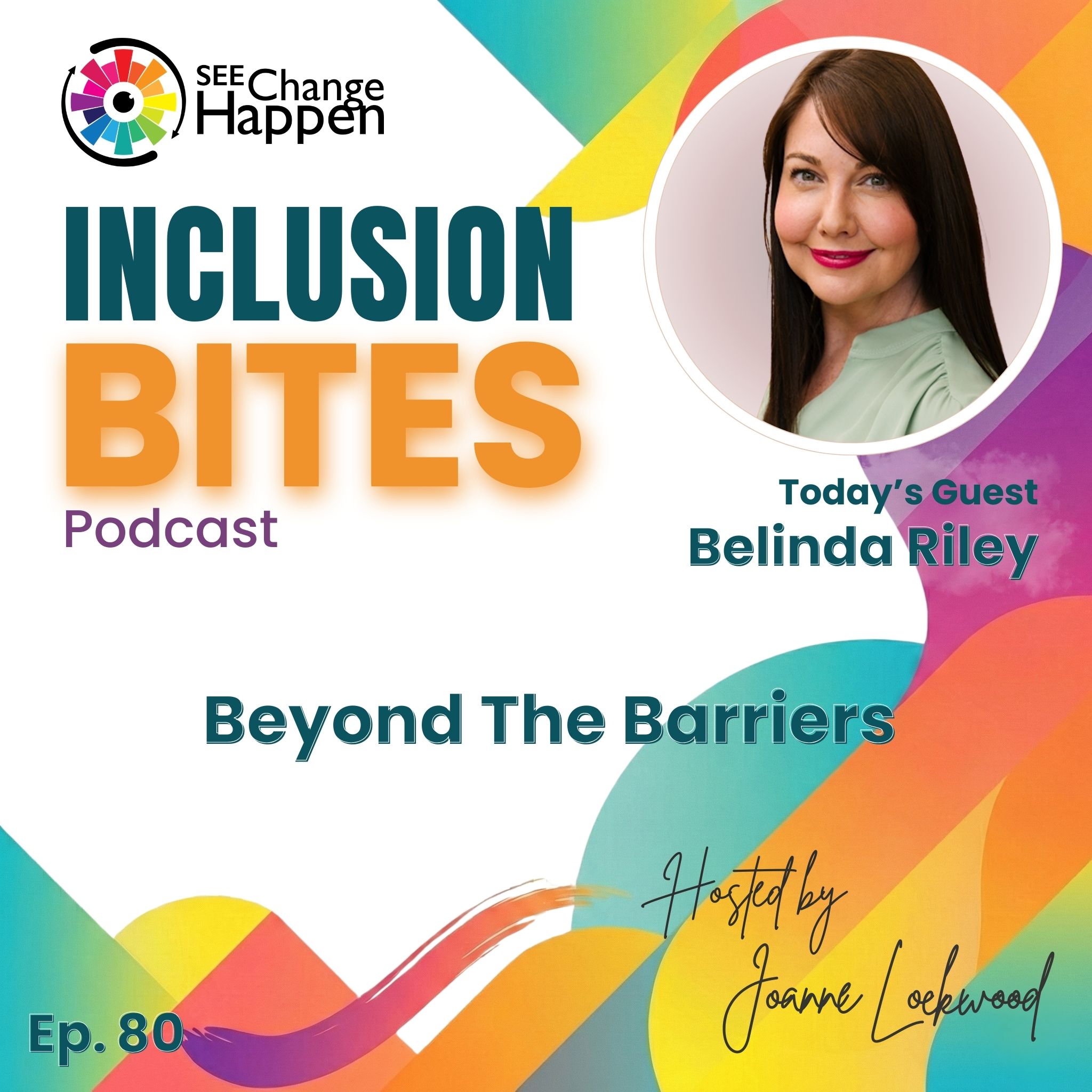
Belinda Riley explores the importance of agility, self-reflection, and sponsorship programs in breaking down barriers and promoting diversity and inclusion in the workplace on The Inclusion Bites Podcast.
In this episode of Inclusion Bites, Joanne Lockwood speaks with Belinda Riley about workplace culture systems.
“The words that we tell ourselves are the most important words.”
Explore
Navigate this episode
Joanne Lockwoodhost
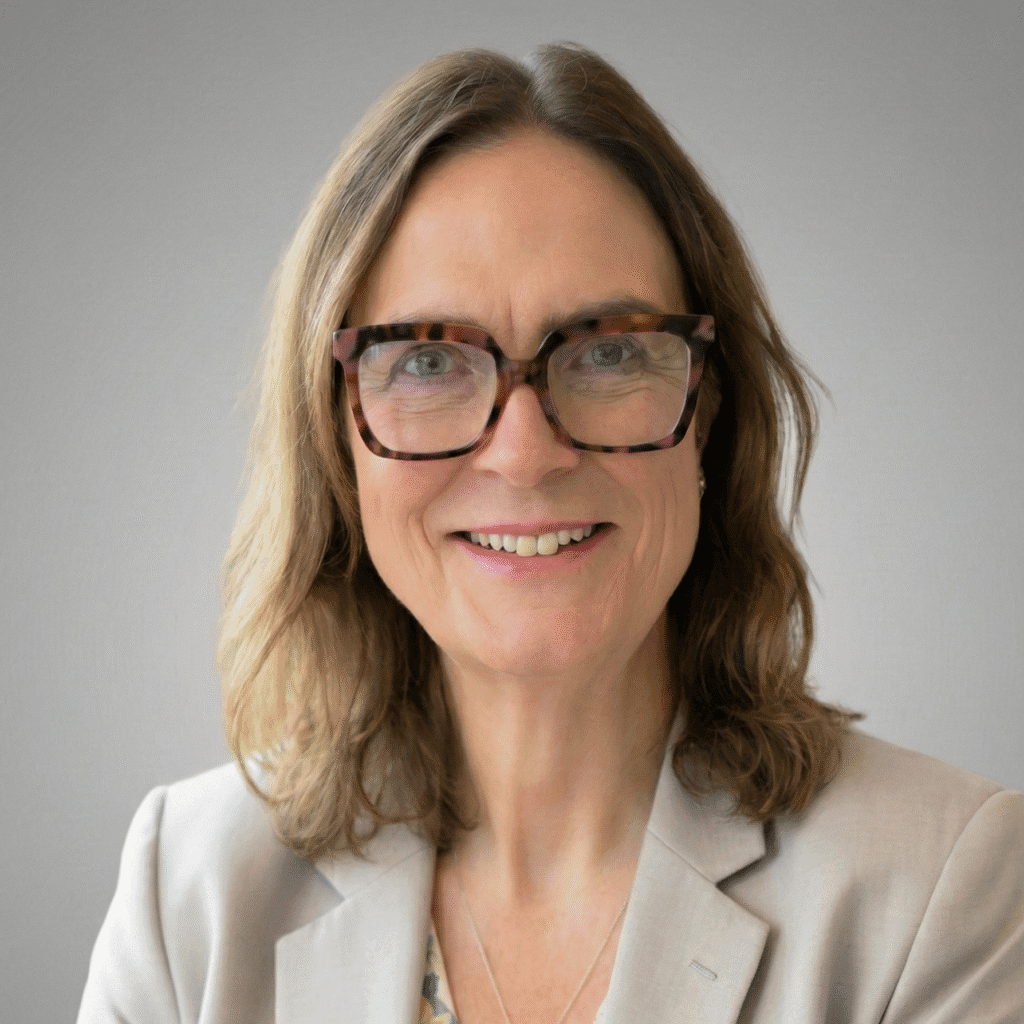
Hello, everyone. My name is Joanne Lockwood and I'm your host forthe Inclusion Bites podcast. In this series, I haveinterviewed a number of amazing people and simply had a conversation around thesubject of inclusion, belonging and generally making the worlda better place for everyone to thrive. If you'd like to join me in thefuture, then please do drop me a line tojo.lockwood@seechangehappen.co.ukthat's S-E-E Change Happen dot co dot uk.You can catch up with all of the previous shows on iTunes,Spotify and the usual places. So plugin your headphones, grab a decaf and let's get going.Today is Episode 80with the title Beyond The Barriers, andI have the absolute honour and privilege to welcome Belinda Riley. Belindadescribes herself as a diversity and inclusion consultantand also clinical hypnotherapist.When I asked Belinda to describe her superpower,she said that she truly cares and wants toget it right, not just feel like she's right, whilst alsorecognising her own privileges and using those to help others.Hello, Belinda, welcome to the show.
Belinda Rileyguest
Hello, Joanne. Thank you very much for having me. It's lovely to see youagain. Yes, it's great to catch up. Belinda,
Joanne Lockwoodhost
tell me we're speaking in the green room, just full, wentlive, and we talk about beyond the barriers. What does that mean to you?
Belinda Rileyguest
So, beyond the barriers for me, means a number of different things. Andin my work, I also do a number of different things. But in essence, it'sabout going beyond the barriers of either limitingbeliefs that people have that hold them back fromreally achieving their potential or thrivingin all areas of their life. But it's also, in myconsultancy work, it's around going beyond the barriers ofinequality to make workplaces workfor everyone. So, limiting
Joanne Lockwoodhost
beliefs? Yeah. Ithink when we first met, probably about four or five years ago, I was probablygoing through a stage of my life where this sense ofimposter syndrome, these limiting beliefs, these things hold you back,this little voice in your ear that says you can't, you can't, you can't.Many people suffer from that, don't they? Oh, absolutely. And
Belinda Rileyguest
I'm fascinated, actually, about how impostor syndromeshows up for people. And I've done a lot of work in thisarea and there's lots of research in this space, and I think theresearch says that kind of 70% of women experience impostor syndrome,40% of men. In my work, what I've kind ofcome across is realising that most people experiencesome form of impostor syndrome or have some kind of impostorfeelings. That does hold them back. Andoften impostor syndrome can show up in loads of different waysof that idea of not feeling good enough, not feeling worthy enough, feelinglike that you don't belong or that you're a fraud andsomeone's going to find out that you don't really know as much aswhat you say that aligns with what you're doing.But for me, more importantly, when I've looked closely intoimpostor syndrome, is seeing how much is being left on thetable, how many great ideas, how muchinnovation, how many opportunities, how many ideasare people not following through because of thoseimpostor feelings and those limiting beliefs and those words that theytell themselves? And it's inspired meto really think more broadly around that and how do I buildawareness and kind of empower people to overcome thoseimpostor feelings so that they can go on and achieve andthrive and realise and fulfil their potential?
Joanne Lockwoodhost
So you said just now that proportionally more womenexperienced it than men. I also believethat it's kind of people from marginalised, minority or unheardvoices backgrounds tend to be more is that down tosocialisation more than anything or is that justis it nurturing, basically? Well, what I've kind of
Belinda Rileyguest
discovered in the work that I have done is that Ibelieve that impostor syndrome is actually compounded by thesystemic barriers or the systemic inequality that exists in theworld, and in particular in the workplace.And I think often when people are talking aboutimpostor syndrome, it's kind of saying that something's wrong with you as anindividual for having these feelings, but often it's not explored withinthe context of the worlds of which we live and the worlds in whichwe work. And I think that that's whyoften, in my experience and what I see, these impostor feelingsare compounded for women and other sort of marginalised orunderrepresented groups. And I think there's a reason for that. AndI've looked really closely because I think when I started looking at impostorsyndrome, I remember when I moved from my career inthe public sector into the private sector, I remember thinking, oh, myGod, I'm not going to fit. They've employed the wrong person,I'm going to get there and they're going to go, thanks so much for coming,Belinda, but we've made the wrong decisionbecause I thought, based on my ideas aboutthe workplace, that I didn't really have a role. But what Irealised quite quickly when I started this new job is that Iwasn't the only person who was experiencing these impostorfeelings or this impostor syndrome. And people whoI was looking up to, who were and areabsolutely phenomenal leaders ofbusinesses, entrepreneurs, I had the privilege in my roleof working with royalty, with Olympicchampions, Paralympic champions, world champions, inathletes. And I couldn't believe that there was somesimilarity in around some of these impostor feelings.And it really triggered in me. Where do these feelingscome from? Why do people think they're not good enough, even when you've kind ofachieved what most people would only dream ofachieving? And where does that come from? So I started kind of doing alittle bit of inquiry and as you mentioned at the beginningof our conversation, I'm also ahypnotherapist and really interested in how sortof the mind works and the rules of themind and the power of the mind. And I also had theprivilege of studying with a phenomenal woman called Marissa Pierre. I don't knowif you've come across her before, but she's a phenomenaltherapist. She coined rapid transformationaltherapy. And she was saying that in her kind of35 years of being a hypnotherapist, a therapist, andshe uses a number of different types of therapies is that sheidentified that there was kind of three limiting beliefs thatthere's no boundaries to this idea that you're not enough,that when you look up, what you want isn't available toyou. Or this idea that you don't fit or you don'tbelong. And so when I was sort of re upskilling withher, I looked into that and was thinking about that in the context of theworkplace and in the context of the work that I was doing arounddiversity, inclusion and inequality. Andmy role was really looking to advanceminorities or marginalised groups into leadership roles.It really got me thinking about those threefactors and how does that actually show up in theworkplace. And what I realised is that when I waslooking at, in particular women and other marginalised groups,we're constantly held to a kind ofmasculine standard around what is success. And we're often told that weneed to work harder, that we need to do more to besuccessful. And there's often this ingrained belief in workplaces thatwe operate a meritocracy that if you work hard, you will progress at the samerate as your peers. But the reality is that's not true. Butthe systems are designed to support thatprocess. But then when I looked a little bit deeper as well,when you look up, it's not available to me. Well, when you look into companiesand you look in businesses and you look in who is in those seed inyour leadership for, again, women and marginalisedgroups, there's not that many people that look like you or soundlike you. And then often again, the same communitieswhen they're walking into a room and they look around, thereis, again, only few people that necessarily look like you.So when we come back to this idea of I don't belong, orI'm not enough, or I don't fit, that is kind of or I'm a fraud,or people are going to find out I don't belong, you can. Kind of seethat those limiting beliefs that we have are compounded everyday to reinforce this idea that what you're seeingis actually true because the world is telling youand reinforcing some of those thought processes.
Joanne Lockwoodhost
Yeah, I love that you break the three down. And I alwaysthink that there's the old adage and you can't be what you can't see,and not fitting walking into a room, being the only oneor seeing other people who are like you not succeeding aswell as other people are. It creates that limitingbelief. I agree completely. I think you're alsoright about this perception about you got to be superhuman sometimes.I can't show weakness, I can't show failure. Andas a woman, we end up having to juggle multiplehome tasks and work tasks and childcare tasks. Even in themost modern relationships, there's stillthat unbalanced burden, if you like,in many families. So trying to be super human todo everything or feeling like you're letting someone down if you can'tdo everything is a massive challenge as well, isn't it? Yeah,
Belinda Rileyguest
absolutely. And I think we put ourselves sometimes underso much pressure that it kind of reinforcesthis idea of if I make a mistake or if Ican't do everything that I said I'm going to do or that I failat something, that there's something wrong with me, that I'mnot good enough. And almost it becomes this self fulfilling prophecyaround there's not enough feelings. Andthe words that we tell ourselves, and I think a lot of people don't realisethis, is that the words we also tell ourselves are the most importantwords. And often wehave such a strong inner critic, we'revery good at internalising the negative. And I justwish that we were just as good at internalising thepositives, our successes and the things that we do well.And I think that if we're able to do that, we could start to kindof overcome some of those limiting beliefs.
Joanne Lockwoodhost
Yeah, you've probably heard of the phrase fake it till you make it.And sometimes it depends on how you say it and how you think about itbecause it can be a kind of a negative term. But I alsothink it's your definition of faking because impostor syndromeis almost telling you that everything you're good at is fake.So sometimes you've just got to keep on believing in yourself that that fakinguntil you make it is not actually you're not actually being fake, you're justbeing really, really hard on yourself and you are good at what you can do.
Belinda Rileyguest
Yeah, well, it's interesting that you bring that up. I thinkthat in the work that I've been doing as a hypnotherapist and again, studyingwith Marissa Pierre is understanding how the mind works.And there's what's called these rules of the mind and this is where this ideaof kind of faking it till you make it almost comes through. But let megive you kind of a new way of kind of reframing that, is that whenwe actually understand how our mind works, we can actually work withour mind rather than against it. Because the minddoesn't actually distinguish between what is real orwhat is fake, what is fact, what is fiction.It's actually just listening and responding to the words that you tellit. So the whole idea that you might not believethat you are talented at something, but ifyou tell yourself enough, then your mind will actuallyrespond to the words that you're saying it. Soour minds are designed to keep us safe, in essence. And this goesback and I know that you've had lots of conversations with previoussort of guests around this idea, but our mindis designed to take us away from kind of keep us safe. And that alsomeans that it takes us away from things that are perceived paintowards what is perceived pleasure or safety. Butwhen we know that we can work with our minds to tell itwhat we want it to be, so we can shift from I'm not good enoughto I am enough, through that consistency and thatrepetition, our mind starts to respond and believes whatwe tell it. And so often people talk aboutthis whole idea of affirmations and people goget a bit icky about sometimes affirmations, but in essence, affirmations arejust the words that we tell ourselves all the time. And if we go backto what we were saying before, so often the words that we tell ourselves arevery negative. I'm not good at that. No, I can't do that orI'm failing or that, or people are going to laugh at me or judge meif I do those things and they literally hold ourselves back. But if we startto tell ourselves a different narrative because everything actuallybegins with a thought and we've got the power to controlour thoughts and change out and change our thoughts and ourthoughts, everything starts with a thought that creates a feeling andthen that feeling kind of creates a behaviour or an action that then kindof creates certain thoughts again. So coming back to thatidea that you've got to fake it till you make it, actually, if you tellyour mind something enough, it will start to believe it and thenyour behaviours start to align with that belief system.
Joanne Lockwoodhost
Yeah, I agree. I look back at myown journey of the last six years and some of the earlystages of that imposter syndrome limiting police really impactedme. One thing I identified was thatI didn't have any benchmark just to knowhow I was doing. I didn't have any positivereinforcement. I worked alone, like many of us do withfreelance or independent. So you haven't got colleagues around yousaying you can compare notes or even when they say, wow, you're doingamazing, you go my reaction was nowI down talk that almost embarrassed to be celebratedsuccess. And I eventuallyovercame it by realising that I was benchmarking againstmyself. And the incremental change was almostuntied with a continuum that very micro changes. I wasimproving and I had to start looking further back. So I had to startlooking a month ago or two months ago.And that's where I started realisingthat I was improving. Yeah.
Belinda Rileyguest
And I think it's really interesting that is that sometimes we forget wherewe started and where we've come, and often whenwe start to change and develop and grow, sometimes that canfeel very incremental. And as you said, unless we're kindof clear of where we started, and so often we don't, and oftenwe fail to stop andcelebrate our successes, our wins, some of the, youknow, whether they're big wins or small wins, and actually seeing theprogress. And often our limiting beliefs are based onexperiences that we had years and years and years and yearsago and aren't actually relevant or aligned to where we arenow. So the fact that you're able to see that, I thinkis phenomenal. And I think sometimes we do just need to cheque inwith what is it that we've done? Look backand see how far we've come, celebrate that, but also getclear about where we want to go. What does successlook like to us, and then what is the action we need to be takingto achieve that? Someone said to me that it's
Joanne Lockwoodhost
a very British thing to be self deprecatingor not taking credit for what we cando. Is it just a British thing or is it a world over trait?This is imposter syndrome. That's a very good question.
Belinda Rileyguest
I was having this exact same conversation with a German friend ofmine only a few days ago.And I think that in my experience and I've had theprivilege of working with people across culturesaround the world. I thinkthe term impostor syndrome is one thing,but I think what's sort of equivalent to the impostor feelings I think arefairly universal. I think it's just about how you describe it.So, yes, I think the British do regularly say, and I'm an Australian,and I was trying to think about are we self deprecating inthe same way that British people are? But I've been in Britain for so long,for 20 years, I can't quite distinguish what's different. But no, I dothink that it's different interpretationsof how you would describe impostor syndrome.But I do feel that when we're looking at kind of more broadlylimiting beliefs, I feel that most people have them. Andoften those limiting beliefs stem all the way back intochildhood. And it's about ourinterpretation. So you and I could have experiencedvery similar things or different things, but our limiting beliefs comefrom our interpretation of those events. And thenevery time we're in a situation where those feelings aretriggered again, it kind of compounds those feelings of notbeing enough or those compounding those feelings of impostorsyndrome. You said at the
Joanne Lockwoodhost
beginning, I introduced you as a diversity inclusionconsultant. And one of the things that I always find when I speak topeople,one of the biggest challenges they have is overcoming thisfear of getting it wrong. Everyone's worried about upsetting somebody tothe point where they'd rather disengage than engage. Sohow do you get people comfortable having uncomfortable conversations, or feelinguncomfortable, if you like, around these kind ofconversations out of their depth whilst giving them a safespace? Yeah, well, first and foremost, I think it's realising
Belinda Rileyguest
that you're not alone.Most people are more worried about themselves than they are worried aboutthe other person and what you think about them. And I think there's something quitefreeing in that. Again, only the other dayI was talking to an old colleague and they're like, oh, my God, I saidthat. And I was like, My goodness, nobody would have even noticed that.But what you felt, where you'd made a stumble or you'd donesomething wrong, that you really noticed. Nobody else evennoticed that. So I think also we're very, very harshon ourselves and I think sometimes we've just gotto kind of let some of that go. Ithink that also we have to get comfortable beinguncomfortable and creating space and kind of almostthat psychological safety for people to be able totalk about issues and talk about differentexperiences, because otherwise, if we're not out therelearning and building awareness and breaking down some of these barriers, nothingever changes. And I regularly and I do alot of work with leaders and a lot of leaders feel and say to me,but what happens if I say the wrong thing? And it's like,but, yeah, you might say the wrong thing,but also, what is your intention? Actually? You often are speakinglouder by not saying anything at all.And I know in talking to lots of people, the factthat people are willing to have that conversation and opento learning and opening to making a mistakeis far more engaging than feeling like you're not beingseen heard or even being given the opportunity to have avoice. Yeah, we do see
Joanne Lockwoodhost
countless examples, though, in the media where someone's made a slipup and they get berated for the recent example ofthe lady waiting to our former queenor our deceased queen having aconversation to a charity, a black person who's a charity worker, and how thatconversation went around where you're from. So people see thatand they either go, oh, that makes me really nervous, orthe opposite reaction is they get kind of defensive about this political correctness andwokeness in society and you can't say anything these days withoutsomeone jumping on you. How do we kind of have those conversations where we'rehelping people through that? Yeah, I
Belinda Rileyguest
think the social media has made life quite challenging forpeople, but also, I think in that example, there was areal lack of awareness. And I think that when people do makemistakes and what was saidwasn't appropriate, and I think that they weren't being aware of the impact ofthat constant questioning about, but no, where are you really from? Where are you reallyfrom? And the impact that that has. I think thatfor me, we have a responsibility to educateourselves and to learn and touse those kind of moments around how do we actually reflect and what isthe impact that that has on other people's lived experiences?And I think that for me, where Isee a real issue is when people aren't open to thatlearning. We talked at the beginning about privilegeand it is about recognising that we have gotcertain privileges, but also it's aroundthere's a great quote that I often use in my work and I bettermake sure I get it right. It's a Stephen Covey quote, is that wesee the world not as it is, but as we are.And I think that for me, that's really important, thatwe start from a place of acknowledging thatand then being open to learning to make surethat we do continue to evolve. I think it'sdifficult, though, I think, because a lot of people are persecuted forsaying the wrong thing. But I alsothink that sometimes it's aboutthe intent and it's alsorecognising the barriers that certain people doface every day. And that was a classicexample of that, of not recognising and notbeing aware of and not,I suppose, almost reinforcing an issue.
Joanne Lockwoodhost
Yeah, I agree that most most people are, by definition,good at heart. Most people want to do well in the world, they wakeup with positive intent. But as as youas we just discussed, the intentdoesn't always cover the impact. We have negativeimpact and we slip up.How do we recover that if we realise we've created a negativeimpact or a problematic impact? Yeah, well, I think it's also about acknowledging
Belinda Rileyguest
it. It's not denying that it happened. I think that we have to getcomfortable owning our mistakes and acknowledging it.So acknowledging the mistake, apologising forit, learning from it, but also then we need to be able tomove on. And I think that often wedon't do that. And I see that and I think actually one of the biggestbarriers to the work that I know that both you and I are verypassionate around advancing equality in theworkplace is the denial of the inequality that existsand people not taking responsibility formaking change. There is enoughinformation out there for us to just becauseyou haven't experienced something or you haven't seen it or it hasn'taffected you, it certainly doesn't mean that it hasn't happened.And I think that for me, is one of our greatest privileges, isbeing able to use that privilege to break down some of thosebarriers and using your voice and using your power andinfluence to start driving change.I often see, especially through this lens ofdiversity, equity, inclusion, is that we're asking minority groups to fix the problem.It is not their job to fix the problem of inequality. Soagain, it comes back to, for me, that education piece, butwe also need to ensure that we're able to acknowledgewhen we have made a mistake and what we're actually going to do about that.
Joanne Lockwoodhost
Yeah, that's so true.Black people can't fix racism, no women can't fixsexism, et cetera, et cetera. But what we often find is inour dei space when we're having these conversations, becomes an echochamber, becomes an echochamber of just within that community. So blackpeople talk about the challenges or black brown people of colour talk about the challengesthey face, but white people aren't listening. So how do weget everybody in the room through allyship? But how do wepersuade people who are not part of those minority groupsto engage and learn more about the challenges, theinjustices, as you said? Well, I think
Belinda Rileyguest
that there's a number of things. I mean, for me it is aroundunderstanding, creating space and opportunities to buildawareness and understanding. There is so muchinformation out there and it's about how do people connect on apersonal level. I think, as I said before,people have a responsibility to educate themselvesand to take action and for people to be awareof how they can leverage their power. Well, first of all, thatthey have got power andinfluence. I think that there's alsoan opportunity in terms ofensuring that we'relistening to people's lived experiences and creating that space tolisten to people's lived experiences. And I think coming back to thatprivilege is it's not always somebody's fault,but it is about recognising that it exists. And Ithink I mentioned before, one of the biggest barriers is the denialthat inequality exists in the first place. So how do weensure and I think that what I've seen is that everybody connectsin different ways. So how do you create those AHAmoments for people that they can connectwith? I think that what I've often seen is thatsometimes the messaging around diversity and equityand inclusion creates a zero sum game. Like to advanceinequality means that other people need to miss out. And that's a realmisconception. Everybody stands to gain.And I think for companies in particular, there is somuch out there that shows that the companies who get this rightare at a competitive advantage. So sometimesit's about how do we ensure that people understand this in theright way around what some of the benefits are.I often say there's no business case for the status quo, but Ialways say, well, tell me the business case. And I do find that a littlebit frustrating, but actually there's enough information out there that demonstrates the businesscase as well as the human case. But recognising again, thateverybody stands to gain from getting this right. But I'd love tohear from you, how are you experiencing this? Because it is achallenge. It is. And
Joanne Lockwoodhost
I have my own marginalised characteristic.And as a trans woman,like most people recorded this in February2023, there's a lot of anti trans rhetoriccaused through the Scottish Gender RecognitionReform Bill, talking abouttransgender prisoners who have been convicted of rape. There'sa whole load of rhetoric around. Think about thewomen and children with damaging access andall this focus on trans women. So it is I'mwell aware of the noise and this pervasive kind ofdrone in the air that I and other trans people feel.And it affects we talked, to use the word earlier, psychological safety.It means I'm constantly on a state of awareness and stress andanxiety in certain situations. And it'sreally hard to I think, as you said,you talk about the zero sum game. I'm not trying to stealanybody's space, I'm not trying to take anything away from anybody.All I'm saying is, can I exist in theworld? And you're not losing. There's nothing to lose here.If there are bad people, there are bad people. There are bad people in allbooks of life. And just because you're transgender doesn't mean say you're a bad person.Sothe effect is we dehumanise. And once you dehumanise,it gives society permission to treat you any way it likes fortheir impunity. I think what's happening is the moment we see it through time. Iwas speaking to a lady yesterday around the dehumanisationof Arabs and Muslims. We saw around the dehumanisation of theJapanese people in America after Pearl Harbour, we saw inthe Second World War and the Nazis aroundpeople who are Jewish. So we see these dehumanising wordsand we're seeing now the worrying thing is we see the rise of theincel movement, the Andrew Tate, the toxic masculinitydehumanising women as such as becoming property. So Ithink as much as we're pushing forward, we'rehaving to hold our own at some point, because otherwise, if we don't hold, we'resliding backwards in some of these areas. Yeah, absolutely. And I
Belinda Rileyguest
think at the heart of all of this, it is about beinghuman. And I think there is a real reminder. Andwhilst I think when we look at what peopleexperience, and as you've just explained, I don'tthink there's anybody in the world who has not felt at somepoint in their life what it feels like to be excluded or tobe rejected. Just some people only have to experiencethis occasionally and often when I go into companiesto work with them, to really kind of help people connect withwhat we're trying to do, and the goal ishelping people to connect with that. What does it feel like, closure?Sometimes do these visualisation exercise, just close your eyes for a minute andimagine what does it like walking in and the onlyperson you open up your eyes and you're the only person that looks. Like youin the room. Remember that timewhen you weren't picked at school to go to aparty, or you weren't invited to a party, or that you weren'tchosen to be on a sports team, being rejected from a date.You ask somebody out and they say no. All of these feelingsare kind of universal, those feelings of not fitting in. And it comes backto what I was saying before, not feeling worthy, not feeling enough. Andthen for me, when people can connect with that, imaginefeeling like that every day, that every day youstep out of your house. And aswomen, we have different thought processes to men because ofsafety every day. And I have theseconversations regularly. Do you even think about what it feels liketo have to think right? Am I going to be coming home late tonight whenit's dark? Am I safe to do that? Can I get transport? How am Igoing to get home? Does anybody even know where I am, for example?And I know that that happens for women and for black boysin particular as well, out in the community, because of thesestereotypes. But when people can actually connect, Ithink sometimes to some of those human behaviours andmake a connection, then that for me, sometimes is a trigger to getthinking, people thinking in a different way.
Joanne Lockwoodhost
It was certainly something I had not foreseenwhen I transitioned six, seven years ago.As we grow up, we learn these social constructs, we learn ourbehaviour model, we learn all these things. And what I hadn't appreciated wasthe need to unlearn, to allow me torelearn. And I experienced some safetyissues that completely came from left field. I had noidea this was going to happen. I was so unprepared.Fortunately, nothing terrible happened, but it was like a realjolt. I can't do this anymore without thinking, Ihave to plan this, I have to be aware of this. I need to chequethat someone is watching me in case this goes wrong.I'm not alone here. I've got support if I need it in abar or wherever that may be. And it was a reallyscary enlightening, but also a wake up callaround my own set of privileges that I had that I hadn't even thoughtabout. And now I erased those privileges and I had this newfeeling, a number of stories. I was ata dinner a couple of weeks ago with two otherwomen. We're sitting there having a conversation. They both looked their watch at some pointwent, we better be going home soon. I don't want to get that last tube,I don't want to get that last train. I want to make sure I gonow. I don't have to get my keys out and hold them between my fingers.I thought, this isn't conversations, this is normalconversations that women have around the table at that time. Of nightthat, again, I was suddenly going, you're right. Yes,you're right, I'm still trading off that old privilege.
Belinda Rileyguest
Yeah. And often people don't necessarily lose. Well, what's the impact ofthat? What is the emotional load with coming withhaving to think about elements of your identityeach and every day? We talk a lot, don't we,around health, well being, mental health,these thoughts, as you've just described as well, thatcan have quite a profound impact on people. And you thinkabout your kind of working memory. If a percentage of your timeand energy is thinking about this, what is the impact that that has in otherareas of your life? And we connect that to the workplace. How doesthat impact productivityin the workplace if people are already having to think about all of those thingsbefore they even start the day? So, again, coming backto companies and businesses needto think about that because there's so much again being left on thetable, because people are worrying about things that because they can't betheir authentic selves, because that's not what fitsor what belonging. And again, there's something thateverybody can gain by creating a place where people can turn up andbe themselves, that there'smodifications to create the right environment for people tothrive. Now, that's for me around, there's a great image, and I'm sureyou've seen it before, that describes equality versus equity, where you see people onbikes. We shouldn't be treating everybodythe same because that's not recognising orunderstanding some of the barriers or modifications that peopleneed to be able to get on the right size bike so that they canget to the finish line. Yeah,
Joanne Lockwoodhost
I think it was JFK. Rising water floats all boatsevenly. Don't we have to recognise this? We need to add enough waterso that we are floating everybody, but it starts at the lowest boatsfirst and then raises to the highest boats. That's recognising that people need thisequity, we need to invest in. Peopleunderstand that the barriers, the additional challenges of being them.And I think you're right when you're talking about this extraload, cognitive load, my background in it, I usedto be a programmer many, many years ago, and I always think about these littlethings or little subroutines in my head. So am I safe?Am I going to be disrespectful? Is someone going to misgender me? Is this goingto happen? So all these little things are firing off before I can actually doany next the proper thinking, yeah, I've almost got thisextra burden every time I'm going, tick, tick, tick, tick, tick. Yeah, good, but carryon. And that could be limiting beliefs, it could be all this other stuff inthere, all part of this load that I and others haveto consider through lack of privilege or whatever it may bethat others may not have to. Maybe they have theirown subroutines their own challenges. But, yeah, it's definitely I feel that cognitiveload there now. Yeah. And that's really powerful. And I think there's
Belinda Rileyguest
also things that we can do to take some of thataway for people. What can we do? We shouldn't be adding tothat by constantly having to either fixthe problem or fixingdifferent things within workplaces. I think that thosein positions of power and influence don't, I think,realise that they can do things differently toalleviate some of that emotional load or even justrecognising that that's what people experienceevery day in certain areas. And being the
Joanne Lockwoodhost
only one in a roomshould not be underestimated how what a load thatis. Because in one respect, you're representing everybodywho's like you. The conversationsare harder, you're looking out for microaggressions or discriminatorycomments or those challenges,and you're worried about your personal safety, you're worried about a whole loadof factors going on, psychological safety. AndI think a lot of workplacesare set up, so there are many places where you are the only one saidif you're a young black woman trying to succeed and go intoleadership roles, there are many role models in there. So what canorganisations do around coaching and mentoring and supportprogrammes? Equity, we talked about. Isn't it about equity? Yeah,
Belinda Rileyguest
I mean, something that I'm really passionate about and have been doing a lot ofwork and have been seeing quite phenomenal impactis sponsorship programmes. And thereason why I think sponsorship is probably one of themost influential factors in kind of advancinginequality or advancing equality in the workplace isit shifts the responsibility around who'skind of accountable for change.Traditionally, and I think this is done with really great intention, we have all ofthese programmes that focus on the minority, whether that's women,whether it's ethnic minorities, et cetera, et cetera.But I think unintentionally it's also the messageis we're trying to fix people to fit into an environmentwhere they don't fit. But actually,if we shift that towards, well, actually, what canwe do to actually enable? Because people don't need fixing,they just need the right environment for them to thrive and that might be differentto what certain people need. But when we talk about people who areindividuals and looking at what people individually need,then we're going to have far greater success. And what we'vediscovered, or what I've discovered through sort of different parts of work that I've done,is that often people have accessto sponsorship informally by those who are in themajority. We all have affinity bias, everysingle one of us. We have very much human behaviour and in essence, affinity biasis that we like to surround ourselves with people that are similar to us orthat we can connect on. And I think that dates right back to tribal times,that if you're a part of a tribe, you're part of a community, you weresafer, and if you stepped outside of that, you were at risk. The thing is,we're not back there, we're not in the same place anymore. But alsothat kind of idea of being around people who are like us does makeus feel broadly safer. And as a result ofthat, and as a result of people who are in the majority, those who arelike that get access to whether that be networks, whether that'sopportunities, whether that's information, and that creates hugeamounts of advantages and opportunities forthose. So when we're looking at kind offormal sponsorship programmes, when you can help, especially leaders inbusiness, understand the barriers that peopleface and how that is compounded when you applyintersectional lenses and once theyrecognise that but they can actually do something tosupport those people by giving them access toinfluential networks, information, opening doors,creating visibility it canlead to huge differences forthose people. But for me, that's around really active, visible andaccountable sponsorship. Now, what I've also seen is a lot ofpeople think that they're sponsoring others, but they're not, they're mentoring them.And the difference for me is sponsorship is about howyou use your influence for others. Mentoring is aboutsharing information, but it's really about what you do whensomebody's not in the room. So if people are really looking at waysto advance sort of representation ordiversity in workplaces, my top tip often isaround, look at your sponsorship programmes, look at formal sponsorship programmes,let's look at the systems, let's break down those barriers that exist,let's challenge this belief of meritocracyand let's really make a difference.
Joanne Lockwoodhost
Yeah, the myth of meritocracy is is still powerful, isn'tit? I've I've I've been in a room full of recruiters andand they all pipe up, yes, but the best person gets the jo,and I say, using whose criteria?And it's about who designs the criteria, designs themeritocracy. And the criteria is designed often withbias own lens, own lens stuff. You're looking at yourselfor I've got a Trevor and I want another Trevor. That's what we're saying, isn'tit? And that's often how the meritocracy is designed, someone just like that.
Belinda Rileyguest
Yeah. Well, it's interesting, I leveraged this termcalled meritocracy that I came across, because actually, Ithink that what most companiesdo, again, unintentionally and unconsciously, isthat they kind of employ, promote, develop peoplewho look and sound like those who are currently in positions of power. And thisterm, meritocracy, was originally coined in Silicon Valleywith a recognition that those in the tech industry, they weren't beingemployed based on their merit, they weren't being employed based on their skills, they werebeing employed based on who looked like those that were alreadythere. And what that meant. And the bigger impact is that they weremissing out on the skills that actuallywere going to help them and enable the businesses and I see that playout again and again in businesses at the moment. And theother question I often challenge people is, well, why would someone want to come andwork in your organisation? And Ithink that if you can answer that question, that's what's going toattract people in. Do you actually value the uniquenessthat individuals bring? Do you create the space for people to havea voice? Because I often say, oh yeah, we really value diversity,it's really important to us. Well, show me, what does that actually look like foryou? Why would a trans woman want to come and work inyour business? Are they going to be set up for success andwhat are you going to do to enable them to be successful? What does thatactually look like? And for me, they're some of the tough conversations wereally need to have because when you start asking those questions, I'mnot sure that everybody always has an answer.And I think that going back to what we were talking about, aboutbeing unlearning and then having to relearn, is Ithink that there's a lot of that that needs to happen. But again, we needto create the space for people to be able to do that,to think about how do we valuepeople who are different and how do we create the right environment. For people to
Joanne Lockwoodhost
thrive when we're trying todiversify. Some air quotes when I said diversity,diversity that are we indanger of creating a stereotype aroundthe person we're trying to hire. What I mean by that isoften when we say why do we want to hire more women?And often we'll say we need more empathy, we need more compassion,we need more soft skills into ourteams, that's making the quantum assumption thatwomen have those skills more than other people. And that's creating astereotype that women are naturally more emotional and compassionate and that'ssaying that men can't be so we're almost creating a reverse bias there tojustify why we should hire more fairly. And I think sometimeswe get sucked up into these other stereotypesand unfairly hiring women just because they'reemotional and compassionate and have high EQ,supposedly. Well, actually, I think there is some research that
Belinda Rileyguest
supports some of those statements. But I think moreimportantly is I think that it's redefiningwhat are the skills that we actually need? AndI think that and not puttingpeople into these gendered stereotypes, but I think that becausepeople men can be very emotionally intelligent andcan have empathy and there's women that don'thave empathy so it shouldn't necessarily keep putting people intoboxes. It's about what are the skills that we need?What does a leader look like in our business and whoare the best people then to deliver on that? And it goes back to yourpoint is are we even clear around what are theskills and capabilities that we actually want and need for abusiness to thrive. And I think that that haschanged and I think that there's a recognition that there's certain skills that we needmore of in the future world of work thanbefore. And I think that that is constantly evolving and changing as well.But I think that it shouldn't necessarily just be defined about a woman brings thisor a man brings this, or somebody from this community brings this. It'sactually being clear on the skill, see? Andthen starting from there. Yeah. And
Joanne Lockwoodhost
also building trust as well.I was talking to somebody the other day, and what we're talking about hereis diversity isn't about Noah's Ark, it's not having two ofeverybody or one of this or some of that. And we've got to havethis matrix of different personalities and identities. It'saround the people who we have, trusting the people inleadership or the mission of the organisation tosupport them, recognise them, empower them, look after them, create their belonging,create their culture. So you may be the only one. I mean,I'm the only one often, but it doesn'tworry me, provided I trust the environment I'min to respect and look after me and not break me.
Belinda Rileyguest
Yeah. And that comes back to that psychological safety, isn't it, isthat if you go into an organisation and everyone looks and soundsthe same, what you could determine from thatis that they're not valuing difference. And it's not always about having tosee a complete replica of yourself. But if there ispeople who are representative of different backgrounds,different whether it's socioeconomic background, differenteducational backgrounds, different ages, all those different elements,people who are neurodivergent if you've got people who arerepresentative of difference, it shows that,well, my difference is more likely to be valued andaccepted because there appears to be becauseof what I'm seeing. People are there because of their uniquenessand the diversity of what they bring, rather than, oh, there's four women, there's fourof this and there's four of that. And I think that often peoplethink that diversity or having certain diversity is fixing theproblem of inequality. For me, diversity is an outputof inclusion and belonging.
Joanne Lockwoodhost
Yeah, I often talk about that, where people focus on thesediversity initiatives, diversity, hiring, let's go out, hire morepeople. And I always say, no, hiring is the last thing you do,not the first thing you do. And it's about getting yourculture right. If you get your culture right with your values and alignment,belonging occurs. If belonging occurs, inclusion occurs. If inclusionoccurs, you will be more diverse because you're welcoming people. If youget the diversity right, you're going to be compliant because youwon't get things. So it all starts with culture, starts with belonging,starts with those values. Absolutely. And I think that,
Belinda Rileyguest
again, this is where some of the messaging hasbeen misconstrued almost, is that, but I'vedone this, I've hired that and it didn't work. Andwhat frustrates me sometimes about that is, oh, no, but we put women intoleadership roles, but they weren't successful. And it's like, well, did you look atwhy did we actually set people up for success? Just putting someone into anyrole, you're not going to put a doctor all of a sudden become a lawyerand expect them to thrive because they thrive somewhere else. We have toreally set people up for success. What support doessomebody need to be successful in that role? And again, Ithink it comes back to the why. Why is thisimportant? And understandingwhy this hasn't been successful in the past. AndI think it's unpacking that. And I think that, again, it comesback to, do we understand the different livedexperiences of people? And just because something workedfor you, it doesn't necessarily mean that it's going to work forothers. It's this concept of the concrete
Joanne Lockwoodhost
cliff, isn't it, where it's really hard to break through the glass ceiling,but what happens is you get there and you realise you don't like it. Youjump off the concrete cliff because it's so toxic, you don't want to be thereanymore. So it really is making sure that you are, as you say,providing that support, that nurturing,recognising the equity that needs to be pumped into thiscircumstance. And, yeah, people might say, well, we don't need to do thatwith men, they just get on with it. But that's not necessarily afair representation, because maybe these men have been nurtured alreadyand they don't necessarily have all the skills. So maybe insteadof focusing on these man attributes, we look at adaptability, learning, creation, allthese other things we talk about in the future. Recognising the world of work inten years time is completely different to the world of work today. Ifyou look at what's happening with AI Chat GPTat the moment, the world's going crazy around AI image generation,everyone's already talking about this. AItaking over the world. And so if we're now generatingcontent and products using AI, where do all theseother roles go? So it's in the same paradigm shift asDeliverer, as Uber, as Facebook, as all these social media stuff. Wedidn't have that ten years ago, now we have. So we look atfor ten years, the world of work is going to be phenomenally different this today,and we need to hire people who are ready for that change. Yeah, and I
Belinda Rileyguest
love that quote, what got us here isn't what's going to get us there. Andfor me, that's about we have to keep evolvingand responding, and the world is changing, as you said it'sso rapidly. If we look back what's happened in the last fourto five years, probably the last time you and I were in persontogether, how much has changed that wedidn't foresee. And I think that, again, this is about howcan we be agile, how can we be flexible, how do weadapt to these changes? And I alwaystry and look for some of the positives. And I mean, COVIDwas pretty horrendous for most people. And again, I think therewas some good things from that and there was some things that wereally struggled with. And I know for me, not being able to see my familyback in Australia was really difficult. But when I come backto thinking about COVID within the context ofworking, of the working world, it busted. So many myths aboutthe way we used to work that I think kind of reinforced andprevented us from really shifting the dial when it came toan inclusion and belonging perspective. Because I used toalways get told, oh, Belinda, people have to be in the office, people have tobe on client sites. Well, actually in the firm I used to work with, wemanaged to mobilise over 300,000 people within a week. Andtechnology has enabled that to happen and still ableto deliver solutions for clients, still able to team, tostill be able to collaborate and still be able to besuccessful. So it's always about forme, how do we reimagine, what else can we do? What can we learnto keep moving forward? And I think there's some huge opportunitiesthat came out of that and I don't think we've quite landed on what thatlooks like going forward. And I know lots of people and companies are struggling withthat. But I think it also opened up a huge talentpool because there was a lot of people whoweren't able to participate within the workforce because ofthat needing to be present. Whether or not that wasaround getting into the cities, how expensivethat is with people with caring responsibilities, people withdisabilities or a number of different reasons that may haveprevented people, that has now opened up. And I think for a lot of companies,the biggest challenges that they have at the moment is winning the war on talent.Or there's a lot of great talent out there. How do we think differently sothat you're the one that gets access to. That talent, and
Joanne Lockwoodhost
talent is more empowered, more enlightened. Talent knows different now.Talent knows it can work from home. And Ioften wonder what motivation is driving someof big businesses. I know the government are worriedabout the rail infrastructure, the underground infrastructure, not having enough people to keepit viable. We've got dead in the cities, coffee bars, cafes,all these economies closing down. So there's an immense pressure to get peopleback to the office just for the economies in the area without necessarilythinking about the benefit to people. And I think when I hear people talkingabout big global leaders talking about we need to get peopleback in the office because it means the creativity, mentoring, learning of eachother, coffee machine, water cooler, chat. And I think,okay, I get that there is some power and some benefit of have face toface contact. I value it as well. But for me, when the answerto every question is back in the office, that's where it falls over.The answer to every question is, what can we doin this particular case? And I think we need to recognisethat Back in the office is not the only answer or the default answer toeverything. So it's about being more innovative. Local hubs,work clubs, that kind of stuff, in local businesses. Yeah, I used to
Belinda Rileyguest
always laugh that often we're in the office and everybody's at their computer with theirheadphones on, so you can kind of do that from anywhere. So I thinkit's just about being creative and imaginative around how dowe use certain spaces and do you come in for thosecollaborative days or those days for teaming? And then do you have thosemeetings structured in a different way? I mean, to be honest, I don't have allthe answers, but I do think there's an opportunity to really think through differentthings. That creates more opportunity for more peopleto participate. And when we look at generations, and I think this isthe first time in history, isn't it, that we have five generations in the workforceat one time, all with differing needs, all with differingexpectations. And so how do wemanage some of that? But if we don't, we are alsomissing, and again, comes back, right back to what I was saying at the beginning,is about how much is left on the table by not creatingthe right environment for people, people to thrive.And when we look at the new generations comingthrough, they're very clear that they will notwork in an organisation or a company that does not value themfor who they are. And they're demanding. I think thelatest research is 80% of thiscommunity want inclusion and if they get somewhere and peoplearen't delivering on their promises, they're off, they're not going to stay.And that's a hugely expensive exercisefor companies. So there's a real opportunity for people to get thisright that benefits everybody.
Joanne Lockwoodhost
Fantastic. That's an awesome place that we canclose this down and draw a line there. That was immenselyinspiring, that last word you saidthere, belinda, it's been an absolute pleasure. So howcan our audience get in touch with you? What's the best way toconnect? So the best way probably to connect with me is either through
Belinda Rileyguest
LinkedIn is a great way, and often people connect with me there,either via email, so that'sBelinda@belindariley.compeople can find me there. I'm also on Instagram, whichis at Belinda Riley, and I'mjust in the process of designing and developing a new app.So when that comes out, it's going to be called beyond the barriers.So that's a nice little connection to ourconversation. So I think you just type that into the App Storeat some point soon and you can find me there aswell. Fantastic. Thank you once again.
Joanne Lockwoodhost
Thank you. Thank you to all the listeners. Thank you forlistening this far. Tuning in. Please dosubscribe. You'll be notified of future episodes of the Inclusion Bitespodcast. That's B-I-T-E. If you haven't already shared it with yourfriends and colleagues, then please do. I've got a number of other excitingguests lined up I'm sure you'll be equally inspired by over the next few weeksand months. Of course, if you'd like to be a guest yourself, please let meknow. Just drop me an email.
Joanne Lockwood is joined by diversity and inclusion consultant and clinical hypnotherapist Belinda Riley for a wide-ranging conversation about what it takes to go “beyond the barriers” that limit people at work.
They explore impostor feelings and limiting beliefs, including how they show up as self-doubt, fear of being found out, and a sense of not belonging. Belinda connects these experiences to systemic inequality, arguing that workplace structures and norms can reinforce “not enough” narratives for women and other underrepresented groups.
The discussion moves into practical inclusion work: how to create psychological safety for difficult conversations, how to recover when we cause harm, and why intent does not erase impact. They also challenge the myth of meritocracy, unpacking how hiring and promotion criteria can be shaped by bias and affinity, and why organisations need to design environments where people can thrive rather than trying to “fix” individuals.
Joanne shares lived experience as a trans woman, describing the effects of anti-trans rhetoric, safety concerns, and the cognitive load of navigating workplaces and public spaces. Together, they emphasise belonging, authenticity, and the role of allyship.
The episode closes with a look at changing ways of working, including lessons from COVID-19 about flexibility and access, and the opportunity for organisations to widen talent pools. Belinda highlights sponsorship as a high-impact approach to advancing equality, shifting accountability to those with influence and opening doors for those who have been excluded.
How can companies adapt to attract and retain diverse talent?
What are some effective strategies for promoting diversity and inclusion in the workplace?
How do our beliefs and thoughts impact our behaviors?
What are the limiting beliefs that contribute to impostor syndrome, and how can they be overcome?
Why is it important to acknowledge and understand the experiences of marginalized and underrepresented groups?
What are some examples of informal affinity bias in the workplace, and how can formal sponsorship programs help address this issue?
Explore topics
Ideas from this episode
Workplace Culture Systems
Psychological Safety
Belonging
Authenticity
Allyship
Change & Transformation
Learn
Frequently asked questions
Why is it important for companies to diversify their workforce?
Diversifying the workforce allows companies to tap into a wider talent pool, bringing in unique skills, perspectives and ideas that can increase innovation and improve company culture. Additionally, it is essential to promote diversity and inclusivity to ensure equality of opportunity and reduce societal inequalities.
How can companies create a diverse and inclusive environment?
Companies can create a diverse and inclusive environment by actively engaging with and listening to employees from diverse backgrounds, implementing formal sponsorship programs, and breaking down barriers that may prevent employees from reaching their full potential.
What is impostor syndrome, and how can it be addressed?
Impostor syndrome is a psychological pattern where individuals doubt their abilities and feel like a fraud, despite evidence of their accomplishments. One way to address this is by recognizing and challenging limiting beliefs that lead to impostor syndrome, such as the belief that there are no boundaries to the idea that you are not enough, that what you want is not available to you, and that you don't fit or belong.
How can companies promote mental health in the workplace?
Promoting mental health in the workplace requires creating a supportive, empathetic environment where employees feel safe and comfortable to seek help if they need it. Offering mental health resources, destigmatizing mental health issues, and addressing workplace stressors are just a few of the ways companies can promote mental health in the workplace.
Why is it essential to recognize privilege and listen to people's lived experiences?
Recognizing privilege and listening to people's lived experiences are essential for creating a more inclusive environment. By doing so, companies and individuals can gain a better understanding of the barriers and challenges that some people may face and work to address them. It can help build empathy and promote a culture of respect and understanding.
Share this episode
Heard something worth passing on? Send this conversation to someone who needs to hear it.