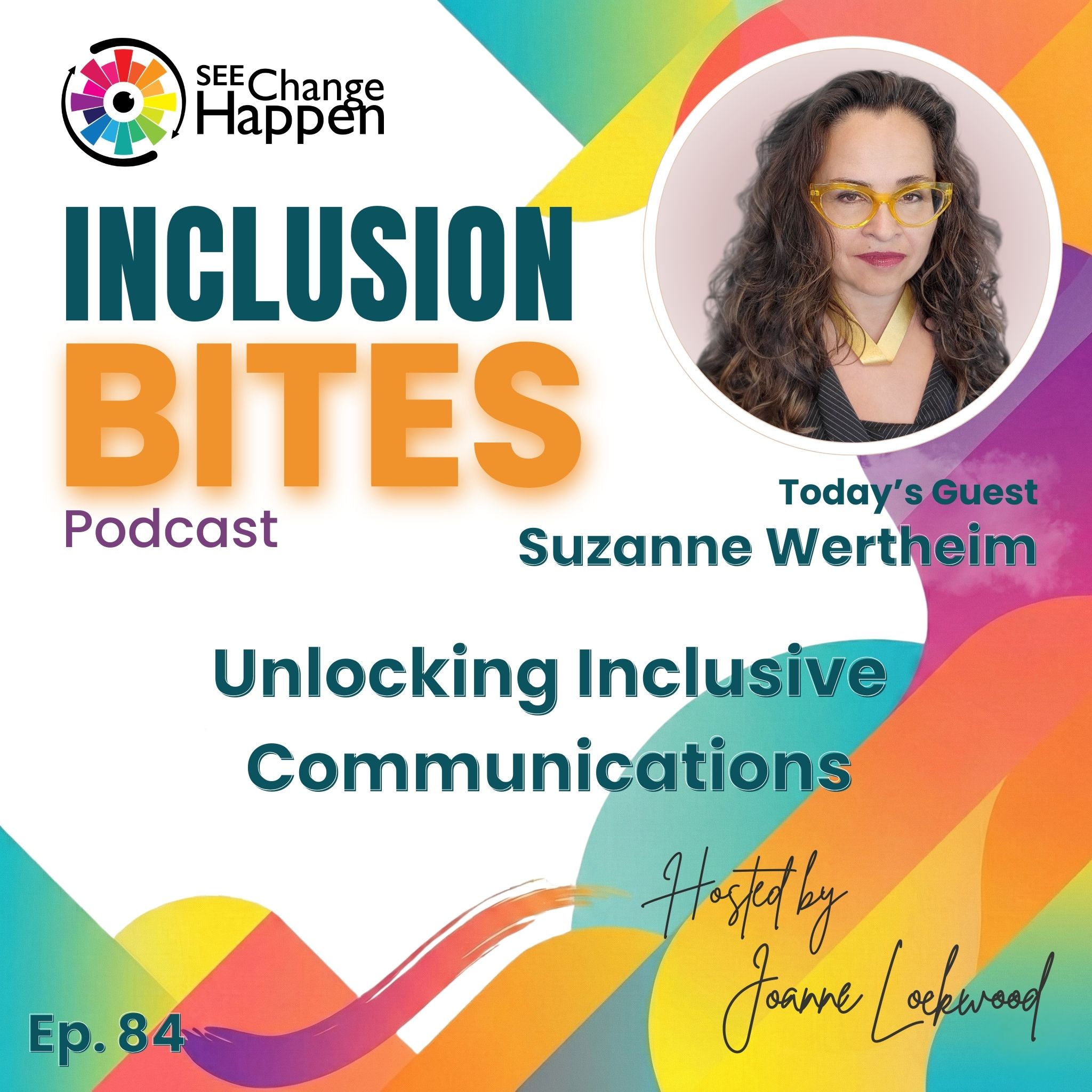
Unlocking Inclusive Communications explores the complexities of language and offers strategies to promote inclusivity and understanding in our interactions.
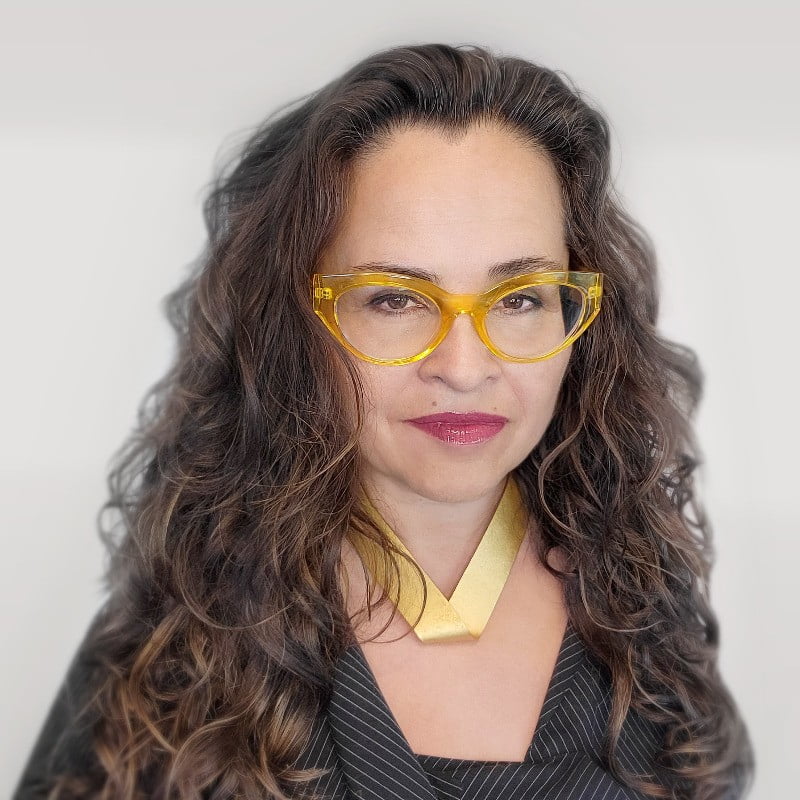
In this episode of Inclusion Bites, Joanne Lockwood speaks with Suzanne Wertheim about workplace culture systems.
“When we communicate inclusively, people feel seen and heard and valued.”
Explore
Navigate this episode
Joanne Lockwoodhost
Hello, everyone. My name is Joanne Lockwood and I am your host for theInclusion Bites podcast. In this series, I have interviewed a number ofamazing people and simply had a conversation around the subject ofinclusion, belonging and generally making the world a betterplace for everyone to thrive. Like to join me in thefuture? Then please do drop me a line to JoeLockwood at m dot co UK that'sseechangehappen co UK.You can catch up with all of the previous shows on itunes, Spotifyand the usual places. So plug in your headphones,grab a decaf and let's get going.Today is Episode 84 with thetitle Unlocking Inclusive Communications.And I have the absolute honour and privilege to welcome SuzanneWorthheim. Suzanne describes herself as alinguistic anthropologist, and when Iasked Suzanne to describe her superpower, she said that shesees patterns that other people don't see.Hello, Suzanne. Welcome to the show.
Suzanne Wertheimguest
Hello, Joanne. It is genuinely a pleasure to be here. I'mreally looking forward to this conversation. Likewise. We've had a great chat
Joanne Lockwoodhost
and agreement already, so I'm really, really excited about this.So, Suzanne, tell me.Unlocking communications. Tell me about that.
Suzanne Wertheimguest
So I said my superpowerwas seeing patterns that other people can't see.And this is the superpower of almost everybody whois a linguist or a linguistic anthropologist. Andso I am here to talk to people here, generallyin the world, and here on this podcast, about how can we be moreinclusive in our communications. And inclusivecommunication, in some respects, is as simple as just Bitesmodern etiquette. It is 21st century etiquette.But if you want to be more pattern based and morebehaviour based, I like to talk about inclusive language and inclusivecommunication as a way of communicating in a set of behaviours.A lot of people will talk about it as a list of words. Here arebad words and here are good words. But I like to go beyond that andhave a very behavioural focus. What are people doing with their language?So when we communicate inclusively,people feel seen and heard and valued.People feel like they are taken into consideration and like theymatter. By contrast, when we use what I callproblematic language, and there are lots of words that people will use that maybeend with IST or ism, but I like to just call it problematiclanguage. Problematic language comes in many forms and hasreally negative outcomes. It candamage relationships, it lowers trust, it drivespeople away and it harms all kinds of relationships. And byrelationships, I meanpersonal relationships. So between familymembers, friends, colleagues, romantic partners. But I alsomean business relationships couldbe still interpersonal between a recruiterand a client, a recruiter and a candidate. But it couldalso be a marketing message and an audienceor customer experience, softwareinterfaces and clients who become so irritated thatthey stop using your product. So that's what I mean by patterns. Thepatterns that I talk about for inclusive communication can beboth one on one and mediaand planned communications that go out and affect many people,sometimes millions of people.
Joanne Lockwoodhost
You're speaking my language. You're speaking my language. Onething that people always come to me and say is they're so afraid of gettingit wrong. And that creates this kind of leanback approach to people, because I've never hada conversation with someone who is black, I've never had some conversation withsomeone who's transgender or has a disability or what if I saythe wrong thing? That's the biggest fear people say, is the fear of getting itwrong. It is a thing that I hear as
Suzanne Wertheimguest
well. And it is one of the reasons that I wrote mybook, because people would feelbetter after a workshop with me, and a workshop would be verydedicated to the precise thing. So if you bring me in for recruiters,I'll do inclusive language for recruiters. If you bring me in for sales team, I'lldo inclusive language for sales. So we're covering some things, but we have a limitedamount of time together. And people would say to me, oh, my people are stillnervous, or I'm still nervous, or executives would say to me, there areso many things I'm supposed to cover in an all hands meeting, or when I'minterviewing with somebody and I'm really afraid of getting cancelled. So some peopleare worried about the wrath of the Internet or getting cancelled. It's more self focusedand some people are more worried about hurting somebody else.
Suzanne Wertheimguest
And so this lack of resources out there has been bothering me for along time. And so this is why I realised it wasn't a question ofego, where I thought, I simply must write a book, right? It was reallymore people kept on being so stressed out andso nervous. And when you're paralysed by fear and you don't sayanything, sometimes it really lands just thesilence is communication in and of itself and it will land verybadly on people who expect you to reach out. So this isexactly why I decided to do the work thatI do. And I will say thatyou might have wanted to ask me this later, and I'm just going to sayit right now. One of the reasons that my discussion of inclusive languageand inclusion communication is different from other people's is I'm the onlyperson I know that starts with behaviour rather thanidentity. So a lot of people will come and say, there are somany people in the world, I can't keep track of them. I grew up ina very homogeneous way. My workplace is very homogeneous. I don't know. Andso it can feel so overwhelming and so exhausting to thinkabout all the people in the world and all the words related toall the people in the world can feel like too much. So that's why I'vecome up with six principles that allow you tolearn more and also make mistakes and correct them ina way that you feel like you always have a North Star. So I'm justgoing to say them. I'm not going to wait for you to team me upand I'll just say them. They are reflectreality, show respect, drawpeople in, incorporate other perspectives,prevent erasure and recognise pain points.So these are always that people want themselves to be treated in somerespects. They're kind of a golden rule of interactions. And soif you can be precise about when somebody is different fromyou, how do you show respect or how do you make sure you're notmarginalising them or how do you recognise the pain points?These are things that can be small research projects that people can get agrip on rather than this long list of words thatfeels nebulous. And PS is changing all the time. So youcan't just go by memorising lists of words because by the time you memorised it,there's a good chance that some of the things that were okay aren't okayanymore. Yeah, I think you hit
Joanne Lockwoodhost
the nail on the head there, to use a British term, into the person thattranslates into American perfectly well.Excellent. I think the key thing for me isyou actually care about how the other person'sgoing to feel when you talk to them. I think youmentioned it in respect and the other elements of your six points, but if Ihave enough care about your feelings, yourneeds, your use the word identity, if you like, your livedexperience, what matters to you, what makes you happy, what makes you sad. If Icare deeply about that, I want a positive communication,I want a positive outcome from our conversation, then I think that'sthe basis then everything builds on the fact that I want this to go well.And if I don't know all the, as you say, every single wordin the dictionary, I don't have to know every single word, I just have toknow that I will not always get it right. And I appreciatethat intent isn't everything. The impact kicks in thereand bit of accountability as well, making sure I own my words. Butthe important thing there is I have to really care that I wantyou to have a positive experience and for me that's always been the root ofit. If I care enough, I will do my best to get it right.
Suzanne Wertheimguest
I think that a combination of caring enough,be open to critical feedback to fix mistakes in the momentand doing some prep work. If you can do those three, thenyou can have a successful conversation with anybody. Ithink that there are some people who are on the receiving end of people beingignorant about what their lived experience is to the point where it'sexhausting, right? So I don't want to just say that ifyou say to somebody, well, just educate me, or if I say a wrongword, please tell me. Because a lot of times people who are on the receivingend of these things are just done, just done. Butif you show that you've already done some homework andyou come in and you say, well, I know this, so is thisokay? I know I shouldn't say hey guys.So I'm going to say hey folks, or hey people, is that okaywith you? Is a story we can talk about a little bit later about asales call gone wrong and then gone right again. But I think that if youhave that combo and show that you've cared enough to put in some workin advance, then people are going to feel they'renot educating you from scratch. The burden of education isn't on them. The burdenof explaining to you in a way that won't make you upset or angry isn'ton them because you've put in that work. And so that's why Ilike to recommend people certain kinds of homework, like diversifyingyour social media. So you start even if you have ahomogeneous group, because of the ways thatthings are set up, like even if you grew up in a homogeneous way andyour workplace is homogeneous, social media is a gift, is a gift,gift, gift. And you can eavesdrop on conversations without bothering anybodyand learn all kinds of things almost by osmosis.
Joanne Lockwoodhost
That's good. What you just said there, again, it resonates because I talka lot about emotional intelligence and cultural intelligence. Andboth of those first steps in both of those emotionalintelligence is about self awareness, how you come across. And culturalintelligence is all around the drive to develop knowledge. So whatyou're saying here is you have to put the legwork in first, don't turnup, expect me to be your educator, which I completely resonate with. Soyou've got to have that drive. You've got to care enough about how you comeacross to build the knowledge. And then for the knowledge you build a strategy. Soyeah, having that groundwork is really important. I concur.We have Google in our pockets, don't we? We have millions and billions ofhours of YouTubes and podcasts and books andAmazon. There's not a lot of excuse really for people not to do the basics,is there? Well, although I would say that
Suzanne Wertheimguest
publishing and Hollywood have been realgatekeepers. So you have to have a little bit of criticalintelligence and thinking about your sources. Becauseif you just watch movies about a group, they might nothave been made by that group. And if you just read books about a groupthat might have been written by somebody who's out group. So that's one of thegifts from social media is this decentralisation and the removal of the kind ofthe gatekeeping. You might not get the knowledge from a bookthat you need, right? So, for example, Irecommend to people, let's just use disabilityas an example. So people who are perceptibly disabledare low frequency for encounters for many people whoare abled out in the world. So it's not frequently that they'll meet somebodywho's deaf or hard of hearing or who's in a wheelchair or who'sblind, just for example. And so here's a thing where peoplesuddenly are like, oh, my God, I don't know what to say. And they're paralysedor often when we're so self conscious,the last thing that you wanted to come out of your mouth this happens tome, too, when you're nervous, the last thing that you want to come out ofyour mouth is coming right out of your mouth. And you're like, oh, I can'tbelieve that I said that. So I talk about this sometimes where somebody gets abad haircut and in your head you're like, don't mention the haircut. Like, don't mentionthe haircut. And then you're out of your lips comes, oh, you got ahaircut. And then you have to make a comment on it when really you justwanted to say nothing. So what I like for theprep is, for example, I don't think in the book you're going to find stuff,but you can just go to Google or any search engine and typein problematic things said to wheelchair users, problematicthings said to blind people, problematic things said to deafpeople. And they'll just tell you, like, it's just out there. It takes very littletime. So I would say even having these kinds of directedsearches, if you're prepped and you're like,then you're ready to go, right? So it might seemlike you're trying to care about somebody. So let's say there's somebody in a wheelchair,and it might feel caring to you to say, oh, how isit that you're in a wheelchair? But I'm going to tell you that every wheelchairperson, every wheelchair person is absolutely not the thing to say. Your wheelchair useris what I was trying to say. Every person in a wheelchair, every wheelchair userthat I've talked with or read things by or heard things by,they absolutely have no interest in explaining to you why theyare in a wheelchair. And intrusive questions are incredibly common. Andso something that might feel like caring or curiosity toyou might land as very intrusive and inappropriate to somebody elsewho's just like, can we just talk about my presentation?Why are we talking about how do I put on pants? Why isthis now part of the conversation? We kind of make a bigger
Joanne Lockwoodhost
deal of it than it really is because that's our insecurity, ournervousness, whatever it may be. I've got a great friend of mine,she's a black woman. She is a wheelchair user. She hascerebral palsy at birth. And Iremember we were going, I think we're going something to eat. And I said, shouldwe just walk to the pub or something? And I was going, oh my God.I said, Walk to the pub? You're a wheelchair user. And I got all heatsin my brain. She said, yeah, let's go for a walk, that's fine. And soshe doesn't use necessarily differentlanguage. She uses contemporary language around the activity. AndI was making a bigger deal of it than it was becauseI picked up the word walk and is that ableist? And it turned out thatI was probably overcooking it. I think sometimes we just got to relaxand learn about not necessarily taking everysingle word we say too literally and apologise for it, butjust feel the mood. If they said, oh yeah,I've got my powered chair, I'll follow you, whatever, just pick up on theirlanguage. And I would say that that's the kind of
Suzanne Wertheimguest
thing over apologising is also a thing that I hear from peoplefrom marginalised and underrepresented groups who don't want to feel othered,right? So my third principle is draw people in is the reverse of marginalising,right? So there's a lot of ways that we interact with people thathighlight difference. People who feel like they just wantto be there in belonging and just treated like everybody elseend up feeling very othered. And so over apologising is one ofthe things that happens. So I was talking to somebody who is non binaryand they have a manager who can't figure outpronouns at this point, like figure it out, right? But soin early stages we understand and as alinguist, I'll tell you that pronouns are different from other words andlanguage and we store them in our brain differently and they're grammarwords. And it's much harder to shift your use of words in thisclosed set of grammar words than other words. Youwouldn't change numbers very easily or prepositions, right? So there areways that it is very reasonable to have astruggle with pronouns as people say, oh, actually my pronouns arethis. And you haven't had unlike young people today, natively usethey them for a single person, right? But for a lot of us who grewup earlier, they them wasn't used for asingle unknown person or for plural people, but not for a single knownperson. So it can be a real struggle against the weight. Of all the timesthat we've used only she or he to talk about people.So the thing that you do is you just do a minor correction.Oh, yes, so and so she, oh, I'm sorry, they and then you moveon. But this manager was, oh my goodness, I'm so sorry,I've done it again. Look at this. I really need to respect that you'renonbinary and on and on and on. So the apologyitself was a problem, wasproblematic language because it was highlighting the otherness. So I thinkthat you can take the cues in the moment here's that emotionalintelligence and cultural intelligence. You're talking about having the ability to live in themoment and see, oh, I said walk. Should I apologise? And you could say, ohmy God, I said walk. They'll be like, oh, no problem. And then aside, youdon't have to worry about walk with them anymore. So these are the kinds ofthings that you file away in your mental database forinteracting with that person. But PS, just because onewheelchair user says it's okay to say walk does not mean you canapply it to everybody. So you got to suss that out person byperson. Of course, yeah, my experience is my
Joanne Lockwoodhost
experience and yours differs.Talking about misgendering, I misgender myself. I spent 52 yearsof my life using one set of pronouns and referring to myself in a certainway. For the last seven so years I've usedshe her and I can't get it right every time.And my wife is probably better at than I do. She never gets itwrong. But it was our daughter'swedding a couple of years ago and I remember and I'm stilldad and still father to our daughter. So I'm extremely proud ofthat in my life, so I'm not going to lose that. But I remember Idid the father of the bride speech and it's almost impossibleto not use male pronouns in this because I saidthere's no prouder moment in a father's life than when he giveshis daughter away. You try and say that sentence with the wordshe in there instead of he. Linguistically, my head couldn't handleit. So I did the entire father of white speech and I said at theend of it, I've just systematically misgendered myself four times in this speech, but itdidn't make sense to me to say it any other way, but that's myexperience. There are other people who want to identifyas mum or wife or wherever they do and they use different pronouns.As I say, that's my experience. That's the way Itreat myself and everyone else is different. So, yeah, youcan't know everybody by knowing one person.
Suzanne Wertheimguest
And I would add to that thatnot everybody uses they them pronouns. Some people whoare genderqueer or in other way nonbinary will have pronouns that are very, very lowfrequency. So this is again why I have theseprinciples. Oh, to show respect and draw inthis person right. To show respect for them and draw them in. Ihave to remember that they're using fay fair, right.So that's also a thing that happens. I think misgendering yourselfis okay because of the complexities. I mean, that story
Suzanne Wertheimguest
is fantastic because it shows the complexities of beingvery prescriptive about how a person is supposed to be.And let me tell you this, that let's just go to Gatekeeping right?So this happens with disability. I don't know if it happens as much withtransgender people, but people who are really tryingto walk the walk and be good and learning can get veryjudgmental and gatekeeping and will lecture people aboutthe language they use for themselves. So Iread a few books by disabledactivists and in one of them one of the authorstalks about how she's a wheelchair user. And sothe question of and in the UK and the US, people have landed on differentsides of things. Do you say a person with a disability or do you saya disabled person and which one is the right one? So I was listening tosomebody recently who does research, disability research, andthey publish in English for both a UK and a US audience. And so they'rereally stymied as to what do I do for the most inclusive choice. Andso I think for those, sometimes you have to do a little preface and say,I'm going to be using this language. But in any case, this wheelchairuser named Emily Lido said that shehad switched over to saying disabled person. And people would say to her,oh no, you should really say person with a disability.And she would say, but I'm disabled. Well, don't talk about yourself like that.I don't think of you as a disabled person, right? So I talk alot about stigma. Stigma is a thing that happens a lot insociety where a group is socially devalued, is marginalised. It's partof what comes with the marginalisation and the lack of access to power isyou get a lot of stigma where a group is just seen as less than,and sometimes not just less than, but stigmatised in someway, right? So for example, people with mental health issues, that's very highlystigmatised, people withdisabilities, disabled people, depending on what people prefer.And so you can hear that stigma in don't talk aboutyourself like that or I don't even think of you as disabled. I have blackfriends who also people have said to them, oh, I don't even think of youas black. And it's like, is that supposed to be acompliment? So there's that kind of gatekeeping. I can imagine a scenario wheresomebody who's being very assiduous and is just learning how to dopronouns, right, would come up and say, whoo, you really need to get betterwith your pronouns. I hear people who are in group gettinglectured by out group people. And so part of my thiscan be like a lot of navel gazing, inclusive language. Well, what exactterm, what exact term? And my feeling is by showingrespect, you use the term that a person prefers. And if you'rewith a group of people who aren't monolithic, then you start to get complicatedand you have to explain yourself a little bit more and say, well, for thisgroup of people, I'm going to use the terminology indigenous, but I understandother people prefer native. Or you like a hyperlink or anAsterisk and a footnote to say, I understand that noteverybody likes this term, I'm choosing it for these reasons. So people know thatyou've put in the work rather than thinking that you're blithely justdoing a thing because you don't know any better. Yeah, I completely
Joanne Lockwoodhost
agree with that. And often when I'm doing talks or runningtraining, I would tend to use multipleways of describing an identity, acharacteristic, whatever it may be, in very short successions. So I might saya person with a disability or a disabled person, as a matter of fact, ina sentence. So acknowledging both terminology andsometimes I might even say, I know that people have a different way of describingthemselves and I don't want to judge. I know that people are very proud ofbeing disabled first, and some people prefer to be described asperson with a disability. Then you meet someone who hasneurodiversity and they prefer to or they useautistic person rather than the person with autism. They're very proud of theautism first. So it's a real minefield, as you say, youhave to be very adaptable, very in tune, do your research orat least your basics, as we talked about having that base level of researchfirst. Andwhere I know there's ambiguity, I try and useall the different language I know to sort of sayI'm aware of the discussion points around this, which is why Iuse both. And if people ask me to clarify, I say, well, I've got somegreat friends who really are proud to be a disabled person. I've got some greatfriends who prefer to be a person with a disability or a wheelchair userand those kind of words. So yeah, I think if you coach it in, it'snot my language, it's words that I'm using that people have explained to me ortheir language. I'm just using the language I've been educated with bymy friends and my contemporaries. Which language do youprefer? Which is your chosen language? And it allows you to show that educationwithout assuming or without using your own, if you like biasor stereotype about people. And I find so let me
Suzanne Wertheimguest
throw a term at you, which is metal linguistic. Sometal linguistic language is language aboutlanguage. So I used to say meta, now it's a giantcompany. So I would say to people, go meta, and now I can't do thatanymore. But I like to educate people. So I talked about mysuperpower being seeing patterns, right? So whenyou explain patterns to people so they can seethem, I think of it as giving people x ray vision. How much canI what is currently opaque to you or feels unrelated? And I canshow you that. I've been digging, digging, digging, and there are these skeletal structuresthat connect them all. Like, how can I show that to you? So if you
Suzanne Wertheimguest
can name something, if you can talk about it, it allows you tomore fluently use metal linguistic language and talkabout language. And talking about language is one of the bestways to remove ambiguity and to remove negativefeelings and to let people know that you're aware of what you're doing and thatyou're doing it very intentionally and consciously. And it allows usto bypass hurt feelings and misunderstandings in allkinds of ways. So I do encouragepeople when it comes to inclusive communication, to really beable to talk about language. And that's why getting educated about howlanguage works really facilitates the ability. Because beforeI said that, I divide language into twosets, or language practises into two sets, there'sinclusive language, inclusive communication, andproblematic language and problematic communication. Well, a lotof people don't have the terminology for what'sgoing off the rails when communication is problematic, except for thelanguage of social justice or language available to laypeople, which will beterms like sexism, racism,transphobia, homophobic, maybethey'll say it's a microaggression. I find in mymany years of experience looking at what people are resistantto and what lands on people, everything I do is designed tobypass resistance and land on people, right, so they caninternalise it, take accountability and say, oh, I should make that shift,right? And it's almost always a small shift. I have found thata very strong stress response trigger a resistance trigger isusing words like sexism and homophobia,because a person may be coming in with very goodintentions and just inadvertently say a thing. Sometimes people are beingabsolutely not inadvertently problematic, they are purposefully beingproblematic. And I have to say, I don't have time or energy for those peoplego pre problematic elsewhere. I think this is the kind of behaviour that can bea fireable offence. Like, I don't have time and energy for you. But if youreally are a well intended person who's like, oh, I got to shift myattention to impact, then I have to say that you can'tuse words like sexism or homophobia to tellpeople when they've said something wrong, because they are going to shut down. They're goingto feel very attacked. They're going to get very stuck in their owngood intentions. They're going to get hot with shame. They're going to be filledwith adrenaline and cortisol, and it might take 48 full hoursfor those stress chemicals to exit from their bodies. And so that'swhy another reason why I've devised these principles is if people are goingmetal linguistic and saying to somebody, hey, I don't think yourealised there's this thing that you said or this thing that you wrote and itwasn't the right thing to say, let me explain it.And you can use this violates a principle of inclusive language.It doesn't reflect. Reality because you've acted as if there are nonon binary people in the world when you said your husband or wife. Andso you've got to switch over to spouse and partner because non binary peopleexist. And so we need to reflect reality thatlands a lot better with peoplethan using the language of social justice,which may be merited, but doesn't landwell with almost anybody. It's the calling it out
Joanne Lockwoodhost
versus calling it in. It's the educational element, as you say.If you start using words like privilege and the other social justicewords, people who hold those privileges, the majority,as you say, tend to shut down. And I'm a great believer that we needto collaborate rather than attack each other because what happens when privilegegets attacked, it pulls the drawbridge up, it starts throwing rocks at you fromthe ramparts and you don't get anywhere. All you end up doing is having anargument amongst yourselves, attacking the castle until we've really gotto try and lower the drawbridge, lower the heat, lower the temperatureand have these she say inclusion conversations whereyou're educating whilst pointing out a better way, ratherthan just you're wrong. As soon as you put the hand up or the stopor the accusation, defences hit and you say the brain chemicals kickin, education stops. And I would add to
Suzanne Wertheimguest
that, that in my experience the more granular yougo and the more behavioural you are rather than saying you'rean x or you're y something that's sort of a largescale label. If you move away from telling somebody that theyare something and saying, oh, here's this habit you have, orhere's this tick you have, or here's this word that you use if you gogranular and you say when you do x, it has thiseffect. It makes people feel disrespected or itmakes people feel erased or you're hitting a pain point. And I don't think yourealise that this word is actually painful for people who've had different experiencesfrom you. If that level of granularity where it's veryspecifically and I recommend in a workshop series, I have theSBI model for telling people when something has gone wrongand I think that's a good part of calling in. So not my model, Iforget who came up with it, but I credit them on the handout that Igive. But it's situation, behaviour, impact. So if you govery granular and you say, the situation is this you said this thing, or thesituation is we were in a conversation and nonbinary people were there, or you sentout a press release and nonbinary people will be reading it, or A range ofpeople will be reading it. The behaviour you used, the phrase husband orwife. And this leaves out non binary people, the impact. Peoplewho have nonbinary partners, people who are themselves nonbinary aregoing to feel like you don't see them, you don't care about them. They're notpart of your policy. This thing that you said about you, including benefitsor whatever, is something that sounds so mundane, right? We're including benefits. And forpeople who are married, your husband or wife can blah, blah, blah. Well, what ifthe husband and wife is not a husband or not a wife? Right, so itcan seem so mundane, but people who work for you can still feelso othered or forgotten about. Well, do I count? I'mnot a husband and I'm not a wife or my partner isn't a husband ora wife. So if you explain that impact, these people are going to feel othered,they're going to feel sad, they're going to feel disrespected, they're going to feel erased.So if you just make this little switch, everyone's going to feel included.People on ramp onto that much, much better. So that'smy I'm going to say something terrible.It's not terrible, but there is a research thatshows that if you ask men, this is just going to be malespecific. If you ask men, have you ever raped anybody?The vast majority will say no. But if you gogranular this is just like anonymous survey work. I believe I have torevisit this study. If you go granular and say, have you ever donebehaviour A? Have you ever done behaviour B? Have you ever done behaviourC? And those behaviours are componentsof non consensual interactions ofrape. The number of men who admit to that shootsup by more than 100% of what it was. So peopleare not this is, to me, sort of an end case, right? But thereare ways that how are we making people feel bad and not caring aboutthem? Inclusion language is still on that spectrum. It's still onthe spectrum of other kinds of physical attacks, right?It's a verbal attack. So that's really where I take mygranularity. Like if it works for getting people to be, if not accountable, thanthe first step of acknowledging that they've done something. If it works even forsomething as horrific and stigmatised as sexual assault,then I promise you it's going to work well for getting people in yourorganisation to be more accountable for theirverbal problems they've created. And by the way, I want to saythat this is an oral medium, you and I,but anytime I say, speak and say, I am in my head, includingsign languages. So I just want to say that everything I'm sayingalso applies to people who are speakers of sign languages and not just orallanguages. That's important to make
Joanne Lockwoodhost
sure we are enunciating looking at people respectfulof people who have hearing loss or hard of hearing, whereI see so many speakers on stage, they're turning their head away. They're not lookingat the audience. So not everybody who is hard ofhearing lip reads. But there are a number of people who have hearing, who stillrely on the visual and the audible to better hear the wordsproperly. So it's always important tobe consciously inclusive of your communication, notjust passively inclusive, because you're talking aboutinclusive communication and problematiccommunication there's. The bit in the middle, really, which is theinconsiderate communication is where you're not being passive ornegative deliberately, you're just not considering. And I thinkpart of the for me, part of it is making sure that we're actively thinkingabout your needs as a person. So if I am speaking infront of an audience or a workshop, whatever, I'm making sure thatI cheque with everybody, ask if they have any needs in advanceand reinforce that whilst I'm wellbeing, is everyone able to hear meokay? Is there anything I need to do differently? Can you see everything okay? Doyou need to come to the front reallyoveremphasising and being overly conscious about itto make sure that you're not inadvertentlyproblematic using your language there?
Suzanne Wertheimguest
And for mybook, I either hired people or quid proquo people for doing subject matterexpert readings of things or lived experience readings of things. So Icollaborated with two autistic linguists, getting their PhDs and studyingnot just autistic, but studying autistic communication. Right. So realsubject matter experts to bring in some autistic communicationsto my book, becausehistorically, I'm so deeply horrified by how my field hasmarginalised autistic communications and presented things. I veryconfidently would stand on a stage and say, all people do X. And now I'mlike, all holistic people do x all people who aren't there's somany ways all people are marking hierarchies all the time. Gender is incrediblysalient and people really care about gender. I'm like, oh,that is really not true for so many autisticcommunicators. For them, power is not that interesting andgender is not that interesting. Right. So there's so many ways in which I wasexcluding people, but, oh, I got caught up in theautistic thing. Oh, I hired people to so, aperson I hired, he actually very recently passedaway, which I am very sad about. He was a leader ina new kind of linguistics called crip linguistics. So they'rereclaiming the word crip, which was a verystigmatised word.
Joanne Lockwoodhost
Before. Yeah, definitely. With reclamation. So you take the word that's been
Suzanne Wertheimguest
used against you and you use it in group and you give it power. Muchlike queer the N word for some people, orAfrican descent, not all. So that's the process of reclamation. And soin the book, I had asked him to read very carefully. I was so careful,it took so much effort for me to say, okay, you're reading as a blackperson and a disabled person. Here are the relevant pages. Right. I was so careful
Suzanne Wertheimguest
for the people doing me this favour. And then he just went and read thewhole book, which was good, because he had a lot of comments onstuff, but at the beginning of the book I comparecommunication event planning to regular event planning. I'm saying,look, if you've ever planned an event, you've had to think about who's coming tothe event and think about what their needs are and take them into consideration.A lot of people get so paralysed with fear when it comes to language, butI'm like, this is a transferable skill. Have you planned an event? You can plana communication event. Do you have to send out a press release? Do you haveto do an internal email to the whole company? Are you going to create avideo? Like all of these things, especially for planned communications,right? Like, if you can plan a party, you can plan communication, you just needan inclusion checklist. Like you would have a party checklist, right? So in thebook I had written, have you ever gone to an event whereyou felt like you were really taken into consideration, like people had really thoughtabout you and really thought about your needs and you reallyfelt included in the event? And this reviewer, a professorof linguistics, said, I've never been to a non deafevent where I felt this way ever in my life.Ever in my life. He was in his forty s andI honestly teared up. I'm tearing up right now thinking about it, because Ihad just asked him, out of respect for his fantastic linguisticskills and his knowledge base, right? And I just asked him to read specificpages and then he went and read additional pages because he was curious andthen he just put that thing in there and it stopped me. I had toclose down and take a walk around the block and just think about I'mvery lucky that I was born into the body I was born in, in alot of ways, right? And it hadn't occurred to me thatbeing born into a body that was hearing and mobile mostlyabled I'm not fully abled and I'm not fully neurotypical, which Ilearned later in life, but I was born into a bodythat made it so I could very oftenfeel like I belonging in places. And here he had had experiences whereunless he was in his specific group, if he was not inhis specific, specific group of deaf and hard of hearing people, henever truly felt taking into account. And that was a reallybrutal place for me to sit and I still sit there sometimes.
Joanne Lockwoodhost
Yeah, that reminds me. I'm amember of the Professional Speaking Association in UK andIreland and we organised two sortof national events per year and we wereapproached, because I'm on the board, we were approached bysomeone who is neurodiverse andthey came to us and said it would be better if so they camewith that. I want to help you improve the event. Forme, for others who are neurodiverse orneurodivergent, some people prefer the term neurodivergent,or people who just maybe have some anxiety about walking into spacesthey've never been to before. It would be better if youput chairs at the back of the room so people don't have to walk intothe space. They can just sneak and sit at the back, become comfortable before theyfind the chair, have walk through videos so that before theyturn up, they can see the entrance, they can see the walks we had toget from A to B. You narrate thingsthat are happening now and next, those kind of things, putting goodsignage, having a quiet room. And so we went through this wholething and the feedback we gotfrom the delegates who went and we've just run another one two weeks ago,was that they found the communication was so powerfulbecause they turned up, they knew what they were going to expect. They just seenthe venue. They knew where the reception was, they knew where the venue was. Andthis is people who cast themselves as neurotypical. So notonly a lot of the work I do, I'm sure what you do, it'swhat helps the one, she helps the many. And that's what we're doinghere. We're not saying it's just for you. It's actually we're benefiting theentire cohort or the communities that are involved, notjust providing access for someone who has a disability.In my late 50s, I'm not saying I'm getting on, but sometimes I don't wantto walk up flight stairs. So for me it's important to have an escalator,a lift or elevator or something.I don't have a disability. There are people who maybe go skiing, break theirleg. They were okay last week, they're not good this week. So we're providingaccessible solutions, not just for people who have a livedor a born disability. We're providing anyone who comes into that intheir life. So what you're saying there about yourexamples is about creating solutions for the one that benefit the many.And you don't know who that many is. They're just there and they appreciate you've.
Suzanne Wertheimguest
Cared about sayso. A lot of companies don't want to invest in talent retention. I'mjust going to put that right up front. I look at where the budgets go,and right now Dei budgets are being slashed. So people are willing toput money into talent acquisition, into client acquisition andclient retention. And then there's that quadrant of talent retention where they'relike, oh, we don't have the budget, or it's a nice to have. And I'mjust like, I'm right now trying to lay out what are the consequencesof when you don't put money into workplace culture, because it's veryexpensive. So I'm here in tech. There's a lot of engineers making200 year dollars.And if you lose them, if you lose a 200K engineer, it's atleast 300K. That year to replace them, right? Becauseof all of the losses. Forexample, I talk about inclusive meetings.When you're trying to design a meeting that is inclusive forsomebody who is autistic, somebody whois a speaker of English as their 2nd, 3rd, 4th, 5th language,a lot of people are much more multilingual than where you're sitting or where I'msitting, depending on where you grew up. If youare making inclusive language for people whoareinclusive meetings, for people who come from aculture where you have to have everything in orderbefore you say something. So, for example, a lot of Native Americancultures here, especially on the West Coast, you're supposed to go off and practise onyour own. And it's the height of rudeness to bring somethinghalf baked, right? Like, you have to come. So ifyou do these things for these kinds of cultural diversity and you make inclusive meetings,guess who also benefits? Your introvert white maleengineer. Right? There are ways in which people thinkthat the benefit is only for a certain kind of person. AndI'm like, everybody wants to work in what I call the optimisedworkplace, so I just call it the optimised workplace. And I'm like, bias gets inthe way. And the optimised workplace is where everyone feels seen, heard, andvalued, where they feel like they belong, where they're able to makecontributions and aren't blocked, and where they feel safe, right?Psychological safety, it's very basic. And I'm like, guess what? Guess who likesto work? There 100% of people. And my data onoptimised workplaces comes from business studies. It doesn't come from deistudies. It's like, oh, here are the best run companies where people really like towork. They've got incredible retention rates, they're incredibly productive, and it aligns100% with diversity, equity, inclusioninitiatives. So to me,that's evidence. That's what we call data validation, right? Andso people often don't think that way. But what you're talking about is exactly thatexample, and I'll add another to it. I present alot right now, much more virtually, but often inperson, it's coming back. Andrecommendations for keynote speaking, they're like, use tenslides maximum. And I'm like, no, becauseI know a lot of people aren'tgreat with only if you're a speaker of an oral language,it doesn't mean that you're great with only auditory comprehension.
Suzanne Wertheimguest
And so when I have an important thing to say, those words are on theslide in big letters, high contrast font, blackand dark blue on a white background. Andpeople can read them as I'm saying them because those are my punctuation points.So back in early rap and 80s rap, it would be where everybody comes inand says the thing and then you go back to the one person, right? It'skind of doing like a little Beastie Boys moment here. Butpeople are very grateful. People are like, I really understood youin a way that I don't understand a lot of other presenters because I'm thinkingabout and so many people use closed captions now,right. People have gotten very used to streaming with closed captionsbecause that extra bit of information for language ishelping their language processing. So, by the way, what you talked about soundsfor me, I can be anxious coming into a new space and everything yousaid, I'm like, oh, that sounds amazing for coming into a meeting and alreadyknowing where I'm going to sit and stand and I can come in and what'shappening next. That's the best. Yeah. And the
Joanne Lockwoodhost
feedback, the quiet room. There were people who just wantedquiet. They didn't want to talk to anybody.I'm a self confessed andout and open introvert. I can do an hour or so. Ican go full max for an hour, then I need therecharge. So I'll just go and lock myself away. It's nice. You haven't got tojustify yourself or say to people, I don't want to speak. Everyoneknows if you're in the room, you don't speak. You just have your own littlespace. Play a bit of Candy Crush or something on your phone, do whatever you'regoing to do, just cheque out. And it really is powerful.I picking up on what you say about slides. There's a kind ofa thing around professional speakers, abouttrue professional speakers don't need slides, they just stand up on stage andit's the power of their voice, the storytelling, and yeah, great,brilliant. But I'm a great believer also in, as yousaid, there are people in the audience who willzone out. English is not their primarylanguage. They'll forget what you're saying or they miss something.I'm the same, actually. I was listening to sometalks at this conference last week, and one personwas working through this exercise and they had this model called Soap. Soap.And they give a little card. You're supposed to write this littlething down on the card. Then you had to tick at the end of it.Whether it was an S, whether it's no, whether it's a whether it was aP. And I kind of zoned out in this talk because I was soengrossed in what this person was saying and my mindwas exploding in different directions. I got to the end, he says, Right, now, Iwant you to do this. I thought okay. And there's nothing onthe card that says what Soap means. His slide had gone and I'mgoing, so I don't know what I can't remember what it stands for.So I went out to ask and said, look, if you're going to commit thesecards, put it on the back, put it on your slide, do something. Because peoplelike me who zone out then realise at the end they need to learn whatthey should missed, can't go back. And another speaker did the same.She had an ABCDE model and she puta and she put a list of things under the A, then she put alist of things under the B. But when she clicked on the B, the Aones disappeared. I assisted at the end, I said Brilliant. But Izoned out. It wasn't until I got to the end of the E that Isuddenly thought, I wonder what I said. I wanted to go back, it'stoo late. So I couldn't go back to the A's. I said, what wouldbe better if kind of thing is instead of blanket out, justgrey it out until you have a bright and a dark. Soyou've taken the focus off of it. But for me, I can just go backand go, oh yeah, I remember, because my attention span just doesn'thold that long. And I learned that about myself last weekend,that I was zoning out. It wasn't because I wasn't paying attention, it's becausewhat they said sparked me. All these things were firing offand I didn't know how to come back. I mean, I
Suzanne Wertheimguest
wouldn't even call it zoning out, which feels a little too self deprecating tome. I think it's more that they didn't signal to youthat this was a thing you were going to have to retain, right? They didn'tsignal to you, here's a thing, I need you to takethis away. And it's too much for people who are soI'll tell you. I'm aprofessional linguist. I learned two languages from my dissertation, likelearned in my twenty s two languages, and then went to Russia for ayear and studied how one language was affecting the other in all these different ways,right? And I cannot learn things withoutvisual cues. I would have to write down if there was a new word, Iwould have to write it down. I remember one time I was with my parentson what's called Navajo reservation, but they preferthe term Dine. And so we were talking and we weresupposed to visit a hogan with an elder and I wanted to speak respectfullyand I said, can you teach me a few things to say to be respectful?And they said them and I'm like, uh oh. And I found a scrap ofpaper and a pen and I said, Please tell me again. And then I wroteit down using a phonetic alphabet, and then I was able to say it.But as a professional linguist, a professional language, learner insome respect without a visual cue, I couldn't even do it. And I would saythe same about song lyrics. I couldn't tell you what any song is about ifit's just going in order. If I don't see it all in one place ona piece of paper, then I'm like, oh, that's what the song is about. ButI'm a native speaker of English and some people enunciate well, andI couldn't tell you what almost any song is actually talking about. So I thinkthat for many of us who are processing, if you're processingthings through time, if there's temporal distance,that there isn't the same kind of retention, if something is gatheredfor you with a different kind of input written and you can see it synthesisedall in one place. So Ireject your zoning out and say that Iwould say that you were doing what's natural for an engaged audiencemember, and there needed to be supplemental things if somebody reallywanted you to take something and turn it into active knowledgeon your behalf. Yeah, I
Joanne Lockwoodhost
take your charitable definition and I agree with you. So absolutely,I was using zoning out as my kind of shortcut to howI would describe, but you're right, I was probably acting verytypical in that until I need to remember somethingor until I know I need to remember something, I probably don't. You have topunctuate and say this next word is worthremembering. It's the other thing, isn't it? If someonesays, Would you like a cup of coffee,Steven? You don't hear, Would you like a cup of coffee? Until theword Steven is used. So if you say, Steven,would you like a cup of coffee? You know thatwhatever's going to come next is an instruction or a question or something foryou. So it's about making sure you cite I think you said itearlier say something as a warm up before you want to say themain point. Otherwise you got to get people back on the page. Right?I'm going to say something really interesting now, and this is it,okay, I'm back in the room. And I think that's what you're trying to saythere is you got to give the people that audible or visual cue, the nextthing that follows is for you. Yeah. And
Suzanne Wertheimguest
so what I think is also interesting, let me bring it back to inclusivecommunication in a less hey, if you're a speaker, do these things.Although I completely agree. A lot of people don't get good training in how tospeak to people, and then it shows. But bringing it back to inclusivelanguage, there are people who are worried that they're going to soundvery woke or not on brand ifthey use more inclusive substitutes. Right?So I'm on retainer for a financial services company,and they send me things, and so they're like, well, what would youdo? And I'm like, but my brand is inclusion, so what's correctfor me isn't like, I see you as three years, five years behindme, right? Like, there's stuff that I'm using now that five years from now isokay for you to use, but I think it's too soon for you to usenow, given who your audience is. They got 23 million customers or something, right?So I'm like, let's be more cautious. For example,I say to people, like, well, I don't want to sound woke.And I'm like, but you don't have to sound woke to be inclusive. So onething is here's an important term. Terminological precision isa thing that I said during my book launch a few weeks ago, and afew people came up. So when I'm talking about inclusion language,I'm saying I want you to be precise. And there are times that you're sayingthings that are actually imprecise. So let's move it to the more precise thing. Ifyou're saying husband and wife, that's imprecise, because there are people who don'tfit in those categories. You think you've included everybody who's legally boundto another person in a romantic relationship. And I'm here to sayyou have been imprecise and you've forgotten people, right? Soterminological precision. So people, for example, thinkthat guys includes everybody. And I'm here to tell you that there aresemantic tests that show yes for the listener.Joanne is shaking her head saying, Guys, itdoes not include so. But there are people who are very resistant.And they say to me, guys includes everybody. And I'll say, okay. SoI'm going to a bathroom, the loo, as it were,in a restaurant, and I am female, assigned female atbirth, female to this day. And the first bathroom door that Isee, because I'm here in the US. Says, guys, do I walk into thatbathroom and think it's gender inclusive, or do I walk down the hall and lookfor a bathroom door that says gals or dolls orgirls? I'm not walking into the guy's bathroom because I know it's a bathroomdesignated for people who are understood to be male,right? So I say you don't have tosound super hippie dippy or California woke orwhatever. If you say so every time you're going tosay guys. Like, let's say you're a manager running a meeting, and every time you'regoing to say, hey, guys. All right, you guys, all right, guys, let's move tothis. I said, you can just switch it up. You don't have to use thesame thing. So you can start by saying, hey, everyone, let's start. Andokay, team, you did a great job. Okay, folks, let's move on. And he said,you know who's noticed? Nobody's noticed. Nobody'spaying attention to the fact nobody's going to. But you know who'seventually going to notice? Like, your non binary orfemale team members who suddenly realise thatthey like when they're in a meeting with somebody else who's saying guys all thetime, they're like, oh. They're like, oh, mike never says guys,right? So it's going to be some sort of retroactive credit you're going to get,but they're going to just feel better. And to my mind,that's the majority of inclusive language. It's not designed tosignal how good a person you are. It'sdesigned to have set things up for comfort,just like all of those careful things to talkyou. Through to talk an attendee through what the meeting was going to be.It's the same thing for all of the interactions, whether they're one on one, ameeting, all hands,meeting speech, anemail to the entire company, et cetera, a slack communicationto everybody. That's why I say communication and language and a set ofpractises rather than focusing on words.
Joanne Lockwoodhost
Yeah, for sure. WhatI've found is you can just put the full stop earlier inthe sentence. So instead of good morning, sir. Good evening, sir, youjust put the full stop after good evening or Good morning. It's easy, just don'tsay anymore. Because our natural politeness, maybe as anEnglish speaker, our natural politeness is we want to sort of use thisfamiliarity terms, but if you just say good morning, good afternoon, or how are wedoing? Everything okay with you today? Good morning, everybody. Hi,everybody, great to see you here, team. Those kind ofthings are really great ways you say a number oftimes I'm standing on the platform at train station and they say, ladies andgentlemen, the train now arriving at platform two is for Cardiff. You go,
Joanne Lockwoodhost
what about my friend? Where are they going to go?You're not talking to them. Every time aspeaker or people are here uses the phrase ladies and gentlemen, I alwaysthink all the people is excluding or. If you have a slide where you're puttingstats and demographics and you've just got male and female on it, you think,well, even if people who are non binary or gendernonconforming are soinsignificantly represented on the statistic, have youstopped you having a column showing zero to at leastyou've thought about it. And what I always say to people is ifyou try Googling, do a Google Image search for guys. If you thinkguys are gender neutral, do a Google Image search and tell me how many peopledon't appear to be men in swimsuits on thefirst five pages. Most of them are men in swimsuits on the firstfive pages. An intriguing result. What I also say is
Suzanne Wertheimguest
another example I like to give it. We call it a semantic test orheuristic right. So what can you go through and test and see what's the genderreference involved is?Two coworkers, one's moved there recently, and they're bothmale and they're bothstraight. And one says to the other, so how many guys haveyou dated since you moved to town? Right, I know it can be hard tomeet people here. It's a small town. Is that likea regular thing to say? Does this person of course it doesn'tinvoke dating everybody. So a niceexample I like to give them. Let's just get historicalhere. How does it feel when a word hasgenuinely changed the gender of the kind of person it refers to?Let's use the word girl. So it's1350, and I say girl, and then I say things in Englishthat whatever, I'm not going to try. But so I'm speaking in 1350English and I use girl, and if I write girl, I spell it with aY and I point to two people.One of them appears to be a young male person and one appears to bea young female person. I can be referring to either because girl in1350 refers to boys and girls. It is genderagnostic. It is what people claim guys is.Girl is absolutely referring to anyone who is ayoung person. So sometimes you can say girl and mean somebody who is a youngmale person. But cut to there was a gender shift and sonow it refers only to young female people. So we know what itfeels like when a word has genuinely changed the reference ofits gender, because nobody's going to say girl and thinkof young male people. Although we're being more careful with gender now.Right, but anyway, but oh, look at that group of girls over there. Andit's a group of boys playing football or whatever. Right. And Imeant soccer. So anyway,I like that counterpoint. Does guys feel likeit's shifted all the way? No. Absolutely. Will it shift in thefuture? Possibly.Semantic shift is a thing you can look back on, but you can't look. Forward
Joanne Lockwoodhost
at it's most prevalent here in restaurants,the meet and greeter tends to say, hi, guys, can I get you a table?And it's kind of I don't want to make any stereotypicalaccusation here, but it seems to be imported fromNorth America as a kind of a cultural thing. Andin the UK, we kind of picked up on it and it's as badas I mean, I'm not a big fan of folk or folk and highfolks and things like that. That's kind of again, it's like forced English.You have to try and make the language sound natural and inclusive without it being,as you say, woke or deliberately inclusive, just naturallyinclusive. I think that's I don't see folks,
Suzanne Wertheimguest
you know, people write to me and they're do I or they ask a question,what do I do about sir and ma'am? Especially people in the AmericanSouth or people, black Americans are often raisedthat they have to say sir or ma'am. And I'm like, OOH, we don't haveone yet. I'm like, I'm waiting for the young people to come up with agender neutral alternative. But we don't have one, I said. So you gotto maybe do politeness and tone. So if you're going to walk up to somebodyon the street, so if there's somebody you know is male and wants to becalled sir, then fine, there's someone you know is female and wants to be calledma'am, then fine, or madam, right? But ifthere's somebody you don't know on the street or the next client or the nextcustomer, you can't do it. So you have to use it. Well, you were sayinggood morning, right? Instead of sir, just drop it off,right? And you can just say, oh, excuse me. Like, you can try to doit in tone or you can say, oh, I think the person in the greenshirt was next. Or instead of saying, Hi, guys, you can say hello,everyone, folks doesn't feel natural for me at all. For some peopleit's a very natural word. For me it feels very artificial. So I recommend thatpeople use it if it feels good in their mouth, but if it doesn't feelgood, dump it like that's. Okay. There's plenty of other things to say.
Joanne Lockwoodhost
It's funny you said that. Describe someone as the person over there in the greenshirt. I tend to wear a hat. I've got a couple ofhats, different coloured hats. I tend to wear those when I'm at events andspeaking and things like that. Because I want to give somebody an easy way todescribe me rather than get confused by my gender identityor use my obvious characteristic as adescription. The trans woman over there or something,I give them the lady in the hat or the person in the hat, orthe person with the yellow tights, or something like that. So I try and givepeople a very easy way of recognising me and spotting me when I walk inthe door as part of my personal brand. So it doeshelp sometimes to signpost yourself in a way youlike to be signposted. But I think it's an excellent example
Suzanne Wertheimguest
of the extra labour that people have to doin order to make sure they're treated well. I think about all the black womenI know straightening their hair, for example, or allthe work that people do in order to make sure that'syour labour to preventnegative things being said, like you're helping people out, but it'salso protection for yourself because you've made it easier through yourlabour. But I long for a worldwhere people already have very fluent ways ofreferring to a person that they don't have to go rightto gender identity and already arethinking maybe gender identity isn't relevant tohow I describe a person. Right.
Joanne Lockwoodhost
On that note, it's been an amazing hour having a chat with youand obviously the 20 or 30 minutes beforehand in the green room where we justgot to know each other. Suzanne Wertheim, tell meabout your book. Tell me about how people can get in contact with you becauseI know the listeners of this show would love to make contact. Sowhat's the best way of getting in touch? Sure. So
Suzanne Wertheimguest
you can find the book. The book is called The InclusiveLanguage Field Guide. It is availableall the places books are sold, including if you'rein the UK, there are a few bookshops there that are stocking it inperson. Paperback. It is a paperback it is an ebook. And ifyou thought I have a nice voice, you can listen to it for 7 hoursand 56 minutes, narrating the audiobook.Although I do have to warn you, there is a table at the end thatI read for 30 minutes. So the audiobook might not be thebest might not be the best option. So ifyou want to find me, the best way to find me is Suzannewortheim.com.If you want to connect with me, you can contact me there. Youcan sign up for my free newsletter, which I send out twice amonth. Once a month, I send out an inclusive language article aboutsomething often topical. And once a month I send out an advicecolumn so you can write to me and get free advice. It's fullyanonymized. And people I recently covered sir and Ma'am,for example, and people like, I don't know what to do. And
Suzanne Wertheimguest
people also like to follow me on LinkedInbecause I do write articles ontopical things. They're often topical in the US, butsometimes they're topical on a more global level. So Iwill give the analysis and show the patterns that people aren't seeing or givethe names for things. Oh, this is an example of inflating language. When the whitebasketball player did it, nobody complained. And when the black basketball player didit, there was an outrage on Twitter. And so that's a double standard usingwhat I call inflating language, et cetera.So, website LinkedIn and allbookstores. Absolutely. Also, as
Joanne Lockwoodhost
you were talking there, I nipped onto Amazon, into Audible, and Ijust purchased your book using one of my Audible credits.So that'll be something I can listen to on the train. So I'm looking forwardto that. Having chatted for an hour, I'm reallyintrigued to get into the nitty gritty in the weeds of this tofind out more about it. So, no, absolutely fantastic. Lovely. And I read it
Suzanne Wertheimguest
slow because there's a good number of linguisticconcepts and sometimes people take time. So if you need to speed itup, it's read slow enough that it works okay. For1.25 speed, I believe. Okay. I was verydeliberate in the speed because I know that when people have new concepts,sometimes it just takes a while. You just needa little more time to hear that new word. Yeah,
Joanne Lockwoodhost
we've picked up on my terminology about zoning out. Sometimes when I'm onaudiobooks, I find myself zoning out or hyperfocusing on the previous thing, and then I have to stop it, rewind and goback again because I realise I haven't listened to about five minutes worth. So, yeah,I do regularly rewind and play them at different speedsor pick my moments. So I'll enjoy that. So thank you very much. I love
Suzanne Wertheimguest
it. Well, thank you again. This has just been such a pleasure and sucha nice conversation. I really, genuinely enjoyed it.
Joanne Lockwoodhost
Thank you. And obviously. Thank you to you, the listener.Thank you for tuning in. Thank you for listening. Thank you for getting to theend. I really appreciate that. Of course, if you're not already subscribed, pleasedo subscribe to keep updates on future episodes of the InclusionBites podcast. That's B-I-T-E-S. Tell your friends, tell your colleagues,share the love, share the episode. I've got a number ofother exciting guests lined up over the next few weeks and months. And, of course,if you'd like to be a guest, please let me know. I'd welcome anyfeedback or suggestions to jo.lockwood@seechangehappen.co.uk.let me know how we can improve the show, if that's possible. Finally.My name is Joanne Lockwood. It's been an absolute pleasure to hostthis podcast for you today. Catch you next time. Bye.
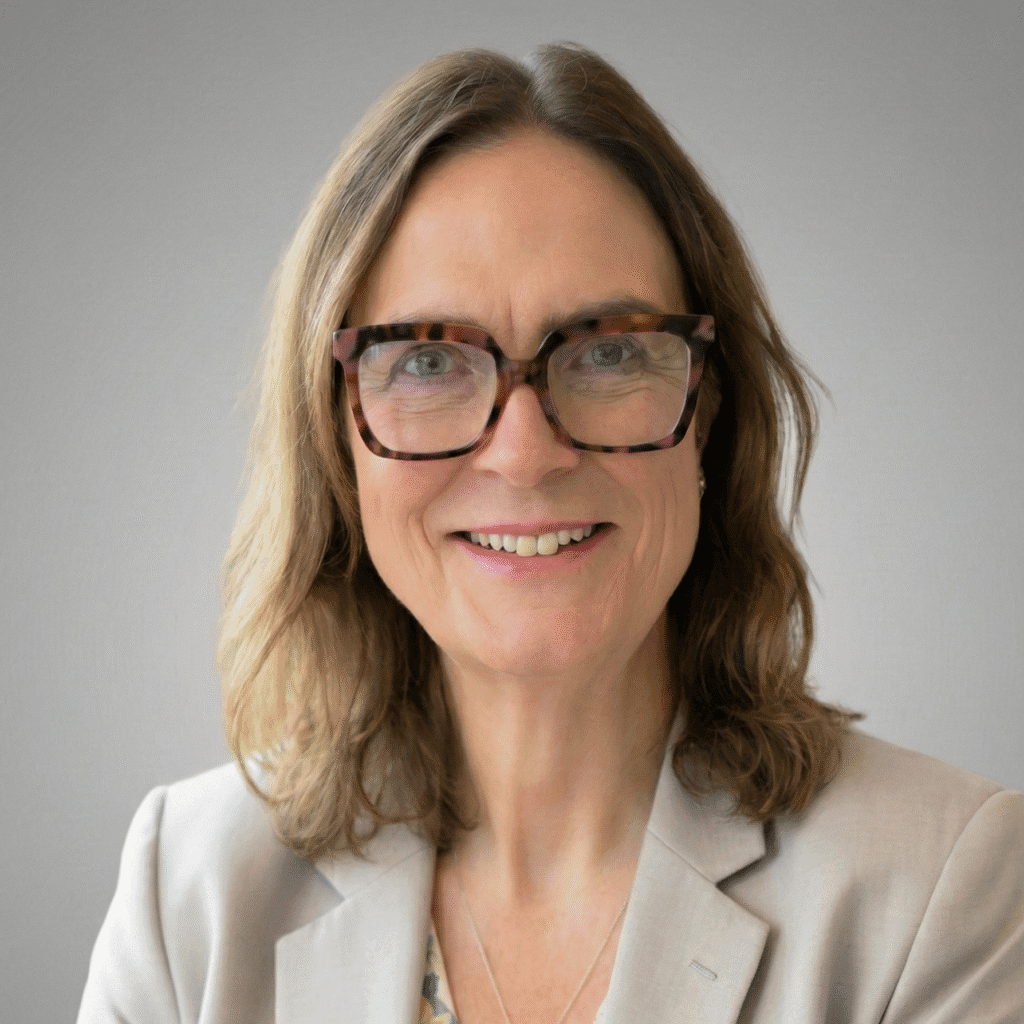
Joanne Lockwood is joined by linguistic anthropologist Suzanne Wertheim to explore what inclusive communication looks like in practice, and why it’s more helpful to focus on behaviours and outcomes than memorising lists of “good” and “bad” words.
Suzanne shares a set of guiding principles for inclusive language, from reflecting reality and showing respect to preventing erasure and recognising pain points. Together they unpack why people often freeze with fear of “getting it wrong,” how silence can communicate exclusion, and how doing a bit of prep work reduces the burden placed on marginalised people to educate others.
The conversation moves through real-world examples, including inclusive alternatives to gendered group terms, how to correct pronoun mistakes without over-apologising, and how to “call in” rather than trigger defensiveness. They also discuss accessibility in communication and events, including considerations for deaf and hard of hearing audiences, and how inclusive design choices tend to benefit everyone.
Across the episode, the emphasis stays on empathy, accountability, and small practical shifts that build trust, belonging, and psychological safety in everyday interactions and organisational communications.
“I think that a combination of caring enough, be open to critical feedback to fix mistakes in the moment and doing some prep work. If you can do those three, then you can have a successful conversation with anybody.”
“Every person in a wheelchair, every wheelchair user that I've talked with or read things by or heard things by, they absolutely have no interest in explaining to you why they are in a wheelchair.”
“I was talking to somebody who is non binary and they have a manager who can't figure out pronouns at this point, like figure it out, right? But so in early stages we understand and as a linguist, I'll tell you that pronouns are different from other words and language and we store them in our brain differently and they're grammar words.”
“And talking about language is one of the best ways to remove ambiguity and to remove negative feelings and to let people know that you're aware of what you're doing and that you're doing it very intentionally and consciously.”
“And I would add to that, that in my experience the more granular you go and the more behavioural you are rather than saying you're an x or you're y something that's sort of a large scale label. If you move away from telling somebody that they are something and saying, oh, here's this habit you have, or here's this tick you have, or here's this word that you use if you go granular and you say when you do x, it has this effect. It makes people feel disrespected or it makes people feel erased or you're hitting a pain point. And I don't think you realise that this word is actually painful for people who've had different experiences from you.”
“If it works even for something as horrific and stigmatized as sexual assault, then I promise you it's going to work well for getting people in your organization to be more accountable for their verbal problems they've created.”
“Here he had had experiences where unless he was in his specific group, if he was not in his specific, specific group of deaf and hard of hearing people, he never truly felt taken into account.”
“And so when I have an important thing to say, those words are on the slide in big letters, high contrast font, black and dark blue on a white background. And people can read them as I'm saying them because those are my punctuation points.”
Effective communication is not just about the words we use, but about truly caring about the other person's feelings and needs, and being accountable for the impact we have with our language.
Questions this episode helps answer
How can inappropriate comments like "I don't even see you as [insert race/ethnicity]" be harmful rather than complimentary?
What does gatekeeping in inclusive language and pronouns look like, and why is it important to avoid criticism when someone is not knowledgeable enough?
How does using the terms that individuals prefer showcase respect in inclusive communications?
What considerations should be made when choosing terminology in a diverse group, and how can one navigate potential conflicting preferences?
How can we show care, be open to critical feedback, and do the necessary prep work for successful inclusive conversations?
What impacts can ignorance about a person's lived experience have on their well-being and engagement in conversations?
Explore topics
Ideas from this episode
Workplace Culture Systems
Belonging
Allyship
Change & Transformation
Psychological Safety
Trans & Nonbinary Inclusion
Learn
Frequently asked questions
What is inclusive communication?
Inclusive communication refers to the use of language and communication strategies that consider and respect the diverse experiences, identities, and needs of the audience. It aims to create an environment where everyone feels included and valued.
What is the importance of terminology in inclusive communication?
Terminology plays a crucial role in inclusive communication as it reflects how we understand and relate to different identities and experiences. Using the terms and language that individuals prefer shows respect and acknowledges their unique perspectives.
How can I navigate the complexity of inclusive language without unintentionally causing harm?
To navigate inclusive language effectively, it is important to educate yourself and do the necessary prep work. Be open to critical feedback and continually strive to improve. By demonstrating that you have put in effort to understand and avoid offensive language, you create a more positive and inclusive interaction.
How can I ensure inclusivity in my communication without making others feel burdened?
Avoid placing the burden of education solely on marginalized and underrepresented groups. Show that you have already taken steps to educate yourself and ask specific questions to foster a conversation that is considerate and inclusive.
What role does pronoun usage play in inclusive communication?
Pronouns are an essential aspect of inclusive communication. Understanding and using correct gender-neutral pronouns, such as "they/them," is crucial in respecting all individuals' gender identities. However, it may take time and practice to shift our linguistic habits in this area.
How should I navigate terminologies related to disability and gender identity?
When it comes to terminologies related to disability and gender identity, it is important to listen to individuals and respect their preferences. Different individuals may prefer different terms, so being open to learning from their experiences and using the terminology they are comfortable with is key.
Share this episode
Heard something worth passing on? Send this conversation to someone who needs to hear it.