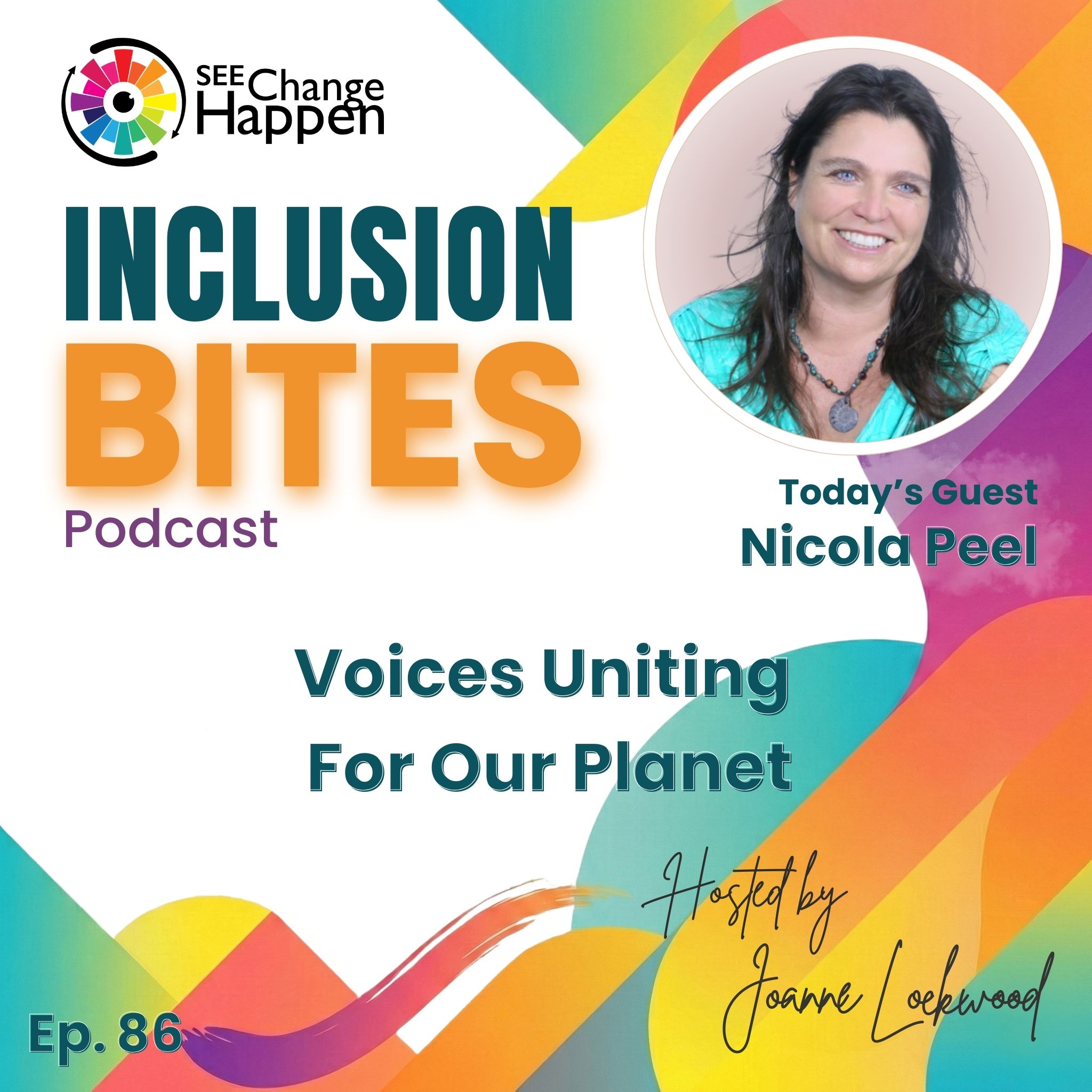
Join Joanne Lockwood and Nicola Peel as they dive into the pressing environmental issues, the need for collective action, and the challenges of creating a sustainable future on this thought-provoking episode of The Inclusion Bites Podcast.
In this episode of Inclusion Bites, Joanne Lockwood speaks with Nicola Peel about workplace culture systems.
“We are actually in the 6th mass extinction right now. We're causing it this time.”
Explore
Navigate this episode
Joanne Lockwoodhost
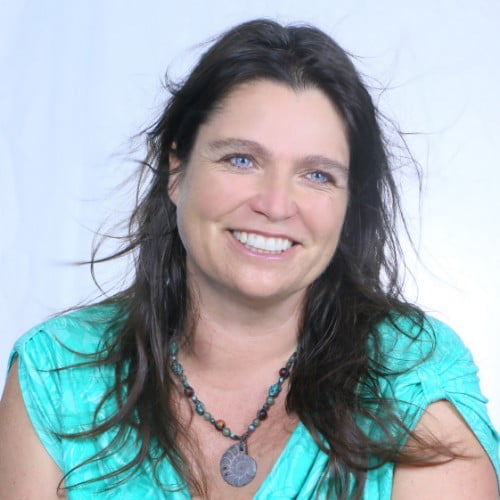
Hello, everyone. My name is Joanne Lockwood and I am your host for theInclusion Bites podcast. In this series, I haveinterviewed a number of amazing people and simply had a conversationaround the subject of inclusion, belonging andgenerally making the world a better place for everyone to thrive.To join me in the future, then, please do drop me a line tojo.lockwood@seechangehappen.co.uk.That's S-E-E Change Happen dot CO dot UK. You can catch upwith all of the previous shows on iTunes, Spotify and the usual places.So plug in your headphones, grab adecaf and let's get going.Today is episode 86 with thetitle"Voices Uniting For Our Planet"andI have the absolute honour and privilege to welcome Nicola Peel.Nicola describes herself as a solutionist,environmentalist and a speaker.And when I asked Nicola to describe her superpower, shesaid, being an inspirational speaker also, she's toldand getting shit done.So, Nicola, welcome to the show.
Nicola Peelguest
Hello, Joanne. It's nice to be here.
Joanne Lockwoodhost
Nicola, voices uniting for our planet andgetting shit done. I've got to hear more about this. Tell me more.
Nicola Peelguest
Well, it's exactly what we need right now. We needto see change happen. We need to get togetherand see our differences, not our. Sorry.See our similarities, not our differences, because we're really goodat finding ways to divide us, this, usagainst them. And we see it so much in the environmentalmovement. And for me to even say that I'm anenvironmentalist, the first thing is, oh, what, you just stand there andprotest, do you? It's like, no, I don't. I do a lot more.And, yeah, and that's what I do. I get shit done. And that's real stuffwith my hands, building infrastructures and helping peoplethat most need it. So, yeah, that's really, I suppose, a little bitof an intro. So you picked up on
Joanne Lockwoodhost
the stereotype, the image that people have in the head of anenvironmentalist, the hippie, the tree huggersthat chained themselves to railings. That's themedia trope. And media create thesetropes to dehumanise, todisenfranchisE, to divert attention.So why is the media latching on toenvironmental concerns as anegative and creating these negative tropes, notamplifying them in a positive light? So I'm a bigmedia hater, if you like. I like to bash the media because they influence everythingwe do. So why do you think environmentalists have this bad name, ifyou like? Well, I suppose we have to like anything. Look
Nicola Peelguest
behind who owns it, who has to benefit from it?I've got a good example, actually, with National Geographic. AndI made a film, Blood of the Amazon, many years ago. I went from theheadwaters in Ecuador, all the way down the Amazon river, and I made afilm. And they were interested, but they said to me, yes, butyou can't name any names. And the name was Chevron,Texaco. They were the ones that created thismassive legacy in the Amazon. But they wereinterested only if I didn't name the. You know,it never occurred to me. I thought, well, National Geographic, they're all about nature. Theylove nature. Of course they're going to be interested in the realstory of what's happening in the Amazon. But thenI picked up one day one of the magazines,and I'd never realised, I'd never really noticed it before. All theadvertising from BP and from Shelland Big Oil who advertised in Nat Geo. Andso it's like that with most media. If we look behindwho owns it, where's the money? Follow themoney. And that's why, really, it comes down tothe same old story, why they don't want to give us a voice.
Joanne Lockwoodhost
There's a few American presidents ago, I can't remember which one it was.You probably know the story where the wholeconcept of climate change was almost,like, buried as a non thing. You probablyknow the story, but we were talking about climate change, the impact of theplanet, the global warming. All these things were beingscientifically proven and evidenced until, I guess, theygot lobbied by the oil companies orthe car manufacturers, whoever that may have been. Andsuddenly it all changed, didn't it? There was a couple of AmericanPresidents ago, if I remember rightly well, Al. Gore
Nicola Peelguest
was the almost president, vice president,and if you haven't already watched his inconvenient truth,it says what it is on the can. It is an inconvenienttruth to everybody. Nobody wants to change.And, yeah, he really clearly laid it out. We've known.Well, definitely the oil companies have known sincethe. What they're doing. So it's oftheir interest and their shareholders interest to make surethat they can just carry on business as usual.
Joanne Lockwoodhost
Oh, cool, you're right. I remember that now. Yeah. Wasn't that aroundRonald Reagan or just after RonaldReagan? It was that. It was around that era, wasn't it? We don't think it
Nicola Peelguest
was that long ago. I think you might be talking about the Kennedys back thenwhen he put solar panels up the White House. And then they were told theyhad to take the solar panels off of the White House. I mean, this islike way ahead of their time. Andwe're still talking about whether or not it's a good idea to get power fromthe sun. As you say, we're
Joanne Lockwoodhost
invested in the status quo and the worldis financed and run bythese big global corporations based on oil controland power, isn't it? And even if you look at the dynamics of the Middleeast, what's going on in the Middle east right now, a lot of the troublesin the Middle east all around power dynamics around oil and energy.When I say power, I mean power in both senses of the word, politicalpower, as well as environment, production of electricity,et cetera. It's a tough thing to change, isn't it?Especially you look at the American car manufacturershave huge, great employment,often in the least employed areas of the US,the Rust Belt, where poverty and employment is really tough. That's wherea lot of the manufacturing is, and making these kind ofchanges. Advancement isn't good for politics, is it?
Nicola Peelguest
No, definitely not. I mean, it's not good for a lot of things.And I kind of wonder if we need to changeour names. We call ourselves still Homo sapiens, which wassapiens wise, and we don't seem to be acting verywisely at the moment. I think we could be. It's almost like, how about wechange our name to Homo Petrolius?Because our whole realityrevolves around the stuff. Andabsolutely everything we do, we get up in the morning andwe'll plastic thing of milk and then we drive towork. And then absolutely everything we are surrounded by ismade from it. So to change the
Nicola Peelguest
industry means changing everything. Andthat's just inconvenient. People don't want to change. It's so much easier to jumpin your own car, fly away on holiday and just keep on living thegood life. And this tiny minorityof us that are able to do that are not preparedto stop just because a few radicals aresaying that it's not good and we shouldn't be doing it. There's not the evidenceof why. If everyone else is doing it, then why should I stop?Which perpetuates the problem ofmostly it's all doom and gloom and, oh, if you become an environmentalist, you'regoing to be running around in a tatty old shirt and like, flip flopsor something, instead of thinking, which is where I come intoit. I don't want to talk about the doom and the gloomand climate change and the woes of how bad it really is. There'senough people talking about that. I want to talk about what the future couldlook like. If we move towards theecological age, where we actually work withnature rather than against it, then what would the world looklike? Talk about ages like that.
Joanne Lockwoodhost
And again, I think I saw something on the news recently that we'veentered a new age of the planet, becauseyou will now be able to detect this era inthe striation to the Earth's core and crust when you dothings. So that's how the Jurassic, mesotric, all these kind oflayers are built up. We've now got one that shows our environmentalimpact as an age, haven't we? Yeah. The Anthropocene.Yeah, that's it. It is the age of the human. You
Nicola Peelguest
cannot get away from our impact. Whatever corner of theglobe, you can be as remote as you like. In the Arctic,in the middle of the Amazon, you cannot get away frommicro particles of plastic. You cannot get awayfrom contamination, which is what the human legacy is rightnow. You talk about micro particles.
Joanne Lockwoodhost
It's in toothpaste, isn't it? It's the little tiny abrasive things intoothpaste, little plastic balls that we're cleaning our teeth.Inevitably, we're ingesting them, being part of our. In allof our internal organs. Everything we eat has got micro particlesof plastic in it. We're going to beoxygen, nitrogen, water and plastic before too long. Aren't we been bornwith plastic in us? Yeah. I mean, you kind of remind me there
Nicola Peelguest
of the spaceship analogy where the Earth, it'sa bit like a spaceship flying through the universe,and we're all these passengers on the spaceship, andall the red lights are flashing. Water,oxygen, waste, biodiversityloss. The lights are all flashing and we're just hurling throughspace, actually not taking any noticewhatsoever of these flashing lights. And,well, actually, what does this mean for humans if wecarry on like this? And I've spent 20years working alongside indigenous people in the Amazon,and I spend time with them where they haveso little, but they're always laughing and they're alwayshappy. It's very, very rare to see anybodydepressed. And when I come back to the UKand I hear about the amount of depression and suicide,teenage suicides, and I look at these two realitieswhere I've had 1ft in each reality, and the difference,it's just incredible. And it just reminds me over and overagain that money does not buy happiness. All the stuffthat we continually fill our lives with, thinkingthat it's going to somehow bring us happiness. It just won't. And what wedesperately need is to reconnect with that which isreal, the world around us.
Joanne Lockwoodhost
Is it because we haven't managed tosell the problem, sell the pain, tomean we see David Attenborough, see Blue Planet,we see all these programmes and we see the impact ofus as humans on animals. We see turtles covered inplastic. We see you cut open birds and as you seeTheir stomachs full of fishing nets and plastics, andwe're seeing that impact on animals or oncreatures. We look at the rivers,the water companies pumping untreated sewage into our rivers.We see the environmental impact of it being covered inalgae, the fish diet. It took almost a generation toclean the Thames up, didn't it, for all the pollution that was in the Thames.So we know when we impact water,how it kills off animals and creatures livein the water. We can see that impact all the time. Is it because wedon't see enough people dying in theair? Because the air looks clean. We don't detectdirtiness in the air. Probably our noses, our mouths, our lungs areprobably used to filtering it and accepting the taste of air as it is.We got people complaining about the UlEZ in London. UleZ is sortof like, let's get this down to 20 miles now. Let's have a UleZzone, people. Go, oh, that's going to make me go later for work. What aboutall the children are dying? We talk about lead in petrol. We got to unleadit. We got lead in paint, we got rid of that. Sorry, I'm talking toomuch. Go. You're the expert. You're just totally there.
Nicola Peelguest
It's very, very true. If we could see the CO2 coming out ofexhaust, if we could see carbon dioxide,the trails of black left by aeroplanes, the trails of blackleft by all the shipping and the transport.But we can't see it, it's invisible. So thatwould be different if we could see this lingering. And there areactually cameras, which are fascinating, where you canactually witness what air pollution looks likevisually. So that is part of it, is that? Yes. We can't see it,so we kind of know about it. There's been loads of information.People are in a state of denial. They don't want toknow. It's too uncomfortable. So theimagery that we see know floods andeverything, which is just these atrocities that are happening around the world,but still. In England, for example, we're in a little bubble here. We're inGoldilocks land. Nothing too bad. Has happened to us, wecan just Carry on. Hey, it might be nice, climate change, because it might geta bit hotter in the, you know, we can come up with allsorts of ideas about why we don't really want to talkabout it. And then it's this other divide,it's getting bigger. Are you a climate denier orare you a Greta Thunberg follower? And it's actuallyreally becoming very toxic. The world of. On whatside do you stand so often when people ask me, oh,do you speak about climate change? No, I don't. I'm a solutionist.There's enough people showing you the graphs and talking about climatechange. I want to talk about the solutions. I want to talk about what wecan do rather than what we can't do, because there's not enoughairtime given to that. We don't have avision of the future. Most people can't see itand if we can't see it, we're never going to get there. So, yeah, Ithink that's part of what my part in the jigsaw is.
Joanne Lockwoodhost
It's showing, painting that realistic picture, isn't it? And you say it's thesolutions around, not just telling us what the pain point is,it's giving us the ideas and the way out of those.If you do nothing, this is the picture. If you do something, this is thepicture. If you do lots, this is the picture. I think you're right.Seeing pictures of polar bears having their environmentshrunk, or the fact that you've got seals who used to live onthese ice flows now are more vulnerable to killer whales because their ice flowsare dissolving too quickly. You see all these pictures of animals, it'sso detached from reality because it's not in your back.Mean, was it? Recently, the Rishi Sunak andco decided to put back our pledge on electricvehicles by another five years, saying it was too tricky to get the infrastructurein place. I'm not saying it is or it isn't, butunless you're committed to a path, it's always going to be difficult.
Nicola Peelguest
Absolutely. And there is no silver bullet. And eventhe idea of all going on to electric vehicles, that'snot what we want either. We fundamentally needsystem change and that means public Transport, it means carsharing. The idea of everyone giving up their fossil fuelcar and getting an electric car, it's just never going to happen. A We don'thave the resources to mine what is needed to buildan entire fleet of electric vehicles, but we can learn fromother countries. I've spent a lot of time in South America where it's allminibus. Everyone gets around by minibus. We have these massivebuses that quite often drive around empty.But maybe that's not necessary. Maybe we need to look at ourwhole infrastructure of how we get around. We've been talking aboutcarpooling for a long time. Nobody does it, though.So how do we create the change? We know what'sneeded. So how do we get from where we are to wherewe need to go? And is it enough for peopleto see the visuals? And I think when you haveyour own first hand experience and you see it yourself, whichI suppose really made it even more realfor myself. When I first started in 2000 in theAmazon, I didn't know that there was these massive oil spills in theAmazon. But it wasn't just seeing the rivers
Nicola Peelguest
running black and the effects on thecreatures. It was when I started to see the childrenthat were covered in skin lesions. Andthe highest rate of childhood leukaemia in theworld is the children in the Amazon. Now, whydon't we know about that? Because it's mucheasier to talk. Oh, yeah, nature's beingcontaminated. Yeah, it's the oceans or it's theforest, but the people, it's a different thing. If people were to see what Isee of how sick the people are that live inthe forest because they drink the water,then you say, well, hang on, this isn't right. Why are all thesekids in the middle of the Amazon so sick? Oh,so I can just drive to Texaco and go and fill my car up. Howdoes that make us feel? So that's where I feellike we need to actually feel what'shappening in a real way. This isn't justsome know, it's real life, it's actually happeningright now. I think maybe if you haven't seen it, you can't really understandit. But it still
Joanne Lockwoodhost
doeSn't impact me. AndI don't feel that pain. No pain, no change sort ofthing.Maybe as an individual, I'm worried about. Well, not worried, butwhat difference can I make if I put this plastic bottle in therecycling or put it in the general waste? What's the impact? It makes nodifference to any. No one's going to care, no one's going to notice. It'll justgo into landfill. Who cares? Sohow can I understand the personal nature of this sothat I can be on board with it, rather than just theory? How can Ibe personal responsibility for change? How can I dothat? Well, I do it because it makes me feel good.
Nicola Peelguest
So whether we do it from a self centred doing the rightthing actually gives you better mental health.And we can come at it from many, many angles. And Ihear this all the time, I'm just one person. Whatever Ido is not really going to make a difference. It's up to the government, it'sup to the corporations, it's up to the politicians. We're very goodat pointing the finger to everybody else, apartfrom, you know, what would happenif know started that the bottom rungis just putting the recycling in the right bin.There was recently I was chatting to a young Japanese girl and shesaid, I didn't know that England was a thirdworld country. And I said, well, whydo you say that? She said, well, people here still don't know how torecycle. And I thought, yep, that'sright. If you lived in Japan, you would peel the label offof your wine bottle and put the label into paper. You'd put the bottle intoglass and you take the lid off and you put it into metal. Theyrecycle everything. They have very little waste.They have a very intelligent system, which meansthat by really separating andrecycling, it costs less in the end. Soit's not even just the environmental impacts, financially,economically, it makes sense. So we starton the rung of that personal radicalresponsibility of there is nosuch thing as away. This idea of I'm going to throw itaway, where is that? We just move it from ourhouse to somewhere else. Sothen the bigger picture of systems change.And for me it's everything. It's not just kindof individual, it's social, it's economical,it's political and it's legal. So we can pull the strands ofeach of those. Sorry, I'm just chuckling under my
Joanne Lockwoodhost
breath here about what you said. When you throw something away, thereis no away. And I had this visionof tidying up my cupboards.What you end up doing is just rearranging stuff or putting the stuff you alreadyhad somewhere else. So away is actually somewhereelse. It's not actually away away anywhere, it's just different.You just moved it from place A to place B. You've changedits position in time and space, not its actual status. Absolutely.
Nicola Peelguest
The time where we move it, we don't see it because it's not in England,because we haven't got any landfill sites anymore. So we just ship it away toanother country and have no responsibility or no ideaif you ask most people, hey, when you chuck your stuff in the rubbish bin,where does it go? We just don'tmean. We saw in the recent by elections
Joanne Lockwoodhost
that the UlEz in London became apolitical wedge issue where oneparty decided that they were going to campaign against it and gettheir person elected, which turned out to be true. Whether it was over theUlez, is it becoming a politicalfootball? The more left leaning you are, the moreenvironmental you are, the more right leaning, the morecapitalist you are, the more like you're less likely to care about theenvironment. Is that kind of a truism or is that kind of a generalisation?
Nicola Peelguest
I think it is true, sadly. It seems to bewhere we're going and it seems to be getting worse.And the rise of fascism in thiscountry as well, and the rise of climate denial.So I've been confronted at a few events where I've been speakingat with people that are absolutely, totally in denialof climate change. And I say, well, okay, if you don't agree with the mapsand the graphs and what the scientists say, do you agree thatthere is air pollution in cities? Do you agree thatthere's rubbish and plastic in the oceans? Do you agree that we'relosing biodiversity at an unprecedented state? We areactually in the 6th mass extinction right now.We're causing it this time. So we know that that'shappening. And so I'm trying to find the things which actually uniteus, the things that we agree upon rather thanwhat we don't agree. And at the moment, because it'salso siloed, you've got people that do amazing worksocially with people that have absolutelynothing to do with the environment. And then you've got environmentaliststhat have nothing to do with social projects.But the Vesica Pisces, the bit in themiddle, which is, well, we've got to remember thathumans are nature. We're not separatefrom it. We're not as important as a worm. Imean, the Earth really needs worms. It doesn't need humans. But weare just another species on this planet. I think sometimes we haveto remember that because we seem to think that there's usand then there's nature. Like it's somethingdifferent. I suppose historically in the
Joanne Lockwoodhost
food chain, we're just food, aren't we? In the middle of bigteeth, predators and worms. Worms at the bottom of the food chain eating us,or a big dinosaur,if you want, big predator eating us. So without ourintelligence, if you like, or lack of intelligence, however you want to describe it, weare just food for somebody else. So, yeah, in the scale of things, that'show we evolved. We're food that evolved to run awayand be more clever about running away, and then we became thepredator ourselves. But we're not most of intelligent of
Nicola Peelguest
species. Most of them don't shit in their own nests.
Joanne Lockwoodhost
No. Most of them know the difference, don't they? No, you'reright. God. Blimey. Had to destroy my thread.Yeah. Someone said to me, it neveroccurred to me that when I was younger, andI'm in my late 50s now, I remember driving my carand you get out of the car and your car has been massively hitby flies and bugs, and you're always wiping something off you,especially at night, you come back and your car be plasteredwith bugs. Now I can't think of.Hardly ever I get a splat on the windscreen, driving down country lanes or evenmotorways, I don't get hit. And that's a sign that we're losingour biodiversity in terms of insects and bugs because of pesticidesand lack of vegetation, isn't it? Absolutely,
Nicola Peelguest
yeah. And I think that that's the advantage that us of a certainage know, that we witnessed it. We actually saw that,whereas the last couple of generations, they never saw insects.So they don't know that they've lost them because they didn't have thatexperience. Soon it will all be textbook.It's like, gosh, to think that those creatures that we grew upwith, the sound of the cuckoo in spring,may soon be lost forever. The amazing song of theNightingale. Many people say, we don't knowhow many very few years we've got left of them. We
Nicola Peelguest
are absolutely on the brink of so many speciesjust disappearing forever, and extinction isforever. We can't get them back.So that's why now there is such a need and apush to do whatever we can. And if that's,like, in our backyard, back garden, local playingfield, just leaving an area to the wildlife,leaving that messy pile of brokendown stones and branches.And that's what nature needs. There's nowhere for it to hide.Because humans have become so tidy, we've cleaned everythingup and there's just no habitat left for them. So that'swhy the rewilding, which is also massivelycontroversial, but thankfully, it is gainingmomentum of people realising that, hey, what does wildlife needbefore we lose it for good? What does it need? It needs habitat.It needs some messy spaces just left for natureand for humans to step away andgive some space back to the rest of the naturalworld. Yeah. Was it. Jeremy
Joanne Lockwoodhost
vine hosted something on radio two a fewmonths ago. Isn't May designated thedon't trim your roadside back of urge, let yougo wild in May or something? He hosted thisno mo May. That's it. No mo May. And he hosted this debateon his show on radio Two. And people were complaining about itbeing the council, trying to save money or to try anddo this, and it was becoming dangerous that all these plants were growing everywhere.And I was just thinking, really? This is reallywhat we're arguing about here is people's jobsworthbackyard. I want to see neat, trimmed banks.It can't make that much difference to the wildlife. That's the mentality we'refighting against, isn't it? Absolutely. But most people like
Nicola Peelguest
birds. I think if you say to people, well, hey, how would you feelif we didn't have any birds left? Becausethey didn't have any insects and so therefore theyhad nothing to eat. And we come back to the seminalbook Silent spring that what happensif we have no birds? It becomessilent. Are we better or worse off ashumans? Is that okay for usto be without other species becauseof our need to have tidiness andlawns that we're not prepared to give pieces of landover? And everyone can do that. That'swhat we need is more people saying, well, hey, okay, I don't have agarden, but we've got a park. How aboutgoing have a conversation with somebody and saying, hey, what about we just givea little tiny bit over, put a sign up,grow some more wildflowers? It can be absolutely beautiful.And that's actually one of the really shocking thing that comes from Nomo maythat. Yes, it has saved the council money, which is a good thing. Butalso, people have never seen what happens if you let your lawngrow. All of a sudden it's covered inflowers and then it's covered in bees and butterflies. It's like,wow. That's what happens when we just letthings go to flower. And if you leave it to go to seed,then you get a whole other load of creatures coming through to feast on thattoo. So it's these little actions thatreally can make a huge difference. Yeah, we get
Joanne Lockwoodhost
these wildflower seed bombs and we've got load of planters. We just fillthese planters up with seed bombs and then we like about it is you gotno idea what's going to come up and what colour of what it's going tolook like. So we've got all these kind of differentflowers coming up everywhere. Some grow, some don't, some work, some don't.And we love doing it. And I'm not saying we did itdeliberately to be environmental, we just did it deliberatelybecause we just wanted to have thatsurprise of what grows. And we like those. And we definitely
Joanne Lockwoodhost
noticed. We lived in the rural Chichester area tillrecently, and we saw a lot of. When westarted taking care of the garden with all these planters and links withall these wildflowers, we saw a huge increase inbees and wasps and flying things, andalso smaller insects, and we saw a huge increase insparrows and tits. And we even had serends, we even had peasantsand partridges come in the back garden. And we noticed starkdifference from the day we moved in and the first six months to thelast 1218 months we were there. Just by ourinfluence on our space, we increased the amountof birds and different speciesand the insects. Everything else okay, we got a few rats we had to dofor the rats because we were too many nuts and seeds everywhere.But, yeah, we could see a marked difference between when we movedin and when we moved out, the diversity of theinsects and the birds. And we're trying to encourage it where we live now,which is the exact. What we've just said, that don't ever
Nicola Peelguest
anyone think that one person can't make a difference if we'reshowing this on a small scale. What about largelandowners that start to actually givea little bit more than just a tiny margin around the edge?The hedges that got taken out, we need to be putting themback. We need to be giving a lot wider edgesaround the fields. We start with the edge and we just kind of workinwards. But then we've also got a problem with this kindof idea that tree planting is going to save the world. Andthis massive tree planting, where often it can be the wrong tree in thewrong place, people don't really understand what they're doing.And one of my greatest passions, or what drivesmy work at the moment, is looking for ways to protectthe forest that's already standing. As we're having this veryconversation. There's probably, let's just say 100,000trees being planted, 100,000 little saplingsputting the ground, and right now there's also100,000 ancient trees being cut down.You cannot just allowancient forests to be cut and think, oh, but don't worry, we'll justplant a few trees instead. It doesn't work. You can never bringback biodiversity. You can never bring back a primaryforest. So I was very lucky because I got lockeddown in probably the most biodiverse place on theplanet, where it was a place called Los CedrosBiological Reserve in the cloud forests of Ecuador. I'd gone to writea report. I said I'd be there for five days. I was there forfive and a half months. And being lockeddown in a place where I could swim in the river andstand in the waterfall and drink the water.How many people ever get the experience to swimin a river that you can drink? It just doesn't happen.But we have to keep that vision.We need to bring that back. And what is going on rightnow with massive companies just not being heldresponsible for the amount of shit, the amount ofsewage that goes into our rivers? They pay their fineand then they just carry on. We have environmentallaws, but they only just pay for a fine. Instead,we need to change it so it's criminal law. We need to changeit so we give nature rights. We need to absolutelyjust clean up our act. Yeah. What
Joanne Lockwoodhost
you're saying there about the new planting,and it just reminded me, as you're talking about the sycamore Gap, just tosee the age of that tree,and no one alive today will ever see a tree likethat again in that location. It's hundreds of years toestablish. And just north of Portsmouth, it'scalled Queen Elizabeth Country Park. And the historyof that is it was planted in the era around HenryVI as a source of woodfor building his fleet of ships near Portsmouth.So you look at that forest today or the park today,and they're quite mature, but that's how many?That's 600, 700 years of growth. So if youare pruning it down, you're putting saplings in today, it's going totake four or 500 years to become an established,integral part of the ecosystem. Not a few years. Andthere's another place called Kingley Vale. It's got the U treeforest, and that must be all aroundplanting for longbows and things, the Uand some other ancient sort of things. And it's the highest density, I think, ofU trees anywhere that I know of, anyway. But, yeah, it's very old andancient. Ancient U trees don't tell anybody.And those trees have got hugetrunks, massive trunks. And allthe branches are like a haunted forest, and it's reallyquite powerful in there. So, yeah, you can't just plant that andexpect it to grow overnight. All our churches have massive utrees in them. Andthey've been there since, what, the 1617? Hundreds. And that's three or 400 yearsagain. Right. Just going on a tree plantingspeech, it's not going to solve anything, is it?
Nicola Peelguest
Most U trees in most churchyards areover 2000 years old because they were originallypagan sites and the church built tosquash the pagan religion. They builttheir churches where it was already a place of worship, which is why that youfind ancient use there. Most of them have been carbon datedover 2000. In fact, there's a little treejust up the road here in Cold Wartham in WestSussex, and that tree was carbon dated at3200 years old. One of the oldesttrees in the country. But yeah, many of the trees are over 2000.So the fact that we are still cutting down theredwoods, these ancient redwoods in America, again, over2000 years old, they say between 1%and 3% are left and they're still cutting them down.What I witness in the Amazon, these giant trees, anybodythat watched avatar will remember the great tree,which is based on the Amazonian sabre tree.
Nicola Peelguest
And now these huge trees being cutdown and one of those massive, massive sabretrees, they will get $500in planks of wood. That's what povertydoes, though. It will drive them to cut the trees down,firstly to sell a few planks and thento be able to clear it, to put cattle on, or to putsoy, which will then be fed chickenssold. In Tesco, this is a direct relation right now, Ihave indigenous friends telling me thattheir forest is being cut downand for soy, and there's a directchain going all the way to Tesco.And I actually brought this up. I was recently at a big conference called Anthropy,and there was somebody from Tesco speaking there from head of sustainability, and I said,why is this still happening? Peopledon't know when they go in to buy something, they don't know thatwhat they're buying is causing destruction in theAmazon. We've got to start becoming really awareand pressurising these big businesses to do theright thing, which is where I definitely want to give a plug to the greatwork of ethical consumer, which they have a fantasticbook, magazine online, and if anybody wants to know whothese businesses are and what they do, thisorganisation have done great research so that we can becomeresponsible consumers in that which we buy.
Joanne Lockwoodhost
I just think about, you talk about the supermarkets there and the chains.They keep telling me that they're cuttingprices, they're driving down this, they're driving down that they're telling me that I haveto have perfect apples and perfect fruit because that's whatthe consumer demands. That's marketing bull,isn't it? The consumer is not demanding anything. They're telling us what weshould demand and then fulfilling that, they're givingus the rally cry and then following through saying, you've told us this, so we'redoing it. So I didn't ask for round apples, I asked for anapple that I can eat. I was quite happy eating them off the tree inmy parents garden, cutting out the maggotand eating the rest of the apple. We sit there at Christmas as abunch of kids, cutting the apples up and cutting the maggots out, justchewing on these apples. Those are okay for us as afamily. What's changed? There's a friend of mine, she said
Nicola Peelguest
something which I thought was quite apt. She said, it shouldn't say organiccarrots, those ones should just say carrots and the otherones should say chemical carrots.
Joanne Lockwoodhost
Yes, I like that. It's shifting the language, isn'tit? And as an EDI professional, I'm wellaware that we label things with adjectives,but we don't tend to label the default, do we? We always label the nondefault. So people want the default. So you sayorganic carrot, that makes it sound like it's notthe norm. If wehad artificially grown or artificially fertilisedcarrots, or carrots, we're going to go, oh,carrots sounds nicer than this other description.
Nicola Peelguest
And it is. A lot of it is the wording andbeing able to know what's going on.Education is a big part of it. But education byitself doesn't make people act alone.I think that's the first seed. And when I'm giving a talk, I can speakto a few hundred people and I'm throwing out these seeds. Many will landon barren land and people won't take any notice. Butthen I feel like somebody else will say something which will water thatseed. And finally that person will be like, oh,actually, maybe I can do something. And my favouritesaying is, thanks to the singer Joan Byers,action is the antidote to despair.And I really think that is such a brilliant saying. People say tome how I've been 25 years I've been banging on about theenvironment. How come you're not totally indespair at the state of the world?Well, that wouldn't help me and it wouldn't help anybody elsethat I was communicating with. And the only thing thatkeeps me from despair is the action that I takeand all the projects that I've coordinated around the worldto make a positive difference. That leaves me thinking, well, hey,if I die tomorrow, at least I can think, well, shit, I didmy best. I did leave the world in a better place than when I foundit. And if we could all have thatfeeling, then we would all. NIMBY is a reallygood thing. We've made out NIMBY as something bad. Notin my backyard. If we all look after ourbackyards, the world will be a better place.
Joanne Lockwoodhost
Wow. I love that. I tend to use the concept ofplus one. I don't have to have a thousand. If I justone more than I had last year. One more change.One person, using a COVIDanalogy, get the R rate, get the infection rateof inclusion and diversity, get the R rate of environmentalism.If we can infect people with a bugto care about the planet, care about each other,and we got that number to two, before long the whole planetwould be infected with thinking about the planet, wouldn't they? Butwe're just lazy, though, aren't we? You look at the reaction we hadas a species in the UK to COVID,we were in denial. There's conspiracies. It wasn't until you actually sawyourself dying, or someone you loved dying, that the penny dropped. But mostpeople go, because we're lazy. Human beingsare very lazy. We look to try and do the least we can.It's biological. We conserve energy. If we don't have todo it, we won't do it. So how do we. How do we stop peoplejust being acting to programming, which is being lazy?
Nicola Peelguest
Well, I think it comes back again to mental health.So if you go to a lot of countries,yes, they can do a lot of lying around in their hammocks, which we wouldcause. Cool. Lazy. But there's also a lotof being busy actually findingfood and doing what needs to do to be human, to actuallysurvive. But because we're in a realitywhere people don't have to hunt and gather, they don't have to go and findfood, they have to just walk down to the shops, there's so much time.And people say, oh, I don't have time. But if we look at how manyhours per day people spend on social media, if we look at howmany hours people spend a day on their phones, and then at theend of the day, you say, well, what have you achieved? What have youdone? Time goes by, and then people havegot feeling down about it. And then when
Nicola Peelguest
you realise that you get active. And a really good example is people going alongto community gardens. The benefits of goingalong and finding a community garden is that, hey, all of a suddenthere's all these other people. So you get a social life,you get to grow some food, youactually start to make a positive difference within a groupof people locally to you, there are so many benefitsfor actually doing the right thing, but it's a bit like wehave to lead the people to show them what's possible.If you've never even heard of such a thing as a community garden, howdo you know where to start? So that's part of my work,is as a speaker, to talk about all the positive things that wecan do and joining together, so that we can all kind oflike act faster and move faster together and have a good time while we'redoing it. Does it need a
Joanne Lockwoodhost
generational shift, though? I mean, we look at ourevolution as a culture, from a boozy, pub based culture toa coffee shop culture has taken a generation.I go back to my teens andpub was it. There was no coffee shops. It was alcohol fueled,obviously, that had social issues as well,surrounding it. And the government at the time, or overtime, removed some of the licencing laws, it became easier to get a drink.You weren't having to finish everything in the last five minutes. You could drinkon a sasset all afternoon if you wanted to. And the impact was peopledidn't feel that drinking was a resource that was limited anymore.Therefore they didn't have to rush it. They could just dip in and dip outwhenever they wanted. At the same time, the coffee shop culture kicked off andwe became a bit more Parisian, if you like, in our high streets.And now you look at the generation today is drinking haschanged completely. You may drink more at home or for mental healthreasons, but fundamentally, it's no longer as ingrained in ourpsyche and culture as it used to be. And you look at other things.Smoking tobacco, it's taken three or fourgenerations, and now talking about making it effectivelyillegal by 2030, or trying to find really radical ways,like New Zealand, of banning it.These are generational changes of attitude. And I would dare say thatmy daughter and my son, who are in their late 20s, early 30s, areprobably just on the early curve of caring aboutthe environment even more than I do. So their children,the gen Alphas, the younger Gen Z's, are the ones that arereally going to be in that era, like Greta Thunberg. And hercohort. That's where we're going to see the real change. Or can we wait thatlong, though? I don't think we can. I think that that's what
Nicola Peelguest
everybody kind of feels like, oh, well, we can't do then. Youknow, the younger generation is saying, well, hey, you lot caused the problem,you need to sort it out. It's your generation that has caused this problem. Whyshould we sort it out? So it can go backwards andforwards? And I meet some greyyoungsters that really care, butthen what happens is, because they don't have the support that isrequired. You get this environmentalanxiety in the youth, which is just soterrible that none of their mates want to get involved. Andit's not the cool club to be in, which iswhat is such a shame. It's cool tobe smoking a single use vape. There'sabsolutely no understanding. This is about as bad asit's got from when we used to drink beer and brew up our own hopsand make our own homebrew to now we've got thisgadget which is usingplastic and lithium. Onceit's then thrown away, a lot of them are ending up inthe rivers, where lithium is highlycontaminating to the rivers. So we can just usethat once. It shouldn't be allowed. I mean, that kind of thing.It's just become extreme in this. Consumption,consumerism, capitalism. They sell, so we willkeep selling them. And it doesn't matter about the state of theenvironment. So it just shows how far we've gone to start torein it back in, to realise and see those impactsand who's responsible? Is it the consumer? Is it the person that buys thevape? Or is it the shop thatsells it? Or is it the manufacturer thatactually creates it in the first place? It's like every level isresponsible for creating this world that we're living in right now ofjust mine it, make it, dump it,mine it, make it, dump it. And we just don'tsee where it came from or where it's going to.
Joanne Lockwoodhost
I am not going to change on my own ifI feel I'm swimming against the tide of everybody elseagain. We're lazy, we could tend to go with the flow, peer pressure. We gothe easy route. Everyone's telling me in theadvertising and the media, what's going on. I'm being bombarded with this day in, dayout. This is the right thing to do. We care about you, we're making theseproducts. Marketing is all around playing with biases andpersuading you do you want something. And people are developing these products as you
Joanne Lockwoodhost
take the single use vapes. They're different colours, they got these fancy flavours and fruitynames and they sound really attractive to young people. No wonder they'reinterested in them. People aren't going to changeuntil the government, andI know you can't blame everything on the government, but you have to set theculture of the country. And if you look at the countries around the world thatare making positive change, I dare say a lot of this has been set bythe tone of the people who are setting the tone for everybody.And then they're putting pressure on big businesses and thosebig businesses that are either incentivized or they put them in pressure to do theright thing, to pass that down. And then people at the bottom go, oh, I'mnow being told to do this, I will do that now. So almost like haveto reprogram people. AndI do despair. We look at the return to office workingand instead of hybrid remote working, I do wonder ifa lot of that is driven by government peer pressureto big organisations to get people back into the inner cities, to keep the coffeeshops, to keep the employment, to keep the transport system alive, keep Londonunderground alive, because it doesn't make sense,really. Where's the incentive to get people travelling,commuting, COVID, we proved you didn't need to. And yes, theysee mentoring, peer to peer learning,cooler chats, all this kind of stuff. It nurtures people. I'm not saying therearen't those benefits, but the answer shouldn't be drive to work.There must be another solution to those problems other than drive to work orget the train and park and get your car out. And Iwonder what the motives are and who's driving all this. And itsays to me that it's not for the right reasons, it'sfor other reasons. If you might. Absolutely.
Nicola Peelguest
Let's just have a look at who's running the country, runningthe world at the moment. Who are the big players and whatare their interests? Their interest is not in the good ofhumanity or the good of the world, it's about makingmoney and it's this revolving doors of who's in governmentand what positions that they're in. They have absolutelyclearly shown that we have no leadership at all in thiscountry. So if it's not going to comefrom above, is it going to come frombelow? How has change happened before? Therehas been these uprisings that have come from agrassroots level of people pushingtheir politicians, their businesses into doing the rightthing. But I think if we wait for the governments todo anything, then we're going to be waiting way too long. And whatwe really need is to be able to have a vision. If we think, hey,what's the world going to look like in 50 years time?Are we all going to be still driving around in cars? Are we all goingto still be doing the same thing? Will the world? Nothing ever staysthe same. So I think it's really important for us all tohave a vision of the future. What do you want it to look like?And if you want it to look a certain way, how are we going toget there from where we are right now to where we need togo?
Joanne Lockwoodhost
Yeah, it's destination planning, isn't it? You got to startsomewhere. I'm a great believer in transformationalleadership, where you paint the picture and you say, this is what fantastic lookslike, this is what you can achieve. Rather than the carrot and stick and thepushing people towards a destination, you just create attractionto that positive vision. I don't think we're doing enough of that.This is how it could be if we all did this. Butthere has to be a real gravitational pull towards that destination.I don't want to be worse off, I don't want to be inconvenienced.I don't want to have to walk everywhere if it's raining, ifsuddenly a bus arrived at the end of my road every day, every half anhour, and went to where I wanted to go, I e the trainstation, I would get on that bus and I would go to the train station,but suddenly it only arrives three times a day.Once for the early morning commuters at 06:00 in the morning andonce at 07:00 at night. But if I want to get the bus to thestation at two or three in the afternoon, I can't. Sothe issue is we're not investing in enough infrastructure. Thischicken and egg thing again, HS Two. I'm not saying it was the great,best idea in the world, but it should have gotcars off the road, should have got lorries off the road.As I say, I don't know if it's the perfect answer, that kind ofinfrastructure, but I've seen MRT, local transportsystems canned, I've seen bus stops closed. We look at the rail network ofold, then the car came along and all the railways, all the little branch linesgot cut out. We got to try and help reinvest in theinfrastructure. We got whole new town developmentsthat are 20 miles from nearest railway station and no businfrastructure. This is crazy stuff. We're doing. Our townplanning, our city planning has got to reflecta better way of connecting us, especially if we keepencouraging people to go back to work.So, I don't know. I'm as frustrated as you. I guess.
Nicola Peelguest
We can see what needs to happen. I think that that's a starting point,is that we have to start having the conversation. We need to start talking aboutwhat's going on. We need to name it, what's going on,what's happening on this planet. It is an eco side. We need touse that word. That's the truth. That's what's going on.
Nicola Peelguest
And we're still not taking it seriously.And I think that a lot of that is because, say, people haven't seen itwith their own eyes, they haven't smelt it, they haven't actually seen thatwhole reality of how bad it can be. These massive openpit mines around the world, which that's what ittakes to have that vape. You need to have these huge, great bigmining realities going on, causing vast amountsof contamination, so that we can go and buy somethingwithout thinking what the materials are it's made from. So Ithink, yeah, there's so many, many parts of thisequation, and I think we just needto do anything. Anything at all is better than nothing. Andif that means recycling one more bottle, finding outwho you're banking with, making those changes,that actually drives a society, whichis, say we said before, it is political. How manypeople speak to their MPs? Very, very few. And the MPsoften say, oh, well, my constituents aren't really interested inwhat's happening in the environment, so I just do what my constituents want. Well,if that's the truth, we need more people engaging with whoevertheir MP is to say, hey, what can we do? And what are you planningto do? So that pushing power that we haveas an individual to pressurise those people who aresupposed to be representing us, to look at how wecan unite socially with other groups and say, hey, how can weall work together? That's what is needed. Asnature communicates through the undergroundmycelial network which connects every tree in theforest, we need to start doing the same as humans.We need to start connecting a lot more so that we canall work together and amplify each other's voices andconcerns. And that way it feels like we will have a much betterchance. Amazing. And
Joanne Lockwoodhost
on that note, I could talk to you all night.We've been chatting for an hour and a half already before in the greenroom and I've no doubt we're bumping to each other again soon and we'll haveanother conversation. So no Nicola, amazingconversation, thank you. I'm sure everyonelistening would love to get in contact with you. So what's the best way ofgetting in contact with you? Your website, LinkedIn. How do we findout more? Yeah, my website is my name
Nicola Peelguest
nicolapeel.com that's got my social media tags onit. I also do the Solutions podcast and I throughPatreon. So anybody that wants to hear meinterviewing interesting people every month,then look for solutionist.
Joanne Lockwoodhost
Amazing. I'm going to go and cheque that out in a minute. That's brilliant.So Nicola, thank you so much for your time andfor you, the listener that's got all the way to the end and really, reallyproud of you for making it this far. Thank you for tuning and listening.If you're not already subscribed, please subscribe to keep updates on futureepisodes. The Inclusion Bites Podcast that's B-I-T-E-S. You can find us onApple Podcasts, Spotify, whatever platform you use.We're there. So please do look us up. As you can imagine, I have anumber of other amazing guests. I mean, our guests just get betterand better. I've got more guests lined up. It could be amazing aswell. So please, please listen in. Of course, if you want to be a guestas well, I'm always welcoming new people onto the show and ifyou've got any comments or suggestions, please do drop me a line tojo.lockwood@seechangehappen.co.uk UK. If you'vegot any ideas on how we can improve, I'd love to hear them. And finally,my name is Joanne Lockwood and it's been an absolute pleasureto host this podcast for you today. Catch you nexttime.Bye.
Workplace Culture SystemsChange & TransformationCommunity & ConnectionAllyshipBelongingLeadership & Power
Joanne Lockwood is joined by environmentalist and solutionist Nicola Peel to explore why environmental action so often gets stuck, and what it takes to shift from awareness to practical change.
They begin by unpacking how environmentalists are portrayed in the media and how ownership, advertising and lobbying influence what stories are told and which voices are amplified. From there, the discussion widens to the challenge of changing a society built around fossil fuels and convenience, and why progress needs more than individual good intentions.
Across the episode, Nicola and Joanne focus on solutions: personal responsibility like recycling and conscious consumption, community-based action such as community gardens, and the need for broader systems change including transport and infrastructure. They also discuss biodiversity loss, rewilding, plastic pollution, protecting existing ancient forests rather than relying on new tree planting, and the importance of accountability for corporate pollution.
The conversation closes with a clear call to action: connect with others, build momentum locally, and use collective pressure to influence political and business decisions, keeping a compelling vision of a healthier future in view.
“Yeah. I mean, you kind of remind me there of the spaceship analogy where the Earth, it's a bit like a spaceship flying through the universe, and we're all these passengers on the spaceship, and all the red lights are flashing. Water, oxygen, waste, biodiversity loss. The lights are all flashing and we're just hurling through space, actually not taking any notice whatsoever of these flashing lights. And, well, actually, what does this mean for humans if we carry on like this? And I've spent 20 years working alongside indigenous people in the Amazon, and I spend time with them where they have so little, but they're always laughing and they're always happy. It's very, very rare to see anybody depressed. And when I come back to the UK and I hear about the amount of depression and suicide, teenage suicides, and I look at these two realities where I've had 1ft in each reality, and the difference, it's just incredible. And it just reminds me over and over again that money does not buy happiness.”
“Are we better or worse off as humans? Is that okay for us to be without other species because of our need to have tidiness and lawns that we're not prepared to give pieces of land over?”
“Most U trees in most churchyards are over 2000 years old because they were originally pagan sites and the church built to squash the pagan religion. They built their churches where it was already a place of worship, which is why that you find ancient use there. Most of them have been carbon dated over 2000. In fact, there's a little tree just up the road here in Cold Wartham in West Sussex, and that tree was carbon dated at 3200 years old. One of the oldest trees in the country. But yeah, many of the trees are over 2000. So the fact that we are still cutting down the redwoods, these ancient redwoods in America, again, over 2000 years old, they say between 1% and 3% are left and they're still cutting them down. What I witness in the Amazon, these giant trees, anybody that watched avatar will remember the great tree, which is based on the Amazonian sabre tree.”
“People don't know when they go in to buy something, they don't know that what they're buying is causing destruction in the Amazon. We've got to start becoming really aware and pressurising these big businesses to do the right thing.”
“The benefits of going along and finding a community garden is that, hey, all of a sudden there's all these other people. So you get a social life, you get to grow some food, you actually start to make a positive difference within a group of people locally to you, there are so many benefits for actually doing the right thing, but it's a bit like we have to lead the people to show them what's possible.”
“You need to have these huge, great big mining realities going on, causing vast amounts of contamination, so that we can go and buy something without thinking what the materials are it's made from.”
“As nature communicates through the underground mycelial network which connects every tree in the forest, we need to start doing the same as humans. We need to start connecting a lot more so that we can all work together and amplify each other's voices and concerns. And that way it feels like we will have a much better chance.”
Realistic pictures and solutions are needed to motivate people to take action.
Questions this episode helps answer
How does the high density of U trees in Kingley Vale showcase the importance of preserving ancient forests?
What role do supermarkets play in driving consumer demands for "perfect" produce, and how does this contribute to environmental issues?
How can shifting language and changing narratives around sustainability influence consumer behavior and perception?
Why is it important to take action in addition to educating oneself about environmental issues?
How can individuals make a difference in protecting the planet, from recycling to changing consumer behaviors?
Why is it crucial for society to come together and amplify voices and concerns when it comes to environmental issues?
Explore topics
Ideas from this episode
Workplace Culture Systems
Change & Transformation
Community & Connection
Allyship
Belonging
Leadership & Power
Learn
Frequently asked questions
Q: What is the significance of Kingley Vale having the highest density of U trees?
Kingley Vale's high density of U trees showcases the importance of preserving ancient forests and their role in supporting biodiversity and the ecosystem.
Q: How old are the U trees in churchyards?
The U trees in churchyards are over 2000 years old, emphasizing their historical and ecological value.
Q: Why are ancient redwoods being cut down?
Unfortunately, ancient redwoods are being cut down due to various factors such as deforestation for logging, agriculture, and development, contributing to the loss of these majestic trees and the ecosystems they support.
Q: How is Tesco linked to deforestation in the Amazon?
Tesco's indirect link to deforestation in the Amazon can be attributed to their reliance on suppliers who engage in practices that contribute to deforestation, such as land clearance for cattle ranching or soybean cultivation.
Q: How do supermarkets drive consumer demands for perfect produce?
Supermarkets often prioritize visually perfect produce, leading to increased pressure on farmers to meet these standards, which can result in the use of harmful chemicals, excessive waste, and unsustainable agricultural practices.
Q: How can shifting language influence consumer perception?
By using language that highlights the environmental impact of products and encourages sustainable choices, consumer perception can be positively influenced, leading to better-informed purchasing decisions.
Share this episode
Heard something worth passing on? Send this conversation to someone who needs to hear it.