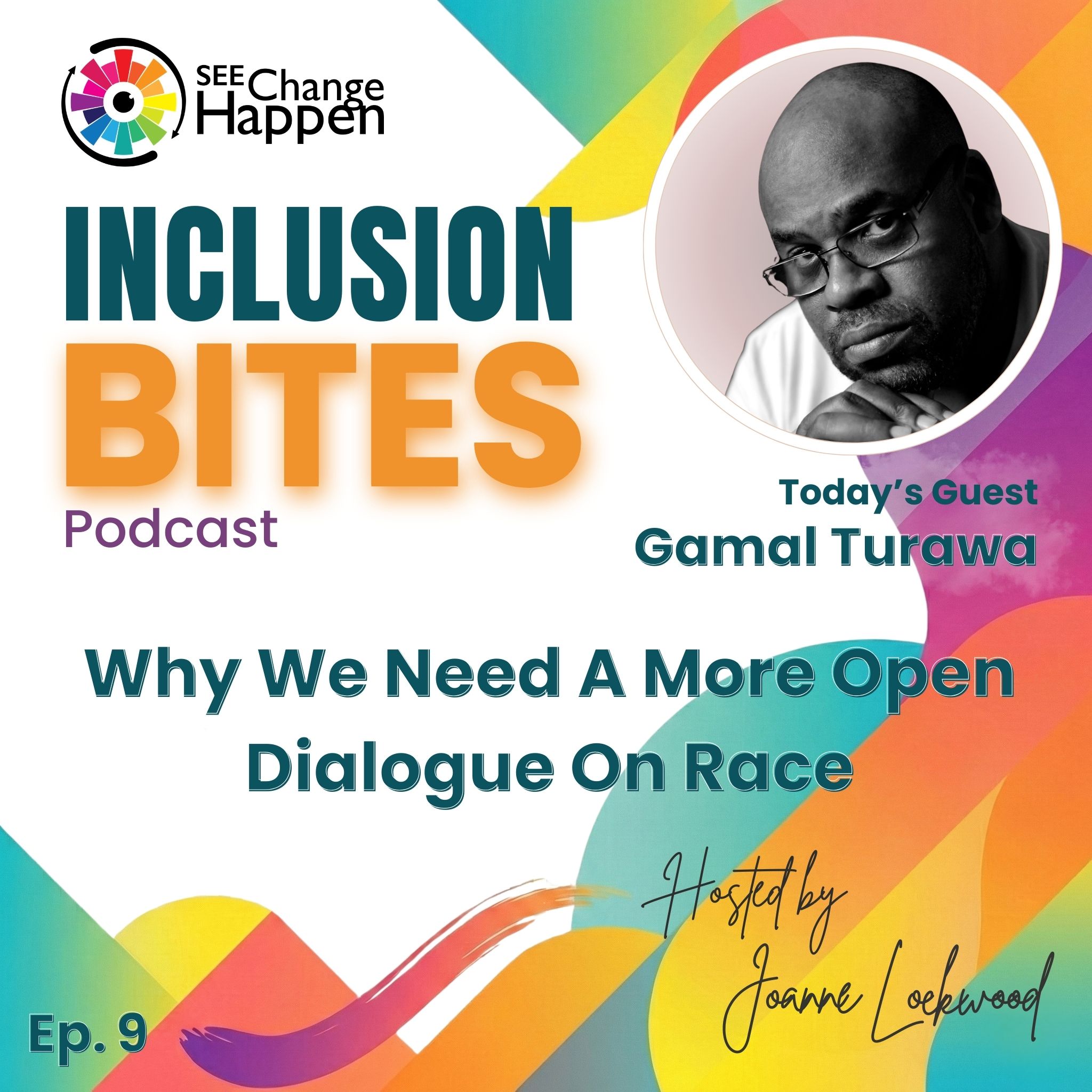
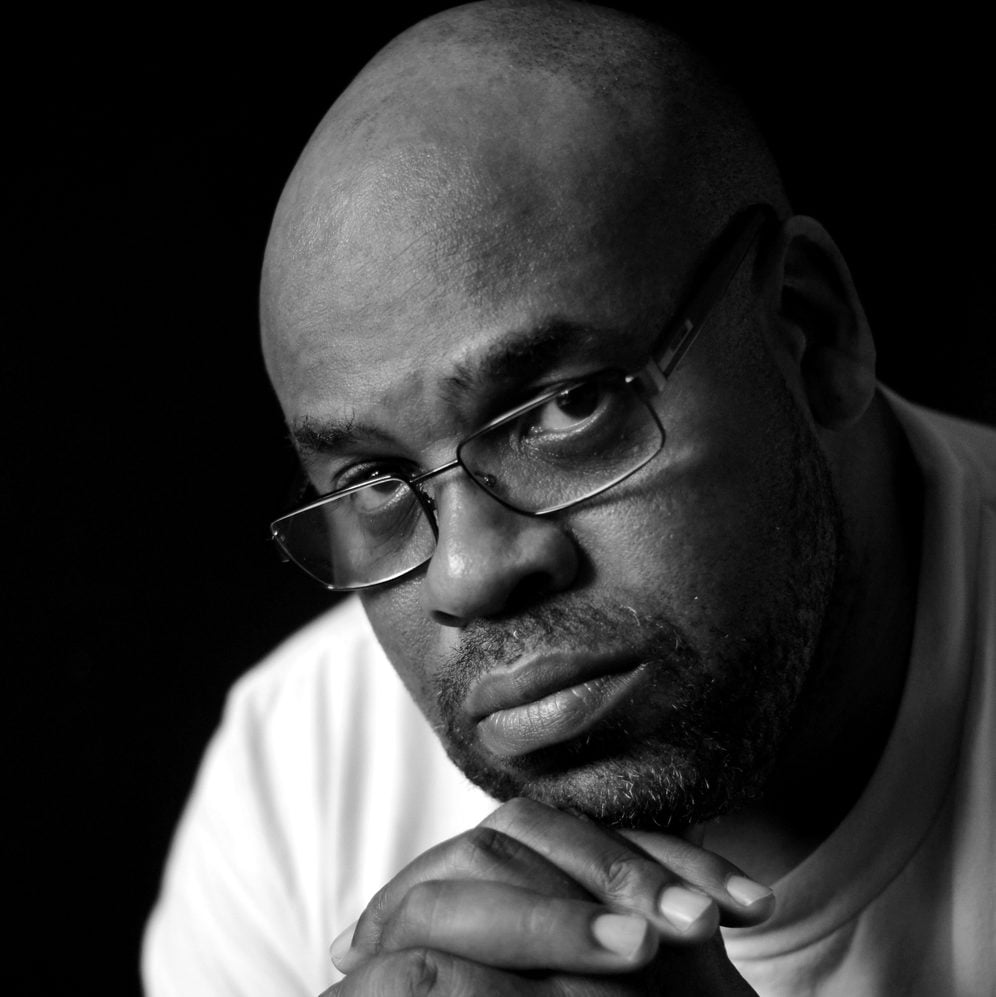
A chat with Gamal 'G' Turawa where we discuss his perspectives of the world as Britain's first openly gay black (former) police officer on the world of today.
In this episode of Inclusion Bites, Joanne Lockwood speaks with Gamal Turawa about workplace culture systems.
“What white people have missed is what it means to be white.”
Explore
Navigate this episode
Joanne Lockwoodhost
Hello, everyone. My name is Joanne Lockwood and I am your host for theInclusion Bites podcast. In this series, I will be interviewing a number ofamazing people and simply having a conversation around the subject ofinclusion, belonging and generally making the world a better placefor everyone to thrive in. If you'd like to join me in the future, thenplease do drop me a line tojo.Lockwood@seechangehappen.co.uk.That's seechangehappen.co.uk. You'll be able to catch up with all of the shows on itunes,Spotify, and, of course, all of the other usual places. So plugin your headphones, grab a decaf and let's get going.Today is episode nine with the title aperspective from the first black, openlygay, now retired police officer. And I havethe absolute honour and privilege to be joined by GamalTuawa, affectionately known as G.And I first met G when we both spoke at a mentoring dayfor Sussex and Surrey police forces back in 2019.G describes himself as a diversity and dignityfacilitator and who says hissuperpower is invisibility?So. Hello, G. Welcome to the show.
Gamal Turawaguest
Hello, Jo, How are you doing? I'm great, thank you.
Joanne Lockwoodhost
So tell me, why do we need a moreopen dialogue on race?
Gamal Turawaguest
I think we need a more open dialogue because there's a lotof emotions. There's alot of emotions, deep emotions like anger,frustration, fear,all this in this mix that is in the middle of this dialogue.And until we get through that, wecan't get to the point where we can start to talk to each other.And what I try and do is I try and be a bridge through thoseemotions to navigate that stuff, so that we can get toa place where we can actually hear each other rather than telleach other. That's the big thing.
Joanne Lockwoodhost
I'm white. Whilst I know peopleof all skin colours, ethnicities andraces, I predominantly have, I suppose, white friendsin my close circle. And I see a lot ofdialogue on Facebook and in the media and things thatpeople are kind of shocked by. This sort of kind of the passion that's comeout. Where's this come from? Where's this been bubbling into? We,as white people, thought it was kind of okay, but we got it wrong, didn'twe? Where did we miss? What did we miss here?
Gamal Turawaguest
I like to flip that question. I think what white people have missed iswhat it means to be white. Weask people of colour, like myself, black people, what isracism like to you? And we're expected to be the medicineand the cure. But the real question that I thinkis coming out now, and from some of the dialogues and conversations I've been having,is that white people are now getting to that point of saying, Hang on aminute. What does it mean to be white? What does privilege actuallymean? What does this mean? And that's the key question.Because once you start to get that, theconversation can then start to flowin the same way.
Joanne Lockwoodhost
Completely. And I think when you've neverexperienced a lack of privilege, whatever that may be,you really don't understand the impact ofthat is when people glide through life without everquestioning who they are, their lived experience, itjust becomes okay. And many people don'trealise what it's like not to have that privilege, do they? No,
Gamal Turawaguest
they don't. The way I describeit is like there's two boxes, one box on top of the other box,and there's a group of people that live in the top boxand in that box, they don't see any of these issues,but it's their box. And they look around and when the people in the bottombox are saying, this is what it's like to be in the bottom, they're sortof like, we don't get that because they don't even acknowledge that the bottombox exists. It's almost like, in myworld, I can't see this. Sowhat you're telling me doesn't make sense.And the barrier is, how do webuild a bridge between those two boxes that can move theboxes next to each other or even integratedwith each other, rather than one on top and one on thebottom? I love the words you use there, because
Joanne Lockwoodhost
one thing I've started talking about recently in the DNI space when I talk,is about building this empathy bridge. So what I need todo is take a position for my lived experience and yourexperience, so I can create a bridge between our two experiences. SoI can sometimes maybe use something I can relate to, that I can applyit to what you're saying. Otherwise, all I do is I hear you, but Ican't apply it. I don't have a reference point. So this isthis empathy bridge that you use the word bridge, and I love that. And Ithink we'll try and do is create this bridge. Becauseoften, I'm sure you find this as a person with a minoritycharacteristic, if you like. You seem to be the one doing all the empathyand actually you want to share that responsibility. So we both meet in the middleof the bridge rather than coming to my side or coming to your side allthe time. Yeah. One of the things I always add to that is
Gamal Turawaguest
that I always try and remove the word understandingbecause I think that word understanding becomes a big barrier to thatbuilding that bridge. You will never understand theworld I live in, no matter how much I try and describeit. So it's not about understand, it's just about to me, it'sabout appreciating that we live in different worlds.I remember a conversation I had witha senior police officers a few years ago,and they were talking about trans issues, and they said,I really don't get trans issues. I can't get my head around itand I said, It's not yours to get.And she looks at me and she goes, what do you mean? I said, allyou have to do is appreciate that it's somebody else'sworld. That's the world that they live in. You don't have to get it, youdon't have to understand it. You just have to appreciate that it's different to yourworld. And that's what people want, to be appreciated, tobe recognised for who they are, not who you think they shouldbe. Oh, completely. Yeah,
Joanne Lockwoodhost
that's completely true. When you talk about identity, you don't have to get someone's identity,you just have to embrace the fact that they have an identity and it's importantto them. Exactly.I cast myself as non religious, but I don't tryand disagree with somebody who has a faith or a belief, because that'simportant to them. I don't have that. I accept andI recognise and I celebrate the fact that that makes you specialand that's who you are. And I need to value you,including that element of your life. Yeah, you just
Gamal Turawaguest
highlighted the other thing is the other thing for me is that identity is notfixed. We all have multiple identities.I mean, looking at this whole scenario andthis movement that is happening at the moment, I can look at it asa black man, I can look at it as an ex police officer as well,so there's so many different hats that I can use to look at thisscenario. I can look at it as a facilitator. So I thinkthe other thing is recognising that our identity is not fixed andsometimes I could be speaking to you, but I may be speaking to youas a facilitator, but you might be hearing me as ablack man, so then theconversation gets kind of lost.So I think it's about being clear of where we're speaking from andhow we're speaking. Yeah.
Joanne Lockwoodhost
In a parallel way of bridging what you've just said.I get that, because often I see people talking to me as atrans person, rather than talking to me as an entrepreneur, abusinesswoman, a speaker, a trainer. They're seeingmy primary identity of, oh, she's trans as being. And then there'salways thoughts in their head about whether they're confused by that or not beforeI have to wade through that. So what you're saying there is this would bebuilding my bridge to you, is trying to relate to saying people are judging youas a black man first or a gay man first, or sometimes a gay blackman first, before they understandyour perspective, intelligence, your insight, et cetera, et cetera.Yeah. And that's why I say invisibility is my superpower.
Gamal Turawaguest
Because one of the things I'd like to think I'm good at is when I'mfacilitating groups. I get to a point where they forget thatI'm black, they forget that I'm a gay man, and they getso engrossed in the conversation that I fade into thebackground and can work with the conversation. And tome, that's the beautiful thing about the work I do.
Joanne Lockwoodhost
I just think of you as g, but Idon't erase your gayness or yourblackness. I don't erase that because that's part of you. As far as I'mconcerned, I would never describe you as my gay black friend.You're my friend. But I understandif I need some insight, perhaps some of the conversation we're havingtoday. I know you're a great person because you have the insight andthe lived experience that is valuable for the world, not justme. Yeah. And what's beautiful about relationships
Gamal Turawaguest
like yours and mine, Joe, is that what I like about my lifeis I've managed to meet andform relationships or friendships with people from acrossa wide spectrum. And to me,it's not what a person is, it's who they are in their heart.What do they stand for, what are their values? That's what I like to connectwith. I'm not about whetherthey're this or they're that, but actually, do you believein humanity? Do you believe we work together? Do youbelieve we are one? That's what's important tome. One of the things you picked up then is one of the things I'vebeen working on recently is that there's a phrase people usewhich is actually quite insulting,when people say things like and I've had it said,it was said to me yesterday, actually, and says, when I see you, I don'tsee your colour. And I find thatphrase, my colour is a very important partof my identity. You don't have to judge me by it, butrecognise that it is a part of my identity. So when you don'tsee that, you actually don't see a part of me.
Joanne Lockwoodhost
Completely. And I say that about many different people.Whilst I don't want to be known as Joe, the trans person,I want you to know the fact that that is part of my identity andthat is what gives me some strength, because I'msure you have resilience inside youthat has come from your lived experience.And that's important to celebrate, isn't it? Yeah.
Gamal Turawaguest
Sorry, I was going to say one of the things, and I don't know whetherit's similar for people of the transcommunity, but one of the things for meis I have had to work hardto value my blackness, to value my gayness.It took me to the point of suicide.I didn't actually come out until I was in my 40s, earlyforty, s. And the reason why it took me so long is becauseI was listening to all the negative messages in the world thattold me that being gay was wrong. I waslistening to all the negative messages in the world who told me that being black,I was less than and all of thosethings, all that negativity built up. AndI say I was lucky to have a breakdown. I was lucky to get tothat point of suicide, because at that point, the questioncame up about, okay, who actually are you?And I remember being asked a question of who definesyou? And I'm sort of like coming up to my40s thinking, I've never heard that phrase before. No one'sever actually asked me to define myself. I thought I had tobe what people expected me to be,not who I could be. And I thought that for me to say this iswho I am, was selfish. That was my conditioning,that was my thought process. So to get tothat point where I'm now saying I am a black gay man hastaken a lot of internalbattles and struggle and strife. So when somebody says,I don't see it or I don't recognise it, you're dismissingthat battle.Does that make sense, as you're talking. That I'm
Joanne Lockwoodhost
thinking about, wow, this is so parallel.I have the same thing society says, trans ismisunderstood, it's discriminated against. You can be rejected, humiliated, you canlose your house, your car, your wife, your family, everything's going to go.So being trans is bad and it's kind of weird. Soyou carry that through all your life and this is what keeps this secret in,isn't it? Because you're almost internalisingyour own transphobia or your own homophobic against yourselfand thinking, I shouldn't succeed. And then when you open,I always talk about having this shield where you carry this in front of yougoing, you won't like me because I'm trans. You won't like me because I'm trans.And that kind of almost like, influences every conversation where you're assumingyou're going to get scrimmage against all the time because you're trans. Andthe thing that got me out of bed when I was going through a verydark time, I wouldn't say I was thinkingsuicidal thoughts at any point, but why? I got to a point whereI seriously could not get out of bed. I could not function as a humanbeing. And the thing that got me off this roundabout that I couldn't getoff was saying, I am and I am. Is a really powerful thing. I amtrans. Then you don't have to explain it, you don't have tojustify, you don't have to find a reason in your perspective of, why amI trans? It doesn't matter, I just am. And they go, oh, that's the jigsaw.That's the missing piece of the jigsaw. I am. And when you said that justthen, I thought, wow, that is such a powerful thing to have, isn'tit? Yeah. And the beauty of what you're saying there, this is what I
Gamal Turawaguest
talk about when we work together, is that the labelsat either end may be different, whether it's blackor trans or straight or gay or male or female. But theprocess in the middle is exactly the same forall of us. We all have to come to terms with something about ouridentity at some point. And that, to me, is the keyto the bridge building, finding that point where we allconnect and then extrapolating it frommean. I consider myself a bit lucky, where privileged.
Joanne Lockwoodhost
I've worked all over the world. I've worked in countries where Englishisn't the first language. I've worked in Hong Kong andSingapore, where my skin colour has been a minority.I've been in rooms, in meetings, in socialsituations. In Germany, where I don't speak German, everyone has to speak in German. SoI know what it's like to be not in part of the conversation. I knowwhat it feels like to feel included. And all of a sudden someone says, oh,Joe, sorry, we've lift you out of that. And he go, it's okay. And you'lljust sit there mindlessly numb, listening to these people talk in German and you're notincluding the conversation. And in Hong Kong, I very much feltthat I was racially different to the majority there, even. I was working in akind of a British bank with lots of white people out insociety. I still found that people were looking at me strange because I wastall, big white person walking around. And I felt thissort of kind of like, weirdness of being unique, if you like, ordifferent. So whilst that doesn't go any way toit's, my empathy bridge to you to say, whilst I don't understand what it's liketo be black, I can understand what it's like to be excluded or in aminority. And also, these are my trans. I know what it's like tohave people judge me by not necessarily the colour of my skin,but my facial characteristics and my voice and my handsize and that I get looked at on the tube.I get looked at when I'm doing things. I get looked at when I'm buyinga coffee. I pick up on these body languagesigns and you may feel, well, oh, wow, bigblack there. And so you create a reaction. I create a reaction.So that's my empathy bridge. So when you tell me thosethings, I go, I get it from my perspective. I understandthrough my empathy bridge to you what that means. And then if you
Gamal Turawaguest
take that to the next level, it's almost like, okay, so now you understandwhat that means, let's look at howwe can work with that. What do we do withthat empathy? And when we start to workwith that empathy, what we do is we start to value each other'sdignity.And that's where the real work, the real magic for me starts tohappen, is when we jump from ourdifference to our empathy toour dignity, andthen it becomes a powerful and profound conversation.
Joanne Lockwoodhost
Because we both understand, we're both just human beings.We both live, love, want to do a great job, berecognised, be celebrated and enjoy our lives. Weboth achieve the same. And our brains probably aren't that different. They were both pinkor grey gooey masses. You've opened your head. The rest of us is justskin and bones, but our intelligence is probably no real difference, justdifferent experience. Yeah, exactly.
Gamal Turawaguest
How that stuff is influenced. I mean, some of the work I think I'vebeen speaking to you about recently is working with. Iwas fostered as a child, and betweenthe 1950s to the early80s, thousands of Nigerian children werefostered in this country with various degreesof success or failure. And one of the things we're working on nowis how do we get those voices heard? Because you'rebrought up in two different worlds. You're brought up with a clashof cultures, you're brought up with a clash of your owninternal identity. Okay, I've got this whiteexperience, then I've got this Nigerian experience and I'm somewhere in themiddle. What does that mean?Who am I? Who amI? There's a lot of people in that group.Sorry, go on. I was going to say, this overlapping identity where
Joanne Lockwoodhost
you're not British, you're not Nigerian, you're kind ofan expat in both worlds, aren't? Yeah, yeah. I
Gamal Turawaguest
mean, one of the sad things, I've had some incredible storiesaround it, but one of the stories or some of the themes that have comeup from it is people who were taken from Englandto Nigeria, and they're in Nigeria for a few years. They managed to get backto England, thinking they're coming back home, but they've now developed aNigerian accent and they come back to England and suddenlyrealise they don't fit in here. They've spent eightyears or so thinking, I don't fit in in Nigeria, I'll fit in inEngland when I get back. And then they come back with this accent and suddenlyrealise they don't fit in. Mean, if I use myselfas an example, when I first came back from Nigeria, I met up with myold school friends and then sat around with them and realisedI had nothing in common with them anymore. I mean,they were all willing to help and engage, but I just thought, we're on totallydifferent planets. I've had this whole other,you know, everybody has, but there's nothing that connects us. They've allgrown up together, they've been around each other's houses and everything that for the pastday, I've been in this whole total different existenceand trying to find a way to fit in and connect. It's almost like youhave to go back to basics and restart your life all overagain and reform and start new friendships. So
Joanne Lockwoodhost
you press pause on your British life, so you did somethingelse, but in the meantime, time continued for everybody who was here. So whenyou joined back, you pressed pause again and startedplay, but you were eight years behind them and you go, Hang on a minute,I expected it to be the same. But it wasn't, was it? Yeah, exactly.
Gamal Turawaguest
And that's a beautiful way of putting it, but you don't realiseconsciously that that's what's happening, because you'regoing off. And doing your thing and you forget that other people are moving on,
Joanne Lockwoodhost
doing their own thing as well. Yeah, that's really interesting. Can I askyou, were your foster parents in the UK, were they black or were they white?
Gamal Turawaguest
They were white. They were white. So you had that mixed
Joanne Lockwoodhost
identity as well. So you're a black child being raised in a whitefamily with not racism as such,but they weren't valuing your racial identity at that point, werethey white? Yeah. And they used to make jokes
Gamal Turawaguest
to me, like, don't send him out in the dark, we'llnever find him again.I remember watching Tarzan and they would say things, know that'swhere you come from in the jungle, you're lucky to be living with us.So I grew up for the first few years thinking all black peoplelived in the jungle, and I was lucky to be living inthis village in Kent. Little village in Kent. Andthen the other thing about it was I was going to theSunday school every Sunday, and thenwhen my dad kidnapped me from my foster parents,I went from this white, British Kentrural life to suddenly in the middle of Halston in London, which wasa totally black area. My father was a Muslim, which was a religionI knew nothing about, never even heard of it. So I was in this wholeculture. The food was different, the culture was different, the ruleswere different. I mean, I remember coming home from school one day and there wasa packet of biscuits on the table. So I came in, took a packet ofbiscuit, took a biscuit, put on the TV, sat down, eating the biscuit, and mydad came in and slapped me around the face. Who gave youpermission to put the TV on? Who gave you that biscuit? I tookit from there. You stole it. And it was suddenly I was inthis whole different world. I didn't understand the rules, I didn't know what was goingon. And you become a traumatisedchild, but then going through all thoseexperiences, I think I'm one of the lucky ones,because I know there's a lot of people that had that experience that ended upin the judicial system or ended up on drugs. And I'maware of people who've committed suicide because they couldn't reconcile thoseidentities. I'm one of the lucky ones. I've got throughthe other side and I've come to a point where I can see it, Ican understand it, but I can also use that experience to helpothers, to understand where they're coming from.
Joanne Lockwoodhost
That's really powerful.I'm struggling to build the bridge here because that is such an alienlived experience to me. And I'm rapidly thinking because I've got other friendswho are black or are fostered by white parents andthey've again grown up with this mixed culture. But to have that sortof that British culture that wasn't quite right foryou, to be whisked into a Nigerian culture that again, was alien to you atthe wrong age, then you're trying to put yourself back into the first culture ina different scenario. That must have been a realmind bending sense of identity. What's going on inmy life? What's my anchor point here? Who am I? Who amI? I am? What am I?
Gamal Turawaguest
And that question, those questions so go on, Jay.
Joanne Lockwoodhost
You go first. I'll let you talk. Go for it. I was going to say,
Gamal Turawaguest
those questions are not always conscious questions.Sometimes they're deep in your subconscious, they're happening underneath thesurface. All you're doing is reacting to everything,so you don't even realise that those questions need to be answered.
Joanne Lockwoodhost
Yeah. Again, as you're talking, I'm thinking hereabout the announcement for the BBC last night, Netflix, etc, for aboutPulling Little Britain. Gone With The Wind has nowbeen withdrawn and re released with differentnarrative around it. And I'm sitting there thinking, OK,let me unpack that, let me understand what they're trying to say, rather than justhave an opinion. Either way, I want to understand why I've got anopinion. And as I'm sitting there thinking about it, I'm thinking about Igrew up as a white kid in the 60s. I'm 55, so I was bornnow 65, and thestereotypical racialportrayal of people in the media, in societywas very fixed. Tarzan tarzan was around black peoplerunning around the jungle in edibleskin, underpants, swinging from trees,basically monkey type. Gorillamonkey. Then we had Mouthlie and we had The Jungle Book. Again, mowgli is kindof like living in the jungle. This whole Tarzan thing we have with kids,we grew up in a very white, middle class society, so wedidn't see black people, or if we saw black people, they were unusual go, oh,there's a black person. Or the people who maybe who arebrown, Chinese, Indian, were performing a servicerole, maybe in a restaurant,maybe in a lower paid role.So we were brought up with the tele programmes, the Alf Garnets, theBlack and white minstrel shows, the comedy at the time.And that was just how I was brought up to thinking. Thatwas it. So my generation, certainly, I don't know how big
Joanne Lockwoodhost
my generation is, but for my certain view, is that I hadno other reference point to people who were black or brownthan what I was told by the media. And so now I lookat the Pulling Little Britain, I'm thinking, yeah, I get that, because what theydid was they propagated these racialstereotypes, they exaggerated features, and they did with gaypeople and they did with trans people and they did with women anddisabled people. So that they were literally pulling at the stereotypes andreplaying those tropes for comedy. And I thought,well, actually, I took a lot of offence as a trans person at some oftheir sketches. That's justa small part of the bigger picture, just being a trans person.So I've now got this empathy bridge thing. Actually, I didn't like thatat the time. I didn't like the are you being served theportrayal of John Inman as a gay man, the way they were using his gaynessas comedy, the way that you see dragin performing arts is yes, okay, I understand drag is a performance culture, butsometimes drag, to me, can also be a parody ofmy identity.To recognise in history that that's who we were,I think we need to recognise that. But then we need to put this wrapperof contemporary interpretation of that history andsay, this is how the Romans used to invade countries.This is how the Egyptians used to be. This is howcolonialists, if you want to call this colonialists used to be.They used to think they could come into countries, take all of their assets,give them religion, and then leave and takes and slaves backas well, and then assume that the people they've helpedare grateful for that. And that's how colonials behave. So wecan always categorise our generation as post colonial,but still living through the ill gottengains of suffering and people's lives.So that's how I'm kind of framing it now to try and try and seeit. So it's important to keep these statues with the graffiti on it in amuseum to say, this is what happens whena cultural revolution occurs. We now understand that this stuffis of the past contextually happened, butwe now recognise that it shouldn't happen again. Yeah,
Gamal Turawaguest
I totally agree. I mean, that's one of the arguments I've been saying with people,that we shouldn't get rid of this stuff. We should have a placewhere we can keep it, where it's recognised that whetherwe like it or not, it's a part of our history.And at some point we have to recognise, if we don't know where we'recoming from, how do we know where we're going?And there's an important part. Yes, we can remove it from theplinths and wherever, but I was watching something aboutWinston Churchill yesterday and howdivisive a figure he was.And in some areas he was racist, in some areas he wasa patriot. He helped Britain through theSecond World War. He was an inspiration. He's one of the greatest Britons.So at what point what it speaksto to me, it goes back to that very same thing of wehave multiple layers to our identity.We have the tate. Gallery, which was built on thesugar plantations of Tate and Lyle.Yet today, you go there and you see some of the finest art in theworld. Are we going to tear down the.
Joanne Lockwoodhost
You know, where is the Egyptian pyramids?Egyptians enslaved half of that region.The Ottoman Empire. The Persian Empire. All of these people in thepast have built countries andsocieties on the past,and none of us are innocent in that. And we've allbenefited from other colonialism maybe further back intime. And it's about recognising. This colonialismwas a point in time and that we need to learn from itand do right where we can. Yeah. And
Gamal Turawaguest
I look at know when they're taking down the statues, I see them assymbolic gestures. They are symbolicof what people want to be. But if you really want to lookat some of this stuff, everything that you almost touch within London orwithin, you know, I look at that. I said, for example, the Britishlion. Everyone talks about the good British lion. And you thought,Where is the lion? Is not even a British animal.So the British lion that they hold up to be the British is not aBritish animal when they say good cup of English tea,where's it growth.So there's a lot of stuff within our society that you sit downand say, okay, if you really want to go down that road, how deepdown the rabbit hole do you want to go? Well, becauseonce you start to open. Up that door yeah, fish
Joanne Lockwoodhost
and potato. The potatocame from was it Walter Raleigh, whoever bought the potatoback, didn't he? And the pineapple. I mean, all this stuff was illgotten gate of the colonial sortof path we led. Yeah. Some of the
Gamal Turawaguest
banking institutions that we respect today were the insurers ofthe slave ships. And you sort of sit there, so you think, ifwe want to look at this stuff, how far down the rabbit? So I seeremoval of statues as a symbolic gesture or asymbolic recognition of thosethings, but they shouldn't be the onlything that's done. We pulled down that statue. That's it, everything's fine now.No, it's symbolic, but there is still other stuff that's within thesystem that is endemic within the system that needs to be addressed.
Joanne Lockwoodhost
Do you think there's a desire for change now? Do you think there is amomentum? I'm an
Gamal Turawaguest
optimist. I like to hope so. I mean, the thing about this, I'vehad and I get emotional when I say this, but I'vehad some incredible conversations with someamazing people and white people as well,who have come back and they're asking forguidance, they're asking for understanding. And that'snever happened before. When I saw the police officers inAmerica taking a knee and police officers coming out onYouTube saying, this is not being done in my name, thathas never happened before. And I'm hoping that there's a lotof profound moments that are happening, andI'm hoping that, yes, it does lead to something moresignificant to me, it's openedup the dialogue, and I think that's the firststage we have to get through, we have to have this dialogue, and it'snot going to be an overnight thing. I think everyone's looking for a quick, fixedsolution. If we do this, have we done it? And it's like, no, it'staken hundreds of years to get here. It's not going to take fiveminutes to get away from it. It's a gradual, slowprocess. I was listening to Sadiq Khan the other night, or the
Joanne Lockwoodhost
other day about his mission or hispassion is to sort of look at statues, road names, et cetera, et cetera,et cetera. And I thought, well, when we talk about inclusion, we're not talkingabout taking something away from you, we're about giving people more, it'sabout giving people access. So when I was listening tosaying, we want to look at the road names, we're going to this, to me,it wasn't about removing white names, it wasabout giving prominence to people ofcolour, to black people, to brown people, to people who've helped us ina more modern time and celebrating them. And yes, at somepoint, you got to displace history with modern history. SoI thought that was a really symbolic way of saying,it's not about condemning the past, it's about recognising, there's a newfuture and we can use new names to celebrate new things.And I thought that was quite a powerful way of doing. As you say, it'ssymbolic, but it's symbolic to me. But for someone ofa black culture, it must be extremely powerful to seepeople you celebrate, you revere being recognised in thesociety you're a part of. Yeah. And I think when you say that,
Gamal Turawaguest
it's not about moving to a new future, it's aboutrecognising an unspoken past.It's not about, okay, we are now recognising. We were here all the time.All this stuff has been happening all the time. It's about nowrecognising that that was going on, recognising that. Thesehistoric figures were there all the time, wejust didn't acknowledge them.So it's not about moving forward in a new way, it's about recognising the oldway. Yeah. So think about
Joanne Lockwoodhost
let's just take the last two years. I think two years is probably the timeframe. We've had Grenfield Tower, and that,significantly, was rooted in the black community asbeing the people in that tower, the people that mostly affected, okay, there are otherpeople of all races in there, but predominantly it wasblack people were affected the most in that tower. Andthat instigated some level of change in building regulations,and it shined a big spotlight on that social deprivationtype issue. And then we've had the Windrushscandal. That the unpicking of that. And I watched a BBCdrama the other night on that, about that onecharacter and his lived experience. And, yes, it was adramatisation, but I felt physically sick,my empathy, everything was triggering. And I just thought theinjustice, the way that person was portrayed, the waythat people talked to them, the way the white peoplealmost had, you're guilty, you're just trash, we've got to getyou out of this country. Whatever you say is a lie type mentality. And Ijust thought, we look in shock and horror aboutBritons who are imprisoned in Iraq or Iran andimprisoned the schoolteacher over there for being a spy or whatever,and we're looking at the Iranian culture going, well, they're barbarians.Can't they see this nice white girl is innocent? Or this nice Asian girl isinnocent. It's so barbaric. Yetwe in what we believe is our perfect Britishjustice system. We're doing that to our own people.And I felt physically sick watching that and I criedat the end of it. I just sat there, I was numb, because that hadsuch an impact of the travesty that we, oursociety, and I talk about our society as Brits,everybody that's you, me and everybody we are doing topeople, and it's incredible we can still do that. And thatwas two years ago, three years ago, howCOVID is affecting people in a disproportionate wayand how the BBC imagery of showing that people who diedrecently was disproportionately white, the faces they wereshowing. And you think, are people not having anysensitivity about understanding the messages that are going out? Andthen finally the Black Lives Matter, thethings that are going on, it's been an evolution over the last two years nowof, as you say, awakeningand sorry, carry on. You were going to say something there. No,
Gamal Turawaguest
what I was going to say is that when people are saying, and you didit there, we were disgusted and we're now waking up.And I'm like, well, who's we? Because some of us have been aware of thisand been saying this for years, all our lives. This is our lived experience.So when there's a we, it's not a we forus. Yeah, you're just finally recognising theworld we've been talking about for years. And that, to me, is thedifference. But even in the language oftalking around that change, people are still saying we and we thought, there's nota we, there's a you and an us at the moment, right?We've got to get to the we. So what's the
Joanne Lockwoodhost
bridge to get to the we, then? How can I use we in adifferent context? I would say it's about
Gamal Turawaguest
recognising the emotion, recognise the injustice,right? And the we for me is people whowant change. Ispeak as a person who wants change and Istand shoulder to shoulder with people that want change. That'sthe we,the we that's disgusted and angered to me,that's an us and them, because we've been disgusted and angered for years.We've been saying it for years. That isn't the we that's you andus, but the people that want to stand shoulder to shoulder,want to make a difference, want to change things, want to improve thingsfor the better. That's the we I want to be part of.
Joanne Lockwoodhost
Okay, so can I pull up a chair atyour table and be we disgusted with you? BecauseI want to join the I am disgusted table now. I want towake up to this injustice. I want to be part of that change. Sothat's the table I want to sit at. Those are the conversations I want tohave. And that's what highlighted to me that I wasn't at the right table. I'vealways been on the wrong table, having the wrong conversations. Yeah.
Gamal Turawaguest
And the other part is be disgusted. But if you're going to sit at thetable, come to the table to do something.It's not enough to be disgusted, it's notenough to be angry,because that can go away. It's almostlike the Angela Davis quote, it's not about beingnon racist, it's about beingantiracist.It's not about being nondiscriminatory. Yeah. So it's not enough tosay you're offended. What do you do with that?
Joanne Lockwoodhost
You can't sit on the fence and take a middle ground. You have to standfor something. Yeah. That's the important part. Whereveris you see me speak. And one of the things I talk about isinclusion is about it's holistic, active anddeliberate. You can't be passively inclusive. You can't be accidentallyinclusive. By doing nothing, you're saying nothing. By saying nothing, you'reletting it pass. So you have to reach out and say, I standfor this, I'm being active about this. And I'm not sayingwhen I talk about holistic, it can't be a bit of, well, you're okay, butyou're not. I think it's about recognising that you got to be inclusive for allpeople at this moment, we talk about Black Lives Matter,but when we also talk about other things in their context,we can't say, well, black lives matter, but trans lives don't. But this is adifferent time. We're talking about Black Lives Matter at the moment, so otherthings are not relevant in the conversation. But we've also got to look at thosethings in its own right. We're not trading one hashtag for another hashtag.We recognise that each hashtag has its own message, its own importancethat we have to amplify. This is going back to
Gamal Turawaguest
that bridge of empathy, right? It may be about Black Lives Matterat the moment, but what happens is,once we start to cross that bridge, we recognise that actually,other people need to be on this bridge with us.Once we've started to have this dialogue, it says, So whycan't we now have this dialogue about trans people? Why can't we not havethis dialogue about gay people? Why can't we not have thisdialogue about, I don't know, people withdisabilities? If we can have thisdialogue in this space, we can have this dialogue in other spaces aswell, because what thisproves is that we can have the dialogue.That's the important part for me. Yeah.
Joanne Lockwoodhost
That's so right. I was talking to someone the other day in anHR perspective. They had an incident where one of their teammade a homophobic remark to another member of their team,and they were wondering about how much of a big deal they should make aboutthis. So I sort of said to them, So imagine they punchedthem. How would you feel then? Well, that's completely unacceptable.What's the difference between a punch and words? One youcan see, one is visible, one is physical pain, one isemotional, mental and microaggressions. Is there adifference? And I tried to get to understand that sometimeswords and language are as painful as a physical punch. Sometimes a
Joanne Lockwoodhost
physical punch is over and done with in five minutes, and you brush yourselfoff. And then I said to them, okay, so now we understand thatwords and actions can have equal impact.If it wasn't a homophobic remark, it was a racist remark, how would youfeel now? I'd be completely abhorrent. I wouldn'ttolerate that at all. So homophobia is okay, but racismisn't. So what we end up trying to do is trying to understand that wehave to have a zero tolerance for a holistic inclusion. Andby saying that, we can't say that racism is bad, homophobiais good, or not so bad, we have to put everything on thetable and say, all of this is not acceptable in apolite and contemporary society. Yeah.
Gamal Turawaguest
And that's the dream, the hope to getto. One of the things I look at isthat I'm not here to solve this problem.It may not be solved in my lifetime. In fact, it won'tbe solved in my lifetime. But what it will beis what we can all do is do our bitto progress it. Yeah.And I think when you look at it from completely yeah, just do yourbit to progress it forward. We all
Joanne Lockwoodhost
have to take a step forward and keep taking a step forward and keepbeing visible, active, anddeliberate about our actions and being vocal and not letting itpass. Keeping that in tug of warterms. We got to keep the tension on the rope, otherwise we go backwards. Andthat's what we don't want to do. We got to keep that tension there. Yeah.
Gamal Turawaguest
I remember having a conversation so I had a conversation with my nephew a whileback, and he's a very vocal that guy's not erased himin another I said, you know what? Do you know how much sacrifice wasmade for you to have that voice?I said, that's the progressyou have that voice, but you don't recognise whathas happened to give you that voice, becausethere were some of us that grew up in a time where we weren'tallowed to have that voice and if we did speak up,we were beaten down. Yeah, that's
Joanne Lockwoodhost
progress. It is. We're finding is thatpeople who have voice now, having voice is a privilege, andthat's a privilege that you earned for them.So they haven't earned that right to have that voice. They've been given that voice,whereas you had to earn that voice, which is where the privilege and notprivilege? I think when we lookat the people who are vocal today, they'rebuilding on the struggles of the previousgeneration and the previous generation. The previous generation. So you have the privilegeof not ever multigeneration backfrom the colonial past? I have the privilege ofnot being part of that colonial past, living in poverty. So I have a voicebecause I've got an education, so that's a privilege. But, yeah, you're so rightthat people should remember that they have a privilege by having avoice, or the freedom to choose, the freedom to express, the freedom tonot feel they're going to be arrested, or freedom that they're going to be treatedfairly. That, again, is a privilege, isn't it? Yeah. I mean, one of the biggest
Gamal Turawaguest
privileges for me as a black gay man, I know there are countries inthe world where I could be stoned to death, I could be killed or Icould be imprisoned for life. I live in a societywhere I can say, I am a black gay man and sayopenly, and that's a privilege.So privilege looks different in so many differentareas. Privilege is not just aboutcolour. Privilege can be about status, privilege can be about the lifeyou're living. And that's what I think people forget.Privilege is on so many different levels.
Joanne Lockwoodhost
Love the way you just said that aboutas a black gay. I don't mean a fact I love you could get stonedto death or arrested to be a gay man, but Ilove the way you brought that into the conversation, because I,as a trans person, I'm very conscious about where in the world I canbe, where I can travel to. If I'mflying to Australia, where can I stop off? Do I go toDubai, UAE? Is that a safe space for me to go? Could I go viaChina? Is that safe? I'm not sure. So I'm nowdouble thinking my travel arrangements, my destinations.I did some work in the Ukraine and I politely askedthe conference organiser would I be safe in Ukraine, and I didn't wantto put my bias on there because I assumed that it wouldn't be safe. Butyou hear some stuff in the press about gay rights in Ukraine and otherplaces like that, so what I wanted to do was make sure that I wassafe ten years ago, that wouldn't have even been a conflict. Iwould have just gone, yeah, we're going to Ukraine and turn up as aprivileged white person, CIS,het, perceived white.So I'm breaking off my own monologue here,but I was at this LGBT conference, and oneof the people on the panel, who I believe identifiedas a gay man said, yes,when a gay person travels what they have to do is pack their gayness awayin a suitcase while they're away and do their job, then come homeand unpack their suitcase again. And I said, well, excuseme, that may be a privilege. You have to be able to pack your suitcase,but I wear my transiness, if youlike, all the time. And the same way that you wear yourblackness all the time, you can't not be black today, can you? You can't say,what? Today? I'm going to go, I'm going to white face today,and it'd be okay. Yeah. It's areally tricky thing that we have to double think this stuff thatpeople who have a privilege of not havingto double think, never experience. And that'sa real extra burden to our processing power that we have to live every day,isn't it? Oh, it is. I mean, like you, I've done a lot of work
Gamal Turawaguest
around the world, and there were places that I won't mentionthe country, but I was going to do a conference there,and they asked me to send through a pen picture, whichthey put in their conference brochure. And they were happywith the gay thing. It wasn't a problem with that.And then they asked me to send a photograph, and I sentthe photograph, and within an hour of sending the photograph, they sentme back a message saying, when you get to the airport, you need to waitat this point, and we will have a police escort to escort you to thehotel. Wow.And I was thinking, okay, what's this about?And when I got there, they said there's been a spate ofattacks on black people on the transitsystems, and they didn't want to risk that happening tome. Wow. Yeah. And you sort ofsit there and you think, wow, I have to have an armed guardto take me from the airport to my hotel.That is scary.
Joanne Lockwoodhost
The only slight way I can relate to that is when I wasin Miami, I wasbriefed by the bank I was working for where I couldn'tgo as a white mean. That's myonly bit of empathy. And also in La. Downtown,around once you get out of the nice bit of La. As awhite person, I would have to be careful as well, butI have the privilege as a white person to be able to go the restof the places. So, yeah, at the time I thought,oh, so you mean the scary black people down that road and Iwould have been really careful. So looking back on that, that wasquite a negative experience, because it reinforced thestereotype that all black people are bad if you go down there. And asa white person, you shouldn't dare venture down there. I'm goingto say something which I hope doesn't sound offensive, whichinevitably say that it probably will be offensive, but I almost feltlike that was the black zone, the cordon zone.Was it like a zoo or something? I couldn't venture in there becauseI needed bars on the windows or keep the car windows rolled up, put theroof up on the car to venture into those areas. So Iwas almost like a safari park experience.Is this how I'm feeling now about how that wascategorised as stereotyping, these different groups? And maybethat's how the people who live there felt about the segregation and howthere was that much of a divide between the two communities or the twopopulations. But the interesting thing about that as well,
Gamal Turawaguest
Joe, is that you have that level where we can sitthere and we can rationalise, but we can think aboutit. But actually, there comes a point for some people where you've hitthat point where fear kicks in. I mean,look at Amy Cooper recently, the woman with the dog. I mean,she was an Obama supporter, a signed up Democrat, shewas part of so many groups. Yet when it cameto that point of fear, that stuffjust came up from nowhere. Well,it came from somewhere, obviously, and there's a wonderful book bya guy called Studs Turkel, and it's called Race.And basically what Stud does, or did, I think he's deadnow. He goes aroundjust interviewing people about a particular subject and he just writes theirmonologues. And the opening paragraph on this thingwas about a guy talking about his wife. He said his wifewas driving down this street and a group of black guys startedshouting at her. Her first response was tolock all the car doors and put her foot down and gofaster. He said it wasn't until she got to the endof the road before she realised what they were trying to tell her isthat she was going the wrong way down a one way street.And he said, look, my wife would not say she was racist,but in that moment it came up.
Joanne Lockwoodhost
And I. Said, So when we want to do that work, it's, how
Gamal Turawaguest
deeply do we want to get to this stuff? Because we can sit inthe classroom and talk about it and say, yes, this is that. And onegoes yes. But when it comes to actually living,there's those points when you find out who you are,if you pay attention, and that's where youknow whether or not you've changed.
Joanne Lockwoodhost
Yeah, that's very insightful. Yeah. Because the innerfight or flight trigger is your default inner self, isn't it?
Gamal Turawaguest
Yeah. I had an experience
Joanne Lockwoodhost
in Germany, actually. I'd left the after party at aconference, thinking I knew the way back to the hotel and somehowmy compass must have been pointing the wrong way because I ended up going completelythe wrong direction and ended up walking through thispark and my mobile phone battery was dead. So I had my satnavwasn't working, I had my laptop with me and I had a couple of drinks.I probably wasn't making the best decisions. And I got into this park and itwas dark, and as I got further and further, it becameblacker, for want of a better way of describing, I moved out ofa white district into a much more racial diversityand then more completely black territory. And I was walking through this park and therewere gangs of youth, groups of youth. I mean,gang has its own connotations about the imagery it creates, but there aregroups of people who were black gathering in this park,playing with bikes. They were playing music, enjoying eachother's company. And I felt really unsafe.
Joanne Lockwoodhost
One, because I didn't know where I was, I was lost. Two, I was awoman, they were all men. Andif I'm really honest and reflect, it wasn't so much they were black,it was just they had this sort of threatening, sort of Gangy typein a place. I didn't speak the language and I was feeling really uncomfortable andit was dark and I had to walk through this park twice because I walkedthrough it and then realised I went the wrong way and I walked back throughit. And I think my biggest fear was as a woman,not as a white person. So I was conscious that I was now walking througha group of people who were men, young men,and I was more worried about it being as a womanthan being a white person. And I think that was the end. And Igot out that park and I got back to my hotel and I sat thereand thought, lesson learned, I'm now a woman, I can't do this.I'm not invincible anymore. I think in my oldlife as a man, if I'd done that, I'd be more worried aboutmy whiteness. But actually, my primary concern wasabout my femininity, my gender. But,yeah, as you were talking, that really broughtback that fight or flight thing I had, and I was trying to judgeit on whether it was racially motivated or whether it was gendermotivated. I think it was more gender at the time that I was worriedabout. But I projected this stereotype onto the people saying,I'm at risk here fromsexual violence for want of a better way or being misappropriated. It didn't help.Some of them were trying to whistle me and chat me upand talk to me, and I was like, Get me out of it. Just getme out of it. When you talk about that, that's one of the
Gamal Turawaguest
beauties I talk about, is that it's not about being perfect,but it's about I mean, the scenario I would give that sortof ties into what you just said on. I'd gone off toEdinburgh to do some work and it was a greatcourse, great everything. And I'm sitting on the plane at Edinburgh Airport, waitingfor takeoff, and there's a voice comes over to Tanoi and thevoice says, we'll be taken off in about 1015 minutes time. We're waitingfor whatever we're waiting for. And this is your captain, MaryJane Smith. And it was a female captain.I immediately felt my body tense up.I'm a diversity trainer, I've been teaching this stuff foryears. But something about that suddenly thought, oh, my God, awoman pilot. And I frozeand I felt my arms grab the chair.
Joanne Lockwoodhost
Right. And then it took me about a minute
Gamal Turawaguest
or two and then I suddenly stopped and I started laughing.And my first thought was, Where the hell did that comefrom? And to me,it's not about the feeling, it's about recognising. The gift isrecognising when it surfaces andhaving the awareness to stop yourselfand not to keep following that path. And that's the giftfor me, is recognising that you're not perfect.You've got this stuff by the very nature of your socialconditioning. You have got baggage.And it's recognising that that baggage is going to surface every now andagain. But are you paying attention enough to recognise whenit's happening or are youjust following it? It's learned to be
Joanne Lockwoodhost
able to question your own biases, isn't it? Or your ownpanic. Better press pause. Step back. Why do Ithink that actually, that's irrational, that's notlogical. I'm using my biases there.Ignore that. Now that thought can just go straight out of my head, move on.And it's learning to learn how to press that pause and question yourself, isn't it?
Gamal Turawaguest
That is it exactly. It'sbeautiful when you level. Yeah. It's been
Joanne Lockwoodhost
fascinating just to put a timestampon this. We're sort of early June 2020, we're right in the middle ofCOVID we've just had some of the BlackMatters, erupting, around the world.Where are we going now? We're coming out of lockdown. The Government's under pressureto let's go to the pubs and socialise, and we're reducing two metres downto one metre. So whilst we're not ever going to changeand go back to the way we were, I mean, certainly in terms of what'shappened, in terms of the Black Lives Matter, in terms of the COVID in termsof working, whatever else we're doing, so where are we going now?What's society going to look like this time next year? Oh, gosh,
Gamal Turawaguest
thanks. That's an easy one, right? Yeah.Wow. Do you know something?I honestly don't know,but I recognise we've never. Been here before.It's almost like, to me, it feels as a black man, it'slike we're touching thegoal. And we've never come this close to the goal before.It's unknown territory. Okay?Yeah, it's exciting. Ilove it. Personally, I love this. The energy behind itis incredible and I'm hoping thatit will create somethingthat we can't go back from. But Idon't know what that looks just I'm just riding this wave. Andthere was John Amici, I was on TV with him the other day, said thisthing. He said, diversity is like pushing aboulder uphill. Right? And there are those of us thathave been pushing it for years and years and years, and we're pushing it andit's a slow push because it's a heavy boulder. Things like thiscome along and a few more hands joinand it becomes a little easier to push it up thehill. But the question is, how long do those hands staywith us?And how much hill is left or how much hill are we going to moveup? The exciting thingis there are now loads of hands on this boulder andit's about how do we maximise? And this is where people like yourself andmyself and other people that do this wonderful work come into ourown. This iswhere we're now the motivators.Come on, you can do this. We know whatto use. Martin Luther King we've been to the promised land. We've seen the mountain.We've been to the mountaintop. We know what the goal can beand it's just helping people get there. Yeah.
Joanne Lockwoodhost
It's standing at the top, looking down, saying, Come on, we can do this, andthen making sure that the way down isn't full of crocodile pits on the waydown either. Once we get over that top, we've got to make sure that thejourney the other side is safe because we can't fall down acrevice and go back to the start again. This is not Snakes and Ladders, wherewe get mick with this gain and then we drop down a hole. Yeah, exactly.
Gamal Turawaguest
The sadness to this and this kind of links into something I was watchingthis morning, is that there are people out therethat seem hell bent to destroy this.And you see some of the stuff that's going on. I mean, there was avideo that's come out this morning of a groupof people attacking two police officers inLondon, and it is vile.The officers are on the floor and these people are dancing round them with theirmobile phones. And you sort of lookat something like that and you think, and there were black youths.That was what was so annoying. And you sit there and you think, that givescertain people permission to take their hand off the boulder.And that's the sadness. That'sthe sadness for me, yeah. Without detracting
Joanne Lockwoodhost
anything from what you just said, I see that in my own life.It only takes one celebrity to startbanding around negativity and itthen calls into question the legitimacyand plays back into that trope that black people areangry, aggressive people, trans people are predators. Itallows people to start playing on those tropes, to seed that division again, shouldsay, try and removing hands from that boulder to allow it to roll back becausethey've got a protected interest in keeping that boulder backwards, notforwards. That's what we see all the time. Yeah. Quick question
Gamal Turawaguest
for you, if I may. Are you aware of theJK. Rowling comments?
Joanne Lockwoodhost
I am. And as we were talking, that was the personand the fact that Daniel Radcliffe took in there as well andposted some stuff. So. Yeah, it's a JK Rowling typevisibility that makes MPslawmakers policymakers kind of scared because they thinkif someone's has got a high profile, they've got a higher mountain to shoutfrom sometimes, and that's the kind of person that does moredamage. The other side of that is itcreates angry activists that don't do sometimesthe cause of favour because they're giving people a reason tothink, actually trans people are dangerous, they're angry,they're just this, that and the other. And you almost like, reinforce thestereotype and it's making sure that weamplify the good voices and attenuate the bad voices andlearning to ignore JK. Rowling and saying she has anopinion. It's not my opinion, it's not the opinion of the world.And actually, just because she writes good books doesn't mean say she's an expert.
Gamal Turawaguest
Yeah. And the other side of that as well isabout, and I've learned this recently, very much recently,giving yourself permission to be angry.It's okay to be angry. It's okay to be upset. It's okayto be frustrated. It's not okay to bedestructive.And I got that from I had a friendknow, when this first happened inMinneapolis with the was the whole of thatweekend. I was really, really angry. And a friend of mine, she's a very
Gamal Turawaguest
good friend, at reflecting back what she sees. And she goes,I've never seen that before. She goes, what? She goes, you were angry, but itwas a focused anger. You were angry that you wanted but youwanted to do something, you didn't want to destroy something, you wanted tobuild something from this. And I think that's the thing is aboutrecognising that, yes, I'm going to be angry, I'm going to be frustrated, I'm goingto be pissed off, but what do I do with that?What do I do with it?Because that's what gives me the permission to move forward. That's whatmotivates me. If I just sit with it and allow it to talk, likejust do nothing, then it becomes destructive.I'm angry, but what am I going to do with it?And I think out of, if anything, for me, that's the biggest lesson that'scome out of this for me. I have every right to beangry.
Joanne Lockwoodhost
Wow. That isa powerful close. Amazing.
Gamal Turawaguest
Thanks, G. You're welcome.
Joanne Lockwoodhost
Yeah, thank you. Well, I'm sure everyone who's listeningis going to agree there's lots to ponder there and take inspiration from.And it's okay to be angry. It's what we do with that anger that's theimportant thing, how we focus that. So how can our listeners get in touch withyou? You can get in touch with me on my email, which
Gamal Turawaguest
isinfo@purplefrogonnections.com,or you can cheque out my LinkedIn profile. I'm sure that you willhave my name spelt on your website, on thepodcast, either of those, or you can contact me viaTwitter. Purple wisdom is my Twitter handle. More thanhappy to talk there or my website,www.purplefrogconnections.com.
Joanne Lockwoodhost
Awesome. I'm sure many people are going to be in contact with you.It's been extreme privilege to have this just overan hour with you today and hear your thoughts, insights and also a hugethank you to the listeners for tuning in and listening.Please do subscribe to keep updated on future episodes of the InclusionBites podcast that's bites. Please tell your friendsand your colleagues. I have a number of exciting guests lined upover the next few weeks and months that I'm sure you'll also be inspired by.Remember, if you'd like to be a guest, then please let me know. I'd alsowelcome any feedback and suggestions you may have tojo.Lockwood@seechangehappen.co.uk.So, to wrap up, my name is Joanne Lockwood and.
Personal Biases and Racial BiasAcknowledging Social Injustices and Unspoken HistoryEmpathy and Inclusion Beyond Movements
Recorded during the early months of COVID-19 and amid the global resurgence of Black Lives Matter following the murder of George Floyd, Joanne Lockwood speaks with Gamal Turawa about why we need more open, honest dialogue about race.
Gamal shares reflections as a Black, openly gay, now-retired police officer and diversity and dignity facilitator, including how emotions like fear, anger and frustration can block meaningful conversation unless they are acknowledged and navigated. Together they explore privilege, what it means to be white, and the importance of moving from difference to empathy and then to dignity.
The conversation also touches on identity as multi-layered and not fixed, the harm of “colour-blind” language, and the responsibility to shift from being “not racist” to being actively anti-racist. Gamal recounts aspects of his lived experience, including being fostered, cultural dislocation, and reaching a point of suicidality before learning to define himself on his own terms.
They reflect on wider social context including Grenfell, Windrush, media stereotypes, statues and historical legacy, and why symbolic actions must be matched by systemic change. The episode closes with a focus on turning anger into constructive action and sustaining momentum for long-term progress.
“You will never understand the world I live in, no matter how much I try and describe it. So it's not about understand, it's just about appreciating that we live in different worlds.”
“My colour is a very important part of my identity. You don't have to judge me by it, but recognise that it is a part of my identity. So when you don't see that, you actually don't see a part of me.”
“I was lucky to have a breakdown. I was lucky to get to that point of suicide, because at that point, the question came up about, okay, who actually are you?”
“You become a traumatised child, but then going through all those experiences, I think I'm one of the lucky ones, because I know there's a lot of people that had that experience that ended up in the judicial system or ended up on drugs.”
“To me, it's opened up the dialogue, and I think that's the first stage we have to get through, we have to have this dialogue, and it's not going to be an overnight thing.”
“I mean, look at Amy Cooper recently, the woman with the dog. I mean, she was an Obama supporter, a signed up Democrat, she was part of so many groups. Yet when it came to that point of fear, that stuff just came up from nowhere.”
“And there are those of us that have been pushing it for years and years and years, and we're pushing it and it's a slow push because it's a heavy boulder. Things like this come along and a few more hands join and it becomes a little easier to push it up the hill.”
The emotional and psychological impact of fear and racial biases on both individuals and society.
The importance of acknowledging and challenging personal biases to foster more inclusive environments.
How historical events like the Grenfell Tower fire and the Windrush scandal highlight ongoing social injustices.
The need to give prominence to people of colour in societal symbols, such as statues and road names.
The significance of recognising overlooked historical figures and the unspoken past of colonialism.
Strategies for managing anger constructively and using it as a force for positive change.
Insights into the continuous struggle for diversity, the importance of momentum, and standing firm against those who undermine progress.
One thing to remember
The essential takeaway from this episode is the critical need for more open and honest dialogue about race to navigate and dismantle deeply ingrained biases and fears. Both Joanne Lockwood and Gamal Turawa emphasise that understanding and challenging one's own prejudices is essential for fostering genuine inclusion and societal progress. Recognising privilege, addressing historical injustices, and being deliberate in standing for change are vital steps towards creating a more inclusive world.
Questions this episode helps answer
Gamal mentioned feeling the need for an armed guard when travelling due to fear. Can you share a personal experience where you felt unsafe because of your race or identity, and how did you handle it?
Joanne Lockwood acknowledged her privilege as a white person during her experiences in Miami and LA. How can individuals become more aware of their privileges, and what steps can they take to use that awareness constructively?
Both Joanne and Gamal emphasised the importance of recognising and challenging one's own biases. What strategies can individuals use to effectively confront and overcome their biases?
The podcast highlighted the importance of giving prominence to people of colour in society, such as through statues and road names. What are some ways communities can work towards better representation and inclusion of diverse identities?
Gamal discussed the need to acknowledge the unspoken past and recognise overlooked historical figures. Why is it essential to understand and acknowledge these historical contexts, and how can this knowledge impact current social justice efforts?
Joanne and Gamal spoke about building an empathy bridge to connect different experiences and appreciate diverse identities. How can empathy play a role in fostering more inclusive environments, and what can individuals do to cultivate it?
Explore topics
Ideas from this episode
Personal Biases and Racial Bias
In my recent conversation with Gamal Turawa, one of the first topics we delved into was the pervasive nature of personal biases and how fear can often trigger racial biases. Gamal recounted the harrowing experience of feeling the need for an armed guard when travelling due to safety concerns.
Acknowledging Social Injustices and Unspoken History
Our dialogue naturally progressed towards the broader topic of social injustices and the need to address the often unspoken past. This segment of our conversation highlighted the importance of acknowledging significant events and historical figures, particularly those who have been overlooked or marginalised.
Empathy and Inclusion Beyond Movements
We rounded off our conversation by discussing the role of empathy in fostering inclusion beyond specific movements like Black Lives Matter. Gamal and I shared our individual journeys and the complexities of our identities, spotlighting the importance of empathy, understanding, and deliberate inclusion efforts.
Learn
Frequently asked questions
Why is it important to discuss race openly?
Open discussions on race are vital for recognising and confronting biases, understanding diverse experiences, and fostering a more inclusive society. As highlighted by Joanne Lockwood and Gamal Turawa in this episode, only through open dialogue can we begin to dismantle systemic inequalities and build empathy across different communities.
What challenges exist when discussing racism in predominantly white spaces?
Predominantly white spaces may lack awareness or understanding of racial issues, often leading to discomfort or defensiveness when the topic is broached. Gamal Turawa notes that such conversations are essential, yet can be challenging, as they require addressing deep-seated biases and privileges that many may not be consciously aware of.
How can individuals become comfortable having uncomfortable conversations about race?
Becoming comfortable with uncomfortable conversations requires a willingness to listen, reflect, and challenge personal biases. Joanne Lockwood suggests that empathy and openness to learning about others' lived experiences can help bridge the gap between different identities and foster greater understanding.
Why is recognising privilege important in discussions on race?
Recognising privilege is crucial as it shapes our perspectives and interactions with others. For example, Joanne acknowledges her white privilege when discussing social injustices like the Grenfell Tower fire and the Windrush scandal. Understanding one's privilege allows individuals to better appreciate and support the struggles of marginalised communities.
What role does history play in our understanding of race and inclusion?
Understanding the historical context of race and inclusion helps to elucidate the root causes of current inequalities. Gamal Turawa emphasises the importance of acknowledging unspoken histories and recognising historically overlooked figures to appreciate the full spectrum of our collective past and its impact on present-day society.
Why is it necessary to challenge personal biases and fear responses?
Challenging personal biases and fear responses is necessary for fostering genuine inclusion. Both speakers highlight that fear often triggers racial biases, and the importance of recognising these subconscious reactions can help mitigate discrimination and promote fairness.
Share this episode
Heard something worth passing on? Send this conversation to someone who needs to hear it.