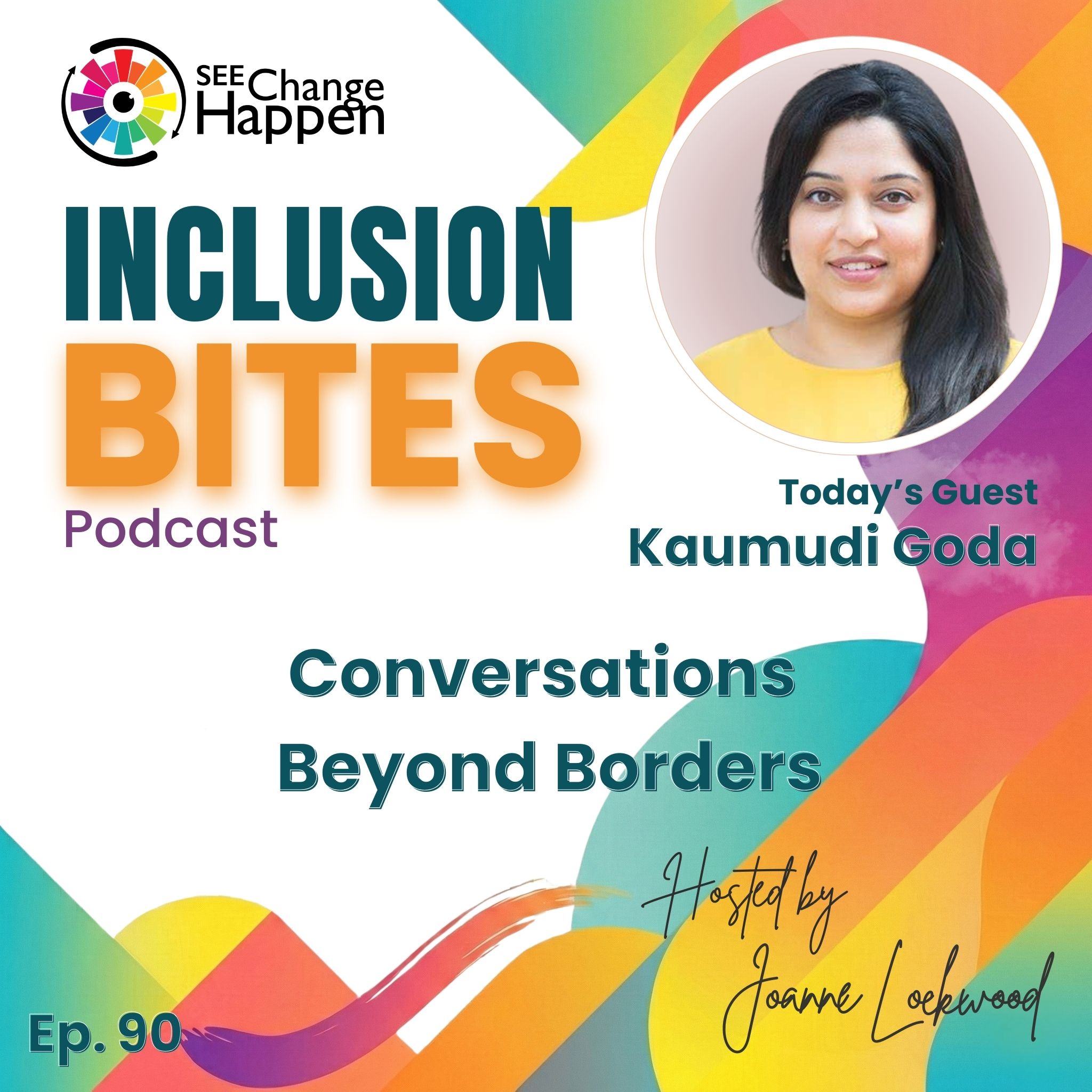
In this episode, Joanne Lockwood and guest Kaumudi Goda navigate the complex landscape of global DEIB work, emphasizing the importance of active listening and non-judgmental understanding in promoting diversity and inclusion.
In this episode of Inclusion Bites, Joanne Lockwood speaks with Kaumudi Goda about workplace culture systems.
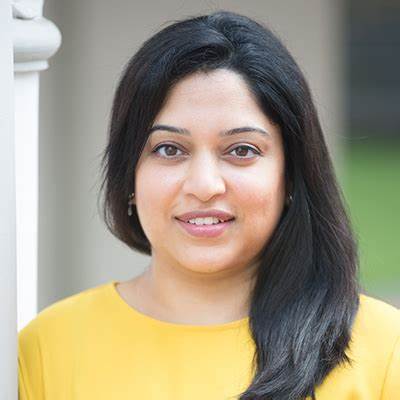
Hello, everyone. My name is Joanne Lockwood and I'm your host forthe Inclusion Bites podcast. In this series,I've interviewed a number of amazing people have simply had aconversation around the subject of inclusion, belongingand generally making the world a better place for everyone to thrive.If you'd like to join me in the future, then please do drop me aline tojo.lockwood@seechangehappen.co.uk,that's S-E-E Change Happen dot codot uk. You can catch up with allof the previous shows on itunes, Spotify and the usual places.So plug in your headphones, grab a decafand let's get going. Todayis Episode 90 with the title"ConversationsBeyond Borders"", and Ihave the absolute honour and privilege to welcome Kaumudi, KaumudiGoda, or KG, to her friends and associates.KG is a Leadership Consultant, ExecutiveCoach and DEIB Strategist.When I asked KG to describe her superpower, shesaid it's her cross siloed perspective, passion forfact based big picture thinking and a commitment toethical, compassionate business. Hello,Kg, welcome to the show. Hi, Joanne.
Kaumudi Godaguest
Thank you for having me. Absolute pleasure. So you're in
Joanne Lockwoodhost
Amsterdam at the moment and it's a bit cold, damp andwet over there. Is it? Yeah, the temperatures plunged this past
Kaumudi Godaguest
week, so we're headed for a rather frostywinter, looks like, here. Yeah, I guess it is the 1
Joanne Lockwoodhost
December, so, yeah, I guess we've got colder weather to come,but, yeah, as long as we're wrapped up nice and warm in our own homes,that's all that matters right now. Absolutely. KGconversations beyond borders. Tell me more about that.
Kaumudi Godaguest
I loved when you picked that title for our conversation.Conversation is very important to me. I call my businessthe Human Conversation because I think if we can allrise above our little differences and have conversationsat a human level, we'd definitely be able to build a betterfuture for all of us together. And so Conversations Beyond
Kaumudi Godaguest
Borders seems perfect for our conversation thismorning. Yeah, I
Joanne Lockwoodhost
think that's a good starting point, isn't it? Becauseoften, and we look at the world around us at themoment where there are conflicts andtragedies happening, wars, conflicts, wherever you want todescribe them, and most of them are where conversations breakdown. And it's really, really important that we recognisehow we don't always have to beright. Not being right is really important andunderstanding perspectives. So for me, that's the basis ofconversation. So what do you talk about in those sort ofterms? My own
Kaumudi Godaguest
sensitivity and my lens is informed by the fact that I'vealways felt like I don't really fit in. I rememberI felt like I didn't fit in as a young girl growingup in a rather patriarchal culturein South India. I didn't feel like I fit inas a young professional, pretty new inNew York City, Manhattan. I spent a decade there and Ithink as I went through life, myrealisation was. All of us are seeking that senseof community, that sense of validation, wantingto feel seen, heard, understood,accepted. That's a universal humanemotion. But all of us are mired in ourown little worries,feeling alone and wanting to connect and yet failing to realiseeveryone else is likely feeling the same. We all feel like we areislands, maroon. And if we couldembrace our own positions in those borders,recognise that maybe standing, feeling like we're standing outside,looking in, everyone else is in the same spot,it might make it easier to really appreciate somebodyelse's perspective, somebody else's viewpoint, and acceptthat my journey might be different from yours. But you're equallyvalid and entitled to having your opinions,having your life experiences, informing your worldviews,just as I am entitled to mine. That space of patience,compassion, curiosity that comes, I think,both with willingness to accept it, but also maybetime and patience with that. I certainly stillfeel I'm on that journey, but I'm willing to embrace it and I invite everyoneelse to do so as well. Yeah, that's really important. And I think what you're
Joanne Lockwoodhost
saying there is we have to avoid the temptationto want to be right, to speak through our own lens, to speak throughour own perspective. As the only thought,I think is the trouble with opinions isthey are often based on our own facts, our own view of the world,and not necessarily reflective of other facts. Which iswhy we know diversity is important, diversity of voice is important inorganisations and society to get more than one truth. Because there'sobviously my perspective, your perspective and the shared perspective of agreater view of something. Butwe get too hung up, though, don't we, on having to be right. Confirmationbias, I think, for want of a better way of describing it, as a humanspecies, why would I want to be wrong all the time?It's a human trait to be right, isn't it? And I think
Kaumudi Godaguest
we need all kinds of perspectives, all kinds of energies andvisions. If I could pick an example of ateam that's working together. We needvisionary folks who have distinctideas and assertively state them with clarity. Weneed that voice, but we also need folks whoare quite strong in their ownthoughts and voices, but are feeling readyto hold a space for more than one truth atthe same time. And we need both those voices. In a company, you needthat assertive, charismatic, extrovertedpromoter of the business idea, but you also needfolks who are collaborative, open to other ideas,willing to explore this might be true, but what else might be true?What are we not considering? What are we failing to consider whenwe say assertively, this is the direction we want to go? You needall those energies together in a team. It takes discipline andit takes commitment, but it also takes a great deal of self confidenceto be holding that space of saying I am verysure about what I believe in, but I can also respect somebodyelse's beliefs and be willing to listen to it. It's not easy. Iacknowledge that. It takes, I think, a lotof self confidence and patience andcertainly experience. Yeah.
Joanne Lockwoodhost
I think often we find that leaders,managers, project leaders in organisationsoften lack what I would call cultural competency orcultural intelligence to be able tobe competent in environments where they have a range ofdifferent views, different experiences, range of personalitytypes, if you like. And often when we're trying to lead these teams,we don't truly understand each person'smotivation, each person'scommunication style, each person's sort of the way they want tointeract. And sometimes we treat people the sameand miss the nuances of people's personalities.
Kaumudi Godaguest
Agree, John? And also, I think that in thecorporate sector we tend to defya certain personality type. The cult of personality, whichis fairly prevalent in United States in the corporateworld, there certainly has seemed to have spreadin other parts of the world as well. I see thatcharismatic CEO type of a personality that's the onethat's most recognised as leadership lookslike that. I had a conversation with a quietfriend once and he told me kg, do you recognisewhat a disadvantage it is to be a soft spoken,introverted, shy person in the corporate world? You're simply notseen as leadership material. And what a blow that isto all of us that we cannot recogniseleadership in all its forms.
Joanne Lockwoodhost
Being outspoken, outgoing for an introvert oreven an ambivert, or someone who is not competent in speaking out canbe very exhausting, can't it's? Almost inauthentic aswell, because you're having to be the person you're not, you're covering, you're masking, you'repretending just to be heard. That's exhausting. Yes,
Kaumudi Godaguest
it is. We shouldn't have to mask, we shouldn't have to codeswitch. These are all terms that perhaps you and I arefamiliar with, but for those who are not familiar with it, maskingis if I were to feel uncomfortable withbeing myself and I have to put up a front, behave in a certainway, change myself to fit into a workplaceculture, that would be masking. And code switching is similarly, Ispeak differently. I communicate and hold myself out in acertain way because I feel speaking as myself, communicating whatis naturally my style would not be acceptable. That'scode switching as well. And we all do that. And we shouldbe cognizant of the importance of creating spaces where none ofus have to mask or code switch.
Joanne Lockwoodhost
Yeah, I mean, people are probably more familiar these days with theterm or phrase bring your whole self to work and alsopsychological safety, which are kind of ways of creatingenvironments where people don't have to mask, code switch orcover or hide who they are. So we'realready trying to bring those senses ofself into the workplace and allow people to be themselves moreand more 100%. Psychological safety
Kaumudi Godaguest
is absolutely the number one thing all of us need.Until I feel I am in a safespace, I'm not even able to be curious, to be alearner, to even bring my best to work, forgetabout feeling like I can trust my colleagues. That won't evenbe the second or third step. The first step is tofeel safe. Then I can relax, then I can learn, then I can do mybest, and then perhaps I'll consider connecting with other people. None of thosewill happen without psychological safety. You're absolutely right.
Joanne Lockwoodhost
You mentioned that you arebased in North America for a while. You've livedin Singapore for a while, maybe you grew up inIndia. Now you're in Amsterdam and Netherlands.Tell us a bit about your career and how that's evolved over those years.
Kaumudi Godaguest
That's a beautiful analogy right there. I think that'sperhaps paralleled by my career as well. I've moved around a lotand that informs my lens. Similarly, in my career,I started out as a lawyer. I practised law in New YorkCity for about seven years. And therefore that legalperspective, that risk assessment, that compliancewith regulatory, the logic that all of us abide bycertain laws is very central to how Ilook at solving problems in the workplace as well. And about sevenyears in Joanne, I realised I was that classic Indian kid. Iwas blinkers on. Grades were important, as is witha lot of children growing up in the Global South. Gradeswere important because your education is your passport to a betterlife, more secure food security, shelter, financialsecurity. All of that comes with working hard andhaving access to better education. And that's what I focused on.And law seemed like a solid career. Ilove it. I absolutely enjoyed my legal career.But seven years in, I was beginning to question what else is out there? BecauseI had never explored anything else. My dad's a lawyer as well, and ourconversations around the dinner table were all around thatcareer. And so MBA thenseemed like a good pairing, because an MBA really is like a finishingcourse. It's a miniature introduction to a lot ofdifferent topics marketing, accounting, finance.And I realised I was gravitating a lot towards leadershipdevelopment and human strategy, human capital strategy. And I thinkit's because what gave me the greatest joywith law was understanding that we all operatewithin a certain regulatory framework. And the challenge isto find solutions for your clients within that. Andin a corporate world, when as a consultant, asa person working in human capital strategy, it'sthe same. You're working within the corporate regulatoryframework and you're trying to solve for your clients, for yourstakeholders, for your products. And so it spoke tome and about, again, seven years in ofthat I'm curious learner. I thought,I'm a lawyer and consultant. A lot of people confidein me, how can I hold space for betterconversations? How can I better supportpeople who are speaking with me, confiding me in me, all sorts ofthings. I thought maybe coaching is a good skill to acquire.And it was catalytic and transformative. Joanne I justended up thinking, why didn't I do it 20 years back? I would have beena better human being for it. This is so phenomenalbecause it was indeed training on skills,but also deeper reflection. The kind that I'd never learnedin law school, never learned in business school, is reallyexploring who I am, why I show up incertain ways, in certain situations and what do I want tobe going forward. And that sort of deep exploration to
Kaumudi Godaguest
my own psyche was meant to be a foundation for howI can hold that space for other people. It's part of coach training.But it was so transformative for me.It just became a big part of who I am today. So,like, with how I moved around a lot, physically,geographically, I also moved around a lot in my career. And allof that boundary spanning, standing at the edges, lookingin, is also what feels like my career. Theseare all support services, lawconsulting, these are all folks whoare standing and supportingcentral business activity. And I guess that's thered thread is throughout all of that, I was seeking, what's theright thing to do? How can we be the truest, how can Ibe the truest, mostmaybe value based person? I can be doing the mostright thing I could do? And that's also what I realised, is what I amtrying to create with my work today is creating thoseworkplaces that are ethical, inclusive, inspirational. I thinkit's possible for all of us. I think I often find that's a big componentthat's missing in lots of education is helping peoplefind that inner core. Because if you arein touch with that, no matter how crazythe context is, through COVID, through any of thecomplex VUCA ness of the world, becauseyou know who you are at the core, you're informed bythat. And that in turn will be your North Star.
Joanne Lockwoodhost
I think I mentioned this to you in the green room before we went live,that my background was in It and computing andI probably spent the formative parts of my lifeand career in a logical black and whitebinary. It works, it doesn't work. Very absoluteworld. And I'm going to make the assumption thatbeing a lawyer is quite absolute at times. You win,you lose. You're right, you're wrong. There's a definitive answer toeverything. And what I found moving into the people spacewas that there are no absolutes people are people people are different. People have differentperspectives. And I realised that Iwas forcing my brain into a logical placethat it was okay with. But actually it wanted to find the humanconnection, it actually wanted to find the human factor. I wanted to explore compassion,I wanted to explore different feelings and emotions and bevulnerable, whereas in the past it was all aroundright, wrong, black, white, fix, not working, illnessand things. So I found the last seven years of my life very fulfilling. Andis that a similar sort of journey that you've discovered with yourself? I love
Kaumudi Godaguest
that. You're absolutely right. But as someone working in the technical field, Iimagine precision, finality,clarity, absolutes are your world. Andmany ways law is precisely that as well. That's been my ownjourney too. In fact, one of my most favourite storiesis when I joined my coach trainingprogramme. One of the master trainers was a man called MarkHempstead, who's sadly passed on. And in myconversation with him, I said, you know, I'm a lawyer, I'm trained to beneutral. And he had a big laugh aboutlawyers being neutral, because lawyers tend to be veryopinionated and whole. You're absolutely know, it's eitherthis or that. And I often think of that twinkle in his eye when Ithink about how far I've come in thatability to hold space for myself and for others,that more than one thing could be true at all times. The world isfull of such complex and wicked problems, isn't it, joanne, youand I could both be working on the same problem. You're addressing acertain aspect of it. I'm addressing a certain aspect of it. Mysolution might harm yours and vice versa. Yet both ofus could be absolutely well intentioned and focused onsolving the exact same problem. Andtherefore, what do we do then? It's aboutembracing the fact that both things can be true at the same time, andthat's the complexity all around us. And we need to find ways in which wecan collaborate and work across silos and solve those wicked problemsand understand. Sometimes it's about priorities and sometimesit's about maybe coming together and addressing something else that both ofus can agree on. I don't know if you found this when you were
Joanne Lockwoodhost
practising law that people wanted. They wanted ananswer, they wanted some sort of reassurance that they were right or they werewrong, or would this work and same in my It career. People cameto me and they wanted me to be the expert, they wanted me to havethe answer. And there's an immense amount ofpressure to have to be the answer toeveryone's problems, to be able to resolve things. And I often say to people,the reason it's a problem is because it's a problem. If it wasn't a problem,I'd have solved it instantly, I'd have fixed it, I'd have come upwith the answer, but the fact of the problem is I had to investigate it,I have to think about it. That's not necessarily a now thing, it could bea week thing, could be a month thing. And I appreciate you want answers quickly,but problems are problems, they've been resolved.And I learned in my electronics career background, you canfault find, you can half split, you can narrow down the root of the problemto left half or right half, then left half or right half,then left half, so you're narrowing the scope down. But with peopleyou can't always do that. You have to go into them withvulnerability and compassion. You have to go in with not knowing theanswer and almost going in, notneeding to find out the answer, just help people down a path.I think that's true in the Dei space as well, that there's noabsolute solutions, just a bestjourney that everyone can get behind and buyinto. Yes, and as an advisor, I find that
Kaumudi Godaguest
the answer of it depends is the least popularanswer. Nobody wants to hear it. Can you just get to it? Don'tHemmen horn, don't be stuck in analysis paralysis. But Ithink that due diligence of looking at everythingpainstakingly, considering all potentialpitfalls, all perspectives, is absolutely vital.That's precisely the space I occupy. That's my personality as well.I am very marks data driven, but what I find,and this has been my journey, Joe, isyou might do all of your entire process,but you need to also beinformed by a very clearunderstanding of who you want to be, what you want yourlegacy to be. There are many situationsin life and work where there are no clear answers and thenyou need to be informed by what can I live with? I need to makea tough choice now as a leader, as a manager, as a person responsiblefor something, and there are no clear answers, I need to make acall. But the call needs to be made on what are your values?At the end of the day, looking back, are you going to be satisfied thatyou did the best you could? It might fail, but ifyou proceeded based on a certain set of values you've thoughtthrough, then likely you're going to regret less in life.And that's very important. I find that missing often.Perhaps one of the most important things all of us can investin is surfacing and unearthing and holding close tous those values and also acknowledge that maybe those valuesevolve as they should. What your value system? What my value systemwas when I was in my teens is certainly not what it is nowas a person with some life experience and some travels and some education,and I think we should all continue to evolve. I
Joanne Lockwoodhost
travelled quite a lot my younger life. I worked fora global bank and I was privileged to be able totravel to their offices around the worldfrom west coast of America,california, north and South California east Coast, New York,Miami, Cross, Europe, Far East, Hong Kong,Singapore. So I travel quite extensively. Also inmy social life, I was a member of a club and we regularly used tohave mainly European meetings and furtherafield where I would stay in people'shomes for a long weekend, maybe four or five days,meet their children, eat around their table,sit around their fire in the back garden, intheir hot tub in Iceland or somewhere.So you get to experience all these different cultures and that isso enriching tobe invited to someone else's home as amember of their family for several days and it's aprivilege to enjoy their hospitality and culture and learn so much fromthem. Spot on. One of my current favourite
Kaumudi Godaguest
metaphors is I'm new inEurope, so this is my third continent I'm living and workingin. And so one of the thingsI learned early on, it's probably apocryphal, butapparently the Canadian Inuit have over50 words to describe various forms of snowand that's because they have a lot of snow that they encounterin their daily lives and that's the vocabulary theyneed. And the Dutch, by popularpop culture, have more words for badweather than all the words in innovate culture. Andso it may or may not be true, but it ticklesme because I think that is so important. To understanda person, to truly understand and know a person,I think we need to understand what are their challenges,what are their priorities, what is it that they are currently focusedon? And so, as much as all of us are working thesedays, perhaps in global organisations with globalvision, that local sensitivity in understandingwhat shoes a person's walking in, what is their vocabulary, whatdo they need the most nuance in their lifefor? And knowing that it varies what I have themost vocabulary for, probably your vocabulary is very focused on somethingentirely different. And to truly know you and understand you, I need to getthat. Yeah. As you say, this is now your third continent.
Joanne Lockwoodhost
You must have picked up a whole breadth anddepth of culturalinformation. Food, you say, theweather, the way people interact with each other, how they greet eachother, personal space. There's a whole lot of differentdynamics, more than just plain language,isn't there, around communication and being together?
Kaumudi Godaguest
I don't know about breadth and depth, but certainlygreater humility around the fact that there'sso much we do not know, so much that it's so veryeasy to not realise, not sense, not besensitive to, and how important it is to keep your eyes wideopen. That sense of learning and humility iscertainly what I'm more and moregrowing towards. From a relatively freshperspective, I do notice that for me,one obvious change as a practitioner is in the US.It's pretty forefront of conversations andconsciousness, the language andvocabulary and sensitivity around inclusion, because therehas been a lot of public discourse. Now peoplemay fall at any end of the spectrum. There's a wholerange of reactions and thoughts and opinions about it, evenwithin United States. But certainly at the forefront ofthat conversation, there public discourse. In Asia, forinstance, there is a greater sense ofwe are a little different. We know, we understand in a certain
Kaumudi Godaguest
sense, but also because in the Global South thereis a great motivation for gettingwith the rest of the world aspirational interestin ensuring we correct what needs to be corrected,anxiety and obviously worry about holding our identitysecure. But certainly let's get a move on.And because of that motivation, the conversation has trickled absolutelyinto public discourse there as well, joe and that's my observation. Theseconversations are happening, in fact, perhaps even a little bit moreadvanced and more open mindedness in myobservation, in Asia, having lived there for nearly a decade as well.I'm brand new in Europe, and I have to say I've had the fortune ofmeeting many, many wonderful advocates,practitioners, allies and amplifiers for dei.But my very neweyes tell mehere, there, I think, perhaps is a morewidespread block between knowing anddoing. The identity seems to be we are thegood guys. We have not had historictradition of slavery, we have not had ahistoric tradition of being oppressors, andtherefore we good guys. We have itmore sorted. This is not our problem. And with thatidentity, I think, also comes a stubbornness sort of ablind spot around curiosity for otherperspectives. What else can I do? If I hold that I am a very goodperson, a very woke person, a very sorted and inclusive person, thenperhaps I'm shutting off conversation that's possible around what can I dodifferently? What can I improve more? And thatis my speaking as a very new person here.I would say perhaps that's something we can embrace more, iscuriosity around what can. That's a very interesting perspective.
Joanne Lockwoodhost
So as a person who's lived in the UK most ofmy life, I'm white, grown up in a fairlyaverage family, I don't see myselfas a colonialist, I don't see myself as aninvader. I don't see myself as somebody who has gone out intothe world and destroyed cultures. That's somethingthat happened in the history books. That's something that happened by somebody else.Whereas I think what I'm picking up on what you're saying is when you're inthe Global South, you're living with the impact ofcolonialism and that echo is still there,even three, 4500 years later. Sowhen you come to the Global North,you're seeing a kind of a detachment from that reality. But when you're in theGlobal South, you're living with that day to day. That's beautifully
Kaumudi Godaguest
put, and thank you for saying that.The thing the disconnect from the acknowledgementof power and privilege, it's so subtle, it's practicallyinvisible. And I think it becomes very easy to have a big blindspot around it. And perhaps the most Dutch example I can giveis the Dutch are great cyclers. Theycycle everywhere. And when we were new here in thesummer, we all stepped out and said, let's go cycling together. It's abeautiful family activity. And on the way out,Joanne, we were cycling. It was gorgeous. Dutchcountryside is stunning in its beauty. Flowers everywhere,meadows, sheeps, horses. Such a country focused onsustainability. It was beautiful and joyous. And abouthalfway through our journey, we said, let's turn back. And all of asudden I was huffing and puffing and I couldn't focus on any of thecountryside. And all I was thinking about was like, my God, Isuck at cycling. This is so hard. I don't think I can cycle all theway back home. And I think the difference simply was that when we were onour outward journey, the breeze was aiding our journeyforward, and that was invisible. The windswere invisible to me. They were pleasant. It was a beautiful summer breeze. Butthe whole system was aiding me in moving forward. And I was able tofocus on the beauty of the world and my family and my lovelylittle boys and just how good this all feels.But the minute the system was working against me, it wasequally invisible. But I couldn't focus on anything. All I couldfocus on was my hardship. And that's very true offolks from the Global South, folks from any sort of nondominant identity trying to operatein workplaces, in cultures where they do not havethat invisible systemic support, power andprivilege. It's invisible to both of us. But if youhave an advantage, you're able to enjoy andnavigate the workplace in a way I simply cannot. And I might looklike I'm preoccupied with my uniqueness, my difference,and how that makes my life difficult. It might seem like it's a loserattitude and victim attitude, but it's because nothingelse is possible for me while the system is making it subtlyinvisibly harder for me to be part of itand navigate it with the same ease and confidence. That'sthat subtle difference between knowing and doing. Becausein many workplaces, in many leadership, let's say atable, if we use that frequent deimetaphor, I'm at the table. But I certainlyfeel like I'm an invited guest. I'm thereat your largest. This is not my table. I betterwatch it. I better watch my language. I better be watchful about whatI need to and how I need to navigate it, because itmight be rescinded. That invitation might be rescinded any moment,one false step. How does thenbeing strategic, being. More risingabove myself become possible to me at all. I'm focused onsurvival. It'sthat 101 inclusion, 101. All of usuniversally, I think we can say majority of us are working on itconsciously. But after that basic level of inclusion,we now have built a table and invited folks in.That next level of inclusion where we focus onthese subtleties, these nuances, these waysin which it's easier for me. It's my stage, my table, my mic,versus maybe it's not yours. And you feel very much like a guest. How canI make that better? We can be more sensitive to it.I think it would be a lovely step forward, a levellingup, if you will, on inclusion.
Joanne Lockwoodhost
I love that analogy and obviouslyyour real experience of that subtle breezeon your back gives you that you'reunaware of, that subtle aid and boost you're getting.But when it's on your front, you become hyper awarethat the same breeze that helps you is the same breeze that oppresses you, thesame breeze that stops you succeeding, makes your journeyharder. So if two people cycling in differentdirections for the same breeze have a different experience, and that's a really powerfulanalogy, and I love the way that you brought that out there.You talked about this table, it's not your table, it's somebody else's table.And that's the challenge, I find, is that whether we're talking aboutfemale empowerment, whether we're talking about antiracism antiSemitism, whatever, we're talking about ableism.The challenge is that the table has beenbuilt and constructed and hosted by people who holdpower and privilege in some way, whether they're white, whether they're men, whetherable bodied, whether they're Christian or non religious, whatever it maybe. That's who owns the table.And what you're saying is the day will come where people whoare marginalised people have taken their power. They've put thewind behind them, if you like, so they're getting the amplification,then the people who used to hold the power and privilege will be eithera guest at the table or they won't come tothe table at all because they're not used to having those conversations from a positionof marginalisation. So how do we get people whoare used to power and privilege to recognisethat and to want to have conversations? It is very
Kaumudi Godaguest
hard. I think it takes a tremendous amount of disciplineand self reflection to be mindful, even, because itcan be so subtle and so seductive to fallinto the usual it feels familiar, thatusual pace of things. I was advising a global organisationwhere there was a huge drive to bring in moreglobal diversity at their topmost leadership level.And what I found was that they keptasking, Why are we not succeeding? Why do we have such a high attrition rate?Why do folks fail to apply even when opportunityis given at the top most leadership level? And it was because folks had beenthere for the longest time. They were used tohyper effective. I understand you completely becausewe've walked the same path, we've had the same education, we speakthe same language, we know the organisation that we have built fromscratch, inside out, therefore we have a short hand. It's almostlike I can look at you and you understand instantly what I'mthinking, but someone else from a very distinct,different experience, different skill set, different way ofcommunicating, it just feels slower. And it's like theydon't get it. And what they say, I get it, I've known it. I've knownit for years. And so when we do that, when we do thatdismissive, fine, but this is slower and this is noteffective. We are just seeking the comfortof what is familiar to us. But the impact ofthat dismissal can be tremendous on those whohave been newly invited to that space. And that'sreally, really important to pay attention to. So what canfolks who currently do have those dominantpositions, whether it was conscious ornot? If you observe that there are folks,perhaps who are new to the table who might feel they areinvited, they might be suffering from impostor syndrome or any otherkinds of nervousness or anxiety around, maybe they don't quitefully belong in that room. What can you do? Be moremindful about the words and actions. If there is
Kaumudi Godaguest
a conversation around a decision, an exploration ofan idea, brainstorming of any kind, let the otherfolks share their opinions beforethe folks currently holdingthe familiar positions speak. I have seen many differentmechanisms being employed effectively, joanne, for instance,when you're voting on something, let even the unpopularchoices be populated by the support of the leaders. For example,if you are leading my team and there is an unpopular choice to be currentlyconsidering, if you give it support, whether or not you believe in it, it encouragesthose who are more quiet to speak up. If they're thinkingthat our team is better off choosing an unpopular choice because you made it okayto choose that. Another could be say thereare some quieter voices that tend not to speak up in team meetings.You could invite them to send their opinion to you one on onevia email, or set up some time with you prior to themeeting. If they're quieter voices, what can we do tobring those to the fore? What can we do to make it okay for themto share it? Let's all be watching about how quickly wedismiss something. A lot of times now, reversementoring has become instituted in a lot of organisations. You have a 20something intern sitting on the board. Are wegenuinely encouraging that person to share their perspective,or are we being subtly patronising without even realising itbad? Good job. How is that going to encourage that person to shareanything? Or dismissively making a statement of,oh, entitled Gen Z or Alpha gen oryou guys probably know all about it'shumour, it's easy, it's familiar, it's comforting toresort to that quickly. Therefore it takes discipline, for sure, to bemindful of it. These may be very, very subtle, but that'swhere we step up from Inclusion 101to genuinely levelling up and saying our actions, ourbehaviours, our strategies are now aligned with what we say wewant. Because as a consultant, as an advisor going intoorganisations, this is my observation. If we holdout that we are an inclusive leader, inclusive team,inclusive organisation, invite people in and thenwe let them down by all of these subtle,subconscious, unconscious behaviours. Moreovertly if there fail to be consequencesof those leaders who are currently in downward positions, they behavebadly, they make poor choices, they're not aligned with our statedvalues. And as an organisation, as a team, thereare no consequences to that. Orworse. We let people in and when they speak up, we punishthem. We punish the whistleblowers in any of these three things, whether it's subtle,unconscious or no consequences for behaviour not aligned with ourstated values, or we punish the whistleblowers for saying theuncomfortable thing. All three situations. Two thingshappen. Those voices that are actively tryingto make the workplace better, they quit, they walkout. And those voices that were mastering up the nerveto no longer be fence sitters, to no longer be quiet, they willgo right back into hiding. And that's a dead ecosystem.
Joanne Lockwoodhost
It's a real challenge, though, if you're in the EDI space,the dib space, as a practitioner, as an in houseperson, to keep on keeping on.It is exhausting because you find that you're always havingconversations almost every day, trying to enlightenpeople who often don't want to be enlightened, that theygo, what's wrong? Everything's good. I don'tsee race, I don't see colour, I don't see this. I treat everyone the same,missing the sort of nuances of their position, their power,as you say, their majority. Andit does become exhausting. And even though I don't work insidecorporates that often, just the conversations I have withfriends, just listening to the attitudes arounda restaurant table, they're ingrained deeplyin many people's psyche and lived experience that theydon't see the world as having a problem. Again,you talked earlier about this wind in your face, wind behind you.When you've had the wind behind you all the time,you think that's the norm, but it is your norm. And the factthat other people are struggling the other way, yourattitude is, well, they have to work harder, or why should I give them,why should I sacrifice myself for them?So how do we, as practitioners, as deiprofessionals, or anybody out there who's listening, who is wantingto change the world for the better, how do we keep up andkeep on in the face of these challenges all thetime. That's actually a question that I struggle with
Kaumudi Godaguest
as well. And so what bubbled up for me, Joanne, when you weresaying this that's so close to my heart and resonates with what Istruggle with as well is, Joanne, when you have feltexhausted or overwhelmed or asked yourself, this is sothankless, why should I even try? Why not go back to asafe, highly paying profession of being It consultant?When you feel like that, what has given yousome relief, somecomfort and some motivation? What has helped yourecharge your own batteries? I suppose for me,
Joanne Lockwoodhost
I just dig deep into why I do what Ido. Seven or eight yearsago, I was the person with the wind on my back,cycling with the aid. Andone event, my gender transition, was my equivalentof coming back the other way. And suddenly,I'm now facing that wind in my face. I don't understandwhat oppression is, what marginalisation is, what it'slike to be talked about in a negativeway or accused of things or judged in a way.So what I do is I dig deep.I suppose I look back at that pivot point in my life where Iwent from being blind to being awake or woke, whatever you want to call thatword, to awake to what's going on. And that's why we dowhat we do. That's why I do what I do is once you'veseen what's going on, once you're aware of what's going on,you can't go back. You can't take the other pill and forget it allagain. You've madethat choice to expose yourself to what's going on.So no matter how exhausting it is, I know it's more exhaustingfor other people who are living it ina harder way than I experience it. My life is relativelyprivileged still. I'm still white. I'vestill had a good education. I'm still British. I speakthe language of my country. I have a house, I have afamily. I have lots of things of privilege, andI have one element of my, if you like, my characteristic, my personality, mybeing, that is not so privileged. There are peoplewho have refugees. We have people migratinginto this country with nothing, not even a pair ofshoes, not even the language, not even a penny in theirpocket. They have a fartougher time than I will ever experience. And I thinkby being aware and having that compassion, that empathy, that humility,all those kind of soft, emotional, intelligence typeskills, you can't unlearn that. I don't think I can unlearn that.And so what keeps me going? Knowing that thisjourney is infinite and there will be bumps on it, but we gotto keep on keeping on, because if I don't who.
Kaumudi Godaguest
Beautiful. That's so spoton. So you must have noticed
Joanne Lockwoodhost
in your work, over threecontinents, there's obviously a different priorityin terms of dei work. So dei workin India, in the global south, has a differentpriority than maybe in the Netherlands, maybe in New York orin North America.Racism is big topic. North Americais it as big in the Netherlands, racism hopefully hasa different set of connotations. It's more about colonialism, maybe about educationin India and the south, or gay rights orqueer rights or things like that.We all have different views on it. I remember talking to a person who wasbased in Berlin, and the challenge they have aroundracism is around the large Turkish population theyhave. So it's not around black people, white people,it's around racism against the Turkishpopulation of Germany. And that's a different perspective.I also believe in the Netherlands, the words that Dutch peopleuse for black and white have differentconnotations. So white means unwell pasty,unhealthy. So they don't talk about black people and white people.They use different language. So even the language in ourdei world is nuanced and the priorities are subtlydifferent and the challenges are different across the globe, aren't they? Absolutely.
Kaumudi Godaguest
I think it is veryintegral to the culture, the ethos,the philosophy of people towardslife. And so, for instance, having lived inSingapore, it was very much a striver culture. Workhard, martyr yourself at work. Ifyou stay till 08:00, Joanne, then I'm going to staytill 930 to prove how sincere I am and how hardworking Iam. And it's infectious, thatattitude of strive hard and keep up.And so each culture is different. For example, inIndonesia, they have very much the approach thatit's a family, the way they eat, it'scommunal eating, and that culture is everyone's family.And so that attitude that a leaderof a team is almost like a parent figure for theteam. It informs the kind of decisions, their attitude towardshow they make policy choices. And it's very, verydifferent from culture where it's veryindividualistic. In Netherlands, for instance, it's very individualistic, it'svery around individual freedoms and rights. I do what is right forme. And so every corporate cultureis unique to that office in that region. And it's really importantto recognise that. I had, forinstance, a global organisation that wasneeding to do some global work oninclusion. And one of the plaintiff voices fromAsia was it's a peak period.Everybody is working overtime, some of the places welive, stepping out as a female or anyother vulnerable identity, late nightto take a long public transport, commute back home isunsafe. And in this time, if you saywe're going to spend a day learning about Martin Luther Kingand the history of racism in America, thisis not relevant to where I live and it is takingme away from a very critical period. I'mnot going to get any time off for this. I'm not going to get anyleeway around my deliverables. You've made me unsafe, you'vestressed me out even more and it's not even relevant to me. Spend aday studying the history of racism in another country, in the other end ofthe world, and this is a reality. We need to come upwith ways in which the work we are doing is relevant to thepeople we are trying to impact. In another instance, I wasadvising an embassy, they were all talking about unconsciousbias and the security person was sitting at the same tableas a diplomat. And security person said, I'm holding agun and standing guard outside the embassyof a foreign country in my home country. When someoneapproaches the compound rapidly, I have asplit second to decide. Now, I cannot spend tenminutes, kg, as you're suggesting, letting the fastthought go by and the slow thinking kick in. I need to make asplit second decision because my job and the lives of everyone I'm guarding dependon it. And therefore we cannot have blankettraining programmes and blanket advice and mechanisms.We need to be sensitive to the context of that particular person, theirfunction, their level, their priorities, their deliverables,their geographic location, their cultural influences. It's sosubtle and so varied and. That'S where someone's
Joanne Lockwoodhost
ingrained bias becomes amplifiedbecause they don't have the luxury or privilege, asyou say, to slow think. You are reacting in the moment. Andthat's where our ingrained biases exist, those in themoment decisions. So someone's skin colour, someone'sgender, someone's justpersona, their accent,those drive, those instant decisions based onthat person's ingrained bias. Andthat puts a perspective. It's different onhow people, their personal safety, their motivation, theirdrivers to protect themselves will kick in. Whereas we, asdei practitioners, in most organisations, we do talk about slowingthinking down, bringing it to the prefrontal cortex, we talk about takingit away from our reptilian brain, but thatis not a luxury that everybody has. That's a very interesting thought. And
Kaumudi Godaguest
as a person who works, and oftentimes my lens is informed bycompliance and risk assessment. If you think about whistleblowers,people in the ecosystem speaking up for what's right or flaggingsomething that's going wrong, that's dysfunctional, the weight on thatperson and the way that person assesses their ability and willingness to speakup depends on what risks they are undertaking andwhat they feel the system will do to them after. If you area person who is just feeling lucky to have that job, whoneeds that job to make ends meet, to pay the rent cheque,to provide food for the family, if you have responsibilities,then chances are you're going to turn a blind eyebecause you feel that system will not provideany consequences for the person who has been flagged or the act thatis being flagged. Rather, the person who's speaking up will be punished. And we haveto be sensitive about that. It's very easy to tell thatsingle mom who needs that job very badly, well, why didn't youspeak up? Why did you put up with it? Why did you turn a blindeye? Well, she didn't have a choice. Well, she perceived that she do not havea choice if we sensitive to thatand find ways in which we can make that okay, level the playingfield, so to speak, if we truly want it. And there's so manydisadvantages to having dysfunctional workplaceswhere people in the system do not feel empowered to speak up, toflag what's going wrong. We've seen again and again, right,Joanne, the submarine that exploded close toTitanic, there were voices along the waythroughout the process of creating that vehicle thatsaid, this is something is terribly wrong. It's not going to work.They were silenced. The same thing happened with many spaceexploration projects as well. Billions of dollars were lost. I'm sureyou know this example very well because engineers had spoken up,had said, this is not going to work. The mechanism is faulty, it'svulnerable, and they were told to shut up because billions wereat stake and there's a deadline to be met, and please stopquibbling about small details that nobody cares about. Andthen the end result is tremendous, catastrophic lossto everybody in the whole project. Yeah, that's
Joanne Lockwoodhost
so true. And I think one thing the airline industry has learned over theyears is this radical candle where you dospeak up, you do challengeit's a different culture. Whereas we look at some cultures, as you say, it's aabout book. We're hiding oppressing, keeping it down, because how canwe be seen to be failing? We have to achieve. We have to hit thatgoal at any cost. Whereas the airline industry hasprobably learnt that it can't do that anymore, and it'ssafer now than it's ever been, because people call it out and they are listenedto. And I think that's really important in the HR, in thepeople space. It's giving people that psychological safety,knowing they will be heard, and it will be actioned notburied. I'm a great
Kaumudi Godaguest
believer in the fact that there is no such thing as a legal entity. I'ma lawyer. I know that there is a legal entity, there is a corporation, butit's comprised of people. And thereforemy comfort level with conflict, the way I respondto conflict, the way I respond to a difficult conversation, the way Icommunicate when situations are awkward or uncomfortable,absolutely informs the culture. It doesn't matter if I'm theboss, if I'm an underling, whatever my position inhierarchy might be. There is much to beacknowledged about the power of a single person and thereforeunderstanding myself, understanding what triggers me. What's my response toconflict? How do I choose to communicate? Mydifficulty, my discomfort, my stanceon things informs the culture.Likewise, the leader has a tremendous responsibility around havingspace for difficult conversations, to engage in conflict inproductive ways. So you're absolutely right. Radical candourand also maybe an understanding of ourselves and howwe hold that space for difficult conversation. 100%. You
Joanne Lockwoodhost
said right at the beginning about that you don't feel thatyou belong here there.So I often talk about the difference between inclusion and belonging.What's your take on the difference between inclusion and belonging and how doyou think you can find the magic of belonging? I think there's
Kaumudi Godaguest
loads of research on what creates that belonging. It'scertainly that final step of the pyramid of havingdiversity around the table, having inclusive policies,actions, behaviours mechanisms and systems and allof that together creates that sense of belonging. Forme, my experience, personal experience, has been it's fairly straightforward. All ofus seek that sense of safety. Am I safeto be myself with you? Am I safe to speak up mytruth and disagree with you where it's relevant,or am I code switching and masking? And so oncethat sense of safety is established and it's acomplex, ever evolving thing, isn't it? I have had conversationswith best friends I've known all my life where I wasn't ableto provide that psychological safety, because in that instant I gottriggered and I said something that's not supportive and that's it, itfled. There's no longer psychological safety and suddenly we are all armoured up andwatching carefully around, watching our P's and Q's around each other. That canhappen in the oldest, most familiar friendships. And solet's acknowledge that psychological safety is ever evolving, it's supercomplex and every moment it changesshape. Once that's established, thenif I am able to perform to my best,because the systems, the processes, the policies areencouraging me, motivating me, supporting me, inspiring me to do my bestwork, and then I feel I'm rewarded for it. I'm seeing,I'm acknowledged that I'm sincere, I'm hardworking, I getbenefits from it, but most of all, feeling adeeper sense of purpose, that there is meaning to the work I doand it's central to which way the boat is heading. I'm in thisboat with everybody else. My work is valued,supported, rewarded, and we're all heading in the same direction.Then all those things come together to create that sense ofbelonging. I think, then I know this is my team, I'm going to fight forit. Ultimately, we are doing some good in life. That's my personal experience.I think everyone's formula for belonging might vary asit should, and we should have conversation. I like that. I like that.
Joanne Lockwoodhost
That's pretty good. I think that for me, that sums up thatessence. It's being a DeMask feel, that senseof relaxedness safety. You say,knowing that you're respected and lovedand that people have your back, those kind of things, all part of that. Yeah.Fantastic. Wow. We've been chatting for over an hour. Time hasflown and we could carry on talking all day, I'm sure. Soyou've written a couple of books, you've got your own organisationcalled The Human Conversation. Tell us more about that, how people can get hold ofyou. I have a website I'm fairly active on, LinkedIn. My
Kaumudi Godaguest
organisation is called the Human Conversation. I'm based out ofAmsterdam, but I work across the world, as many of us do.Joanne so if you have a need for a leadershipconsultant, an advisor, a coach, atrainer, I'm available. Hit me up and look forward to havingconversations. I have a question for you, if you have the time.
Joanne Lockwoodhost
Joanne yeah, go for it. I was curious about what's one
Kaumudi Godaguest
thing that you have found evolved. You've evolvedon your thinking about one topic, where you wereon one point and then you're like, I'm at a different place on the sametopic. Now.
Joanne Lockwoodhost
That'S a tricky one to answer, because I've evolved somuch in my thinking in the last seven or eightyears. It's hard, I think, toput a finger on it. And Ithink the reason I asked you about belonging, I thinkone of the things that I did some self reflection and self analysis onwas around the sense of belonging and what makes thedifference between the difference between included and belonging. Andit started to click into place for me,areas of my life where I was included, but I didn't feelbelonging. And it empowered me to makechoices, to move on from thingsthat didn't make me happy. So, in the green room before, Imentioned the Icky guy and the four areas,what I'm good at, what the world needs, what I can make money at,and the important one for me is what I love. And Ithink what I discovered was belongingnessin whatever I was doing was part of that. What I lovedoing. If I didn't love it, if it wasn't ingrained inme, thatquadrant became unbalanced. I wasn'tfeeling, no matter how much I was getting paid,no matter how much I was good at it, if I didn't loveit. And I think, so recognising what belonging meant,it allowed me to step back and say, this isn't fulfilling me,this isn't making my life better. I am performing, Iam forcing myself, covering,masking, pretending, whatever it may be.So I suppose that essence of Icky Guy and thatessence of belonging now tries to driveme to do what I do. Andit also drives me to recognise what doesn't work forme. So I'm not scared to step out and say, I'm sorry,that doesn't work for me. That's not me. I don't feel it.So I suppose that's my answer to your question.Discovering belonging and what Ilove, that's so powerful. I love that. And to be okay,
Kaumudi Godaguest
to say no, to walk away from spaces and conversationsthat are not acceptable. That's beautiful, those boundaries,right? Having those healthy boundaries spot on.
Joanne Lockwoodhost
Yeah. And I get challenged. I'm a trans womanin my late 50s. There's a lot of transcritical views, transcritical rhetoric,and people want to debate it. AndI've discovered I don't owe anybody an argument, I don't oweanybody a justification, I don't owe anybody a defence.So I'm quite comfortable saying,I accept. We have dim perspectives, we're sopolarised, there's no way we can come to the centre of this table and havea conversation. Therefore, I'm sorry, I don't owe you an argument.I don't owe you a justification, because that's what you want to do. You wantto provoke me into an argument or justification where you want to win.I don't need to be right. I don't need to win or lose. Itdoesn't fulfil me. Why take part in this? So it's allowed me tosort of step away from those. And when I see the negative language,the negative comments, I'm able tolook at it very detached, verypragmatic. And the phrase I use, I see it asgraffiti. So graffiti sprayed onto a wall.It's anger expressed on a wall. It'snot at me. You have anger. You have somethingthat makes you differentperspective to me. You're spraying on a wall.I don't have to look at it. I can drive past it, I can seeit and go, Whatever. I don't internalise it. I just see it for whatit is. It's anger expressed somewhere else.So it allows me to reframe in that way. So I don't take thingsto heart. Okay, yes, I accept my armoursometimes gets pierced when I'm not ready, when I'mvulnerable or I feel too relaxed. Sometimes it canhit me. But mostly my self care, my resiliencekick in and I may need to hide for an hour or two and comeback. But mostly I can process that and go,use my techniques, get out of this rut. It's justgraffiti, it's not personal. They don't know me andthen step away from it. So, yeah, I think all thosecombination of things is what I've discovered about myself in the lastthree, four, five. Years that's so important, that
Kaumudi Godaguest
those tools for self care and to just block outnegativity and harshness when it's all around us,it's so hard. I love that you shared that. Thankyou. I'm going to carry this
Joanne Lockwoodhost
on. This is my show. But I'm also consciousthat I can't put my fingers in my ear and bury my head in thesand. So I'm not excluding and blocking out thosethoughts. I'm just processing them in a waythat I don't internalise. So I look at them, I understand them,I recognise them. I hear your argument, I hear your debate, Ihear your view, but I don't want to engage init. So I'm not denying you to hold that view.In fact, sometimes I actually spend. Time readingcritical views, not just about trans or gender identity,but critical views around racism, critical views around othercharacteristics, because I think you have to know what's goingon in the world, be able to processit and say, no, that's not what I think. I've spenta lot of time trying to do some research on the crisis going on inIsrael and Palestine and with Hamas. I don't have an answer. Idon't know the answer. But what I do know is I don't know. So Ineed to find out more. I have an opinion, and my opinion ispeace needs to win. People need to stop dying. People need to notkill each other. People can't have their families, their lives, everythingripped apart through conflict. That's what I standagainst. Who's right? Who's wrong? I don't know.I can't solve that problem. But what I do know is, let's talk about peace.Let's talk about resolving this. Let's talk about stopping peopledying. So that's my focus.I do listen to perspectives. I don't shut them out, but Ido it in a way where I'm ableto process them and learn about thingsand form my own model, if you like. In my headaround things and continually wanting to challenge it,avoiding the confirmation, avoiding biases that I know I probablyhold, is deliberately trying to test myself to findalternate theories, alternate solutions.Probably my science background, my It background is you're always trying to lookfor information, different information, things, differentsolutions, different ways of working. So, yeah, I continue to challenge myselfin that way. Sorry, that's me going off on one left. And that
Kaumudi Godaguest
rigour is really important. That rigour and yourrecognition of I thought you said it so beautifully when you saidyou don't owe an argument to anybody. But for thatrigorous scientific processing of a complexproblem. And coming up with a response rather thana mindless reaction needs a quiettime where you are able to block out unnecessarystatic and take in input, butnevertheless have that moment for yourself where you can think through things and havea thoughtful response to a situation that's absolutely important. In fact,that's perhaps more important than being reactive to everythingand responding instantly to every noise that comes your way. Youdon't owe an argument to anybody. I loved when you said that.
Joanne Lockwoodhost
I think that's also a good trait for leadersto approach, that you haven't got to have the answer now.You don't have to respond now. You can hold thespace. You can say, Look, I need to think about that. You're right. There's somechallenges there. Give me half an hour. Let mecome up with some ideas. Let's get back after a cup of coffee, and let'ssit down when we're both ready for that conversation. And otherwise you dotend to just go off on your first thought, yourfirst bias, your first reaction, and we need to be measuredand considered a lot of the time. Beautiful, in my humbleopinion, anyway. Kg, thankyou. Thank you. We could carry on all day, I know we could.And hopefully one day we'll actually meet in person somewhere. Somewhere inthe world. And for you, the listeners, thank you for getting to theend of this episode of the Inclusion Bytes Podcast. Please dosubscribe, if you're not already subscribed. And it's B-I-T-E-S.Inclusion Bites. B-I-T-E-S. Tell your friends tell your colleagues.I've got a number of other exciting guests lined up, and I'm sure you'd beequally inspired over the next few weeks and months. So this is episode 90.
Joanne Lockwoodhost
It's not long till we turn 100. So hopingthat there's going to be a guest who's going to be magical for thehundredth. Who knows, of course, that could be you beinga guest. So, yeah, please sign up. I welcome anysuggestions and feedback on how we can improve. Tojo.lockwood@seechangehapen.co.uk.And finally, my name is Joanne Lockwood, andit's been an absolute pleasure to host this podcast for you today. Catchyou next time. Bye.
Joanne Lockwood is joined by leadership consultant and DEIB strategist Kaumudi Goda (KG) to explore what it takes to have inclusive conversations across cultures, geographies, and lived experiences.
KG reflects on feeling like she didn’t fit in while growing up in South India and later living and working across New York, Singapore, and now Amsterdam, and how those experiences shaped her focus on human connection, curiosity, and compassion. Together, they unpack the challenges of working across difference, including how easily people default to “being right,” and why effective organisations need to hold space for more than one truth.
The conversation moves into workplace realities: psychological safety as a foundation for learning and collaboration; the costs of masking and code-switching; and how leadership norms can privilege certain styles while overlooking quieter voices. They discuss power and privilege using practical metaphors, and why inclusion efforts often fail when organisations invite people to the table but don’t change the subtle behaviours, consequences, and decision-making practices that shape who truly belongs.
They also examine why global DEI work can’t rely on blanket training, highlighting the need for cultural and role-based context, and the importance of systems that protect people who speak up. The episode closes with reflections on sustaining this work over time, setting boundaries, and staying committed to values-led change.
“We need visionary folks who have distinct ideas and assertively state them with clarity. We need that voice, but we also need folks who are quite strong in their own thoughts and voices, but are feeling ready to hold a space for more than one truth at the same time.”
“And so one of the things I learned early on, it's probably apocryphal, but apparently the Canadian Inuit have over 50 words to describe various forms of snow and that's because they have a lot of snow that they encounter in their daily lives and that's the vocabulary they need.”
“The identity seems to be we are the good guys. We have not had historic tradition of slavery, we have not had a historic tradition of being oppressors, and therefore we good guys.”
“It is very hard. I think it takes a tremendous amount of discipline and self reflection to be mindful, even, because it can be so subtle and so seductive to fall into the usual it feels familiar, that usual pace of things.”
“If you are leading my team and there is an unpopular choice to be currently considering, if you give it support, whether or not you believe in it, it encourages those who are more quiet to speak up. If they're thinking that our team is better off choosing an unpopular choice because you made it okay to choose that.”
“If we hold out that we are an inclusive leader, inclusive team, inclusive organisation, invite people in and then we let them down by all of these subtle, subconscious, unconscious behaviours.”
“If you are a person who is just feeling lucky to have that job, who needs that job to make ends meet, to pay the rent cheque, to provide food for the family, if you have responsibilities, then chances are you're going to turn a blind eye because you feel that system will not provide any consequences for the person who has been flagged or the act that is being flagged.”
The importance of self-awareness and understanding in shaping workplace culture cannot be overstated.
Questions this episode helps answer
How can colonial legacies and different historical perspectives impact conversations about inclusion and belonging in today's global society?
In what ways can cultural differences shape communication, decision-making, and inclusivity in the workplace?
What are the challenges of embracing diversity and fostering psychological safety for employees in different regions, such as the US, Asia, and Europe?
How can leaders effectively create spaces where employees feel psychologically safe to bring their whole selves to work and speak up?
What are the implications of dismissive attitudes towards newcomers in leadership positions, and how can mindfulness and compassion play a role in addressing this issue?
How can leaders support inclusive decision-making and encourage quieter voices to be heard, especially in the face of unpopular choices?
Explore topics
Ideas from this episode
Workplace Culture Systems
Psychological Safety
Belonging
Authenticity
Change & Transformation
Community & Connection
Learn
Frequently asked questions
What are some examples of different work cultures around the world?
In this episode, we discuss various work cultures, such as Singapore's emphasis on hard work, Indonesia's communal approach, and the Netherlands' individualistic mindset.
What is the importance of tailoring training and policies to individual contexts in the workplace?
It is crucial to make training and policies relevant to individuals' contexts and needs, especially in terms of personal safety and decision-making, instead of adopting blanket approaches.
How does bias impact in-the-moment decisions in the workplace?
We explore the impact of biases on in-the-moment decisions and the lack of luxury for everyone to engage in slow thinking processes, highlighting the need to challenge biases and focus on peace and resolution.
What are the implications of speaking out against wrongdoing in the workplace?
Discussing the risks and consequences for individuals, we emphasize the importance of creating a culture where people feel psychologically safe to speak up and have difficult conversations.
How can leaders promote inclusivity and diversity in decision-making?
Our guests stress the importance of mindful decision-making, inclusive conversations, and supporting unpopular choices to encourage quieter voices to speak up.
What is the significance of creating spaces where employees don't have to mask or code switch in the workplace?
We highlight the importance of psychological safety for employees to bring their whole selves to work, be curious, learn, and connect with others without the need to alter themselves.
Share this episode
Heard something worth passing on? Send this conversation to someone who needs to hear it.