Join Joanne Lockwood and guest Sam Warner as they delve into the world of neurodiversity, discussing the challenges and opportunities it presents in the workplace, and the importance of understanding and accommodating the varying needs of individuals
In this episode of Inclusion Bites, Joanne Lockwood speaks with Sam Warner about workplace culture systems.
“It's not that I can't work, it's that I can't work there.”
Explore
Navigate this episode
Joanne Lockwoodhost
Hello, everyone. My name is Joanne Lockwood and I'm your host for theInclusion Bites podcast. In this series, I haveinterviewed a number of amazing people and simply had a conversationaround the subject of inclusion, belonging and generallymaking the world a better place for everyone to thrive.If you'd like to join me in the future, then please do drop me ninetojo.lockwood@seechangehapen.co.uk.That's S-E-E Change Happen dot co dot uk. Youcan catch up with all of the previous shows on iTunes, Spotifyand the usual places. So plug inyour headphones, grab a decaf and let's get going.Today is Episode 91with the title"Beyond the CorporateRobot"". And I have the absolute honour andprivilege to welcome Sam Warner. Samis a neurodivergent communication specialist, and when I askedSam to describe her superbach, she said, I'm blessedwith the ability to take very complex subjects andsimplify them when they need to be explained to others.Hello, Sam. Welcome to the show.
Sam Warnerguest
Hello. Hi. It's great to see you again. It
Joanne Lockwoodhost
seems only a week since we were in each other's companyin a medical centre place in Stoke.
Sam Warnerguest
Indeed. I used to meet people in the most interesting places. Yes,
Joanne Lockwoodhost
it was very interesting. Nice car park, nice sandwiches.Lovely. Thank you. So, Sam,"BeyondThe Corporate Robot"". That's intriguing. Tell me more.
Sam Warnerguest
I shall. So, around about2015, I leftthe world of corporate, andthere's a really good reason why I left the world of corporate.And there'll be some people, I guess, who can relate to this. Maybe even you,Joe. I don't know whereI felt like I was swimming up a river all thetime and I was tired mentallyand physically, and it was just really the wholesquare peg in a round hole. I can never seem to do rightby everybody. If I'm doing right by that person, I'm doing wrong by theother. I can't play the political game. They all seem to be playing
Sam Warnerguest
some sort of game and I haven't got the rules. AndI just got to that point where I was like, okay, I'm done.I can't play anymore, I'm out. You carry on playing on yourown. I need to play a different game.And it's only after that, really, that I delvedvery deeply into why I might be feeling like that. I'dhad some idea already for a few years, dabbled with the ideathat I might be neurodivergent, which, if you're notfamiliar with neurodivergent, it's quite a new word, I guessit's autistic, it's ADHD dyslexia,dyspraxia, sensory processingdisorders, all sorts of stuff like that. Andas it turns out, when I explored that more and I researchedit more and I'm really good at research, it became reallyapparent to me that I was wired up so differently toeveryone else. It was as if itwas as if, Jo, that you'd picked me up and popped me into japanand gone, off you pop, love. Work it out. Because that'show confusing it was. The different laws, the differentways that you're supposed to express respect to eachother, the do's and the don'ts, all of that kind ofstuff. And even just language in general. Because what I'vediscovered is people don't tend to mean what they say and say what they mean.It's all this sort of woolly kind of stuff. They were supposed to work itout, apparently, so that I found really challenging.And I'd reached my zenith,I'd reached the end of my tether. And thenthe epiphany I had was, well, there's loads of stuffI'm actually really, really good at and it just doesn't suit this corporate world.It's not that I can't work, it's that I can't workthere. And I noticed that as I came from, mylast job was in it for nearly nine years. I realisedthat there's lots of other people struggling in a similar way tome. And then these sort of ideas popped into my brain. They werehatching. And I've always loved coaching and teachingpeople very much on a side hustle kind of way. And Irealised I should be doing this. This is the thing, this is why I'mhere. If we've got to look for purpose in our lives, I need touse my talent to help other people understandall of this and thrive. And that's how come Get YourMessage Across was truly kind of birthed into the worldas an organisation. And so now I go intoorganisations and I help them to attractand retain neurodivergent talent,to support them in a fantastic way.Reasonable adjustments, accommodations and adaptations,usually costing the company nothing, which isamazing and actually happy side effects. Itbenefits everybody, there's no losers. And then on the side ofthat, things come to you. I've ended up helpingindividuals who also want to do fantastically well at workand thrive, so itsort of exploded and I'm really happy about that. So, yeah,I'll stop talking so you can get a win in h waste.
Joanne Lockwoodhost
Thank you. No, absolutely. Have a sip of coffee, that would do you good.I got to ask, haveyou had a diagnosis or are you self diagnosed or are youclinically diagnosed? So I have
Sam Warnerguest
a clinical diagnosis. I got that lastyear because I saved up all my pennies and spent 1500pounds getting my Autistic andADHD combined. Diagnosis.
Joanne Lockwoodhost
Yeah, that was obviously important to you,otherwise you wouldn't have invested so much money in it. So what was the biggame changer? You knew, presumably, you weregoing into the diagnosis expecting to be diagnosed, you weren't going in there to beexpected to be filed. No. You're not neurodiverse enough.Sorry. Yeah, exactly. That's why there's
Sam Warnerguest
all this stuff in the news about so many people being diagnosedwith ADHD. I'm like, yeah, because all the people who think they've got ADHDare going for diagnosis. Duh. It's expensive.But for me it was validation. So even though I was99.9% certain because of all the research I'd doneanyway and met so many people like me,there was that 0.1% of me that had impostor syndrome thatkept going how can you be doing this for other people? How can you callyourself the neurodivergent communication specialist ifyou can't prove that you're neurodivergent? What if someone asks youfor proof? And that was always like this nagging little elfon my shoulder. So I flicked the elf off myshoulder and I've got it. Not one personhas ever asked to see my diagnosis. But I did cry for 3 hoursafterwards because they were validated.
Joanne Lockwoodhost
I felt a bit similar when I was diagnosed astrans psychologist and I got my lettersaying DSM 64 onetranssexual tick and it was kind of likeso what? Thank you for telling me something I know already. Butit was validation. I think that's the whole reason that I and manyothers who are trans, obviously you're neurodiverse or whatever it maybe, is you want someone to say you're not makingthis shit up almost. This is real, it'stangible and it's me. Oh, definitely. And there's
Sam Warnerguest
a real stigma for people who are selfdiagnosed for often gatekeeping bydiagnosed individuals. Weirdly, even though we're all supposed tobe part of the same community and supporting each other and you're like,hang on a minute, I don't think you've thought about this beforediving in and attacking someone or accusing them of not beingdiagnosed, therefore not really neurodivergent. Oh no,
Joanne Lockwoodhost
neurodivergent enough. You're not a real neurodivergent. You're pretend
Sam Warnerguest
letter from your mom. And for alot of people it's really hard to get diagnosed. I mean, there's someshocking statistics at the moment for trying to be on waiting lists.I think I won't name it, but there's one county inthe UK and their waiting list is seven years.
Joanne Lockwoodhost
I think trans people have it hard because we're looking atabout six or seven years for first appointment. So yeah, not toodissimilar. So manyparallels because the trans community, we have people whoare policing people saying, well, unless you got diagnosis, you're not trans enough, you'renot proper trans person, you're just making it up. It's like it's incredible how wedo that. My goodness. No, I know
Sam Warnerguest
actually.
Joanne Lockwoodhost
Your respective my respective communities, we'reabout gatekeeping and policing and then the pathway toproper diagnosis is either goprivate or sit in the queueknowing there's something not right or knowing that you need some validation andyou have to wait six, seven years. I guess even bestcase, it's going to be four or five years. Even if you get really luckywith your postcode. Oh, yeah, for sure. And
Sam Warnerguest
there's another twist to the whole private thing. So for a lotof people, particularly with ADHD,which for some people sometimesmedication can help. I'm being very clear that that'snot. A given written or something like that, is it? All sortsof things. They normally give written children, because why. Wouldn'T you give the Bart
Joanne Lockwoodhost
Simpson sort. Of pill or whatever it is to children? That sounds
Sam Warnerguest
wizard, doesn't it? And then, funny enough, when they get to 18, they can't haveit anymore because it's a controlled substance.Yeah, let's not go down that road. But the medication thingis, the point I'm making in that if you go down the privatediagnosis route, you then have to pay foryour medication privately for the first two years. And it's like200 pounds a month until the NHS willagree, hopefully, to take you over so that youcan have a normal prescription like everyone else has.So it's more than justscraping together the money you need for your diagnosis. It haswider implications financially. It's two and a half thousand pounds a year
Joanne Lockwoodhost
for the meds, isn't it? That's what you're saying as well. It's just horrendous. Sotwo year cost is 5000 plus 1500 at six and a half thousand pounds foryour first two years of being yourself and having beenvalidated. And so the whole diagnosis thing becomes a privilege
Sam Warnerguest
for people who can afford and that's why they go,oh, is this a big epidemic of people being diagnosed? What's going on?No. So we've only been diagnosing autism since about1980. Shockingly. And we've only beendiagnosing ADHD since 1968, and thatwas mainly menand children rather than adults.
There was a real belief that you grew out of it, which is just interestingto me, shall we say, was. A bottom set in our schools,
Joanne Lockwoodhost
where there was a whole group of young children orchildren who were the no hopers. They wereeither unsuccessful in exams oracademically or they would lark around, they were uncontrollable. So thebottom set was always the they can go and play with the toysall day because there's nothing else we can do with them and just trying toteach them what they can. Otherwise they were forgotten children. And justI hate to use the word, but labelled as thick or stupid. And that was
Sam Warnerguest
kind of disruptive r word that we don'tuse anymore. Oh, yes. No, the R word. Yeah, we don't use thatanymore. Which nickel stupid? Either, but yeah,
Joanne Lockwoodhost
the R word, indeed. They would have found that they had
Sam Warnerguest
talents in other areas that just simply weren't academic. And there were peoplelike me who were academically gifted. I was ableto follow the rules and do what I was told, andI found the work really easy because I have really logical brain. So youjust follow what it says and there you go. Bob's your uncle. But I wasbored, bored out of my head. I wasn't stimulated. There was no curiosityfostered, if you could wind the world back40 OD years. I'd have loved to have gone to a Montessori school or somethinglike that. That fosters that kind of creative thinking, thatcuriosity, that's exactly the kind of teaching that Ineeded not learn this and thenregurgitate it in a year's time for over 4hours at a desk where you can't talk to anyone. Oh yeah, that's anexam. Right. So where in my working life willI ever have to do this again? Oh, never.What? Doesn't make any sense tome at all. At all. So I flew under the radarin school because I was a good girl and I did as I was toldand admittedly I was still a bit of a handful. So I was boardmonitor, milk monitor, playground monitor, and they were tryingto keep me busy because of myhyperactivity, so I getit, I'd probably do that as well if I was my teacher,but I'd read all the books in the library, they didn't know what to dowith me. Now, the boys who were academicallygifted were put up a year, not the girlsthough. Oh no, you have to stay with your peers.Why? I don't have anyfriends, in case you hadn't noticed,I'm always on my own.
Joanne Lockwoodhost
Yes. So you weren't hanging out with the boys and in theplayground and doing hopscotch or handstands against theno, no. I was frequently to be found on my own
Sam Warnerguest
making up stories in my head. Gosh. Idon't know if you ever did this as a kid, Joe, but we used toget part of a stocking and a tennis ball. And you put the tennisball in the stocking and you stand against a wall, and thenyou hold one end of the stocking and you kind of throw the ball, andit goes doof doof, doof, doof, doof either side of you. And then you cando it between your legs and above your head, and you try and do allsorts of things with it. I did that a lot.I remember that, people away from you. If
Joanne Lockwoodhost
I've got too close, you could. Yeah, they're going to get hit by it. Yeah,
Sam Warnerguest
dear, the silly days. Definitely in the East End of London it
Joanne Lockwoodhost
progressed to a snooker ball in the stocking, doesn't it?
Sam Warnerguest
I would throw myself at whatever extracurricular activities I could,so even in primary school we would do like a bit of music anddance or something, or a little play, and I'd be the first one with myhand up going be meep, me, pick me, pick me. Because I was desperate forstimulation and desperate to be involved and feel like I was usefuland nourished and mentallyand then I went to grammar school and I thought, I thoughteveryone at grammar school was going to want to be at school and want tolearn and be like me. Turns out that's not what itwas like at all. It was just the kids that passed the ElevenPlus. Who probably had the privilege of
Joanne Lockwoodhost
parents who pushed them through it as well and motivated them. Yeah,
Sam Warnerguest
or they were just bright, but they were still horrible.Horribly, horribly bullied through school. Hated every second of schoolpeople. Oh, yes, it's really good. Even if it wasn't good for you,you would have learned some really valuable lessons. Yeah, I knowwhich people to stay away from. I know where the good places are tohide. And I ended up playing bridge with the mathteachers at lunchtime to get away from the children.I mean, what 13 year old plays bridge with the math teachers atschool? Yeah, we used to play
Joanne Lockwoodhost
chess in our break title. We used to have chess sets and magneticchess to sit outside under the shelters whenever Iwas playing football. Me and a couple of friends used to play chess every lunchtime,things like that. Butmy school career, I suppose if I look back on it, I was reallypolarised. So if you looked at my school report, I was eitherA or E. There were subjects I was alwaysE and there were the classes I got thrown out of. I had tostand in the corner of my hands on my head. There were the ones Iwas disruptive mainly, so things like French,geography, history, all those kind of like those sortof subjects mass physics, science I was always on the A side.And when it came to my exams, I thinkI sat nine GCE at the time, back in theearly eighty s, and I got five and I did fiveas a walk on part. I don't remember actually revisingat all. I just walked into Math physics. I only gotB's, but if I'd have tried I tried to get A's. Yeah. And I wascompletely polarised. Of course. My parents just saw the left hand column, theE's. They didn't see the A's. No one twigged and said, givethis person stimulation on this column and don't try and stimulate themin that column because it's not going to work. And that hasn't changed.
Sam Warnerguest
We're 30, 40 years later, and kids are still being trained to lookat, oh, look, you got a D in such and such. Never mind your tenA stars, you got you've got a D in history. They might hate history, theymight not like the teacher. There could be any number of reasons why history isnot working out for them, so don't force them to do history.
Joanne Lockwoodhost
But as it happens, I'm actually quite interested in history today.I'm interested in it because it intrigues me now. I actually care about it nowabout the intricacies and the detail of it. But then Ididn't care about Egyptians. Well, yeah, and we did World War
Sam Warnerguest
II. Okay. I think it's important for us to learn aboutthose kind of things, but the teacher was awful.It wasn't that he wasn't knowledgeable, he waslet's call him quite the character.He used to walk around with a cane that he did notneed to walk, it was a prop and hewould whack it on the desk right next to your handand tell us how he'd come from a boarding school where he was allowed tohit the kids and all this kind of stuff. Hewas there to terrify us and enjoyed every second of it. Is it any wondermy history grade was not good? Really?
Joanne Lockwoodhost
Yeah. I've still got the dent in my forehead from a geography teacher in theboard. Rubber. Yeah. He used to throw chalk
Sam Warnerguest
and stuff at us as well. Yeah. I sat in the front row becauseand this is before I knew about ADHD or anything like that, but I foundit really distracting if I could see the other kids in the class, like luckingabout and doing all that stuff. So I found if I sat in the front,I could block out most of the class and try andconcentrate on the teacher and I used to tell people it's because I wore glasses.Wasn't that until I could see fine. I mean, I did have glasses, but itwas a great way of explaining why I wanted to sit at the front allthe time. Yeah.
Joanne Lockwoodhost
You talked about your diagnosis and I talked about my transiness diagnosis, if youlike. I've often considered am I on somekind of neurodevelopment spectrum? Probably hyper focusing,the hypertensive type stuff, rather than thedisruptive element these days. So I obsess over things,so I have to pull it apart, put it together, put it apart, put ittogether, pull it apart, put it together, pull it apart, get together. Right. Board now.Next thing, pull it apart. So I've got a whole pile of things I've done.I very, really revisit once I've done them, I've done them. I've kind ofloaded the module in my head sort of thing. But I supposehaving been through the process to get diagnosed as trans,I don't need someone else, I've realised I don't need validation anymore. I justneed to know that it doesn't matter. I don't need to identify asor have a diagnosis as if I am, I am. If I'm not, I'mnot. If I'm not quite enough, it doesn't matter to me. I've learned tocope with myself.
Sam Warnerguest
I think you're kind of the same as me in a way, inthat you like to sort ofthis might not be the right way. I'm saying this so I quite like theidea that I'm holding up a torch and I'm saying, Look,I've got an idea how we can do this, the whole beinga human thing. Come with me and I'll show you whatI know kind of thing. And I kind of get that feeling that you're likethat too. It's not that you know it all and you've got all of theanswers, it's just, look, come with me, I know some stuff and it might help.
Joanne Lockwoodhost
Yeah. My brain's been processing this inthe background for like, 30 or 40 years, andI've got 30 or 40 years worth of analysis that's occurred in my head.So things very rarely pop out without a lot of deepthinking. And I've learned to realise that what I've got to be carefulof is I spit out my mouth as acomplete idea, forgetting that nobody else has had the backstory. So I'vegot to start sometimes I've got to wind myself back and go, okay,then there were dinosaurs. Dinosaurs died out through a meteor. Then we got to goand eventually we get to the point where Joe has this idea,okay, we're all up to the same page now. Yeah. Otherwise
Joanne Lockwoodhost
Marie, my wife, often says to me, what are you thinking about? And I gonothing. I've just shut down my external senses because something,the processing is going on the back of my head somewhere. I'm not aware ofwhat's going on, it's just conjugating and processing. And if you keep talkingto me, I have to keep stopping, pressing pause, bringing myself backinto the conscious and impulsive self again and then carrying on the processing. So,yeah, I do a lot of staring into space processing,trying to simulate ideas and put them together and come up withthoughts I see in pictures. And everything I dois around navigating the world as a virtualworld in my head. I process everything in that sort of way.
Sam Warnerguest
That's cool because I have aphantasia, so I don't see pictures at all.
Joanne Lockwoodhost
You don't see pictures? Wow. And I'm a professional artist, so write that
Sam Warnerguest
one out. So think of an
Joanne Lockwoodhost
elephant. You're going, what? Well, no, I have a knowing
Sam Warnerguest
of an elephant, right? I have seen an elephant. Icould draw an elephant for you and it wouldn't be veryrudimentary, it would look like an elephant, but I do notsee an elephant. When I close my eyes, there is no picturethere. It's just sort of I've got this.
Joanne Lockwoodhost
Tachyoderm in a waterhole in Africa somewhere with itstrunk and this little baby elephant next to it, and there's lions. I've got thewhole picture, the whole serengeti's out there. It's going on there now.
Sam Warnerguest
And yeah. So places I've been to multipletimes, particularly rooms, I candraw for you from memory accurately andwith all full perspective, with all of the detail in it. Likeif there was a window open, usually the window will be open. If there wasa broken something, that'll be in it. If there's a door in akitchen that's not quite hung, right, that'll be there, because mymemory remembers it latches. Onto difference or latches
Joanne Lockwoodhost
onto the unique orsomething that's not quite right. So you spot those things as opposedto you're optimising out, the defaults spot, thedifference games. I'm really good at that kind of stuff. I'm
Sam Warnerguest
really good at things like pattern recognition and do you remember, like,52 card pickup with the playing cards facedown? And the idea is that you'd got to find the pairs. Haveyou ever played that? We used to joke about the playground. Someone says, someone
Joanne Lockwoodhost
comes up the pack of cars, you say, if you play 52 car pickup, theygo, what's that? You pick up the car, someone throw them in the air andgo, There you go. You call
Sam Warnerguest
52 car pickup that isn't that one. Yeah. And you lay them all down, facedown, and they're all kind of randomised. And the idea is that youremember where cards were in order to make. A yes, I know what you mean.
Joanne Lockwoodhost
Yeah. And I just kept winning it all the time.
Sam Warnerguest
I don't know how I remember where it is, I justdo. I can't tell you the processthat's going on and then later on in life, I realised thatthere were things that I could relate and match up together,like using a metaphor or an anecdote or something likethat, that would help someone understand something that wasquite complicated. And then they, oh, yeah, I totallyget it now. Oh, that's much easier. And I could see little light bulbs goingoff in their eyes and I was like,I seem to be quite good at this whole reducing really big,complex level down into some sort of simpleforms. And it became especially helpful working in It,when you're often talking to business managers who aren't techie, but they're allabout the people. So being a project manager, I was able tosort of distil translate stuffto the business managers, get a decision and then beef thatback up again in order to translate it back to what technical decision has justbeen made. When I was in It, I
Joanne Lockwoodhost
was my It company, so for me, it was kind of the translationwas, it's broken? It's going to cost you a lot of money. Do you wantto buy it? It was kind of sistering it down into sort of simpleterms that, yeah. You can well, an old honesty piece. So
Sam Warnerguest
a lot of people, when they've got a customer, they don't really liketelling the customer bad news. They don't like saying, no, I'm sorry,you can't have that. I want a blue button. You can't have it. You haveto have a red one. What do you mean? After I want a blue button?It's not possible. That doesn't exist yet. Right. We don't have thetechnology to make it that colour, so you have to have the other colour.So that's being honest with the customer, even though it's bad news, even though theydon't like it, that's a fact. And some people reallycan't cope with that. They feel that's very confrontational. They find it hard to beassertive, to stick up for themselves, to ride throughthe customer having to go through that process of griefbecause they thought they were going to get that and they're not going to getthat, and they're really angry about it. And then they come out the other sideand they go, okay, well, if that's the way it is, that's the way itis, and everything's all right again. But because we're never taught howto have that kind of conversation, which be useful, wouldn't it? If we're taught thatschool how to have difficult conversations with people, then we'd be so muchmore honest. There'd be less of this woollypollux that's just said, thatdoesn't mean anything, or it's just a lie.And everyone I speak to, whether they're neurodivergentor neurotypical, everyone says they want clearercommunication. I haven't had a single personwho said, no. I like it when it's really woolly and hard to understand.Not one. Not yet.
Joanne Lockwoodhost
So you just use two terms, they're neurodivergent and neurotypical.And this is another one of those spectrum conversations whereeverybody's somewhere on the spectrum. It's a bit introvert, extrovert. Well,there's also the bid in the middle, where you're not and you're trans, you're nonbinary. Everyone loves a spectrum, don't they? Soneurodiversity ASD autism.Whenever we have a terminology, there's always a spectrum. There'sreally? Really. And not so much over here.Surely we are, as a species,so diverse and so varied in our brains and everything else,is there really a typicalneurotypical? I don't think there is, which is why the
Sam Warnerguest
DSM Five is such a joke, because it's based ona small group of people inAmerica, mainly men, mainly menwho have made a decision about what they thinknormal is or neurotypical is. And therefore, if youare not that, then you are divergent fromthat. Therefore, you are then up fordiagnosing, pathologizing, medicating,hospitalisation, the whole works.Institutionalisation. I mean, don't forget, it wasn't that longago they were putting women in institutions for being hysterical.
Joanne Lockwoodhost
Yes, menopause. Childbirth. Raise your
Sam Warnerguest
voice. Me. Put her away. Hysteria. That's a
Joanne Lockwoodhost
diagnosis of hysteria. That was a real diagnosis. How dare she?
Sam Warnerguest
Good job I wasn't born back then. I can tell you.
Joanne Lockwoodhost
We need to steal her property offer that a recent deceased father lefther. We need to lock her away. Either marry her off or lock her away.And we can tell. So we've still got a long way to go
Sam Warnerguest
in terms of how we interpret ourbrains and what that means. But you'reright, Joe. If we put that all to oneside and we just makesure that everybody at work, which is where Ithrive, I work with people who are in work. Ifwe just allow them to have all the reasonable adjustments, accommodations andadaptations they need to be their very best selves at work,regardless of what's going on in their head, surely that. Isthe answer. There is no stigma. Everyone canchoose what they need and the organisation canput parameters on things. I mean, if someone's adriver of a logistics firm, you might not be able toallow that driver to take multiple breaks during the day, startlate and do the things that they might need to do to preserve their energy.Perhaps that's not the right job for them.Yes, perhaps there's a different kind of job thatwill allow them to do that. Maybe still a driving job,if that's what they want to do. Maybe a taxi drivermight be a better job where you can start later. And you can
Joanne Lockwoodhost
Uber. Amazon delivery, not
Sam Warnerguest
so much. You're under the Kosh on that one, I think.But there are other jobs that might be moresuitable with different kinds of rules and boundaries.I think we have to make sure we don't frighten organisations by saying,oh, yes, you just got to let all your workforce do whatever they want. No,that's not what we're saying, and some organisations are scared of that.What we're saying is, if you have a neurodiversity policy,which many places do not have, yet, you areable to describe what this organisation will toleratein terms of reasonable adjustments, accommodations and adaptations,and to reassure the employee that that's not an exhaustivelist, a conversation can be had. The starting point.
Joanne Lockwoodhost
Yeah, starting point. What we say we will agree, and that's
Sam Warnerguest
hunky dory. And you need to talk to your team leader about how that fitsinto the team dynamic, how it's communicated, et cetera, et cetera.And some things might have a pound sign cost. It might be thatsomeone needs some specific software, just like any other personwho might be disabled and need something that's a bitspecial. But the greatest analogy I've ever heard, Joe, I've gotto share this with you, right, is if I'm sat next to someone atwork and they are not wearing glasses because they donot need glasses, right, if I takemy glasses off, right, I'm nowthe same as them, right? That's equality, right.However, I can't see. I'm blind as a bat. Minus eight. You're botheyes, right? Now, my reasonableadjustment is putting these fantastic glasses on, which meansI can now see like the person next to me.Do I have an unfair advantage now?No. I was disadvantagedand now I'm at the same place as the person who can see withoutglasses. And that's what reasonable adjustments are.They are an opportunity to put everyone on stepone. So actually, it's making the wholeworkforce a fairer place to work.
Joanne Lockwoodhost
Yeah. And I think you touched on it at the beginning thatdon't see a workplace adjustment,accommodation as something just benefiting onegroup or one minority or one characteristic.The lift, the elevator benefits all, notjust the people who are wheelchair users orimmobile. It's recognising that by putting things inplace, it benefits all. You may go skiing, come back with a brokenleg. You are not technically disabled, but you are at that moment forsix to eight weeks. So we're allone frivolity away from a broken leg or a broken arm or a crackedskull. So I think we got to recognise that these adjustments we'reputting in other people benefit, like quiet rooms.
Joanne Lockwoodhost
It's not just the people who are yeah,I would consider myself an introvert.I can exhaust myself in about an hour of highernetworking or involvement in things. I just want to go and shut the doorand I want to work around a quiet room, because the default is you don'ttalk to me, you come in or maybe wink at each other ornod gently. But apart from that, there's no pressure to talk.If you start talking, I'm just going to ignore you, because that's the rules ofthe quiet room, which is what annoys me on trains, when there's suddenlythere's a whole family of people getting all kind of chatty. I said,Just want to I want my own space to do nothing here,so get out of my head. So quiet rooms,prayer rooms, faith rooms, all of those things benefit everybody,not just somebody who you think it's there for. Absolutely. Same as a
Sam Warnerguest
disabled loo. So everyone thinks a disabled loo is for a wheelchair user andnobody else. And I'm like, okay, so quite often I have to use the disabledloo, mainly because there arehand dryers in so many loos and there is no softfurnishings in public lose. And so the sound of thehand dryer bounces around the room and it's thatpercussion shock I experience on my ears.Literally feels like someone is boxing my ears. Bang, bang, bang, bang, bang.And I'm escaping and trying not to cry,it's so horrible. And soI end up having to go into the disabled loo so thatI don't have to experience that, because I just can't cope.I just freeze and turn into a five year old with my fingers in myears, like, no, stop it. You know, and I'm 50,it's not good. And there arelots and lots of hidden disabilities, lots of reasons why people might needto use a private loo. All sorts ofconditions, like crohn's, IBS, all sorts of things. That where you might need to bein a very private space, because we don'ttend to have sinks inside the cubicles. You might need to get to a sinkfor some reason. If you've got a colostomy bagyes.Where you need to have running water to deal with that, to changeanything. Do you really want to be doing that out in a sink in apublic loo? Everyone's going to go, it's going to behorrible. If you're a gentleman, there's very rarely any sanitary
Joanne Lockwoodhost
disposal or bins in the gent toilets, so it'sembarrassing. And, yeah, at least in the femaletoilets. You probably get more empathetic people and disposal facilities inthe female toilets. Well, can you believe
Sam Warnerguest
most of the time there is no bin in femaletoilets? No bin. So you might havethe sanitary bin? Sanitary bins, yeah, in the cubicle, but.Anything else but that in it. So if you have otherthings that you might need to dispose of, like because you mightbe changing your stoma or something else, you can't put it in that bin.And there are no other bins because they have got no towels, they've got handdryers. So in their head, there's no reason for you to need abin or you've got a bit ofrubbish, or you've just taken a plaster off. What do I do with this? Wheredo I put it? There's nowhere to put it.So a lot of things that are supposed to be perfectly okay foreverybody are not fit for purpose. For everybody. Anyway,at the minimum, how many times have you opened a stall door and you've hadto smoosh up next to the toilet in order to shut the door? Whyis that about? You have to sort of do the Okie cokey, don't you? It'slike self over the loo. Great. Get your boobs out of the way. Hang on
Joanne Lockwoodhost
a minute. And someone said to me, well, you can't have
Sam Warnerguest
opening outwards because then you'd smack someone in the face. And I'm like,when was the last time someone stood directly outside thedoor waiting for it to open? And even if they did, youcould put a sign on it saying, this door opens outwards,could you? Yeah. The issue is that
Joanne Lockwoodhost
toilet cubicles are designed for men. They're not designed for women, becausethere's no room for the sanitary disposal. You end up trying to sit on theloo and one bum cheek is on the sanitary disposal. You endup standing on the pedal and it flips open where you get on the loo.They try and get in and out with your handbag, your coat. You try andlift your skirt and you dress up. It's like there's absolutely no room in there.And you actually need to be about six inches wider. And I think they'd beendesigned for skinny men 50 years ago. Yeah,
Sam Warnerguest
well, and there's obviously a bug standard size,because if I found out there wasn't a bug standard size and they could havemade it bigger, that's worse. Well, I'm pretty sure they're
Joanne Lockwoodhost
all saying, because I've studied this. So the sanitary disposal unitsare pretty much a standard size and they literally squeezebetween the porcelain and the wall, aren't they? Or thecubicle size. They must have decided that is the standardunit of sanitary disposal size, because. It tends to
Sam Warnerguest
fit the cubicle itself, the length ofit, or whatever you call it, andnot having a hook on the back of the door. I know so manywomen don't just have a handbag. Some women don't have handbags shopping.We will have a coat they want to take off or shopping or ahat or whatever it is. They want to be able to hang up because they'redoing something else. Right now, Iknow when I go. To the cinema, the floor
Joanne Lockwoodhost
when I go to the cinema, I know that some of the cubicles don'thave hooks and I know the ones that do, so I always go to theones that do. So, again, you can hang your coat, put your egg on theback of the door or do something, because you don't want to be trying toone. Down the end where you can open it outwards, because I feel less
Sam Warnerguest
yes. That'S the accessible one generally, isn't it? Because it's the one that's
Joanne Lockwoodhost
wheelchair accessible. Tends to open out, doesn't it? Yeah, it's funny,
Sam Warnerguest
isn't it? But it's relatively simple to solvethese problems. I've even been to some placeswhere the cubicles werelike brick, so fully enclosed, like a littleroom, if you like, and the door opened inward, therewas no gap, no window, so if youfainted and collapsed behind the door, you're staying there,love. There's no getting out and there's no getting to you. You'll dieif it was major. I'm like, that's sodangerous.Mind blown, completely blown. And that was a councilproperty. I was like, really? Yeah. I think it's just old
Joanne Lockwoodhost
design that no one's stood back. You've becomekind of blinkered to the world around you. You walk in there, you see itevery day, you don't necessarily question it unless you're new to the space, andthen you go, It's obvious. And you say to everybody, what about that? They go,oh, yeah, I never thought of that. It's obvious, isn't it? You go, yeah. And
Sam Warnerguest
they do nothing about it. Yeah. How to it's
Joanne Lockwoodhost
like, well, we've got no budget for that. That means knocking the block down. Thisrefurbishment, that's 20 k's worth, we haven't got that budget, blah,blah, blah. Yeah, I suppose. Hey
Sam Warnerguest
ho, hey ho. So going back to we
Joanne Lockwoodhost
talked about the spectrum earlier. We talked about some of your experience of workplaceadjustment. Neurodiversity, or neurodivergenceor neurotypical has becomea buzword probably in the last 18 to 24 months. Before that,it wasn't largely spoken about, really,in the workplace. The last couple of years, there's beena boom, if you like, of practitioners,consultants, talking about university, bringing the profile up, talkingabout it, some high profileexamples talking about it. Workplace are nowbecoming neurodiverse, jury version, friendly, et cetera, etcetera.I'm sure you're going to say, no, our workplaces doing enough rightnow. What is one little thing they could be doing that they'renot? So I'm glad to report that some are doing a
Sam Warnerguest
really great job. Can I name ChequeOne? I'd like to name Cheque one. So PebblePadare doing a fantastic job. One of my clients here inTelford. They were already doing a great job whenthey got me in and I was able to confirm what agreat job they're doing. And we made a couple of very small tweaks, and thereare a poster child for what you can do.You can do it, right? It's like this. Look, they're already doing it.So even that quiet space would be a fantastic first step,right? So if you're bringing everyone back to work either every day of the weekor one day a week, they're still going to need that space. Sowhether it's a meeting room that's hardly used or even a broom cupboard with achair in it, let's face it, I wouldn't mind if it was a broom cupboardwith a chair in it. As long as I don't feel too claustrophobic and Iwon't get locked in, I'm good. I'll use a broom cupboard andyou. Can open the door without having to sort of shimmy around it.
Sam Warnerguest
Yeah, that'd be nice. But even a stairwell, as long asthat's not too noisy, somewhere where I can go, where people are just going toleave me alone for a little bit, would be fantastic.But really, not making assumptions is the big thingbecause how many people have I talked towhere I'll be starting the conversation? We'll be talking aboutneurodiversity. Oh, I know all about neurodiversity. I've got anephew who's six and he's autistic and I know all about it. AndI'm like, okay, so you know your nephew who's six who'sautistic. That's fantastic that you've got to know him super welland you can support him and help him, but he's just aguy with autismor who is autistic, and he'sprobably got a personality, an upbringing, a culture,lots of different layers of personality can really change the way youpresent. I know lots of people who are neurodivergent, who areassholes, as well as lots of very lovely people. Just because you're
Sam Warnerguest
neurodivergent doesn't mean you've got a halo. Reallydoesn't. Andthe whole assuming that because you've heard aboutsomething somewhere, you know it all that's dangerous. That's whereyou get into a sticky wicket. So my biggest advice, I guess, apart from thequiet room area, if you can do one, is don't make assumptions,ask, and don't embarrass the person when youask. Take them to one side and ask, dependingon where they are today, if you've ever heard of spoontheory, that's a really great way of people explaining how much energy they've gottoday to just function. And they might be able to expressthat with you, who are a team leader, and say, do you know what? I'vegot about three spoons today, so what do you want me to work on?Because that's all I'm doing. And then they might what do you.
Joanne Lockwoodhost
Want me to do with it? I can hit you on the forehead with itor you can leave me. Alone, this project, but don't
Sam Warnerguest
talk to me. An extra spoon to have to stop and talk toyou because extra energy shift. It doesn't mean that personcan't work, it just means they might need to change they work today, change theway that they work today. And that whole,I think I know what you need is not agood thing. It becomes very parental.And in fact, there's someone else who talks about this, I think it was AndrewBryant, who talks about the fact that when you're at work and you'rea team leader or a supervisor or a manager or whatever,you are not their parent. And a lot ofmanagers manage like a parent. We don't wantanother parent. Somepeople are done with parents.We actually just want a leader, show us the way andsupport us and have our backs and all that kind of stuff. So alot of the work I've been doing more recently is helpingleaders by giving them the language they might need when they'regiving and receiving feedback, giving them the language they might need whenthey're giving instructions to people.Like, if I was going to give you a set of instructions, instead of justgoing, I want you to do this, this and this is that. All right, Joe?I would go, I want you to do this, this and this. Joe, can yourepeat back to me what I've said so I can cheque that I've told youeverything. And that means we've made sure we'vegot group understanding. Yeah. And if you can't, you might say,actually, could you pop that in an email for me? And I'lltell you if there's anything I don't know. Brilliant. Now we're communicatinghonestly. Now we're finding my wife says that all the time.
Joanne Lockwoodhost
She said, you're going past the shop. Can you get me this, this and thisand this? And I go, no. She doesn't totally mean no. I said, ifyou text me the list, I'll get it, but don't expect me toremember five things. But I remember the bread, that's all. I'llcome way back with bread. She said, what about the other things? I only rememberedbread. It's like a generation game
Sam Warnerguest
cuddly toy. But the other thing she does, she adds one more
Joanne Lockwoodhost
item onto the list after a whole load of other text messages, I said, no,that's no good. You have to cut and paste the entire list to add oneitem on. Otherwise I can't cope with going back up the list and trying towork out what I've got, what I haven't got. I want one list, one list,and then I can process it. But yeah, so I get that. And
Sam Warnerguest
how great that you've had that communication between you. Sheknows that about you. Texas, 36 years. Yeah,
Sam Warnerguest
I know. Well, so with my hubby so we've been together for1617 years and he can't havemore than one task at a time.And also, he has pathological demand avoidance and so do I.So we don't respond very well if people tell us what to do,and I'll give you a scenario. So, when I was a kid, my mum wasa clean freak and I knew that if I spontaneously went and got the Hooverand vacuumed the lounge, mum would be really pleased and happywith me, because I'd done it and I hadn't been asked. As I walked towardsthe Hoover, my mum said, can you go and vacuum the lounge?And I went, well, now I can't, because you've told me to doit. Which doesn't make any sense when you say it out loud, really,but that's how my brain works. And people who'vegot pathological demand avoidanceacutely can even go so far as ending up homeless, because theycan't respond to phone calls, they end up with CCJs, they can't paybills, they can't work, there's all sorts of things they can'tdo because their brain goes, that was a demand, notdoing demands. And it can be really disabling inthat way with Dave and I. We're not that bad, butI still have to give him a choice. So I'll say the washing up needsdoing and the Hoovering needs doing, which would you like todo? So it's a given, it's going to happen. But he doesget a choice which one he wants to do and I'll do the other one.And that has really worked for us, as long as we both do the choresat the same time. Yes,
Joanne Lockwoodhost
that's fair. Yeah, I get that. I can get that. Yeah.So we talked about neurodivergency or neurodivergent,we talked about this spectrum and there's loads of differentphrases and terminology within that. So things likeASD autistic spectrum disorder, Asperger's, which Iunderstand is kind of an older term, not used so much these days.That high functioning, whatever that may mean to people. Yeah,
Sam Warnerguest
we don't use that one. Dyspraxia dyslexia dyscalculia.
Joanne Lockwoodhost
The demand avoidance, all this kind of stuff. So there's all these termsall under this. This is just like trans, honestly, you've gotthis umbrella, umbrella term of all these things underneath it. Soneurodivergency is kind of an umbrella term for all of these differentcharacteristics that people may or may not have insmall or large quantities. Barely, I guess people have all ofthem. They are either grouped my sister in.
Sam Warnerguest
Law, some area my sister in law is the most neurotypical person I've ever metin my life. I've even tested her unofficially.Yeah, she is the polar opposite to me.
Joanne Lockwoodhost
Logical and empathetic.
Sam Warnerguest
She's not those things. Yeah, you're logical and
Joanne Lockwoodhost
empathetic and she isn't. I don't think that's neurotypical, then, is
Joanne Lockwoodhost
it? Well, so neurotypical people this is
Sam Warnerguest
really going to be problems here. Soneurotypical people generally think that they're really empathetic, but they're not. They'resympathetic most of the time, and what they seek issympathy from others, and they call it empathy. And that's why a lot ofneurodivergent people get labelled as, oh, you haven't got any empathy.Well, actually, that's not true. I've got so much empathy, Ican't control it sometimes, which is why I wailwhen I see the donkey advert about the poor donkey with the hooves that areall wrong and the cats and the dogs and the orange PCA. I have somuch empathy, I can't stop. Not just for animals, forhumans as well. Usually if I see someone else cry, Iwill tap into that emotion and I will feel it just as strongly as theydo, even though they're acting or someone I don't know.However, sympathy a lot more challenging. So if you cameto me, Joe, and said, oh, I want to share a problem with you, Ineed your empathy. What you're generally saying, if you're a neurotypical person, is, youwant me to go, oh, they're there. Yes. Feel sorry for
Joanne Lockwoodhost
you. Feel sorry for me, rub it better for me. Oh, yeah,
Sam Warnerguest
exactly. Right. Which is the same as small talk. It's pointless. Right. SoI can't stand it. And I tell people who know me, don't come to mefor sympathy. I don't do sympathy. I am anempath. So not only can I stand in your shoes and imaginewhat it's like, not only can I feel the same emotions asyou, I now want to take away your pain and solve yourproblem. Because there's three different types of empathy and I feel all ofthem, usually simultaneously. But what people want is theywant to see the progression of me going, oh, they're there. Oh, I feel asbad as you do. Oh, do you want to fix it? Only Idon't. I don't want to feel all the pain. I just go straight to Imove very quickly through them and I go straight to, let's fix it. Let's takeaway your pain. So, again, I tell people, don't come to mefor sympathy, come to me if you want me to fix your problems.
Joanne Lockwoodhost
The analogy I use is, remember Baba off the GreenMile when he sucks all of the bad stuff out of people?That's kind of how I do it. As you say, I'm not really interested inwe didn't talk about it for half an hour. I get it right now, asyou say, go to the fix, go to the solution, and if you're not interestedin, let me help you, then go away. Absolutely. Come back when you
Sam Warnerguest
are. Yeah. Don't ask me for help and then not
Joanne Lockwoodhost
listen. Yeah, that is very frustrating, for sure. And quite often I'll
Sam Warnerguest
say when it's not clear that theywant help, or it's not clear how I can help, because they obviously don'twant a fix or it's not possible for me to fix it's out of myhands. I'll have to actually be really upfront and I'll go,what can I do for you? How can I help you?And sometimes they'll go, I just want you to listen.And a little bit of me inside dies.
Joanne Lockwoodhost
I've got to tell you this. I've got to tell you this. Marie knowsthat I don't have active listening, so youhave to give me a wake up word in order to get me to listen.So Marie's learnt this. Now she just stops talking. I missedthe first two sentences or something. She now has to say, Are youlistening? I don't hear that either. Joe, are youlistening? I go, yeah, get on with it then.You've now occupied my brain for almost 30 seconds and you haven't told me anything.I need to know. You've got my attention now. Just get on with it. Tellme. I'm bored again. I'm bored. I'm off.
Sam Warnerguest
Yeah, we have to put pause on the TV becauseif I haven't got Dave's full attention, he tunes me out.
Joanne Lockwoodhost
Well, what I do is I'm so engrossed in the TVmarine to talk to me, I have to pause it because I have to saythat I can't concentrate on you because I'm engrossed with it. So I have tostop and then do one and then come back. And then if you finish now,can I carry on? It's like click. And I do reassure Dave and I say,
Sam Warnerguest
Dave, the reason why we use the pause button is because you're more important thanthe telly. So I will pause the telly. I can watch.More interested in what you've got to say than what the telly's got tosay that may or may not be true.
Joanne Lockwoodhost
It depends if it's strictly on the telly or not, or something like.
Sam Warnerguest
Love me a bit of David Tennant.
Joanne Lockwoodhost
Yes. Yes. This little super special has been really good.I really enjoyed Sam. It's almost anhour. I can't believe this. We've been well and minutes in the green room aswell. We've been yaking on and nattering and thank youso much. How can our listeners get in contact with you if they wantto find out more about creating amore neurodivergent, welcomingenvironment? At work, at home, at play, insociety? Yeah, well, there's a couple of places. So I'm on LinkedIn.
Sam Warnerguest
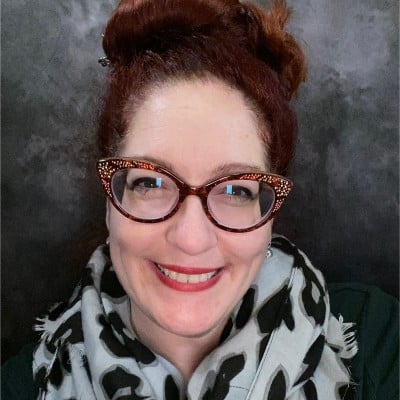
So if you go into LinkedIn and you just putLinkedIn.com in Sam Warnerslash, there I am, nice and easy to find.I'm the one wearing the cat eyeglasses and the hair up. I looklike something from a different age, but that's okay. That's just my look.And I've also got a website with all those of stuff on it,so that's get yourHyphen messageacross. I know. Bit of a gobble. Turnsout gaima G-Y-M-A is a drink. And it's loads ofother stuff. It's loads of products, so couldn't shorten it, butGet-Your-Message-Across.co.uk with Hyphens in between. And that's my website. Fantastic.
Joanne Lockwoodhost
Maybe you should change it to beyond the Corporate Robotor something. B-T-C-R.Beyond the corporate robot, maybe.Fantastic. Thank you. Thank you somuch. And also thank you to thelistener who you've tuned in. You've got to this far, you got to the endof the podcast. Yay. Go you. Thank you. Please dosubscribe. If you're not already subscribed, subscribe. Click the little button, ring the bell, youget notified. All the usual things that people tell you to do, because then you'llget notified of future episodes of the Inclusion Bytes Podcast as bit. Yes.
Joanne Lockwoodhost
So this is episode 91. It's going to be episode 100 soon, and Ican't wait to see who that's going to be. They're going to be exciting. Sorry,Sam, you came out too early. But yeah, maybe I'll have ahundredth birthday celebration and get some other guests back and do a specialone. So I've got a number of other exciting guests lined up over the nextfew weeks and months. Also, if you'd like to be a guest, drop me aline. And also if you've got any suggestions or feedback, I'd love to hear them.So my email address isjo.lockwood@seechangehappen.co.uk. Andmy name is Joanne Lockwood. It's been absolute pleasure to host this podcast for youtoday. Catch you next time. Bye.
Exploring Neurodiversity and Workplace InclusionThe Importance of Diagnosis and ValidationWorkplace Accommodations and Reasonable AdjustmentsCommunication, Leadership, and Understanding Neurodiversity
Joanne Lockwood is joined by Sam Warner, a neurodivergent communication specialist, to explore what it means to go beyond “the corporate robot” and build workplaces that work for more brains.
Sam shares her experience of leaving the corporate world after years of feeling exhausted, out of place, and unable to navigate unspoken workplace politics. That turning point led her to research neurodivergence more deeply, pursue a clinical autism and ADHD diagnosis for validation, and ultimately build a practice helping organisations attract and retain neurodivergent talent.
Together they discuss the realities of diagnosis, including long waiting lists, the financial burden of private routes, and the stigma and gatekeeping that can show up around self-diagnosis. They also reflect on school experiences, bullying, and how traditional education can overlook both strengths and support needs.
The conversation then turns practical: clear communication, not making assumptions, and simple reasonable adjustments that often cost little but benefit many. From quiet spaces and clearer instructions to more thoughtful facilities and accessibility design, the episode offers grounded ideas for leaders and teams who want to create environments where people can do their best work.
“They all seem to be playing some sort of game and I haven't got the rules. And I just got to that point where I was like, okay, I'm done. I can't play anymore, I'm out.”
“So even though I was 99.9% certain because of all the research I'd done anyway and met so many people like me, there was that 0.1% of me that had impostor syndrome that kept going how can you be doing this for other people?”
“Right. We don't have the technology to make it that colour, so you have to have the other colour. So that's being honest with the customer, even though it's bad news, even though they don't like it, that's a fact.”
“If we just allow them to have all the reasonable adjustments, accommodations and adaptations they need to be their very best selves at work, regardless of what's going on in their head, surely that is the answer.”
“Just because you're neurodivergent doesn't mean you've got a halo. Really doesn't. And the whole assuming that because you've heard about something somewhere, you know it all that's dangerous. That's where you get into a sticky wicket.”
The diagnosis process and access to medication can be a financial privilege, with costs adding up to thousands of pounds.
Questions this episode helps answer
How can organisations ensure that they are creating a neurodiverse and welcoming environment in the workplace?
What challenges do neurodivergent individuals face in the corporate world, and how can organisations adapt to support them effectively?
What misconceptions and stigmas exist around ADHD and Autism, and how do these impact diagnosis and workplace experiences for neurodivergent individuals?
What are some examples of reasonable adjustments in the workplace that benefit not only neurodivergent employees but the entire workforce?
How can leaders and managers effectively communicate with and support neurodivergent employees in the workplace?
In what ways can public facilities, such as toilets, be made more accessible and accommodating for individuals with hidden disabilities or sensory needs?
Explore topics
Ideas from this episode
Exploring Neurodiversity and Workplace Inclusion
During a recent conversation with Sam Warner, a neurodivergent communication specialist, we delved into various topics surrounding neurodiversity and the workplace. One of the key points of our discussion was the significance of neurodiversity in the professional environment.
The Importance of Diagnosis and Validation
Sam revealed the challenges and privilege associated with obtaining a clinical diagnosis for conditions such as ADHD and autism. We highlighted the financial barriers that individuals face in securing private diagnoses and obtaining necessary medications, often at great personal expense.
Workplace Accommodations and Reasonable Adjustments
Our conversation also centred on the importance of workplace accommodations and reasonable adjustments for neurodiverse individuals. Sam emphasised the need for organisations to have clear policies in place, communicating boundaries and rules for reasonable adjustments.
Communication, Leadership, and Understanding Neurodiversity
Additionally, Sam and I discussed the significance of clear and honest communication in the workplace, regardless of neurodiversity or neurotypicality. We touched upon the need for leaders to provide clear instructions and feedback, avoiding a parental approach.
Learn
Frequently asked questions
What is neurodiversity, and how does it affect the workplace?
Neurodiversity refers to the diverse range of neurological differences, including ADHD and Autism. In the workplace, it impacts how individuals process information, communicate, and interact with others.
How can workplaces better support neurodivergent individuals?
By providing reasonable adjustments such as quiet spaces, clear communication, and flexible work arrangements, workplaces can create an inclusive environment for neurodivergent employees.
What are some misconceptions about ADHD and Autism in the workplace?
Misconceptions include assumptions about an individual's capabilities, communication styles, and work preferences based on their neurodivergent condition.
How can leaders and managers effectively support neurodiverse employees?
By understanding the varying needs of employees, providing clear instructions, and offering tailored support, leaders and managers can create an environment where all individuals can thrive.
What are the key considerations for workplace accommodations for neurodivergent individuals?
Workplace accommodations should be tailored to individual needs, transparently communicated, and integrated with the organization's policies on inclusion and diversity.
How can organisations promote neurodiversity awareness and understanding?
By implementing neurodiversity policies, providing training for staff, and fostering an open dialogue about neurodiversity, organizations can promote awareness and understanding.
Share this episode
Heard something worth passing on? Send this conversation to someone who needs to hear it.