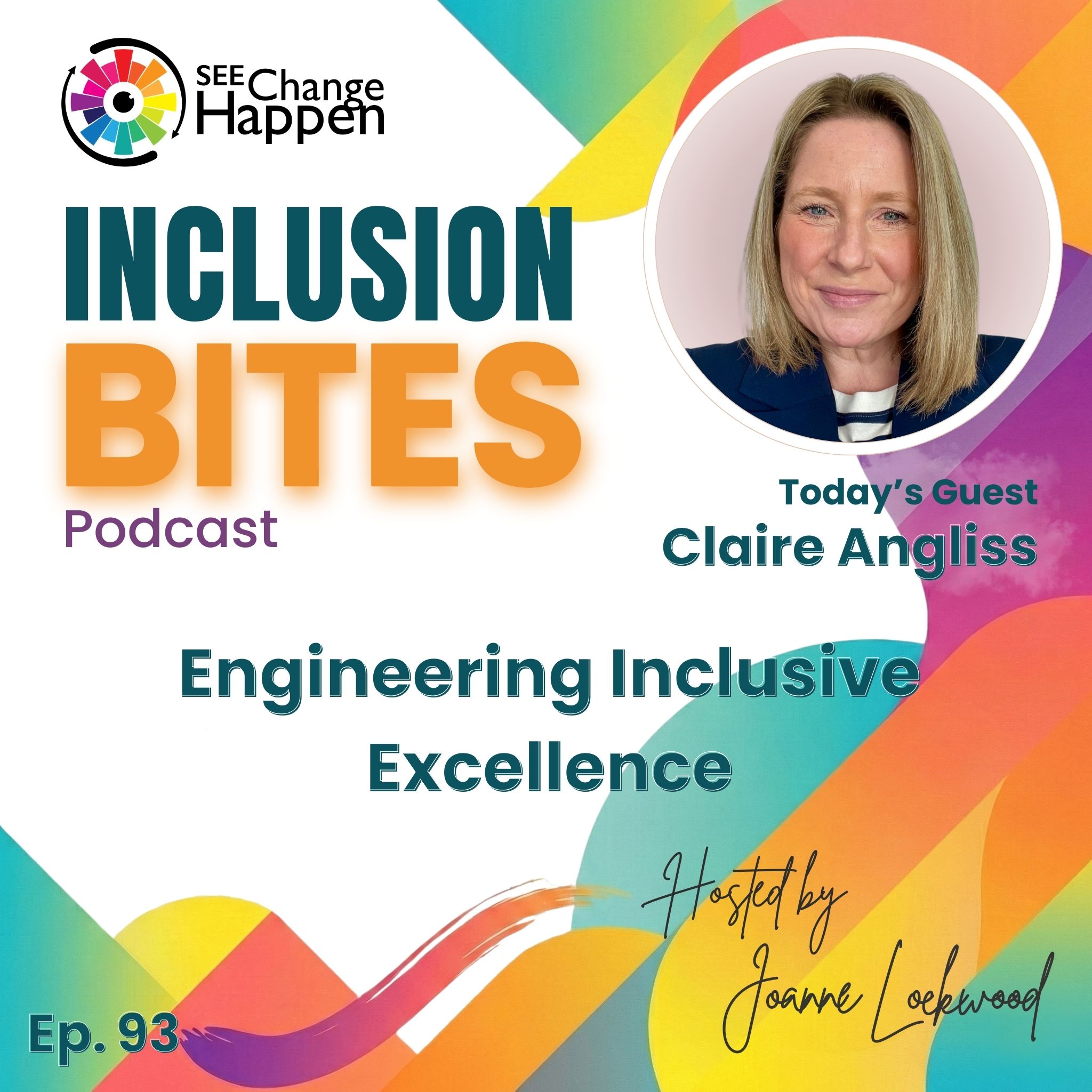
Exploring the complexities of fostering inclusive excellence in engineering. Delve into the challenges and importance of promoting diversity, redefining talent selection processes, and cultivating a psychologically safe workplace.
In this episode of Inclusion Bites, Joanne Lockwood speaks with Claire Angliss about workplace culture systems.
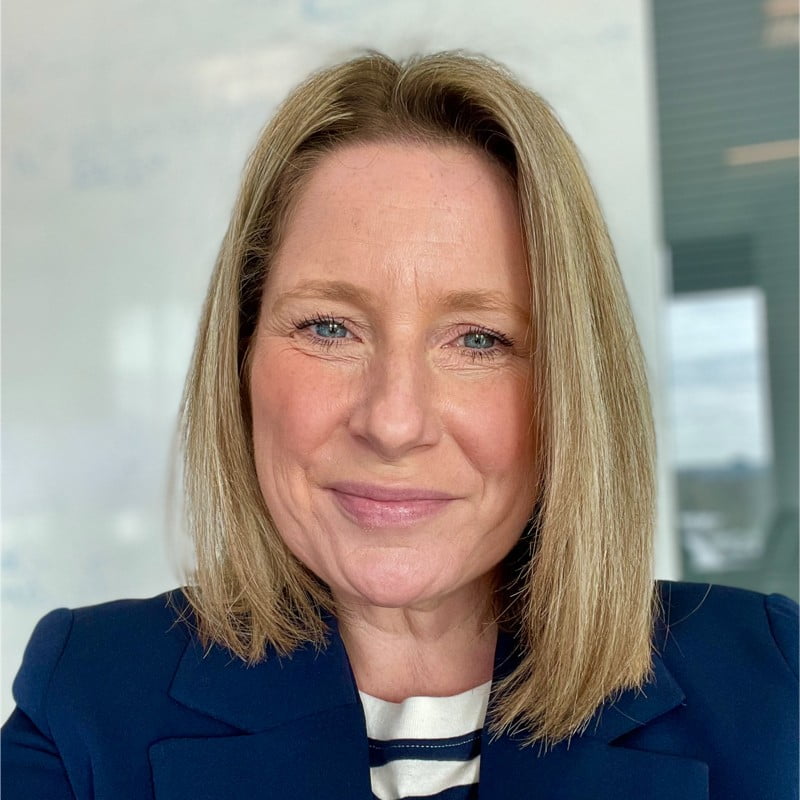
Hello everyone, my name is Joanne Lockwood and I am your hostfor the Inclusion Bites podcast. In this series, Ihave interviewed a number of amazing people that simply had aconversation around the subject of inclusion, belongingand generally making the world a better place for everyone to thrive.If you'd like to join me in the future, then please do drop me aline tojo.lockwood@seechangehapen.co.uk.That's S-E-E Change Happan dot Co dot Uk. You cancatch up with all of the previous shows on iTunes, Spotify and the usual places.So plug in your headphones, grab a decafand let's get going.Today is episode 93 with thetitle engineering inclusive excellenceand I have the absolute honour and privilege to welcome ClaireAngliss. Claire is a leader of learning forlarge engineering organisation and is also theowner of her own inclusive coaching business. When Iasked Claire to describe her superpower, she said she ishonest and delivers clear talk backed upwith action. Wow. Hey, Claire, welcome to theshow. Hi Jo. So nice of you to invite me
Claire Anglissguest
to talk today. Absolute pleasure. We've
Joanne Lockwoodhost
worked together in the past and it was an honour to invite you alongand even more of an honour for you to accept. Thank you. So,Claire, engineering inclusiveexcellence, tell me why we chose that as a title.
Claire Anglissguest
Well, Jo, as you know, I'm the head of learning for Thales in theUK and we've been looking at engineering excellencewithin our business and leadership for a long period of timenow. And when I talk about engineering excellence, I'm really talkingabout a place where everyone feels valued and that they cancontribute their best. So all of thathead in for any engineering organisation, in delivery for thecustomer, of course. But a place where people can achieveand thrive and feel that they belong, feel that they'retrusted, feel that they can contribute and be theirmost authentic selves, that they feel they want to be at work.
Joanne Lockwoodhost
That's easier said than done, isn't it? I mean, we hear this buzword, bringyour whole self to work. And I always say, well, that's easy to you,easy for you, because the further you are from the bell curve of
Joanne Lockwoodhost
normality, the harder it is to bring that whole self, isn'tit? That's why I chose my words really carefully there, Jo, because
Claire Anglissguest
I said that you choose to do. Because I thinkI had a conversation and I'm trying to remember where it was. Itwas a couple of years ago now, at a learning conference I wasat and I was listening to a speaker there who was talking about bringing yourwhole self to work. And I was thinking, the same as you. That's really easyif your whole self is something that's well acceptedor very, I guess, the norm of whereyou work. And they were talking abouta really senior leader in a large, organised, complexorganisation and saying that they'd been talking about howyou were your most authentic self at work. And he hadbeen sharing that he couldn't possibly be that.And the reason was that his extracurricular activitywas one that maybe others wouldn't understandand wouldn't accept. And being a very seniorleader, he decided that he wouldn't sharethat. His choice ofextracurricular was to be naked in the woods with other peoplethat like natureism and love to be outdoors naked inthe woods. So he made a decision not to share what his extracurricular kindof hobies were outside of work. And I guess that's whereI share my words really carefully. It's of what youchoose, of what is comfortable. And I would have loved to get to aplace, Jo, as you know, where we could really be our mostauthentic selves. But it's always about what you choose to share aboutyou, because there will always things about everybody we choose notto. So I think that's important, that asHR and learning leaders, we're really understanding that you can'tpossibly be asking that of everybody.
Joanne Lockwoodhost
No. And picking up on that particular example,the natureism, this person's sort ofweekend community and hobby, or their lifestyle,whichever makes them happy. It's coming in towork on a Monday morning or having taken some time off.So what did you get up to? And then immediately this person's having to cover,mask, hide what they've done,sanitise their response. And that'sa huge cognitive load for people to have to process it.You say they choose to share that or not. By choosingnot to share it, they choose to createa story and a myth, which is even harder sometimes to maintain.
Claire Anglissguest
I think that's absolutely right. I guess what Isee as our kind of role to play is to help people to beable to share the things that they feel they'd like to and thatthey can balance with. This is something that'sreally important to me, and I don't want to mask this.It causes me more distress if I do to.Actually, I'm a senior financial controller in a large organisationand this is what I choose to do at my weekends and actuallythe outlying kind of balance in what would happen if Idid choose that. And actually it's private to me, I don't reallywant to. I guess that's where I'm coming from. It'smore. If you choose not to share that becausefor you, it's just not something you feel comfortable sharing, then I'mokay with that. But what I don't want is for people clearly to benot sharing things that then causes them pain not to share.
Joanne Lockwoodhost
Yeah, I completely agree. And the pressure to out yourself oneverything, if you like, can't be there either. And justbecause someone maybe is gay, bi,lesbian, it doesn't need to bring that to work. If you'recomfortable saying, actually, it's none of your business who I sleep with, who I haverelationships with. I don't feel the need. I'm not hiding myself, I'm justchoosing not to share that. It doesn't matter to me. Yeah. And some
Claire Anglissguest
folk, it's a big part of who they are and it's what they want toshare. I guess it's like any of us. There are things that Imight choose to share. When I was going through a divorce, did I chooseto share that at work? Not with everybody. With the people that Ifelt needed to know to support me, but not with everybody.And that was testament. When I changed my name from Mortimer toAnglis back to my maiden name, the amount of people that congratulated me ongetting married, there was far more awkward conversationsabout congratulations on being married than there was probablythat if I'd have had the conversation that I was divorced,but I just felt it was no one else's business and I didn't really needto. So when people push for people to share everything,but it's a really inclusive space and you can share whatever you want toshare your truth, I think that is always withchoice, and that should be made really clear that it's notan expectation that you do that, but if it's right for you,then you can. Yeah. And
Joanne Lockwoodhost
I think the key thing really is you should have an ultimate expectationif you do decide to share something, people go,wow, excellent. Thank you. Brilliant. Thank you for trusting me.And that's the kind of the reaction. It's not sort of like, oh, oMg. Orsort of run for the hills. It's kind of a, yeah, okay,
Joanne Lockwoodhost
actually, so and so down the corridor, it has a similarlifestyle, have a chat with them and suddenly there's a network built up and yousuddenly feel fine that other people can share that as well.And obviously went through the same thing obviously went throughthe same thing seven or eight years ago. Where you end up building up thishuge backstory about everything. Andwherever the old adage is, it's always easier to tell the truth because you neverhave to remember what the lie was or what the fabrication was. AndI found myself going away for weekends and my socialengagements, and people would say, what'd you do last night? I said, well, Iwent for a stag weekend, which at the time wasn't technically alie. It wasn't technically a truth. It was kind of an easy way of sayingI went away with a load of people to Blackpool for a bit of astag weekend. The fact it was a load of trans women havinga weekend away, trying to explore themselves and have some time out,you end up making the story up and then you finallydo share something and it becomes people then feela bit lied to if you're not careful. You've been deceiving me, you've been tellingme this all this time. So, yeah, it's that really fine linebetween lying to people about what you're doing and choosing not to share, hasn'tit? And I found that was a real awkwardness where people said, oh, you've beenlying. I guess we do that though, Jo, don't we? To protect people somewhat
Claire Anglissguest
as well, because people tend to want to help. So ifyou tell someone something, they then tend to feel like there'ssomething they should do about it. And I think that goes back to your point,how to react when someone shares something like that with you. Because if you'd haveshared your truth, I wonder how many people would have wanted to help orsupport or talk about what you were going through thatwere totally unequipped to do so. That wouldhave been actually of hindrance at that moment in your life,rather than help, potentially, but actually,how we respond to someone when they share their truth withus, or are open about who and what theychoose to do. I guess it's a case of us not feelinglike we need to help support, fix or dosomething with that person and just say, thank you for sharing that. Is there anysupport, like, from me, maybe is a good question, rather.Oh, that sounds really interesting. Tell me more.I really didn't know. I'm so sorry, Jo. You're going through all this becauseactually that wasn't how you were feeling.
Joanne Lockwoodhost
It's interesting, you mentioned a couple of things there. So you mentionedthat our human need to fix andthe sympathy and the, oh, you're brave,or you're so courageous.Everyone's obviously well meaning, but they're not actuallyresponding to you. They're responding about themselves, aren't they? It's all aboutthem. Oh, you're so. It means I couldn't doso. You're courageous means, oh, wow, that scaresme. And then this listening to fix, isn't it sortof like, let me help you. Let me solve your problem, because you're obviously notintelligent enough to fix your own problem. You need my suggestion to fix it foryou. And I can say something and they're going to go, wow, Jo, I couldhave done that without you. How amazing. Yeah, I agree,
Claire Anglissguest
Jo. Yeah. I was chatting to someone on a podcast
Joanne Lockwoodhost
this episode last week, Greg, and it's coming out a coupleweeks time. And he was saying that when he was going through a really darktime and contemplated suicide at somepoint, and when he was telling people about it, he said it was really hardto find people who would just say, thank you for sharingthat. Do you want to talk about it more? Do you want to explore it?Rather than the natural reaction is what can I do to help? Or what canI do to fix it? Actually, just listening to me, let me understandwhy I'm in this dark place. Give me space tospeak, is what it is. And it's really hard tonot chip in with an answer than that. And I think that's the challenge.
Claire Anglissguest
Yeah, that kind of takes us as well. Sorry, Jay. Thattakes us to this kind of leadership piece as well, because that'sabout that connection being based upon, I guess,love, rather than a need to lead or fix ornurture. And that's around that genuine kind of empathy,compassion, genuine care. And I'm not suggesting that someone thatoffers support isn't offering that care, butactually, when you really think about what someone else needs rather than what youneed in that moment, quite often it is someonejust wants to talk and share what's going on for them,or they're just telling you because you asked a question, right? If someone says, whatdid you do at the weekend? And you said, well, as you said, Jo, Iwas with a group of friends, and it was a group of trans womenexploring and taking some time out together,I guess you wanted to share that if you feltthat with me, you could share that. Andthat sounds like an interesting weekend. Did you have a good time?
Joanne Lockwoodhost
Yeah, exactly. And it was. But I think you'reright. I wasn't comfortable enough in my own skinor where I was heading in my life.So thatprivate weekend wasn't necessarily something that was worthsharing at that point, because I didn't know what it meant. I had nocontext. If someone asked me a question about it, I couldn't answer anyquestion about it. Just was. So you're right, Iwasn't hiding myself specifically, it was just nothing I wanted toshare. So you mentionedearlier the concept of allowing people to thrive andbelong, and I'm a great believer in those two words.Firstly, thrive. I should succeed or fail based on myown merits. And the environment around me allows me tosucceed or fail on my own merits or gives me acomfort, blank insecurity to be able to work around that. So the workyou do in your organisation at the moment, you reallyare focused on creating those environments, aren't you? Yeah, we really are.
Claire Anglissguest
I think things started. We've always been reallypassionate about inclusion and I think thebeginning, like most organisations, we probably were talking aboutdiversity at that. Know, if we rewindyears back, we were definitely talking about having diversecommunities rather than inclusion. And I know that we've spokenbefore about this, Jo, but I think one of the things that reallyhit a lot of organisations potentially through thelockdown was the whole ed I kindof topic and became verycommercial. There were lots of people popping up all over the place that claimed tobe ed I experts and lots of folk thathave some lived experiences that wanted to be involved in theconversations with corporates. And I think at Thaleswe were really curious about, well, what does that really look likefor us and why would we be doing this? And one of thethings that I became quitecurious about was figuring out how you talk about Ed I in abusiness context. So how do you talkabout the real kind ofsensitive topics rather than justthe real obvious ones? So wehave measurements against genderand there are some complexities in ourorganisation because we're a global organisation asto data that we can kind ofselect and collect, Jo.
Claire Anglissguest
But ultimately we had some gendertargets, but beyond that there was little else. And I know thatacross the UK business we're really passionate about thetopic of inclusion being beyond gender.So we started to think about, well, what does that mean?And I think one of the things that a lot oforganisations are struggling with is to create abusiness conversation around Ed and I,not a conversation around it would be really great if we had diversecommunities because, yeah, that would be really great. Butfolks struggle to put then measurements around that and what'sethically right to measure. How would we measurethen? Would we need everyone to disclose? Would we need tohave the conversations, Jo, that you and I have just been talking about, would weneed everyone to share? Would they feel safe in doing that? What comesfirst? Do we create a if environment for everyone to shareand then we need disclosure and then we can do this and that stopspeople having the right conversation. SoI definitely think the maturity at Thales has beenaround how we talk in our organisation, aroundthe importance of Ed and I and whyit's important to us as a business, not just as anHR topic or as a diversity topic.So, yeah, we've been really passionate and beengaining a lot of momentum over the last couple of years, actually,as an example, in bringing in people like yourself, Jo, to talk to ourleadership community, to help them to relate and understandto what inclusion really looks and feels like from a leadershipperspective. I'm listening to what you're saying there about the focus,
Joanne Lockwoodhost
maybe over the last two years, around the COVID period, if you like, alot of people talking around diversity, and I thinkit started off the Equality act, the Racial Relations Act,Discrimination act. It was all focused on characteristics, all focused onproviding support, workplace adjustments, a pay gapanalysis, focus on gender, focus onrace, disability, with a bit of LGBTQ plus thrownin the background. And we're all focusing on singlestrand initiatives, how to employ more women or howto increase our ethnic diversity, or whatever it may be,without actually putting the structures in place around the belongingness,the welcomingness, the culture. And I alwaysget frustrated when I'm talking to people about their hiring needs.Oh, we want to hire more diverse people, I say, okay, definewhat you mean by more diverse people. Do you mean people not like you? Whatdo you mean by more diverse? So do you mean more women, more blackpeople, more women of colour, more queer women, more lesbian women? What do youmean by that? Okay,unless you could be specific about what you're trying to achieve.Just by saying we want to hire more diverse people doesn't mean anything. It's nota quantifiable, it's a broader cohort or broader diversityof people in the funnel. But what do you mean? What's your objective?And I agree what you're saying there about the business benefit or the businessobjective, without overshadowing the people element. It's kind ofgot hand in hand, isn't it? But very often people don't havea trajectory. I talk about trajectory rather than a target or aquota. It's a statement of intense, statement of direction. Bit like the World EconomicForum talking about 70 or 80 years for genderequity in the western world. What the steps to getthere because we're not achieving them. So it's more about the steps to get somewherethan it is around the actual target, as long as we're showing thosesteps incremental and making a difference.
Claire Anglissguest
And I also think that Jo, that businesses are waitingfor it to be perfect before they take action. So they'retentatively saying we want it to be a diversebusiness, but they're really worried aboutexposing themselves to not be perfect. So we're notperfect at Thales, we know that. Can we domore to make our culture more inclusive? Absolutely. Of course we can and we willcontinue to do so. Do we have adiverse group of talent in our business right now? Wedo, but not where we would like it to be. And when you say,well, where is that? Well that's a place whereI sit around a board table and I see and feeldifference in the room and there's a collective intelligence ofdifference. And that therefore means I'm not talkingabout gender or race and ethnicity. It's alot more than that. It's about neurodivergence, it's about all of thosetopics and differences. Andtherefore I think you can't really have astrategy that's one dimensional. So you can't say,okay, this year we're going to be focused on ethnicity, or this yearwe're going to be focused on this. TotalisVeterans is a really importantpool of people that we want to be included in ourworkforce. So there'svarious different pools of people that we want to be attractive to. And I thinkit's that intersectionality and understanding where all of thecrossovers lie. And that's if we can createa safe, trusting, psychologicallysafe environment for people to work in, thenif we talk about that, if we share outside of theorganisation and inside of the organisation what we're doing toget to that place, then we will naturallystart to attract talent from alldifferent organisations that are not doing that, that are notbeing overtly explicit in whatthey're doing. So we've recently launched a number of new policiesthat support people in our environment, to leaders tohave the right conversations and employees to have the right conversations.And we've won awards for those and we're really proud of thatbecause does a policy change a culture? No, of coursenot. But it does mean for somebody in the business thatmight be, let's say, transitioning, that theycan find that policy and say, what are my rights here? Whatshould I expect this to feel like at work? And I know that'sa topic that you and your wife have spoken at Tulis about.And that's really helped us to scope outwhat our thoughts are as a business and how we support people, because that's reallyimportant as leaders and as a business, we understand how we should dothat. Right. So you need the policies, but you also need to then talkabout that and say, we have these new policies, andthis is what we expect of our leaders when someone in their teamis talking to them about transitioning. Here you go. This is what we expectfrom you. And we're really clear that we measure that and we look at itfrom both sides. The experience of the employee and the experience of the leader.I think, Jo, that does help for people tounderstand what the culture should feel like and whether or not it would be asafe place to have that level of open conversation anddisclosure that they might need to have.
Joanne Lockwoodhost
People generally get it. Let meexplain what I mean by that. So do they understand why itmatters, all the things we talk about, Edi,HR, positive experiences. Do you think people trulyget the why, or are they just maybe latchingon to wokism and politically correctness and we can't say anythingthese days? The average layperson is going, this isjust too complicated today. Yeah, I think that's
Claire Anglissguest
a really good point. I don't think they do get it. So in thecommunities that I kind of am partof, like, say, learning communities, HR communities,I would say that probably about70% of people still don't getit. And I think ina business it's even less so. I'm reallyclear when I'm talking about Ed and I that what I'mtalking about is this collective intelligence notion.So that we've got. Let's take a problem. Let's take anexample in a business. So you've got a problem, you're trying to solve a problem.Who would you best select to be around the table to solve the problem?Now, of course, if it's a technical issue, you've gotthe technical dimension of the people that will have the knowledgeof that technical capability. But other than that,the same people from the same backgrounds, with the same livedexperiences, with the same tenure of service, with the samesexuality, with all of those characteristics of thesame, are they going to come up with different solutions? Probably not.But then if we start to think, okay, well, let's think about who else wemight invite into this. Maybe we bring a graduate in or an apprenticethat's not been in the organisation for a long period of time. Sotherefore they don't know what the rules are. And there's some real benefit in beinga novice. So let's bring them into the conversation. Let's bring Jo
Claire Anglissguest
in who might have a completely different Lyft experience to us,who might be used to thinking differently and might be usedto having to navigate change and complexityand difficulty in an organisation. She might have acompletely different view on this. So if you start tothink about who you've got around your table for problem solving, if they all look,feel and smell the same, you're quite likely to get avery similar answer to your problem. But if it's a different setof folk, then actually who knows how you might end upsolving that problem? And that takes you then to innovation, right? So theimportance of innovation in business is huge. So why would you choose tohave people that are all the same in yourorganisation? So when you kind of explain it like that topeople, most people then go, oh yeah,that makes real sense. So we're not doing this because wewant x amount of females in our business, or we want xamount of veterans, or we want to include trans people in ourorganisation. What we're saying is we want better problem solvingand innovation. I get it now, of course, why would we notwant people that think differently? So they're neurodivergent people thathave had different lived experiences. And I think that helps people tounderstand why Ed and I is so important.Inclusion is so important in organisations andbusinesses. But I don't think they get it yet, Jo.
Joanne Lockwoodhost
No. And do people actually,we use the word get. Do they get it how difficult it issometimes to be a person ofuniqueness, whatever that may mean to that person walking toa room of difference or the norm, if you like.So being the first black woman in seniorleadership, being the first openly gayman in a role or something, just lookingat tv culture, we look at what goes on, strictly come dancingand the pushback around same sex couples anddifferent presentations, and we see this all over the placewhere somebody has to break the ground,somebody has to walk that path first. And that's not foreverybody. Not everybody is a groundbreaker or a pathclearer. So that's a real challenge whereyou are in a monoculture, for want of a better way ofdescribing it, or a limited culture, to try and expand that cultureand allow people to bring their whole self to work or have psychological safety intheir environment without people being tokenized. It'sa real challenge to grow that demographic, isn't it? It
Claire Anglissguest
really is. And that's why I truly believe it's not upto those communities to make the difference. So is it upto. I've been growing ourinternal Thales black female leadersfor a number of years. And is it up tothem to drive the agenda for black women in our organisation? No,it's not up to them. It's up to everybody. And that's whyleadership and leadership development is sointegral for businesses in this space, because it's the spacethat the leaders create in the organisation for peopleto feel they can belong. So it's not up toa new female black leader to walk into a room and change thedemographic in that room and change the way that they're seen. It's up to thepeople in the room to do that. They have a part to play. Of coursethey do, but it's up to all of us.Go back to your initial question. Do I think that people understandthat? No, not wholly. We've definitely been having thatconversation. And as part of the leadershipprogrammes at Thales, we have collectiveintelligence as modules within the leadershipdevelopment and we also run events, live events, Jo, like you werepart of for Thales, where we talk about that and weopenly talk about the challenges with leaders and how we expectpeople to lead in our organisation. And I think it's up toorganisations to get firmer on that and measure it and make sure that the leadersare creating that space and makingthat change. But it's certainly not up to the individualssolely to be groundbreakers. I wouldn't be expectingsomebody to do that. I think there's a fatigue in that.That is an interesting kind of discussion, Jo,which is how often can you walk in a room and havethat conversation? And how often should you haveto without then me being the person thatraises that as a topic rather thanyou, even if you're in the room.
Joanne Lockwoodhost
I'm involved with an organisation andwe have a low representation of people ofcolour across our organisation,and that inevitably means we have a lackof. Just put it in business context, a lack of talent pipeline. So wedon't have the level of people coming throughwith their professional skills, we don't have the level of people comingthrough who want to take on leadership or influencerroles or people who want to come and winawards or be seen on speaking about certaintopics. So when you look at it through the opticsof race or colour, then you look atit as a very white heavy organisation.Gender balance is pretty good, but it's very white.And the problem I'm facing is how do we createan organisation where people do want to join,or they're put off at the very early stages by lookingat going, oh, this is a very white organisation full ofold people. It's not for me.How do we break that first ground and get a footing oran advanced party of people who go, actually, we believeyou, that you want to make change. We believe you're not trying to tokenizeus, we believe you're trying to give us chance. So you need avery, I would say, a type ofperson who's willing to be that groundbreaker, providetheir support. And that's the real challenge I'm facing. And I'm just interested to hearyour thoughts on that in your own organisation. Yeah.
Claire Anglissguest
So I think it is a challenge, but I think it'sone that requires follow through, Jo. So Ithink it's great to have the attraction campaigns and reaching outto different groups. So in yourexample, to groups of people of colour, butthen you've got to demonstrate that actually, when they join the organisation,that's not it. So then you need the right level of developmentprogrammes. You need to show that you do talent reviews that arevery specifically focused on colour, maybe, orethnicity. Then you need to demonstrate that you havethe right level of partnerships and that there are peoplewithin the senior leadership team that are willingto sponsor and to grow the talentwithin that kind of pipeline.So I don't think it's a one hit wonder, and I don't thinkthe other part of it is nobody would want to be the spokesperson foran organisation where they felt that was the case andthat there were targets placed upon. Let's talk about it from
Claire Anglissguest
a female perspective. I don't want to work in an organisation that says,well, we wanted 30% of our senior leadersto be women, so therefore we're going to promote Claire because we needanother woman and she seems to be the right person from the talent review we'vedone. So I get the job not through merit, but because Iwas a woman. And then if we were to look and say, well,if there are no development programmes, then for me to go on. So once Iget that role, you don't really want me there, because you're not supporting me togrow and develop, but you want me to do all of your campaignson LinkedIn and you want me to do. So. If you have an organisationwhere someone feels like that, why the hell would they want to stay and whywould they want to join? The first thing they're going to do is look forother people in the organisation that either look like them or that arefrom other marginalised groups so that they can see whatthe business really is doing. SoI don't ask our femaleblack leaders to have their photographs takenaltogether and do big ad campaigns forattraction. Why don't I? Because they would be thesame group of women that have their pictures taken for everything else. Becausewe don't have a swell of women that can do that. It would beinauthentic and it would be the wrong thing to do. Do wewant to grow our talent from that port? Absolutely. We'rereally passionate, but we want to do that because people want to join. They feelthat they'll be promoted andsupported and developed. So I've worked on looking atall of the right talent reviews with my talent colleagues andwe've looked at the right selection process to make them accessible. We'velooked at our early careers programmes to make sure that we've got youngblack talent coming through our early careers programmes. We looked at executivedevelopment so that people can see, when you get to a certain level,do we want you to progress? Absolutely. As a business.We've also spoken about on our gender pay gaprelease. We also released our ethnicity pay gap. We don't have toreport on that, but we want it to be really clear that this isan area we're really passionate about and we can measure it. So wehave, and we've shared that and we shared that ahead of havingto, because it's really important to us that we attract ethnictalent. So I think it's just really important, Jo, thatit's not looked at as an attraction campaign, it's looked at asa holistic business opportunity. Ratherknow we need to attract more black talent into our pipeline.
Claire Anglissguest
So therefore we need to recruit from a certain pool or get acertain recruiter to help us and give them some targets. It's somuch more complex. And if we talk to people that are joining ourorganisations, they are looking at all of those things.They're not looking at, will I get the right level and will I get theright pay? They're looking at will you develop me? Are there other people that youcan demonstrate you do that with? What else is thereand available? Who are the people that interview me? What did they look like? Werethey like me? Did they talk about yourpsychological safety or did they talk about your ethnicity?Challenges in the business? If I raised it, did theywant to talk about it when I raised it? So I think that's the otherthing is to be really prepared that if you're goingto interview ablack woman to join your organisation, she may well ask you what you're going todo to help and support her and what you're doing for others and be expectantof that, because people want to bechampions and these are the days where people can ask those questionsin interviews. So I think we have to be really prepared thatwe can tell a great story of what inclusionreally feels like for a candidate. If you're interviewing.I've ranted loads there, Jo, but I hope you canabout that. No, I completely concur. I do.
Joanne Lockwoodhost
And I picked up on a word you said quite early on in that wasthe word merit. It's this wholeperceived. I'm going to use the BS word, the BS wordof meritocracy sometimes, where it's perceived tobe a meritocratic process, but often it's notalways. And I'm sure as an organisation such as yourself, you must have been workingon. When you talk about the talent development and the talent identification sortof process you do, you are focusing on meritin there. But many organisations, who defines who's the bestperson for the job? Often the incumbentor the person who's running the team that they've always run, it'snot often done sort of through a peer review or awider review. And then merit, if you like, is subjectiveand that's the danger sometimes, yeah, absolutely.
Claire Anglissguest
And that bias creeps in, doesn't it?I think this is where having a really good, robusttalent process helps organisations to ensure thatthe right person is selected for the role. Anddo we always get it right? I'm sure we don't. Iwouldn't ever profess to be perfect at this, but Ido think if you have, as we've been saying,a collectively different group of people runningthose talent reviews, you get different, diverse thoughtson the individuals that you're talking about. So if it's runby senior leaders that might have limited access to thosepeople on a daily, weekly basis, then you'relikely to only get what the person has chosen or the person wholeads that person has chosen to share about them. If you've then got maybe acustomer, or if you've got someone that regularlyhas interaction with that person, that brings another view.I remember being in talent reviews, not at Thales, I wouldsay, but with other organisations where people will,you know, I haven't really heard much from them this year.They haven't really been doing anything extracurricular they've beenquite quiet. I would expect them to have been running this, this and this.And you think, well, wait a minute, they've been on a major programme andbeen deploying resources all over the place or been leadingprojects that might not have been on the agenda of thesenior leaders or kind of on their radar, butthey've been actually delivering for our customers reallywell. And that might not have been seen, but it's definitelyhappened. So having the voice of the customer as well in things like your talentreviews is really important.
Joanne Lockwoodhost
You mentioned that the organisation has a30% target, et cetera, et cetera, and you find yourselfsucked into that target and positioned because you're awoman, to hit that 30% target.Some of it's got to be psychological from your perspective. I'm notjust using you as a hypothetical. You not. So you specificallywhere you feel that you are past the target, whereis there an imposter syndrome there that you don't believe you have the meritto succeed without the target? Is there a kind of a chicken and egg there?
Claire Anglissguest
Yeah, first of all, that was an example. So there are no 30.In my coaching business, I talk to. Actually, quitea lot of women that I talk to willfeel like others believe thatthey are in a role because of their gender and from anethnicity perspective, definitely, and actually a disabilityperspective. When I've been coaching people with disability as well, theyhave all spoken about feelinga little bit of that impostor syndrome. So maybeI wasn't the best person, but I happens to bethe person that looks like me orthat has a disability. So that's probably the reason whyI'm here. And that's really toughon people, and it really lays heavy,and I think we need to be reallycognizant of that when we are talking to people aboutpromotion and inclusion in our business,but also not. And not only for them,but for everybody around them, because thereis also clearly a message toothers that might be part of a norm group. Soin industry and in engineering, that might be kindof middle aged white male. Thereis a message, isn't there? If we're talking lots around inclusion,there's a message that by inclusion, we meanwomen, we mean black people, we mean transgender, wemean neurodivergent, we don't mean you. And when I talkabout inclusion, I am talking about everybody. Sowhen we talk about inclusion, what we should remember is that themessages need to be heard by everybody, that wewant you all included. We're not excludingfor the need of inclusion. So,yes, I think that weight lays heavy, but it also weighs heavy onothers. So when someone gets a promotion and others tell a storyto themselves, well, that promotion was given to that person because she's a woman.That can be really hard for that person, because if that'struly what they feel at the time, they also have to work through that.Why do I feel that? Who gave me those messages? What's the story I've toldmyself? How am I now going to report to that person as a white malewhen I believe the only reason they were promoted was that they're a female? WhenI went for the job and I didn't get it, but she got it becauseshe's a woman. So there's also the whole falloutof inclusion, that people that don't feelthat inclusion is part of what the business is doing for them aswell. So does that play into the
Joanne Lockwoodhost
myth, if you want, or the misconception that hiring for diversity is hiringsecond best because you must be second best because you're adiverse candidate, wherever that may mean. Is that apervasive thinking? Maybe amongst the majority? Yeah,
Claire Anglissguest
I don't know if it's amongst the majority, but certainly people that I coach thattalk about impostor syndrome, I definitely thinkthey all would say there was probably a better candidate.That doesn't actually end up being true, by the way. So when you getto the real crux of the challenge, it really isn't about the fact thatthere was someone better. And I absolutely know, in anyorganisation I have worked with, definitely inThales and in any other organisation, I speak to leaders.Nobody, nobody is making decisionsbased upon gender, ethnicity,sexuality. No one's saying we need that candidatebecause everyone is hiring on merit.Everyone's hiring the best person for the job. Dothey want to see a diverse pool of people? Absolutely.
Claire Anglissguest
Will they go out of their way to find them, put targetson recruiters, all of those things? Yeah. And they should, becausewithout that, sometimes you don't get to see everybody. Arethey hiring the best person for the job? Always,as far as I have seen, I don't think I have met anyone thathas openly said to me, oh, yeah, we gave it tothat person and because they're black or we gave it to that person, do Ithink it goes on? Maybe, but not in the organisations that I haveworked with or spoken to. Has anybody ever said, well,we're absolutely not going to give it to anybody that's male, because thisperson needs to be a female? I think there are timeswhere you might want to make that decision because youwant the diversity on a board, for example. So you might wantto deliberately say, we are wanting toattract a female into this role because we knowthat we're missing that. And I think that's okay to do that ifthe person has the qualifications to do the job, but not if theydon't. So, positive action versus positive
Joanne Lockwoodhost
discrimination. So we're saying legitimate means,but again, does that. I'm going to come back to the meritocracything. If we're setting out the roleprofile, the job description, the success criteria, in acertain way, then only someone who's done this role for tenyears in a similar sort of company, with a similar sort of team and asimilar sort of product range could ever succeed. And typically, that personisn't black or isn't a woman. Therefore, the talentpipeline of the candidate pool is narrowing itself down because therequirement spec is so defined. So how dowe hire for capability and growth, ratherthan just hire for. Done it before?
Claire Anglissguest
Well, we've just done something similar, actually. A colleague of mine,Kirsten, has been running a programme called Code First Girls,and we've been partnering with Code first girls, which have given ussome amazing talent. And that's around looking for people thatare looking to reskill to come into engineering, not necessarilybeen engineers. So the background, Jo, is that they might not necessarily have ever beenin engineering, but we're going to take them on and train them to be engineersin software. So if we'd have written a jobspec, as we would do for that role, you wouldexpect a level of understanding. So this isreally about the organisation saying, at what point andwhere in our business doesexperience or qualification notnecessarily matter, where we can train people ourselvesto have the skills and capability that they're going to need to deliver forus. And I think that's what starts to make businesses different andaccessible. So by bringing inthat cohort, what we're saying is we're really open totalk to people that might not have the right background.And there are some roles where you can do that, andthere are also some roles where you know that talentreally exists. So 50%of the roles at Talus last year were non engineering roles. So whateverstory talis would have told themselves about the talentpool, as far as diversitywas concerned about engineering, it's only 50% true.So we know that and we say, okay, so in thatpool, we accept that it's going to be more of a challenge to get thediversity that we're looking for. So therefore we might need to be morespecific. But in this 50% of the roles, that's nottrue. So what are we going to do in those roles to make them moreaccessible? So I think there are some roles, Jo, you can really do that inand you can remove the barriers. You need a really greattalent acquisition team, you need people in the organisation to bechallenging and it's really hard forspecialists in their discipline. So, for example, asafety engineer to accept thatsomebody might not need x amount of years experience, if that'swhat they've been used to. And you need peopleto be able to ask the right questions and challengepeople in the organisation to say, why is thatso? And what background might they, might they comefrom? If they weren't from a defence background, forexample, what other background would be okay?And slowly you start to see change.None of this happens overnight. I think you've probablyseen that. And slowly, slowly start to seepeople say, oh, that really worked well. That workedwell. We worked with the prince'strust good number of years ago now it must have been about sixyears ago to bring in young people that were not ineducation or employment. And the reaction inthe business at the time was really mixed. Lotsof people were super excited and some were really worried.What sort of person would I get in my team? Am I the right kindof leader? Would I be able to offer the right level of support? Allof them were well meant, well positioned,like we spoke about very first on wanting to help and support people.The reality, of course, of the people that joined us were that they were reallycapable, great people, and a lot of them are still in our organisationand they've been promoted and they've mobilised and they're recognisedas talent. So I think it's along winded answer, Jo, but I think there's loads you cando to break that down. I think the first thing you need is to startasking yourself the questions. Why? Why is that important?
Joanne Lockwoodhost
Obviously the same with people who have been in the caresystem all their lives, had anextremely unsupportedbackground, people who have left the criminal justice system for whateverreason, there's an instant stigma and employers arevery reluctant to give people a chance.What if they're risky? What if they're not?There's a default. And I think, as you say, it's about getting thehiring teams to start cutting through themyths, misconceptions, the biases, the beliefs theyhave and then start looking into the humanity of the person and say, okay, what'sthis person's capability? What are their core values? Okay, they've had a toughlife and they may have done things they're not proud of when they look backon it, but actually,I hate to say, victim of circumstances, not the way where they wereevolved in the circumstantial upbringing which led them downa path, and that could happen to anybody. So it's looking at thatperson's real core drivers and steering them away fromthat life and saying, actually, if you give someone a different opportunity, they make differentchoices. Absolutely. I would add though, Jo, it's
Claire Anglissguest
not just the recruiting part of your organisation, it'sabsolutely everyone. So if you're an assessor onan early careers programme, if you're an assessor in an interview, even if you'renot part of the talent acquisition team, it's everybody's role tosay, actually, I think that this person has more tooffer. I think interviewers forget quite quicklythat the skill is also part of the interviewer to getthe right answers from the interviewee. So if you're feeling like thatperson's not got the experience, if you feel like that person's not being able togive you the right examples to your competency based questions, it's part of your roleas the interviewer to try and help them to do so as well,so they can be their best. But it is also,if I'm sat having a coffee with a colleague and they're talking about a rolethat they're recruiting for as a leader in our business, and theyturn around and say, well, I'm just not getting the right level of experience, Iwill also challenge and say, well, what is the right level ofexperience and why is that? And what else could it be? And whereelse could you look? And who else could you ask? And what if they hadonly 60% and you needed to develop the rest, howwould you do that? And it's my job to do that, notas a head of learning, but as a colleague and appear to my friendsand colleagues at work. It's not just the role of the talentacquisition team of every single person in the business. We should all be asking thosequestions of each other and saying, who else did you see? Yeah,
Joanne Lockwoodhost
it's being open to be challenging people as towhy people weren't selected, as opposed to just challenging people of the peoplewho were selected. It's asking people why. Sowhat didn't you see in them? Yeah, what was therejection criteria? And I think we'rebusy people. We got huge, great short lists and longlists to go through and we tend to give people not enough time to seeinto the heart of them. And I think what we often do is look superficiallyand sometimes we got the best person for the job. Great, we've movedon. But what about our corporate responsibility, social responsibility toget people back into employment, to help looking atthe environment out there, our cultures and our society out thereand being a great employer for everybody, not just a great employerfor the typical incumbent, if you like. Andthat's a big challenge. And that goes all the way back to that first part
Claire Anglissguest
of our conversation around it being a psychologically safe place for peopleto be able to speak their truth. And if we're able to dothat and we're okay with who we are and we can be all right withhow someone else is and kind of lead from that place of love,then you can openly how you feel about somethingand say I appreciate you may have already selected the person.Did you see anyone of colour on your list or have youspoken to jo? I know she was really interested in that role. Is there areason you might not have spoken to her about it? And doingso from a place of love and care rather than critique?I think having places, it sounds very idealistic,but having an environment where people feel more ableto have that level of conversation is where I thinkheads of learning, HR strategists, that's the kindof focus for us. It's helping the organisation toget to that space. Because then imagine a place where people could speak theirtruth when things weren't going to plan on aproject and someone could actually fess up and say,this isn't quite going to plan, boss. Rather thanhiding it and worrying about it and trying to fix it in silos,we would be able to talk more openly. And certainly talis,that's something we've been really focused on over the last couple of years,really trying to help people to be able to talk moreopenly and everything we're doing is to get us to aplace where that is more possible for everybody.
Joanne Lockwoodhost
I think by doing that you createin your talent, attraction, recruitment, marketing, your employer valueproposition, your employer branding, all the stuff you're putting out there,you start to create an authentic truth about you are a placethat is welcoming, psychologically safe. Becausewe know that people from marginalised minority backgrounds,underrepresented backgrounds, voiceless backgrounds, tend to have a high level ofimposter syndrome or limiting belief. I could never work for there, they'd neveraccept person like me. So you've got to tell these stories. That breaks downthat apprehension about the initial stepping into the funnel, if youlike. Absolutely. And that's why we've been at
Claire Anglissguest
all different events as well, trying to makesure that we're reaching out to lots of different communities. Sowe genuinely want to see you rather than this is acampaign that we're doing to widen our diverse pool.So you're right. It's about storytelling. It's about us telling ourstories and our employees telling our stories and makingsure that people really understand what the motivation isand being truthful, Jo, that we don't have it100% right. And I know that if there are people atTalus listening to this podcast, which I hope they do, there will becritique. People will say, well, it's not like that all the time. And there arepockets of places where it isn't like that maybeat all for some individuals, but theintention and the clear targetis to get to a place where we are able to do that.And all of the intention is good to get us to that space.Yeah. It's about finding that North Star, painting the picture,
Joanne Lockwoodhost
creating an aspirational journey of what fantastic lookslike, and then trying to inspire people to join you on that journey ina scale and a velocity that works for everybody, really, isn't it?
Claire Anglissguest
Absolutely. And that's where then you hope thatyour internal colleagues are listening to that andsaying, great, I want to be part of this place. I want to stay. Iwant to grow, I want to bring others in. And then you hope that thetalent that's looking around thinking, I'm looking for a newopportunity, start noticing you more and wanting tojoin your business and the talent that, by the way, are working for yourcompetitors that maybe feel that their business isn't beingquite so transparent, that their business isn't talking about topicsand being honest about where they are and what they want to do and wherethey want to get to say, well, why isn't my business doingthat? I'm either going to go and have a conversation with them and say, hangon a minute, this business over here are doing it. Why aren'tyou? And we get a lot of that. We were at the UK black businessshow this year, and there were a lot of people thatcame to our stand to talk to us that were surprised, first of all, tosee Thales there, delighted to see Thales there, and thensaying, well, my employer's not here and youare. I don't understand that I need to talk to them about why they're nothere. And that wasn't a gimmick for us, that was a genuinereach out talent. We genuinely want talent.And actually what we can do in that process is alsohelp individuals go back to their businesses and ask thosequestions. And maybe their businesses also startgoing to these events, also start reaching out for talent. What we do iscreate a swell.I think it's really important that it's not just for our own businesses we're doingthis. It's for the economy in the UK,it's for all of the social impact that you spoke about, Jo, and it'sabout our society being able to realiseits full potential. So it's not just about. It's not
Claire Anglissguest
all about Tyre. And I think we have to recognise that
Joanne Lockwoodhost
communities talk to each other. If you talk about the veterans community, there'sa strong veterans community, they will talk to each other and go, oh, I gota job at Talus. It's an absolutely amazing place. You just see their talent pipeline,the development prospects, their stats, especially if you're a youngblack woman exiting the Royal Navy as an engineer on a shipor something, you're going to go, wow, I found a belongingnesshere. And that's the story you want to paint, isn't it?The belongingness is, for me, one of the measures is you want toevangelise about your role to other people and share the love andbring other people. Why wouldn't you want to recommend the organisation if you love itso much, if you want to keep it a secret? So I think that's themagic source we want to try and find, isn't it?
Claire Anglissguest
I totally believe so, yeah. It's been
Joanne Lockwoodhost
a fantastic conversation. We chatted for about halfan hour before we went live and I'm sure we could keep chatting forever andI'm sure we will catch up again soon, have a chat. So how do peopleget hold of you and how can you help others in the industry?
Claire Anglissguest
I'm really happy to receive any LinkedIn messages from anyone that'sinterested in talking about this topic further or if you want tolink in with me to talk about what Thales are doing. If you're a Thalesemployee and want to link in, that's great. If you'renot equally happy for anyone to get in touch and talkmore on this topic. So search you on LinkedIn.
Joanne Lockwoodhost
Claire. C-L-A-I-R-E. AnglisA-N-G-L-I-S-S. So just search you on LinkedIn. Is that okay,brilliant. Brilliant. Yeah. Well, thank you so much. Andthank you to you, the listener, for tuning in again to the end.I really appreciate your time and your attention. Please do subscribe ifyou're not already subscribed, to future episodes of the Inclusion Bitespodcast. That's bits. Please tell your colleagues, your friends,please share the links. I have a number of exciting guests lined upthat I'm sure you'd be equally inspired by over the next few weeks and months.And of course, if you'd like to be a guest yourself, please drop me aline tojo.lockwood@seechangehappen.co.uk If you've gotany other suggestions on how we can improve, that will also be welcome. So,finally, my name is Joanne Lockwood, and it's been anabsolute pleasure to host this podcast for you today. Take care. Catch you nexttime. Bye.
Joanne Lockwood is joined by Claire Angliss, Head of Learning for Thales UK and an inclusive coach, to explore what “inclusive excellence” looks like inside an engineering organisation.
They unpack the real-world tension behind “bring your whole self to work”, focusing on choice, masking, and the cognitive load created when people feel they must sanitise or hide parts of their lives. The conversation also looks at how leaders can respond when someone shares something personal: listening without trying to fix, and creating space where trust can grow.
Claire and Joanne then move into the organisational mechanics of inclusion: shifting from diversity as a headline goal to inclusion as a business-critical capability that improves problem-solving and innovation through collective intelligence. They discuss psychological safety, avoiding tokenism, and the need for robust talent and hiring processes that reduce bias, widen candidate pools, and value capability and growth over narrow “done it before” criteria.
Across the episode, the emphasis is on building cultures, policies, and leadership practices that make inclusion tangible and measurable, while being honest that progress is iterative and imperfect.
“So, yeah, we've been really passionate and been gaining a lot of momentum over the last couple of years, actually, as an example, in bringing in people like yourself, Joe, to talk to our leadership community, to help them to relate and understand to what inclusion really looks and feels like from a leadership perspective.”
“So why would you choose to have people that are all the same in your organisation? So when you kind of explain it like that to people, most people then go, oh yeah, that makes real sense. So we're not doing this because we want x amount of females in our business, or we want x amount of veterans, or we want to include trans people in our organisation. What we're saying is we want better problem solving and innovation.”
“I don't want to work in an organisation that says, well, we wanted 30% of our senior leaders to be women, so therefore we're going to promote Claire because we need another woman and she seems to be the right person from the talent review we've done.”
“...she may well ask you what you're going to do to help and support her and what you're doing for others and be expectant of that, because people want to be champions and these are the days where people can ask those questions in interviews.”
“And do we always get it right? I'm sure we don't. I wouldn't ever profess to be perfect at this, but I do think if you have, as we've been saying, a collectively different group of people running those talent reviews, you get different, diverse thoughts on the individuals that you're talking about.”
“It's not just the role of the talent acquisition team of every single person in the business. We should all be asking those questions of each other and saying, who else did you see?”
“Having places, it sounds very idealistic, but having an environment where people feel more able to have that level of conversation is where I think heads of learning, HR strategists, that's the kind of focus for us.”
The importance of actively seeking out diverse candidates and putting targets on recruiters to achieve diversity in hiring.
Questions this episode helps answer
How can organisations create psychologically safe environments for open discussions and foster inclusivity in the workplace?
In what ways do you think the selection process and criteria for hiring can be challenged to create a more diverse and inclusive workforce?
How can storytelling and creating an authentic employer brand attract a diverse talent pool in organisations?
What role does community networking and social responsibility play in creating an inclusive work environment where employees feel free to recommend and promote the organisation?
How do you think different perspectives contribute to better problem-solving and innovation in an organisation?
What are the challenges faced by individuals of uniqueness in a monoculture, and how can leadership address these challenges?
Explore topics
Ideas from this episode
Workplace Culture Systems
Psychological Safety
Belonging
Authenticity
Change & Transformation
Confidence Self Worth
Learn
Frequently asked questions
What is the main focus of the "Engineering Inclusive Excellence" podcast episode?
The episode focuses on the importance of creating psychologically safe environments in the workplace for open discussions and inclusivity. It also discusses the need for challenging the selection process and criteria to aim for a more diverse and inclusive workforce.
How does the episode highlight the importance of storytelling and creating an authentic employer brand?
The conversation emphasises the significance of storytelling and creating an authentic employer brand to attract a diverse talent pool.
What are the key points discussed about the impact of community networking and social responsibility in the workplace?
The episode touches on the impact of community networking, social responsibility, and creating a work environment where employees feel free to recommend and promote the organisation.
How does the episode emphasize the value of different perspectives in problem-solving and innovation?
The conversation highlights that different perspectives lead to better problem solving and innovation, and the importance of diversity and inclusion in organisations.
What challenges are faced by individuals of uniqueness in a monoculture according to the episode?
The episode highlights the challenges faced by individuals of uniqueness in a monoculture, including the responsibility of leadership in creating an inclusive space.
What are the key insights into the lack of representation and talent pipeline for people of colour in an organisation?
The episode sheds light on the lack of representation and talent pipeline for people of colour in an organisation, as well as the importance of follow-through in attracting and retaining diverse talent to avoid tokenism and promote authentic growth and support for underrepresented groups.
Share this episode
Heard something worth passing on? Send this conversation to someone who needs to hear it.