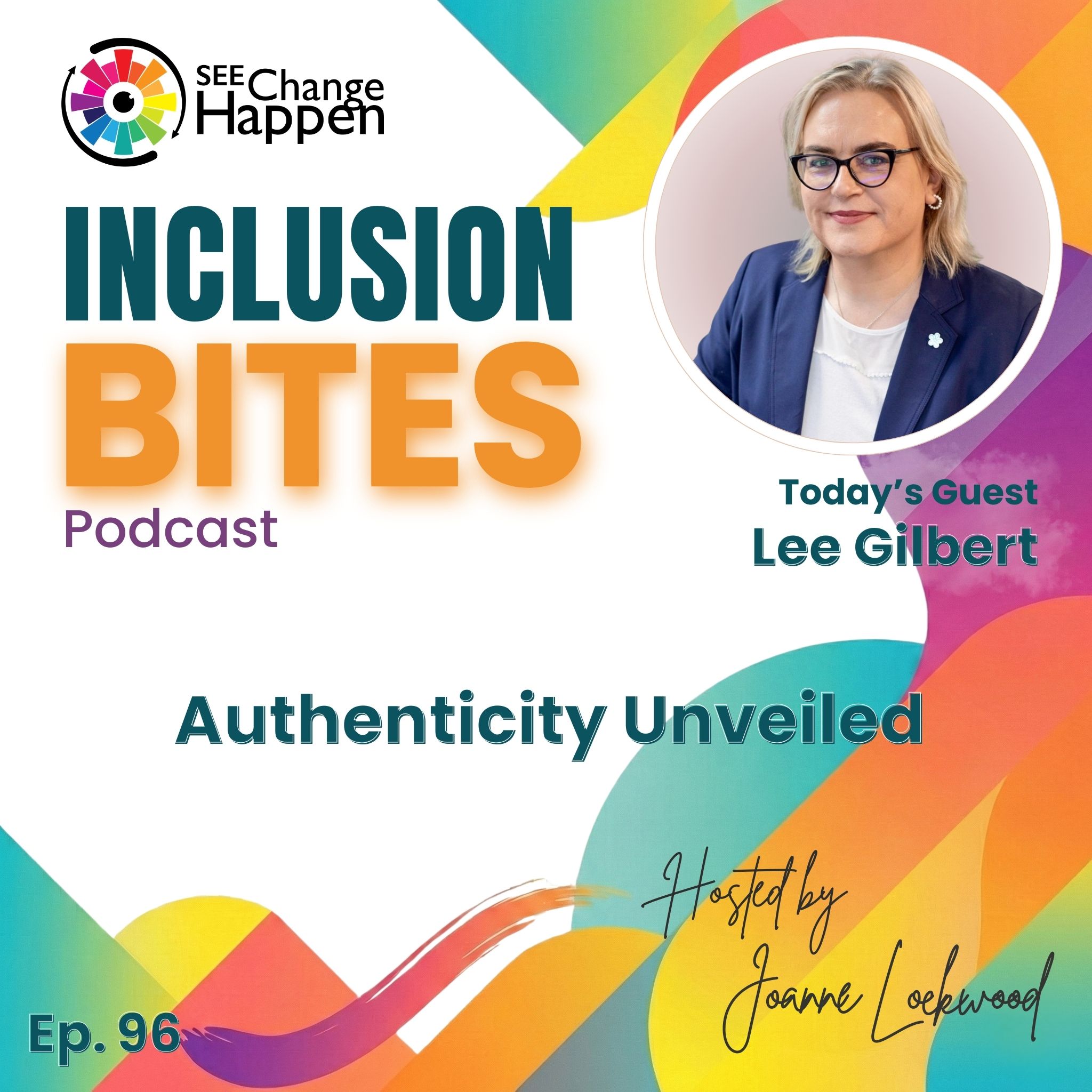
Join Joanne Lockwood and Lee Gilbert as they delve into Lee's transformative journey, discussing the challenges she faced during her gender transition and her views on authenticity and inclusion.
In this episode of Inclusion Bites, Joanne Lockwood speaks with Lee Gilbert about lived experience identity.
“I knew I was trans in 1985, which was when I was about seven, coming on eight that year.”
Explore
Navigate this episode
Joanne Lockwoodhost
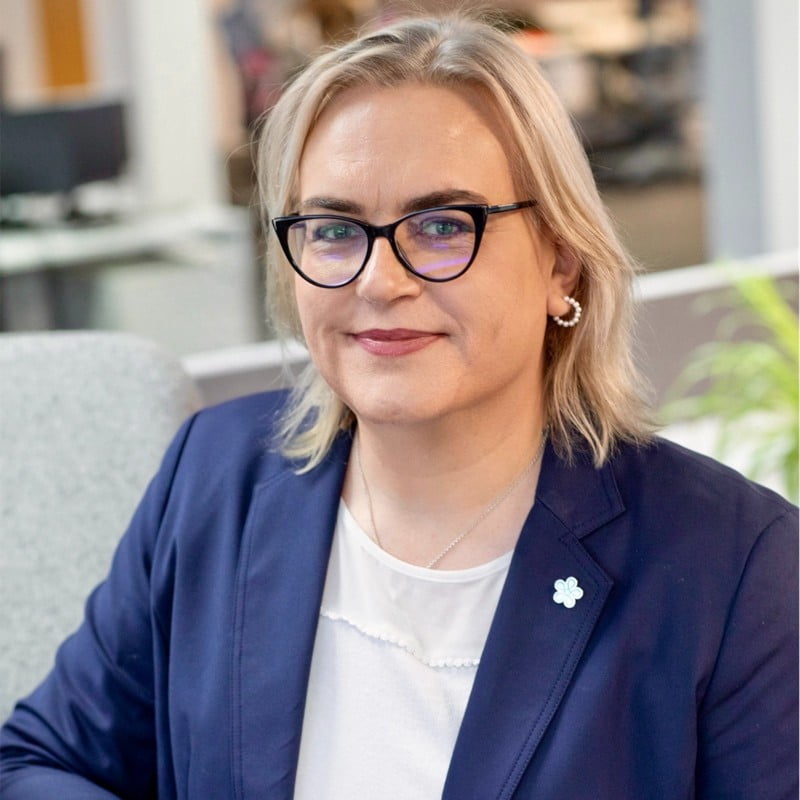
Hello, everyone. My name is Joanne Lockwood and I am your host for theInclusion Bites podcast. In this series, I haveinterviewed a number of amazing people and simply had the conversationaround the subject of inclusion, belonging, andgenerally making the world a better place for everyone to thrive.If you'd like to join me in the future, then please do drop me aline to jo.lockwood@seechangehappen.co.uk,that's S-E-E Change Happen dot Co dot UK.You can catch up with all of the previous showson iTunes, Spotify and the usual places.So plug in the headphones, grab a decaf andlet's get going. Todayis episode 96 with the title""Authenticity Unveiled"and I havethe absolute honour and privilege to welcome Lee Gilbert.Lee is a marketing leader and a volunteer, mentor andcounsellor for adults with gender dysphoria.When I asked Lee to describe her superpower, she said,being an authentic leader who is comfortable with beingvulnerable and using the happiness that comes from it.Hello, Lee. Welcome to the show. Hi, Jo. It's a real pleasure
Lee Gilbertguest
to be here. Likewise. And where are
Joanne Lockwoodhost
we now? We're in Twixmas, aren't we? The bit between Christmas and New Year 2023.And we were just chatting just now about our familyoccasions and all the things we've done. So, Lee,authenticity unveiled, what's all that?
Lee Gilbertguest
I guess there's two parts to that. Authenticity is somethingthat's become more important to me in the last few years, andthe unveiling is the part that took 40 years, Iguess is a way of looking at it.So, winding back the clock just to set thecontext here. I amtransgender. I am someone that
Lee Gilbertguest
has been through and experienced a lot in mylife, but I didn't become authenticallymyself until 2020.Prior to that, I wasoperating what I would call the role of a lifetime, as RonaldReagan once described it, as an acting role. I wasone of the world's best actors. I was actinga life that wasn't authentic, but a lifethat was very successful,productive, and from the outside to other people,looked amazing. But inside, to me,was very uncomfortable andchallenging. Winding back the clock. I knew I was trans in1985, which was when I was about seven,coming on eight that year. In1995,when I finished educationin March of that year, Iattempted my own life, because that was a point in my lifethat was possibly the lowest. I've never thought about itor had ideation about that since. Butit was a moment that was the deepest anddarkest time as I began adulthood at that point. And it wasa time whenit happened, but it thankfully failed.I guess I decided todo what society expected me to do forthe next 30 years almost.And I'll. And I'll tell you the difference between the 30 and the 35,the difference in the time there in a moment. Butthe intervening period,I was reasonably successful. I decided, for my own mentalhealth reasons, not to go to university. I could have gone, but I chose notto because I thought the isolation of university, considering what had justhappened, might have been one of the worst things I could do formyself. So I decided to go and get a job and go for the picketfence and the 2.4 kids and everything else that the worldkind of dictates that you're supposed to do.Dictators, a bit of a strange word to use, but I guess that's how itfeels. And that lack of belongingcreated that inauthenticfeeling. But at the same time,
Lee Gilbertguest
I'm quite a driven, passionate,entrepreneurial individual. So I kind of wanderedthrough five years of life in my firstroles and then set up my own businessin the turn of the millennium, and thenbasically made myself unemployable for 20years, during which time I founded a couple of startups andfounded a marketing agency anddid some speaking. Became very successful to the outsideworld with supercars and houses andmultiple holidays and family and everythingelse. It looked like I was being authentic,but actually it was the biggest fraud in humanhistory, certainly in my history.But in 2016, I kind ofset myself free a bit. Thatfreedom exercised itself fully in 2020. I can explainthe gap between 2016 and 2020 a bit more later.And then since 2020, I've been livingauthentically, and now I've kind of founda sense of belonging, which means I found happiness.And not only am I livingauthentically, it's dramatically improved theway I act, who I am,and I enjoyed being a leader in an authentic way.So I guess that's the unveiling part, Jo, andthat's the journey to authenticity. Wow. Well,
Joanne Lockwoodhost
first of all, thank you for sharing and trustingme with some of that information. It can't be easy to talk about that. Iappreciate that. So you're ofseven or 819 85. A little bityounger than me, I won't say how. Well, quite a lot younger than me. Tenor so years. 1015 years. 1985was still the dark ages in humanevolution. When we talk about Internet, we talk aboutprobably right in the middle of section 28, I guess, close tosection 20. 819 88, wasn't it? I think. Yeah, I was at school when that
Lee Gilbertguest
happened. So, yeah, you were growing
Joanne Lockwoodhost
up in a time where being queerwas AIDS, AIDS was around,all that kind of stuff. It was being demonised. We look atthose, look back at that time in history, it wasn't a greattime to be a young, questioning person. There's noinformation, no literature, no nothing else around. So when you sayyou were trying to figure itself out in your head,what reference point did you have to try and use to analysethat? Nothing. And I guess that was
Lee Gilbertguest
the problem, Jo, from1985 to 1995, when I attempted myown life, you're quite right, that was the vacuum of informationthat we lived in and that was the backdrop to it.And I had no role models around me, which iswhy today I'm very driven to be open aboutmy journey so I can offer myself as a role model toothers. And as you said in the beginning, I dovolunteer to mentor youngadults that are going through that journey myself.And I'm very open on LinkedIn about my journey and some of the challengesamongst everything else professionally. Butduring that period, there was noinformation, there was no Internet. And I think the only thingsthat happened, and this sounds silly, but the only things that wouldhappen is occasionally you would get in the news of the world or theSunday people or something, there would be a storyevery now and again, a few times a year,you would get sex swap copor some army majorthat has beenbrave enough to change their gender and sold their story to the News of theWorld. You'd get like JuliaGrant, who did the BBC tv series in the 80s, which was.They were little diamonds in the rough. That happened. But the sex swapstop. Sex swap cop stories wereso derogatory. But actually, I was compelled to readthem because it was a pointof identity. It was like, actually, I getthat. But you're looking back at now, the way that thenewspapers dealt with that and the headlines they put on it were, quitefrankly, shocking, but that was the only information we had,and we didn't have any Internet, andthere was very little in libraries because of government legislation,as you've alluded to, and there was no schooling.And I think the lack of informationcreated the darkness and some of the mental health challenges I had at thattime and put me in that difficult place in95, which music actually got me out of. It was musicthat got me out of the darkness.But that vacuum ofinformation is so kick. Of course, today you flip that coinand there's arguably so much information, andso much of that information is still riddled with that mediakind of poisoned language in places, but some of itis genuinely powerful and reallygreat information. But you'vegone from nothing to too much, arguably, andthere's a lot of confusion. So young people today, the ones that I work withat least, have the opposite problem to the one I did,which is that they're bombarded with so muchthat they're not quite sure which way to turn.
Joanne Lockwoodhost
Yeah, so many more options these days. In the olddays, it was transvestite or transsexualor transvestite is precross dressing, because cross dressing is kind of the contemporary terms of. Transvestite was theterm used in those days. And you were a tv or a ts, that waskind of a language. Now we've got a whole load of differentways to describe gender in terms of fluidity, demitransmasculine, transfeminine, nonbinary fluid. All these kind ofdifferent terms exist. And the one I think is most important,that's now evolved, is questioning. You're allowed toquestion. You're allowed to say, I don't know,but society wants you to know. I think sometimes you getpushed into making a decision and not allowed to just figure yourself out fora bit. I think that's right. I think we kind of grow up
Lee Gilbertguest
in a binary world in so many senses. There's left, there's right, there's up,there's down, there's male, there's female, there's black, there's white.And I think that binary makes people feelsafe in their own thoughts.And being in that, dare I say the term, 50 shadesof grey spectrum in the middle makes some people feeluncomfortable and they find thatquestions themselves, let alone thosethat are questioning. And that's where some of thediscomfort and some of the challenges that others have withthings I think happen. But we do live in a binary world,and there are good things that come frombinary factors. It kind of makes things easy tounderstand. But when things are lessbinary, that's when complexityoccurs. I
Joanne Lockwoodhost
did my evolution alone.I'm not saying it was easier or harder being alone orbeing with people, but I had no pressure from people aroundme to be. To operate at a differentpace. I sometimes wonder if we have created a societywhere because of thequeues for the gender identity clinics are now six to eight years.I think depending on where you go, if you're a young person trying to geton the pathway, I think the time scales are even longer.You're more like to become an adult before you get seen at the youth servicesnow because they've all been disrupted, there's this kindof need to get on the conveyor belt. Whereas when I wastrying to figure myself out because I was in isolation, yes, I didn't understand.I couldn't figure myself out. But I didn't have a whole peer group ofpressure or comparison drawing me intosomething that I wasn't sure about. Peoplewere surprised when I transitioned because I went from sort of naught to60 in a millisecond. It was like,how did that happen? Because I kind of dotted all my I's and crossed myt's and then went, right now I know. I think today people areusing their quite rightly questioning in public,and out they come out and question, rather than keep it as asecret in question. I think that's quite right,
Lee Gilbertguest
and it's positive that that happens.I talk about vulnerability being almost a superpower or something thatI'm. I see as part of anauthenticity. I. Youknow, from my period up untilwhat was November2015,when I first came out to my wife, we then had a periodof five years where no oneelse knew. But during thatfive years, myself, mostparticularly, but also my wife, and building those foundations of a strong relationshipand everything else that goes with kind of havingthat cornerstone there, at least in my experience,for me, and it was important,it allowed me to do those things somewhat in private for fiveyears, but with someone I could talk to. But up until that point, it waswithout it. But prior to that time, doingit in isolation createdshame. And shame is a very, very negativeemotion, but one I've learned to turn into apowerful emotion now becauseshame is the backbone of vulnerability. So, yes, Ifeel shame about some of my past, and I do.I've learned to be okay with that and to turnthat around and to say, actually, by beingvulnerable, that allows me toengage people at a deeper level.And I'm quite glad that I had that time. I'm quite glad that I hadthat adjustment. There was this period of deep shame, then a period of five yearsof kind of figuring stuff out and a little bit of that with my wifeat the time. But then, literally during lockdown, let'snot forget, 2020 was during lockdown, when the worldslowed down a bit and I was allowed some mentalcapacity to think about things. It was like, okay, now is right,now is right.
Lee Gilbertguest
Lockdown was pants. But actually, one of thepositive things for lockdown for me was it gave me thatbandwidth to makethe decision that I was going to come out to the worldin summer of 2020.Professionally, I didn't do it till the new year, but the family was first, obviously,and had we not have had lockdown and that kind of pause oflife, I'm not sure it would have happened at that momentin time. So it's quite an interesting perspective ofdeep shame transition, of kind of getting mymind together and dealing with some of that and then having the pause oflockdown and that to be the unveiling,as you described at the start. Andit happened at nocta 60 for me too, from that point onwards. I mean, tothe outside world at least, but actually it was a 40 plus year journeyprior to that, but to the outside world, everyone was like, what theheck? But that's how it happens. I guess
Joanne Lockwoodhost
your story is not too dissimilar to my story. Ifirst talked to my wife 2012and then didn't really announceit to the world until mid 20, 20 16. So it'sa four year private secret to try and figure that stuff out and tryand keep our relationship togetherand prepare for telling the family. Although even at that journey,I wasn't sure where I was going with it. There was no destination. It wasjust kind of, let's just figure this stuff out. You talkedabout shame. In order to have shame, I thinkyou need to be almost, given the situation,where do you think your shame came from? You don't self generate itout of nothing, do you? No. I
Lee Gilbertguest
think shame is quite a complexthing. On one level, itcomes from a societal norm perspectivethat I was doing, or Iwas. I am not whatsociety expects. So that createsshame on a sort of surface level.But on a deeper level, there's the shame ofhaving a relationship and amarriage at that time. When I told mywife coming on for about 1314 years, it's, it'snow over 20. But it's theshame of the sense of, didI do the right thing during that time?I'm quite a morally ethically driven person, so Ithink some of the shame comes from that. And then the other part
Lee Gilbertguest
of shame, I think, comes fromwhat I gave up,which is a strange thing to say. ButI got to a situation where I built successful coupleof successful startups, successful agency, a successful speaking career.I had a driveway full of supercars,two dressage horses.I was, to the outside world, verysuccessful. So shame comes a little bit in kindof the public exposure at that time,and it's quite a journey to dothat in public. I kind of createdthis Persona, which was my protection. But then the Personabecame a big driver for change, becauselosing or leaving that,which was absolutely the right thing to do, because it was all acomplete and utter front. ButI built it up. And then in orderto be me and to be authentic, I had to close thedoor on all of that and almost startagain, which is what I did, really. There must have been a huge.
Joanne Lockwoodhost
I'm used the word fear, fear of thatunknown, how the world was going to react, how people aroundyou would react. And that fear,I'm just using my own experience, held me back for manyyears. How did you overcome that fear? Andhow big was that fear for you? It was
Lee Gilbertguest
huge. There's two parts to it.You spoke about coming out to your wife first and then having aperiod where there's the adjustment, and then there was whereyou come out to the remainder of the world. I mean, let's face it, youkind of come out every day in some expenses, but that's aseparate conversation. The fear of. I call it jumpingoff a cliff moment. That's how I've described it in the past. So I hada huge jump off a cliff moment. I was at ahotel in Belgium on thecorner of the Formula one racing circuit spa. Frank Orchamp.I'd been doing a two day track day thing with some cars,which I was ridiculously into at thattime. Andin the middle night, it was the night of the batterclan. Paris Brussels. Terrorist attack,actually, to anchor it in history. And at thatparticular time, although I didn't know it until the following morning. Butabout the terrorist attack, that isovernight from about 11:00 p.m. Until 04:00
Lee Gilbertguest
a.m. I was coming out to my wife from a hotel roomin Belgium while she was back home.So I jumped off a metaphorical cliff,remotely, if you like, and then cameback home to my wife and family.So that was the first jump off a cliff moment. The next jump off acliff moment is when you come out to your family.And then the bigger jump off a cliff moment was, I'm now going to throwmy professional career away in the following yearand kind of stand on another grenade and see whatthat brings about. But, yeah, there's thethree metaphorical cliffs, I guess, wife,family, professional, and they're all bigleaps. Which is the hardest? That'sa great question, Jo. The hardest was mywife, because I knew I had to do that. I'd been trying to do itfor nine months. Prior to that, the family onelockdown really helped me get in a greatplace. To do that was actually the easiestat that point. The professional onealmost felt like a rite of passage. It just felt somethingthat, okay, we're now here. Wenow need to do this. And Iconnected at that time with a need to find abelonging. I kind of had 20 years of making myself completelyunemployable and doing lots of things,but I realised that actually I wanted a home then.And in order to find. It wasn't aboutbeing a solopreneur, an entrepreneur, an agency owner, a speaker.It wasn't about being a startup founder. I didn't want thatanymore. I was probably too old to a point.But what I wanted was a sense ofbelonging. I wanted to feelthat I belonged in so many ways,authentically, from a gender perspective,authentically, from a humanperspective. And part of thatbelonging was the need to find something thataligned with my purpose. So Icame out and then thought, I'll go and get ajob. So there's ahuge shift, really. I did the opposite, actually. I
Joanne Lockwoodhost
came out and started my own business, becauseat the time, in 2016, 2017,I couldn't find a job that I wanted. Again, you talk aboutbeing unemployable. I'd run a business for the last 30 or 35years. Where do you apply for arole where your former title was business owner orrunning a business or. There was no easy,employable route at the time, butwhen I told the world, it was a kind of drunkenmoment, a bit of facebook, bit of prosecco, bit of truth serum, sort ofthing. What I didn't realise at the time wasthat the biggest impact of that wasn't on me, but itwas on my family. Because what had been a private secret, aprivate thing we had between us,suddenly I realised what my wifeand my children were now publiclyassociated to a trans person. Before, it was kindof a private thing. So suddenly my wife had her ownshame, her own stigma, her own feeling. My daughter, mydad's trans, had to tell her friend sort of thing. So that was thething I was really surprised at. It hadn't occurred to me inone slightest. I had this real wake up moment that actually itwasn't about me at this point. Now it was all about everybody else aroundme and the trauma they were going through. I think that's
Lee Gilbertguest
right. I thinkduring the five years that I was havingprivate coming out, if you like, with my wife, it was easy there.My kids were very aware of what was going on withoutbeing told it was in front of their eyes. Sothere was an unsaid thing for a number of years. Eventually, we had conversations,but in the beginning, it was an unsaid thing, and then it becamequite an easy piece. But at the point of professionallycoming out, putting a post out on LinkedIn andtelling the world in subsequent conversations and to clientsand ex clients and everything else, I mean, that's a story in itself, where theex clients then started to come to me and say, oh, I've got trans daughterand I've got a trans son. Can you help? And that's where myvolunteering actually started from. My clients, when I ran my own business, theywere bringing their own children to me,which was an interesting switch. But you're quite right.My wife in particular, had to gothrough her own journey at that point, andit took her probably a couple of years to feelcompletely okay and completely comfortable in a public situationin so much a way that now she's quiteproud of that and veryopenly identifies in that way. But weare three, four, three and a half years down the track from that point.But in the beginning, it was very difficult. Yeah, we did it quite
Joanne Lockwoodhost
publicly. We did a channel four documentary, so it was hard for us to hidea lot of this. It was being broadcast on Channel Four on a Mondaynight in 2019. So that kind of createdthis crunch point where we had to start telling people,because in a few weeks time, it was all going to be everywhere. BecauseMarie was very nervous about telling her parents. I told mymum several years before, and that was quite emotional, butvery supportive. But, yeah,I was quite surprised by my friends. Anda saying I say, which sounds quite crazy, is that your friends are your friendsbecause they're your friends. The people who aren't your friends
Joanne Lockwoodhost
are no longer your friends, basically. So I was surprised by the friendsand their reaction. It was almost like a little jolt in thespacetime continuum, and everyone sort of shook themselves out of it. Okay,fine. Okay, whatever. Becauseif anyone who doesn't know the history, I was national president of a man's clubcalled the Roundtable. So a lot of my friends were throughthe roundtable movement, and there was obviouslybeing a male only club and being national president of it kindof did disrupt a lot of people's thinking,so much so that, and we talked about belonging. I've lost thesense of belonging I had with that club because it's notfor me. And I go to some meetings because I'minvited as a past national president, past club chair, and all these kind of things.And I go there and I think, this isn't where I want to be. Thisfeels uncomfortable. So I've lost the belonging I had. And it's not them,it's not at all them. It's all about me and what I want and whatI need. So I've lost a sense of belonging. And I've driftedaway considerably from old friends. And it'snot them, it is purely me, my needsand what fulfils me now. Did you have something similar because you'resupercar racing, you were track dayssuccessful, probably spending far toomuch in bars that you shouldn't be in, having a.
Lee Gilbertguest
Good time, spending far too much in bars that Ishouldn't have been in was trueto all intense purposes. I was an alcoholic during that period. A highfunctioning alcoholic, I have to say. But thatwas just a ridiculous thing. And I used the word ridiculousabout some of the car stuff earlier on. I mean, it was all denial andmasking and everything else. You lookback at it now and it brings me shame thinking about it, actually,because I was denying myselfthrough that denial. I was denying myself true authenticity.But there are things I go back to now. It's like being in environmentsthat's quite laddish now, orin situations that are quiteatypical. Going back to a binary situation fora moment. Male environments, whether it'saround cars or around football, or around heavy drinkingor ladish behaviour. Literally, it's a fish outof water. And because I found myinner self and that sense of belonging, Ijust don't want to be there. Sothat shift ofjourney to authenticity, if you like, it was a longone, but when I found it,it definitely has put me in places. Itmakes me realise now thatthere are lots of things that I did that Iclearly didn't really want to be in or be around or be part of, orbe involved with. But I wasdoing it again, going back to doing what I was supposed to do. And the2.4 kids and societal norms and everything else. You mentioned
Joanne Lockwoodhost
that lockdown gave you the mentalcapacity to sort of explore the space in yourhead to explore things. And one of the things I found throughout my life, Ilook at it from similar sort of age. Six, seven, eight years old.There was always this societal, you call it societalexpectation. You're in school, you've got to get your exams, yougot to get your exams, you got to go to college, you got to goto university, whatever. I ended up joining the ref from school.But there was always this kind of trajectory that you get on,this life expectation. And if you didn't,then you were one of those weird people that didn't succeed or youwere rogue. So I think I did that and
Joanne Lockwoodhost
I followed the must get married, must have kids, must have the picketfence, must have the four bedroom detached and have the biggest car I couldafford and spend far too much and being very ladish.And I think what happened to me was I got to my mid forty sand I hit the stop button. It was kind of like, hang on a minute.My it career is not something I really wanted to do. I don't know howI got into it. I'm good at it, but I don't enjoy it. It's notsomething that buzzes me. And of course that time there, around my mid40s, you start to question your life anyway, don't you? AndI think it would have been cheaper to get Harley Davidson and cruise acrossAmerica in leathers than it would be to transition and give up everything. I gaveup, but I think I did a reboot. I literally rebootedeverything. My career, my identity. The only thing that is actually thesame now are my wife and family.99% of everything else is different. Don'tlive in the same house, we don't have the same cars, we don't have thesame circle of friends. Everything is rebooted. AndI think you talk about unfailing authenticity. It's allowed me torebuild a life thatresonates rather than the life that was making me resonate,if you like. My life is now humming to my inner beatrather than me resonating to. The outer beat, if you like. I think that's probablythe difference. It's now my life I've got control over.
Lee Gilbertguest
And I completely relate. I love the analogy of the reboot.Fundamentally, that's what's happened. We still do live in the samehouse, ironically, buteverything else is rebooted. And I wentthrough that whole thing of pressing the stop buttonas you described it, and everything happened at that moment,and it happened quick, within a reallyshort period of time. So it'salmost like I spent the time prior to thatpreparing tosomehow bring it together or creating some sort ofmental space to allow that to happen. And I think I said itearlier on, lockdown gave me the pause.
Joanne Lockwoodhost
To. First of all, find the
Lee Gilbertguest
brain space to act. But italso allowed me then, because of course, lockdown didn't justhappen for a couple of months. It happened after I came out to myfamily and continued for some time after that,it allowed brain spacefor others to adjust so they weren't running theirlives at 90 miles an hour. So those that came along and are still onthe journey with us kind of had the opportunity toexplore and join in andsee the world for what it was for us and experiencethat and go, actually, this is kind of the same, butdifferent. And those friends and family are,as you say, still with us. But the reboot around ushappened on so many levels and so fast.
I can't tell you now howI find it difficult to describe at the moment. I'vebeen through this period over the last month or two, trying tofind words to describe it simply. And I'mstruggling, if I'm honest, but theempowerment from itconnected with some of mydrive and passion and enthusiasm, entrepreneurial spirit that's always beenthere in my life, but connecting the empowerment with that stuff,I'm now the best me I canbe. Whereasbefore, it wasn't all of me.I struggle to put that in as few words as possible, but that's kind ofhow it is. That's beautiful. That's really beautiful.
Joanne Lockwoodhost
It so resonates. It's a connection of all the dots, isn'tit? Everything clicks into place. AndI always talk about this, the Japanese saying icky guy, whichis when you have all those four elements click into place and the last oneis what resonates, that you find that passion andthen everything clicks into place. I felt I was alwayslacking that bit. I was good at something, I earned money at it, the worldneeded it, but I never found me in there. I think once you line itall up, suddenly that's where the magic happens.
Lee Gilbertguest
My favourite poem isMarianne Williamson one. It talksabout that it's our darkness.That's our darkness and our fears, which is our greatest.It's our light that we're most afraid of. It's not our darkness.And that's true, actually. I focus for so long onkind of all the things that I kind of captured in that darkness.But actually, once youconnect those dots, everything becomesso much moreenthralling. Happy. Yes. Andthat in itself is quite a powerful emotion. And you mix thatin with other things. I literally nowfeel capable of movingthings that I never felt I could moveor do or achieve, orconversations, even on a human level, that I never thought I could dobefore. So the bandwidththat I have from an emotional intelligence is fargreater than ever was. But the bandwidth Ihaveon an IQ perspective has somehowbecome more powerful as a result, becausethe emotion in there is allowing me to explorethings that I didn't see before.It's really hard tocapture, but it'samazing indeed. Yes. Beautiful. Again.
Joanne Lockwoodhost
So here we are, the end of 2023, at the endof a pretty tough year fortrans, nonbinary, gender diverse individuals. From a mediaperspective, from the government perspective, from a global perspective.It's getting worse, isn't it? And I think
Lee Gilbertguest
it will in 2024, if I'm honest, becausethere's inevitably going to be anelection in the UK. Obviously,the US election engine is warmingup, so I think it willincrease. It's an interesting one, Jo,because to somedegree, I've stayed away from beingactively involved inconversations about themediaspin and hatred,but also the medialens broadly on transissues. Predominantly because I just didn't want to getassociated with being part of the conversation. I'vealways had the view that I can make a differencein individual ways, which is why I do my volunteering andmy mentoring work with young adults,because I can make a difference there. And next year,I think it's going to be more challenging. It's never beensomething I wanted to stray into. I've never really wanted to be the kind ofnoisy, vocal person. Although I've got the opinions, I must say, Ido have the opinions, but I've always wanted tobe. I guess it's my marketing head,I put it on and think from a personal brand perspective, do Iwant to be part of that conversation? Andprivately, I am very much part of that conversation. But publicly,I very rarely am. And there are some things that annoy me. Imean, the things that do annoy me, and I will talk about here is thelack of common sense. Iread something the other day, maybe even beenyesterday, about howtrans chess players are nowbeing treated in the same way astrans athletes.And I look at that and I think, okay, so we can have a conversationabout the trans athlete thing, and that can gowhichever way you want that to go. But then you start thinkingabout trans chess players and theworld's gone mad. Becausethere are sports, and I don't know whychess is not one of them. But there are definitely sports,and equestrian sports is one of them, wheregender doesn't create a different class ofcompetition, that you compete together, and there isno advantage or disadvantage from thatin whatever way you choose to look at it. Buthow can someone that is trans have anadvantage over another chess player?Of any other gender identity in asport that's got nophysical attributes to it, yet itbecomes a story in the media just because it continues. Thiswhole thing about trans in sport,it's kind of like, okay, let's make it make sense, please, let's justfind something, find a place thatdelivers some common sense into theconversation. And the chess one was just
Lee Gilbertguest
like. Oh, please, there's been a couple like that, hasn't it?
Joanne Lockwoodhost
And it was chess and something else recently where it justdoesn't make sense at all. But then you look at ice hockey, and ice Hockeyhas come up with some very pragmatic, very simplerules where yourtransiness or your trans history isn't deciding fact.It's all based on risk, and I'm all in favourof analysing risk forparticipants and also risk of fairness.Sport at elite level has to have a perception of fairnessbecause there's money involved, there's betting, there's competitions.So you have to believe there's fairness. But there's lots ofinequity in sport anyway, around sponsorship, aroundmoney, around privilege. And one's gender identity isjust part of that mix of fairness which we latchonto without latching onto the other inequitiesin society.You'd think that the 1%, 2% ofthe population that are trans nonbinary would be themajority, the way we're subverting the entire societyand destroying family values and the fabricahead of all the other things. We've hadpoliticians lying, we've got.
Lee Gilbertguest
Countless. Wars going on around the world, but yet trans people seem to be the
Joanne Lockwoodhost
ones that are the diverse from me tactic at the moment, aren't we?
Lee Gilbertguest
Yes. And it's a potato,a hot potato, that seems to get passed around a lot.And it's something that I guess is part of the journey ofacceptance in ten years time, probably lookback and it'll just be part of history. And I'm sure that will bethe case because you look at historical kind ofperiods of acceptance, and that's kind of how it's always played out. There's always beenthis time where it's been tumultuous and difficult and challenging and kindof buoyant, and then it calms down, then there's a piece ofrevisionism that happens, and then people look back and it'sall norm kind of proceeds. And I do think in tenyears time, that is where we will be at, but we're in the middleof it right now. Andthe bit that makes me sadactually, isthat it becomes the mostimportant topic of the day for somepeople, some media outlets, some newspapers, sometv stations and such like. Yetactually, there are far more important things going onin the world. There are far more important challengesin the economy and in health careand in education and ineverything else. Yet this is a story that everyonekeeps talking about.It's almost like you use the word distraction, and I think that'sit. If we keep it bubbling,then it means we don't have to have the tough conversations about thethings that really matter. And the things that really matterare the economy, education, health care.But actually, if we kick the stuff around about migrants and trans people, then wecan keep the headlines there and we don't have to have those toughconversations. Just
Joanne Lockwoodhost
bury the real news under the fake news, isn't it, and create thesepolitical footballs. But as you say, I think 2024, we got theUS elections where it would seem thatTrump is now the favourite, apparently. Allegedly. That's hopingyou listen back to this episode in a year's time that that wasn't the case.But that seems to be the trajectory at the moment. And thepolitical football this year for the UK is likely to be.Trans people are likely to be dead centre. I'm going tosay we, as we were in the Tory legit competitionlast summer, the summer before, where it was a race to be the mosttransphobic, got the vote or something.I think we're going to end up in that same hot potatopolitical football sphere again. And everyone's going to beposturing on how to be the most transphobic or the most anti trans. They canbe throw us under the bus as much as they can in order to createsome sort of wedge issue in society.
Lee Gilbertguest
That's why I'm determined to be visible, becauseby being visible, you creates.You challenge the myththat trans people are all of acertain type, or they're all. I mean, obviously, at themoment, every mention of trans is that they're somebody that's beenheld up in court for a physical assault on another female, and that personis identified as being trans as a way of getting outof whether that's true or not. In their case,the media spin that andit's like they've got this avatar of a transperson and every time that they mention it,they've got to be a rapist, they've got to be aperson that's been held up onsome sort of charge in court, or they've done something particularly wrong.But of course, that's kind of a smear thing.So my determination is to become visibleand to create a positive role model for others,but to do it in a way that's notshouty and not always focused on trans issues, butto do it in a way that's about here is someoneleading a normal life, wanting to make adifference and to be a rolemodel. Role model is a strange word, but be a visibleperson, let's call it that. That challengesthat avatar that seemsto drop itself into the media all the time.
Joanne Lockwoodhost
Yes, we can all close your eyes, think of a transperson. We all have this media infused, rocky horror typeimage in our heads that media keep playing on. And I think that's what keeps,as you say, keeps getting dropped in, if not literally,figuratively or descriptively, is the language that's beingreinforced. And you're a marketing specialist andyou have these common themes of threads you pull to getyour message across. And that's the negative brand that trans peoplehave. It is, I
Lee Gilbertguest
think they've definitely got this playbookaround it and who's driving that playbook is toughto find. But yeah, I still willcontinue throughout 2024 to have my own playbook, which isthat I will not be drawninto debate or anything about thatsubject. It annoys me massively. Butthe way that I'm choosing to make a differenceis to deal, is to work with individualsand to be visible as anormal human being. I concur. I
Joanne Lockwoodhost
definitely concur with that. I have asimilar approach where.I want to do it through education, through engagement, through conversations,through being the best me I can be.And that's my motivation. I'm not looking to. I'dlike nothing more than to be Jothe EDI specialist, Jo the speaker who justhappens to be trans rather than trans being by raise on Detroit, if youlike. I think I've probably got another coupleof years before I want to just hide in the background and justget on with life. There's hopethat you say in a couple of years time, the pressure changes,the direction changes, there'll be something else and society will moveon. And much like being queer inthe was, it's becoming normalised. We startto not see being gay or being black, because it wasn'tso long ago that being black was the same language as beingused. And that's my point about in ten years time going
Lee Gilbertguest
that we'll have that period of revisionism, and then it will be that period ofacceptance and the examples you gave then or giventhen are ones where that's happened and we've kind of come throughthat and that's where we are. And I believe in ten years we'll be therewith this. But it's closeto home, obviously, and it was close to homefor millions of others while those events were happeningin the. Was going to leave it
Joanne Lockwoodhost
there. I think that's been a fantastic conversation andit's been really fascinating talking to you and hearing yourstory. And we talked about authenticity, we talked about vulnerability,and you've been both authentic and vulnerable. And I really appreciateyour openness and candle around yourself, your life,your family, which I know isn't easy because you're always taking a pieceof yourself and giving it to somebody else, and you've only got so manyspoons and so many pieces of you you can give. And I feel quitehonoured that you've come here today and shared that if people want to get incontact with you as a human being, where's the best place totrack you down? The best place. And the place I hang out
Lee Gilbertguest
is on LinkedIn, so you'll always find me on LinkedIn.And on LinkedIn I am very openabout authenticity, leadership,marketing, but also gender issues when they're relevant and myown story, so give a quiterounded view of life on LinkedIn. I'm notsomeone that kind of has high bias towards just talking about thingsthat are professional, talking about things on one particular topic.So it is my hangout space for social media.I've kind of not deleted, butI've stopped using the other platform. So LinkedIn is mypreferred hangout space for sure. And it's definitely the best placethat people can get in contact with me or followme or create connection.
Joanne Lockwoodhost
Fabulous. Fabulous. I know I follow you, and I'm sureyou follow me, and I see a lot of what you're posting, andI probably remember those early posts when you first were openabout yourself, first started talking about it. So, yeah, it's been an honourto not only speak to you today, but also follow.And I hate this word journey. Journey is such a crass word for me sometimes,but follow your life and how you'veevolved yourself and it's been an amazing privilege. Yeah, I think it's
Lee Gilbertguest
just picking up at the point of journey. I mean, people overuse the word journeyof a journey for everything. But I love the phrase journey because I thinkwe're all on a journey, no matter what it is, we're all on a journeyof some form, right? Yeah, I just
Joanne Lockwoodhost
find it with unprecedented, unprecedented.And journey is kind of like, when are things going to become precedentedagain? That's what I want to know.
Lee Gilbertguest
There's definitely an overused term, butit's the meanderings of life either way.
Joanne Lockwoodhost
I agree. I agree. Well, thank you, Lee. And thank youto you, the listener who's tuned in,who's stayed with us to the end, and I really appreciate your time. Hopefully,I'm sure you have got something out today. There's so much there totake inspiration from. If you're not already subscribed,please do subscribe and follow this podcast on iTunes orSpotify wherever you consume your podcasts. Searchfor inclusion bytes as B-I-T-E-S share the love. Tell your
Joanne Lockwoodhost
colleagues, tell your friends. Reshare this when it's on LinkedIn or otherplatforms. I've got a number of other exciting guests linedup. I'm sure you'd be equally inspired off, and I've had a whole 95others. If you haven't listened to this podcast before, then please do listento the back issues. And of course, I'd love you to be a guest aswell if you have something to say. So email me atjo.lockwood@seechangehappen.co.uk. Let me know.Talk to me. How can we improve? And finally,my name is Joanne Lockwood. It has been an absolute pleasure to hostthis podcast for you today. Catch you next time. Bye.
Lee Gilbert joins Joanne Lockwood to talk through what it took to move from decades of masking to living openly and authentically.
Lee reflects on knowing she was transgender from childhood, the absence of information and role models in the 1980s and 1990s, and how that isolation contributed to shame and a severe mental health crisis in her teens. She describes building a life that looked successful from the outside while feeling deeply misaligned internally, and how music, relationships, and time helped her survive and make sense of who she was.
The conversation explores the practical and emotional “cliff edges” of coming out to a spouse, family, and then professionally, including how visibility can affect loved ones as well as the person transitioning. Joanne and Lee discuss vulnerability as a strength, the search for belonging, and the experience of “rebooting” life once authenticity becomes possible.
They also touch on the current media and political climate for trans and nonbinary people, and why Lee chooses to focus on mentoring, role-modelling, and one-to-one impact rather than being drawn into public debate. The episode closes with a clear message: authenticity and vulnerability can be transformative, and being visible in everyday life can challenge damaging stereotypes and make space for others.
“But in 2016, I kind of set myself free a bit. That freedom exercised itself fully in 2020. I can explain the gap between 2016 and 2020 a bit more later. And then since 2020, I've been living authentically, and now I've kind of found a sense of belonging, which means I found happiness.”
“Lockdown was pants. But actually, one of the positive things for lockdown for me was it gave me that bandwidth to make the decision that I was going to come out to the world in summer of 2020.”
“I've always had the view that I can make a difference in individual ways, which is why I do my volunteering and my mentoring work with young adults, because I can make a difference there.”
“My determination is to become visible and to create a positive role model for others, but to do it in a way that's not shouty and not always focused on trans issues, but to do it in a way that's about here is someone leading a normal life, wanting to make a difference and to be a role model.”
The impact of lockdown on personal introspection and the opportunity for aligning life with authenticity.
Overcoming societal pressures and expectations to live authentically.
The significance of finding a sense of belonging through living authentically.
The challenges faced by transgender individuals in media and society, and strategies for advocacy and visibility.
The evolution of gender terminology and societal pressures to conform to binary norms.
Embracing vulnerability, authenticity, and the fear of the unknown in gender identity exploration.
The importance of allowing individuals to question and figure out their gender identity without societal pressure.
One thing to remember
1. Lee Gilbert and Joanne Lockwood discuss the importance of living authentically and embracing vulnerability as part of their personal growth journeys. 2.
Questions this episode helps answer
Lee, you mentioned that you faced challenges and mental health issues due to the lack of information and role models for transgender individuals in the 1980s and 1990s. How do you think the situation has changed today for those exploring their gender identity?
Joanne and Lee, could you share some insights on your personal journeys with regards to questions about your own gender identity and how societal pressure played a role in your experiences?
Lee, you mentioned that you found a need for belonging and authenticity, which led to major shifts in your life. How did you navigate the challenges of finding your true self amidst societal pressures and expectations?
Lee, you discussed the Paris-Brussels terrorist attack, and how it transformed aspects of your life. Can you share more about how this event contributed to your journey of authenticity?
Joanne, after coming out as trans and facing difficulty finding suitable employment, you started your own business. How has this shift impacted your sense of authenticity and belonging?
Joanne and Lee, both of you discussed the challenges faced with family and friends after coming out, as well as the loss of belonging in certain circles. How have you both found ways to establish new circles and regain a sense of belonging after these experiences?
Explore topics
Ideas from this episode
Lived Experience Identity
Authenticity
Belonging
Resilience
Change & Transformation
Community & Connection
Learn
Frequently asked questions
What challenges did Lee Gilbert face during her gender transition?
During her gender transition, Lee Gilbert faced challenges such as societal pressure to conform to binary norms, the fear of the unknown, and the lack of information and role models for transgender individuals. She also encountered mental health issues due to the difficulties she experienced in the 1980s and 1990s.
How did Lee Gilbert navigate the pressure to conform to societal gender expectations?
Lee Gilbert navigated the pressure to conform by embracing vulnerability and authenticity. She found the courage to question her gender identity and transition despite societal expectations.
What motivated Lee Gilbert to share her personal experiences and become a mentor for transgender individuals?
Motivated by her own struggles and the lack of positive information about gender identity, Lee Gilbert became a mentor for transgender individuals to provide support and guidance to young adults going through similar journeys.
How does Lee Gilbert advocate for gender inclusion and authenticity?
Lee Gilbert actively engages in discussions about gender issues, leadership, and authenticity on platforms such as LinkedIn. Her open discussions aim to promote gender inclusion and provide positive role models for others.
What advice does Lee Gilbert offer to individuals questioning their gender identity?
Lee Gilbert encourages individuals to allow themselves the space to question and figure out their gender identity without societal pressure. She emphasizes the importance of embracing vulnerability and seeking support from positive role models.
How does Lee Gilbert hope to change perceptions of transgender individuals?
Lee Gilbert and her co-host, Joanne Lockwood, hope to change perceptions by being visible and positive role models rather than engaging in debates. They aim to increase acceptance of transgender individuals in the future.
Share this episode
Heard something worth passing on? Send this conversation to someone who needs to hear it.