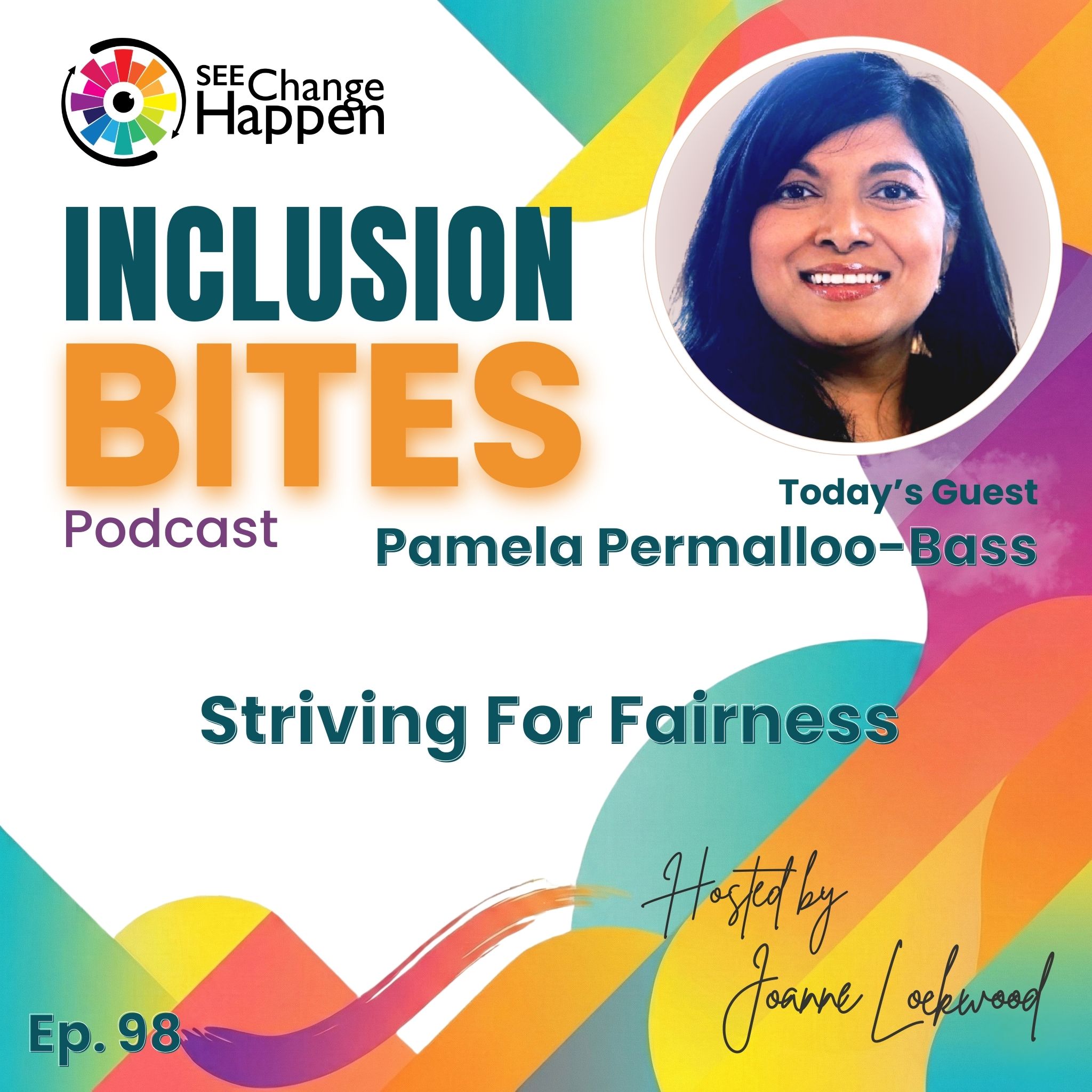
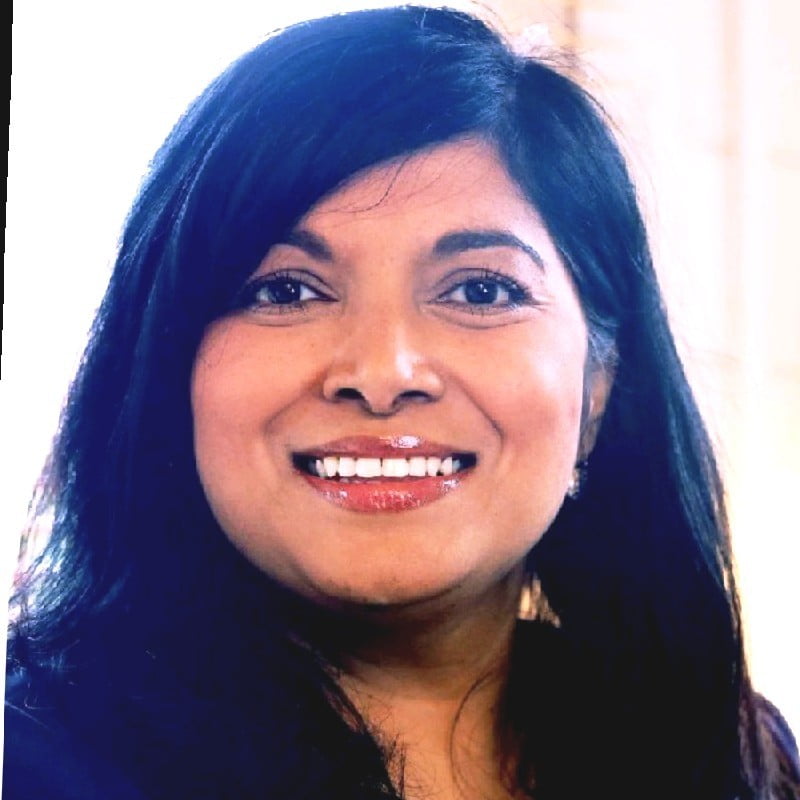
Join Joanne Lockwood and her guest Pamela Permalloo Bass in a thought-provoking conversation about fairness, equity, and the challenges of striving for inclusivity in businesses and organisations, with references to Rutger Bregman's influential works
In this episode of Inclusion Bites, Joanne Lockwood speaks with Pamela Permalloo Bass about workplace culture systems.
“It has to be an organisational, structural decision to actively do things differently.”
Explore
Navigate this episode
Joanne Lockwoodhost
Hello, everyone. My name is Joanne Lockwood and I'm your host for theInclusion Bites podcast. In this series, I haveinterviewed a number of amazing people and simply had a conversation aroundthe subject of inclusion, belonging and generallymaking the world a better place for everyone to thrive.Join me in the future, then. Please do drop me a line tojo.lockwood@seechangehappen.co.uk,that's S-E-E Change Happen dot Co dot UK. You catchup with all of the previous shows on iTunes, Spotify and the usualplaces. So plug in the advance, grab a decaf andlet's get going. Today isepisode 98 with the title strivingfor fairness, and I havethe absolute honour and privilege to welcome Pamela Permalloo Bass. Pamelais the EDI coach and consultant andwhen I asked Pamela to describe her superbass, she said,the skill of intently listening with empathy. Hello,Pamela. Welcome to the show.
Pamela Permalloo Bassguest
Hi, Jo. Hi. Thank you so much for inviting me and it'san absolute privilege to be here this morning,particularly at the start of the year. This is one of my first meetings ofthe year, so it feels very exciting. So thank you very much.
Joanne Lockwoodhost
Yeah, as we were saying in the green room before we've gone live that wehaven't spoken for two or three years, it's been absolutelyfantastic to catch up and have a good natter before we record thepodcast. Yeah, absolutely. I think we needed more than the
Pamela Permalloo Bassguest
designated 30 minutes to have a proper catch up. We've had agood. Too many years have gone by. Yeah,
Joanne Lockwoodhost
they have. Anyway, we've caught up now. So, Pavana,tell me about striving for fairness. Why is that important to.
Pamela Permalloo Bassguest
Mean? You've known me for a good couple of years now andI've spent most of my life and myworking career working in the field of diversity and
Pamela Permalloo Bassguest
inclusion. We're using the word diversity, equity,inclusion more and more now in organisationalspaces. But 2030 years ago, itwasn't language that was used. And I like the wordfairness because I think it really bringsout what I'vealways strived to do on a daily basis, both in my workand in my personal life. AndI think over the years, it's been great that more and morepeople and professionals are on board in the DNIspace. Yeah, fairness is.
Joanne Lockwoodhost
I find sometimes it's a tough word becausepeople want fairness and they also wantmeritocracy, but they don't always balancethe two out fairly oxymoron. Iappreciate. People have their own perception of what fairmeans, don't they? Yeah. And I think
Pamela Permalloo Bassguest
it's quite a generic piece of language, fairness, becausedepending on your own experiences, whetherit's cultural, societal, social, you'll have adifferent perspective of what fairness really means. But I thinkfor me, when we're using fairness in the world we're in rightnow, in the UK, when we're looking at it from a UK perspective,I think we can link it to issues aroundsocioeconomic status. We touched onprivilege as a concept in the green room. Andthere's also aspects of fairnessthat really permeate in organisations, particularlyorganisations that are hierarchical. So I'vespent about 15 years working in theNHS and more recently in substantive roles as aDNI director in the NHS with severalcommunity based organisations. So the hierarchywithin the NHS and how that plays outabsolutely will havedifferent experiences for different peoplein those different roles.
Joanne Lockwoodhost
Yeah. I use the freedom principles.For those of you who aren't aware, the freedom principles. Freedom stands for fairness, respect,equity or equality, dignity and autonomy.So I'm a great believer that fairnessis utmost, because when we're dealingwith people, you have to believe in the process, you have to have anelement of trust. So I need to know that I can trustyou to treat me fairly, because if I haven't got that trust inyou, no matter what you say next, I will never believe you orI won't have that psychological safety. I won't feel I can bringmy whole self to work, whatever you mean by that. So fairness is veryfundamental. I agree with you. Sometimeswe end up battling each other's concept of fairness, don't we?
Pamela Permalloo Bassguest
And I think you touched on trust. That too isso hugely important in relationships andwithin organisations.Most of you will know around issues arounddiscrimination that organisations affect. And the NHS isno different to other organisations.When we're thinking about actually who does speak up,who is listened to, how are thingsresolved and managed,having that trust in, whether it's your line manageror whether it's the executive director or yourCEO, that's really important to know thatyou are going to be listened to and you're going to be treated fairly, you'renot going to be treated differently, you're not going to be treated differently because ofyour role or what you're raising or anything to dowith a particular characteristic or your experience.So I think it's all hand in hand, isn't it? All of thesedifferent. These key values thatwe.
Joanne Lockwoodhost
I mean, working in organisations such as the NHS, they're hugemonoliths sometimes and made up of lots ofdisparate departments and different priorities, differentcare needs, different overheads. It must be really difficult to tryand create change in a way thatis meaningful because so manypeople have so many different views of what inclusion means.I was doing some work with, I think it was Morgan Bay, that areathere, and they were doing a huge project on stickyfloor where they recognised that asection of the demographic, of their employee basewere never promoted, they were never getting past entrylevel positions, and the sticky floor washolding people back. And you could see quite clearly thatpeople who are white escapedthat lower tier, whereas people who are people of colour,low economic, socioeconomic status, even though they're perfectlyqualified, able to devolve, for whatever reason, they didn't progressfrom the organisation in the same way. So it's about how do we createequity in the system to ensure we're amplifying people whoare stuck or not seen ornot viewed as capable for whatever reason.
Pamela Permalloo Bassguest
Yeah. I've been workingin organisations for so long now and I remember when we firststarted looking at issues like that, your example of stickyfloor issues, there was a lot of emphasis onindividuals upskilling themselves,improving their cvs, getting better at interviews,et cetera, et cetera. And over time itbecame more and more clear that it was to do withsystemic structures within organisations.And that is still the place where I still sit, sort ofprofessionally, in my viewsof fairness and where it should sit,absolutely. Individuals play a part,but they are not key in dismantlingunfairness within organisations. It has to be anorganisational, structural decisionto actively do things differently.So the work that I was involved in, in the NHS, when welooked at specific data sets, so, for example,we use a data tool called the Workforce RaceEquality standard, and there's another data set called theWorkforce Disability standard. And those two standards,historically, with regards to data recruitment andretention and promotion, theyhave always been the data set across pretty much allNHS organisations where there is hugedisproportionality when we're comparing it towhite british employees, and even if you break it downto white british male employees or white britishfemale employees, there's a huge disproportionality. So it'sa good piece of data set to reallyevidence how unfairness plays out inorganisations. Yeah. When I was listening
Joanne Lockwoodhost
to the stats that I was a party to the presentation,I left the room with more questions and answers. I wanted tospeak to people who were in thosedemographics where they weren't progressing and say,what do you think the problem is? Because I was asking the people who doresident support? I said, well, what are the people who are getting stuck field?Well, we don't know, we just got the data. I said, well, surely we wantto get into those examples and say, look,so you're in this role. Is there a reason why youperceive you haven't progressed? Is it a limitingbelief impostor syndrome? Is it a lack of drive?Or is it just purely that they come to work, do a job, they're happywith what they've got, they don't have ambition. So we're trying to createsystems and fixing systems where we haven't necessarily engaged with the people whoare affected to ask them why they haven't progressed.As you said in the past, we werepushing the problem back to them and saying, you need to progress yourself, you needto work harder, you seek qualifications. And they obviously weren't.So is it a community thing, is it a limiting beliefthing? Is it just a societal expectation thing? Or is thereother genuine reasons why people are being pushed down and held back?
Pamela Permalloo Bassguest
I think it's a complicated answer and Ithink there are absolutely key themes that willjust think about NHS organisations specifically. There are key themeswithin NHS organisations as a whole, but then there'llbe different reasons and specificcultural differences within different NHSorganisations, whether it's to do withgeography, the services that they have,the size of organisations. There's a lot of complexstructural organisations out there aswell. Even people who work in the NHS don't necessarily understand thearchitecture. But for everyday people, it'snot something that we really consider. You just think of the NHS as a placewe go to be treated, to be healed,cared for. It's a huge beast and it's incrediblycomplicated. So I think all of those different aspectsof it gives differentreasons why unfairness plays out. AndI think you're absolutely right, Jo, that the more youbecome curious and learn about it,the more you think actually, hold on, I don't get this. This is just somuch. There's so much that I want to know here, there's so much tounpick, there's far more questions.And I have spent 15 years asking those questions. And thework that I'm doing now as a consultant, I'm working with NHSorganisations, going into very sort of specificpieces of work with them, which is quite different to thetype of work I was doing in my substantive role.
Joanne Lockwoodhost
People always say that data tells a story, and I think I'm always frustrated,but we never actually hear the story. We hear the headlines, we hearthe opening chapter, but we never actually dive down. I think thatwas the frustration I felt and I think you're echoing thesame thing, is that we've got lots of data, we know lots ofstartings of the story, but we don't actually have the real answers.And that's the challenge, I think, in most EDI workis trying to uncover the story and what are the inequities, what are thechallenges? And yes, a lot of it issystemic and based on historicalprivilege and power structures. But how do webreak out that cycle is the challenge we all face in this sortof EDI sector, if you like.
Pamela Permalloo Bassguest
One of the things, and you'll probably be in agreementthat the more we look at oursociety, again, we're looking at talking aboutUK specific societies, our society,right now, and look at inequity and how that plays out in oursociety, it absolutely will resembleorganisations. So you can't detract from what ishappening out there right now.And I think that's hugely important to constantly rememberthat. Yeah, we just look at what's going on
Joanne Lockwoodhost
in the political sphere at the moment wherethe language being used aroundrefugees entering our shores,fleeing from terror, fleeing for their livesin many cases, how the dehumanising languageused to describe them, and then the government islooking to turn the boat around and ship them toRwanda. And I don't want to be guiltyof having a bias against Rwanda. I don't know the country, I don't know thepeople. I think there's a kind of a politicaldemonization of Rwanda as a country, saying it's third world, it can'tbe any good, we're dumping our rubbish somewhere. Ithink that could be disrespectful of a country. So I don't want to get intothe debate whether Miranda. It's just the language the government'susing to sort of devalue these peopleand seeing them as notworthy of our supportwing mentality, isn't it? Yeah, no, it absolutely is. And
Pamela Permalloo Bassguest
it feels like it's an opportunity tosidetrack the conversation, because when we think about actuallyhow much money has been spent on the Rwanda deal and the costof that so far and actually how many people have gone to Rwanda, Ithink the latest figure is there's been more home secretaries that have gone toMiranda than actual refugees.So if societyand the people that were interested in the politicaldebate around this were interested inthe cost of this particular exercise,and if that money was to go into, I don'tknow, housing, into services like theNHS, or into know keyservices policing. Actually,to me, it feels like, firstly, it's acomplete waste of money, but it also issidetracking from all the other underfundedresourcing that's going into the public sector, whichis so much needed, really, inparticular, some very key areas in our country.
Joanne Lockwoodhost
It must have a psychological impact onpeople where they're hearing you said, quite rightly,what's going on in society is themacro, and that impacts the micro, if you like, of the organisation or what'sgoing on inside organisations and people's psychology and mentalhealth. You're hearing all of this dehumanising language, thisdemonising language, these stereotypes, these biases, thexenophobic type remarks that stem from Brexit. We've gota population who seem to be leaning, and certainly amainstream media, who lean towardsstealing jobs from the british, whoever they maybe, some sort of ethnic sort ofsuperiority around white people being denied opportunity. Wetalk here, we're talking about fairness and equity.Is the everyday white person feelingmarginalised and that's why they're fightingback, is that kind of thing. What's going on?
Pamela Permalloo Bassguest
So, again, there's been a lot of work aroundwhite working class boys, specifically inurban areas, and I think that's been going ondefinitely in all of my time in the NHS. Whetherthat's really sort of played out in policy change,I'm not sure, because my experience is not in education.So I would like to believethat there is work in identifiedareas in my sphere of career. So in theNHS, it's definitely been an area, hasn't been a focus,which I think absolutely should. I think when theEquality act came on board, socioeconomicwas going to be a protected characteristic, but it got thrown out at the last.I think it was literally a couple of months before the act came intoplay. And I think if that was part of the work arounddiversity and inclusion and bakedin, into the sort of process, we would have absolutely lookedat white working class boys. And I sayboys. It's actually a specific group that's been identifiedup to 18 and then post 25. Sothere's quite a lot of research around thatand looking at that and how that plays out intoorganisations, whether it's around peoplefinding it difficult, finding jobs or are in work, and they'rehaving the same issues as you've described inMez's side around sticky know, we look at ethnicitywhen we tend to look at ethnicity and disability, when we look atpromotions and again, absolutely missedopportunity to not look at white working classgroups and their journey around career progressionsin organisations. Ithink it's an area thatit feels like it's on the sideline, really. I think people likeus in this field of work, we're aware of it, but we don'tget necessarily asked to do that work. Yeah,
Joanne Lockwoodhost
it's tough sometimes in the EDI space because byamplifying and giving equity to certaindemographics, it almost feels like sometimes you're pulling other peopleback because that's the perception they have, even though equity isall about amplifying and not pulling other people back. So you're tryingto bring people up to the same level rather than bring people down to yourlevel. You always feel like you're losingsomething by somebody else getting more.
Pamela Permalloo Bassguest
And again, organisations will resource different piecesof work or there would be different pieces of work that are perceivedas more important at that one time. So thebalance has always been when we're looking atDNI is looking at all ofthe groups. So again, just sort of giving my example ofthe NHS, one of the things I always looked atwhen I worked in organisations was the workforcedemographics. So looking at workforce demographics, looking at, and then Ilooked at the census demographics and seeing how that married up.And most good organisations tended to marry upand be similar to their communities because, you know, if it's similar to thecommunity, it will be similar to the patient community. Generallyspeaking, there's huge disparities inthat. Again, itopens that space into understanding where the prioritiesare for those organisations if their workforce isnot reflective of their local community.
Joanne Lockwoodhost
Yeah, I was into some housing associationsprobably last year, the year before, where they were really strugglingto find good people in their hourlypaid roles of care workers. Andthe analysis they did identified the fact that most of their carehomes and service provisionlocations tends to be in affluent typeneighbourhoods and areas. And most of the people they wanted toattract to work in those places weresome many miles away where they lived, andthe transport links between where people were living in their targetdemographic for people to recruit. The transport links werepoor or expensive, so people who they wanted toattract couldn't actually affordtime and money to come to work at thatlocation when they're being paid minimum wage orliving wage. So theyidentified the fact they needed to put on a kind of a staff bus, collectpeople in the mornings, bus people in, because that way,that equity, if you like, would relieve it. Butas you're saying there, it's important to look at your demographicof your territory, your locale, and then lay on top ofthat, the demographic of your staff and the people youserve, and make sure there's an alignment there, otherwise you find thisdisconnect. The people you wantto work in your organisation can't afford to workthere because there's no way getting to work every day.
Pamela Permalloo Bassguest
Well, I think that example is a great one because public transport isexpensive now, so if people are on minimum wage and then they'regoing to have to fork out for the transport cost to get to and fromwork, where if they can get a job much closerto where they live. Yeah. These are the sort ofthings that organisations need to consider when they're thinkingaboutwho they want to work in their organisation. There's so many nuancesand not really understanding those types of thingswith regards to the areas that you're serving.I just don't think organisations necessarilyhave the chance to really think through all of this first. It tends to besomething that they'll think about afterwards when they think, oh, well, actually, hold on aminute, we can't get anybody, or in that particularexample, it could be only middle class, affluent peopleare applying for work here, or they'revolunteering because they don't money. The
Joanne Lockwoodhost
people who you want to apply aren't applyingbecause it's too expensive to work there and the people who would be ableto get there easily wouldn't want a job because it's low paidwork and they don't see that as something fitful for them.Again, getting the data and asking the questions, why aren't these peopleapplying and what's the barriers? Because we can also lookinto the nature of people who are in that demographicwhere they are taking hourly paid, low paid work, unskilled orpartially skilled work. They probably have childcare, they have care responsibilities,they have multiple challenges aroundmaybe the single parent, maybe they're in a dysfunctional family. There's a whole load ofissues that going on that whilst they'd love a great job,they just physically actuallycan't engage with it because it doesn't work for them.I think we need to look at those sort of ways of. We talk aboutequity a lot. How do we bring equity? And not just the recruitmentprocess, but also in the employment process and how do we look at thosechallenges? I think also, I'm sure theNHS have this view as well, is that we have a socialresponsibility to get people into work and to getpeople into good work, reliable work, and to make people,or allow people to be productive in society. So I think allorganisations, no matter whether if you're in commercial or public sector,you have a responsibility to make sure you are providing work for thecommunity as well as drive profit for shareholders.
Pamela Permalloo Bassguest
I think we touched ontravel in the green room and your train journeyand your example of people having tophysically get to work is something that I don'tthink we spend a huge amount of time really considering. And Iknow in the pandemic when everyone was working at home, therewere lots of groups of people thatI remember talking to that for some of them it washuge benefit working at home. And again, peoplewho identified with particular characteristics, sowomen with young children at home, so that flexibilityof either looking after children or dropping children off at nurseryor school, particularly when the schools were opened.So things like this, where it becomes reallyimportant for working women actuallycommuting and physically getting to work and back,it's an extra layer on someone's day. So ifthey're able to work from home and they've got that capacity to. Do.
Pamela Permalloo Bassguest
Know, if they have to commute into London, which is like, I don't know, we'reall based in know, it's like an hour and a half, 2hours. So why would they do that if they could work from home andpretty much do exactly the same as what they're doingif they're in? So I think that whole thing aroundcommuting and what your workforce lookslike and how you retain your workforce,it's one step back. How you enablediversity within your workforce, but also how you retain your workforce, Ithink they're all significant questions toask around how we work.I know there's a real push for people to get back in theoffice, which I've written a couple of different LinkedInposts about that and my view isthat absolutely understand why anorganisation would say that and depending on what your role is,there will absolutely be reasons. So if you're frontline,clinical facing role, most of those are betterplaced physically seeing patients as opposed tovirtual sessions with patients, although some canbe virtual. But the majority of time it's better to see peoplein person, face to face. But if you're a PA or ifyou're an administrator or trying to think otherroles, computer based jobs,you can do that at home, you don't need to physically be in anoffice. Bit controversial, Iknow, but yeah, I think it reallyimpacts certain groups.
Joanne Lockwoodhost
Yeah. My theory is that it's largelypolitical. The government orthe people in power need to putmoney back into the system. So if you've got nobody travelling into the office,nobody's commuting, the trains becomeunviable. London underground becomes. Lacks viability, whichis what we're seeing here. The government's having to prop up tfl bybillions to keep it afloat because people aren't travelling into London. Sothere's a huge societal pressure to get people back to whatthey were doing, because the entire country's infrastructure was based onpeople travelling around and going to work. If everyone sits at home everyday, all of the infrastructure, all of the cafes, the coffee shops, the littleplaces in the city, they're just not needed anymore. Therefore wehave unemployment rising becauseeveryone's working from home. So the society wasn't readyto reengineer its whole viability ofeconomic, sort of cash movement, if you like, as aresult of the pandemic. And I think that's why they tried to put this helpout, to eat out, whatever the scheme it was, to try and get people eatingout again, because people backed off of pubs, they backed off thecafes, they backed off of restaurants and living at home.So I think that's part of it. The government went, oh,we've been too keen to push people away,and now we've got a huge problem. Now we've got economicvacuums in places where people aren't going back. So I think a lot of thatdrives it. We've got business owners who have huge great buildingsthat are empty. If the buildings are empty, you don't need cleaningstaff, you don't need door stuff, you don't need security. So again, you got awhole sector of people not being employed.I think that's the driver in some respects. Yeah, no, I do agree with you,
Pamela Permalloo Bassguest
but I do think a lot of these sort ofeconomic arguments are so short sighted. There are so manyother ways of creating.We're talking about a capitalist society, and there's so many other waysthat we all can contribute into society financially.So it's not just getting on a train. We could go to anindependent cafe to where we live, or mostpeople who work at home, they'vegot into habits to manage their well beings. Theyare out and about and they are doing different. You know, theargument, if we really looked into it, which I'm sure no one hasdone, that, I'm sure there are otherareas where the economy is thriving and might not bethriving in the small cafe in London, but there might be thriving in asmall cafe, independent cafe in.It's I think all of this is, and whatwe do find with, and we're talkingcurrent government, it's veryshort sighted, it's very immediate. There's not muchconsideration into different aspects of decisionmaking and obviously we're seeing some of that in the COVID inquiry. Andfor those of us who worked in the publicsector during COVID and Ihad the privilege of working in the pandemic,were able to see that firsthand some of those poordecision making processes. So I thinkthis is part of it, really. I think the whole push to getpeople back into work. Yes, I think you're right, it is drivenpolitically, but I think the economic argument is a poor argument. I thinkfor them it's a very poor.There's a lot of lack of thought in that argument.
Joanne Lockwoodhost
I completely agree. And whilst I understand the reasons,or what I perceive are the reasons, onething I was saying when there was this push back to go tothe office and the early arguments were, well, what about the watercolourconversations, the mentoring? If you're in early career,you lack that sort of experience by mixing with people and theosmosis that occurs. I said, I completely get it, but whatyou can't say is the equation, and theanswer to every equation is you must go back to the office. The equationmust be what is the most efficient, where's the best way of doing it? Goingback to the office is one outcome that can deliver that requirement.If you start with that being the only outcome, that's what you focus on.We step back, we've got the metaverse, we've got AI, we'vegot Zoom, we've got teams, there are far better way of collaborating.I'm a great believer in that. And the example you had about surgeons,we've got surgeons doing laparoscopicprocedures with robots from the other side of the world controllingthe operation. Because when they're actually in theoperator's theatre, and this is my lay appreciation of what I see ontelly, they are looking at computer screen and they'recontrolling things with robot arms and doing the work. That waythey don't actually need to be in the same room in the same country, inthe same time zone. Yeah. Soif a doctor can do that, dentists can do that, everybody can do that. It'sjust about evolving our communication skills.And the other thing I used to say is people say, well, it's about ourculture. We need our culture, people to come in and feelexperiences. And I say, well, actually I want myculture. Like my pension I can take it with mewhen I go to another organisation. So what I can have is I can buildmy own home life culture around my family, around my community,around my own gym and my own coffee shop, andI can consume my culture and the way I want it. AndI can just pick and choose whichever company I want to work for, wherever theymay be, and I don't have to leave my culture behind. But what you wantme to do is rip my life out of my family, travel fortwo and a half hours each way, 5 hours a day to experience yourculture. When I've got a perfectly good one, I could be investing in the home.So that's my argument around this culture thing. Let me have it.Like my pension, I could take it with me. No, I like that.
Pamela Permalloo Bassguest
I like that analogy.
Joanne Lockwoodhost
Yeah, but that seems to be the argument. It's like, no, butyou're a solopreneur. You work from home largely.I'm a solopreneur. I largely work from home. It's probably 80,2090. Ten, sometimes 10% in the office, 10%in clients. I know I could work perfect productively. And I think it's almostinsulting to people to say you're not as productiveremotely. It's an insult, people. I find
Pamela Permalloo Bassguest
that very insulting. Although I wouldsay for you and I, we're at different stages of our careers. So I thinkfor those at the early stages of their careers, I think it's reallya mid career as well. I say early stages of the mid career. I thinkit's really important to not necessarily be in an office. Ithink to be engaging on as manydifferent ways as possible to learn from others.Thinking about that whole mentoring experience andhow you can see leadership, particularly if you're career driven,I think that's really important to explore as many differentways. So if you're just working at homemainly, I don't thinkthat's good. I think do a combo of lots of different things, whether it's anin person conference a couple of times a year, going to some workshopsor catch ups with coffees, doesn'tnecessarily mean you have to be in the office every day. But I think havinga mixture. But yeah, people like us, Joe,we're sort of well versed at what we should be doing with our work.So all of these tools we've acquired, haven't we? So we knowto go and meet somebody in person, or when to attend anevent or go to something. So again,acquiring that skill with our experience, Ithink we're at a different stage and we can makedifferent choices. I completely agree.
Joanne Lockwoodhost
And there are times in my career when Ineeded people around me, I needed to learn, I need to be mentored, I neededto pick up stuff and the osmosis was necessary. You're completely right,and I'm not negating that need. We also have to remember that I think60% of the workforce, if not more, doroles where you have to physically touch something. Soassembly work, manufacturing, hospitality,production lines, all these kind of people, you can't at themoment do those remotely, even with computer. There's no.Largely not computer controlled remotely. So we have to recognise there isan inequity here of the ones who can and the ones who cannot.So I think there's also the in it together type mentality,whereas if you've got half the office who have to be there for variousreasons, then it's only fair that everybody should kind of bethere as well. So altogether. So I didn't get the kind ofsocioeconomic and the need for us as humansto get together and collaborate and be together. So I doget it. I don't know about you,but I hate stereotypes, I hatebig blanket assumptions and decisions. They'll allshout because they'll shout sort of thing, without thegranularity. And being person centric. And you work at theNHS and being person centric is so important because if you start togeneralise, you make poor decisions, because every personis different. And looking at the needs of individualsshould be a corporate responsibility. Yeah.
Pamela Permalloo Bassguest
I think there are so many different sort of work culturesthat don't take into account all the nuances ofindividuals. So as you were talking, I wasrecalling an example, and it wasn't even that long ago, it wasprobably, I know, six years ago, seven years ago, I wasworking for a company in central London, so, commuting in and out ofLondon, and on a Friday night, there was a cocktail bar oppositethe offices, and that's what they did Friday nightcocktails, and most people stayed until earlyhours and it was obviously socialtime and it was a given that you go to these cocktailsand if you didn't, it's, oh, you're not going to cocktails. So again, just.That sounds great if you like cocktails, but say you don't drinkalcohol, are there mocktails there? What about. You don't want to be in thosetypes of environments, sort of for religious reasons or culturalreasons, nothing there for anydifference. What about if you've got a family, you need to get back for themagain. Nothing about the family. What about. I know,disability, the public transport that you need to get on,but at 02:00 in the morning is not running again. Nothing.Cocktails on a Friday sounds lovely, but actually, when you're thinkingabout, is it right for everybody?Probably not. And there are lots of different reasons why it's not rightfor everybody. I gave up drinking, I think,
Joanne Lockwoodhost
723 days ago, thereabouts. It wasJanuary a couple of years ago, I gave up. And you suddenly realisehow much the world is orientated arounda social that involves alcohol.And I found it incredible. We talk aboutprivilege, but you don't realise the water youswim in until you're not in that water anymore, then you suddenly step out andgo, wow, hang on a minute. I now see this. And as a nondrinker, I've now woken up to how much of our societyrevolves around a drink somewhere, even in culturalconversations. Let's go for a beer one night. Let's go for a glass of wine.
Joanne Lockwoodhost
Or I don't drink. And they say, well, we can come along and have alemonade. Well, why do I want to go to a pub where everyone'sdrinking and have a lemonade? Why can't we go to Costa or have anice coffee somewhere? Yeah, but we want to go for a drink.We don't have to. So it's trying to reorientate.And I've walked away from events purely becausethey have a boozy undercurrent to them. I think, well, do Iwant to turn up to this evening where after about half an hour, everyone isstarting to slur? Everyone started. It gets kind of ickyin that kind of drunken environment. I think, no, you'renot funny. It's no fun to be sober.So I walk away from things, and that's for personal reasons, notreligious reasons or any other reasonable health reasons, necessarily. Sowe are excluding people or defining the norm,and that's our cultural fit, isn't it? We keep trying to say, you must fitinto this or you're seen as no fun. Yeah,
Pamela Permalloo Bassguest
I remember this. Cocktails evening. So, Friday, cocktailnight, gently,very gently, sort of questioning.Is this sort of being inclusive? And are we thinking about everybodyhere? Oh, yeah, we've got know it'sdisability access. And so everything I said there was like aso still in a cocktail bar in central LondonFriday night, and all the things that you said around that sort of culturalexperience, people getting drunk, being in that,but there might be some flirtations going on with people,you just think, actually, do people really want to be in thoseenvironments? Really? I don't know.
Joanne Lockwoodhost
Apparently some extrovert. Yeah, if you're an extrovert, I'm quite happybeing an introvert who's happy to go out. But some people dothrive on those environments. They want to bounce off like apinball in a pinball machine and have all that social interaction because that'swhere they get their energy. But there's a good 50% of the populationdon't. No, that's it. Because I
Pamela Permalloo Bassguest
would describe myself as an extrovert, but I thought,like, I just don't want to do that type of stuff anymore.I've got other things that I enjoy doing.So again, it's allowing for all of that,really. But, yeah, I agree, there isstill very much, whenyou consciously think of alcohol, become more aware that weare still very much in an alcoholrich society and a lot of it is based arounddrinking. So even gifting. So again, one of the thingsthat I gently. I sound like I'm a bit of a misery, really. ButChristmas time, when people give out gifts to their colleaguesand they give out bottles of wine or bottles of gin. Isaid, have you thought about doing non alcoholic or somethingdifferent? No. It's nice getting a bottle of wine, isn'tit? Or a bottle of gin. I said, well, not for everybody,but, yeah, I think they probably thought I was a bit of a misery, really.A party poop. Yeah.
Joanne Lockwoodhost
I know you can get alcohol free gin, alcohol free beer, alcohol freewine. And I don'tneed an alcohol substitute. It's like amocktail. I wouldn't drink that normally.You're calling it a mocktail to make it sound like it'san alcohol substitute. Why don't you give me a coffee?I've also sort of had the same sort of thought aroundveganism or vegetarianism and thinking, do I want toconsume my plant based food asin the soap of a sausage? Why do I have to have a plant basedfood in the soap of a sausage? Why can't I have something that's plantbased, that's plant based from the ground up? Because you see somany times where you go to these functions where the vegan orvegetarian option is a poor facsimile of everybodyelse's experience is just mediocre.I'm not vegan or vegetarian, but I will often go for the vegan orvegetarian choice because when it's done right, it's far morecreative and inspiring than a meat dish sometimes, because peoplehave to. Have to work harder on it. And I feel so sorrythat we're not catering properly forceliacs. Other dietaryrequirements. It's always a poor relation andit's just so unattractive. I just feel so kind ofprivileged as an eater, if that's anomnivore who eats most things. And I just feel sodisappointed for people who have to have that lib sandwich with a bit ofcellophane over. That's their gluten freeoption. Yeah,
Pamela Permalloo Bassguest
no, you're absolutely right. I think they tendto be sort of like conference function type things, go to anice restaurant. There are normally good options for nonmeat eaters. Yeah, options. Butthere are options. Good options. I've made a conscious
Joanne Lockwoodhost
decision to minimise my dairy, like cowdairy intake. So I tend to use plant basedoat milk or almond milk or other milk. Andyou ask sometimes and it's becoming better in coffee shops. It's becoming better than itever has. They have the options there. You still got to pay extra forit, it's still penalised for itand they assume you've got an allergy. No, it's just a preference.It's okay, it's a preference. You go to natural trust. They put this littlesticker on the cup so it doesn't get contaminated of anything. No, it's just apreference. Some people are gearing themselves up for it.I think it's important that we start to. When we think about EDI,we talk about fairness, respect, we talk about inclusion, all thesethings. Actually. It's small details that psychologicalsafety, that inclusion. How do I feel? And thebelongingness. I'm a great believer in belongingness. Walking into a place and you feel it'sfor you. Have they thought about your needs as an individual?Not just a broad brush, you'll be okay sortof thing, or you'll adapt round us. Actually, we're bending for youa little bit here as well. That's what I think a lot of organisationsmiss that nuance between inclusion and belonging.
Pamela Permalloo Bassguest
I think there's an attempt, isn't there? There's an absolutely attempt toget that. But it's so variable inorganisations and I think it's variableon lots of different levels. So there will beorganisations in some areas they're excelling and they're doingreally well and everyone feels great. There might be other functions ordepartments or even customer facing serviceswhere it isn't. So it's so variable. Therestill is that lack of consistency. Ithink that's probably an area whereprobably needs the most impotence.Impetus is the consistency in howpeople feel in environments and organisations.
Joanne Lockwoodhost
There's a book or there's a well knownstory based on airlines and it'sthe coffee stain on the tray table. So if you get ontoan aeroplane, you pull the tray table down, there's a coffee stain, a coffee ringon the tray table, what does that say to you? Ifthey can't clean the tray, do they service theengines, do they do the flight cheque, do they do this? Sosometimes when you're looking at these small little details think well it's only a coffeestain actually it shows the systemic process and thinking of theorganisation, they don't care about the hygiene level rightat that beginning. So what does it say about the rest of the process? AndI think EDI is like that for me. If you're not showingequity, creating, focusing on belongingness aroundin a person centric way for everybody, thenthat shows it's tokenistic or you're notfollowing through to every detail in your systems. Soit's that coffee stain on the trade table is theindicator of how much you care about people. I thinkthat's what I want to see in organisations is that deep,really real care about how your experienceof working here or being a customer or being a service user or beingwhatever it may be. And that's the fairness and inclusion andbelonging element for me. Yeah.
Pamela Permalloo Bassguest
And I was just thinking about my experience in theNHS and the clients that I work with.I think to have that level of detail andnuance is absolutely aspirationalfor most organisations because there's so muchother work to do. Need to makesure that. Just think about that airline analogy to make surethat the customers, the passengers on the previous flight areoff the flight. It's that type of stuff that needs tohappen before we get to the cleaning up bit. There's somuch other work to do. Oh yeah, no, completely.
Joanne Lockwoodhost
It's interesting when you start thinking about that coffee stain andwhen you look around the world and see it, you walk into a restaurantand every free table has got dirtytrays on it, so they're too busy servicing new people andthen there's no capacity for them to sit and you've got to try and balanceyour front, your back, your middle. So just observing how operationswork around, trying to create this balance and I thinkthat you get so locked in you become blinkeredinto your focus. You often don'tstep back and sort of look at the other systems as well.
Pamela Permalloo Bassguest
That part of it is really hard for people when they're inorganisations to take that step back and see what else is goingon because you're immersed in what you're doingand by noreason at all regarding yourself. Wecould use the word unconscious bias or all the other aspectsof the EDi language. If you're so immersedin what you're doing and it's impossible to step away, it'svery hard for people to really sort of think about whereelse is going on.
Joanne Lockwoodhost
We were chatting just before we went on. I noticed in the show notes thatyou put in, you're a rucker Bregman fan and you mentioned humankind.And I'm also a fan of his other book, Utopia for realists.There's some really great stuff that comes out that the thing that I would rememberfrom Utopia for realists is thought about universal basicincome, Ubi, and how thisperception that poor people can't be trusted with money,that's why they're poor. Actually, when you look at people whohave less money, they're more diligent and focused onbudgeting and careful. A person who'swealthy will squander more money than someonewho is not wealthy ever does in their entire life in an hoursort of thing. And it was all about this example where if yougave people an online basic income, they wouldthen allow them to escape the sticky floor which we talked aboutearlier. And then once you elevate yourself up Maslow's triangle,you stop having to worry about your house and your food and what's happenedtoday. You can think about next week. When you can think about next week, youstart to think about next month. Once you start planning,you then have agency and power over self. Otherwiseyou're just reactive. The whole concept behind his firstbook was really inspiring to me. Yeah. And I
Pamela Permalloo Bassguest
think I'd recommend anyone wholistens to us on this podcast to read any of his books or even connectto them on LinkedIn, because he writes some really interestingposts and links historyto current perspectives of societies. Andhe looks at different types of societies across the world, which Ithink is hugely fascinating. But yeah, Ithink that your example about that, the sharing of wealthand one of the things he does is I can't remember what the charity iscalled, but it's called like poverty,global poverty, something rather I have to find the name of thecharity, but the expectation is thatregardless of what you earn, you give x amount of money. And I know thereare religions, different religions that operate like that as well.So there is something about being altruistic, beingconsiderate, and actually just giving what you can.And so he's 10%or 20% of his income is given away andthat's it. And he'll just live off whatever hehas.I think ultimately, one of the things that resonatedwith his writing and my interests was aroundstriving for a fair, equal societywhere hierarchy, Ithink the other. But he talks about utopia, so it absolutely is autopic you where there is no hierarchy, there isno socioeconomic groups, there is noclass, we all have the same, we all have the same money,we all live in similar types of accommodation, we're all payingsimilar utility charges.Ultimately, his quest for the futureis that's their society.
Joanne Lockwoodhost
But even if we look at utopian Star Trek, there's stillhierarchy in Star Trek, even though the concept of moneyand poverty has been eradicated, if youlike, in their utopian 25th century, whatever it maybe, it's hard to escapehierarchy, but creating a commonbase, and it's not thecommunism view of the world, it's kind of a moreutopian, statusless view of the world. That'strue. Rather than we all seethe failures of communism still being a two tier systemor multi tier system. I think
Pamela Permalloo Bassguest
with regards to his book and his perception, Ithink when we look at poverty and how we canshare out resources, I think that's probably a better way ofdescribing it as opposed to eradicating hierarchy, because we'renot going to eradicate that. This iswhat we're in, and it's absolutely not going to change, but that is thatdistribution of wealth. So I can't remember what the number is,but I forgot what the number is. But it's somethingridiculous, like, I don't know, 50 peopleown the amount of wealth in the whole world. I can't remember. It's probablynot 50, but it's something. Very minutial, small number.
Joanne Lockwoodhost
Yeah. And so when we think about actually the
Pamela Permalloo Bassguest
billionaires and where the wealth is distributed,it's that distribution of wealth and how that impactspeople who are on the breadline who are struggling. Andthere are far more people like that than the people who are thebillionaires and the highly wealthy. Soit's something around distributing wealth,not completely so that everyone has exactly the same, because like I said, that'snot going to happen. We know that. But right now we can absolutely giveas much as we can, really, for those who havegot some level of. Additional
Joanne Lockwoodhost
income and that heads back to theopening which was striving for fairness. And that's reallythe crux of what you're saying there is trying to create a fair andequitable society, and that's something we should all bemindful and strifeful. I believe so. And
Pamela Permalloo Bassguest
I have been living like this for a long timeand I'll still continue to be like this.
Joanne Lockwoodhost
Fabulous. Thanks, Pamela. It's been amazing catching upwith you again. We've had a great chat now and I hope you, thelistener that got to the end with us and have enjoyed this,have got some inspiration. Take something away from this. So how can people get intouch. With so yes, I'm on
Pamela Permalloo Bassguest
LinkedIn and there is only one of me, so I'm quite easy to find. SoPamela Permalyrath. So just find me and you can connect with me.I do like using LinkedIn. I'm no good at other social media,I must admit, so you won't find me anywhere else. So,LinkedIn. I've also got a website, and again, I've kept it straightforward.It's my name, so Google that you find me straight away. And there isalso a section on the website where you can email medirect. So they're the sort of two routes to get in touch withme. Fabulous. And your name will be in the show notes.
Joanne Lockwoodhost
So if you could look it up and spell it. But your surname isP-E-R-M-A-L-L-O-O spaceB-A-S-S. Permalloo Bass. Yousay there could be only one bit like the Highlander in the old days, isn'tit?
Pamela Permalloo Bassguest
Always? Really love meeting youpeople. So if you connect with me, very happy to have a conversation.
Joanne Lockwoodhost
Thank you. For those of you listening, please dosubscribe to future episodes of the Inclusion Bites Podcast.That's B-I-T-E-S. Please share the love, tell your friends, tell yourfamily, tell your colleagues. If you're not subscribed, then do click that buttonnow and follow us for more updates. Of course, I've got a numberof other exciting guests lined up and we'll be hitting episode number100 in a couple of weeks time, so I'm sure you'd be equallyinspired by those people as well. And if you'd like to be a guest yourself,I'd love to hear from you, so drop me a line tojo.lockwood@seechangehappen.co.ukFinally, my name is Joanne Lockwood. It hasbeen an absolute pleasure to host this podcast for you today. Catch younext time. Bye.
Fairness in Business and OrganisationsSocietal Impact and InequityInclusive Work Cultures and Social Environments
Joanne Lockwood speaks with EDI coach and consultant Pamela Permalloo Bass about what it really means to strive for fairness in workplaces and wider society.
Drawing on Pamela’s experience in NHS roles and consulting, they explore how inequity shows up through organisational structures, hierarchy, and decision-making, and why data alone (including workforce equality standards) is only a starting point unless organisations also listen to the lived realities behind the numbers. The conversation looks at barriers to progression, the “sticky floor,” and how fairness, trust, and psychological safety shape whether people feel able to speak up and thrive.
They also discuss how broader social narratives and policy debates influence workplace culture, and move into practical examples of inclusion in everyday working life: commuting and remote work, retention, and how social norms like alcohol-centred events or one-size-fits-all workplace expectations can unintentionally exclude people. The episode closes with reflections on fairness at a societal level, including wealth distribution and ideas such as universal basic income.
“I think it's quite a generic piece of language, fairness, because depending on your own experiences, whether it's cultural, societal, social, you'll have a different perspective of what fairness really means.”
“Individuals play a part, but they are not key in dismantling unfairness within organisations. It has to be an organisational, structural decision to actively do things differently.”
“Actually, to me, it feels like, firstly, it's a complete waste of money, but it also is sidetracking from all the other underfunded resourcing that's going into the public sector, which is so much needed, really, in particular, some very key areas in our country.”
“Most good organisations tended to marry up and be similar to their communities because, you know, if it's similar to the community, it will be similar to the patient community.”
“Well, I think that example is a great one because public transport is expensive now, so if people are on minimum wage and then they're going to have to fork out for the transport cost to get to and from work, where if they can get a job much closer to where they live.”
“There are so many other ways of creating. We're talking about a capitalist society, and there's so many other ways that we all can contribute into society financially.”
“So there is something about being altruistic, being considerate, and actually just giving what you can. And so he's 10% or 20% of his income is given away and that's it. And he'll just live off whatever he has.”
The evolving dynamic of business premises and its consequent impact on various job roles, highlighting the changing nature of workspaces.
Innovative ways to enhance efficiency and collaboration through technology while dismantling conventional office culture assumptions.
The importance of addressing the inequity between roles that can and cannot be done remotely, respecting the physical presence some jobs necessitate.
How early and mid-career individuals can benefit from a hybrid model of remote and in-person engagements for learning and mentorship.
Understanding the diverse dimensions of fairness, trust, and meritocracy in the context of cultural, societal, and social experiences.
Strategies to combat systemic discrimination and ensure equitable treatment and opportunities within organisations.
The role of leadership in aligning workforce demographics with local communities and addressing infrastructure challenges related to remote work.
One thing to remember
In the quest for inclusion and equity within organisations, it's paramount to challenge existing systems and biases that perpetuate unfairness. Understanding and accommodating individual needs, embracing both remote and in-person engagement for professional development, and countering stereotypes are all crucial steps towards fostering a fair and equitable workplace. Ensuring alignment between organisations' workforce demographics and their local community while considering barriers such as transportation costs demonstrates a commitment to true equity.
Questions this episode helps answer
In what ways can businesses and organizations contribute to fairness and equity, especially in the context of workforce diversity and societal impact?
How can the concept of striving for fairness and equality in society, as discussed through Rutger Bregman's books, be translated into practical actions within organizations and communities?
What strategies can help address the systemic inequities and challenges faced by individuals in the healthcare sector, as highlighted by Pamela Permalloo Bass's experience in the NHS?
How can organizations balance the promotion of certain demographics for equity and inclusion without disadvantaging others, as discussed in the context of EDI efforts?
What measures can businesses take to accommodate and support individuals with diverse needs and preferences in work cultures and social events, as exemplified by the discussion on alcohol-free and inclusive gatherings?
How does the impact of remote work and commuting challenges align with the societal and economic considerations raised in the episode, especially regarding workforce diversity and retention?
Explore topics
Ideas from this episode
Fairness in Business and Organisations
The pressing issues of fairness and equity in various business sectors, with a particular focus on the NHS. We discussed the impact of empty buildings on unemployment for cleaning staff, door staff, and security, shedding light on the ripple effects of closures in the wake of the pandemic.
Societal Impact and Inequity
Our dialogue expanded to encompass societal inequity and the ramifications of political language around refugees, reflecting on the broader impact on public services and funding. We delved into the psychological impact of dehumanizing language and biases, particularly in the context of Brexit and its effect on different demographic groups.
Inclusive Work Cultures and Social Environments
The importance of creating inclusive work cultures and social environments that cater to diverse needs and preferences. Our discussion revolved around the challenges of integrating inclusivity in work-related and social events, considering factors such as dietary preferences and non-alcoholic social activities.
Learn
Frequently asked questions
What are the main challenges faced by businesses in achieving fairness and equity?
Businesses are challenged with balancing remote and on-site work, addressing systemic biases, and ensuring inclusive work cultures that consider diverse individual needs.
How do systemic biases impact fairness in the workplace?
Systemic biases can lead to inequity in recruitment, retention, promotion, and workforce diversity, which can perpetuate unfair treatment and limit opportunities for certain demographics.
What are some practical solutions for promoting fairness and inclusivity in work environments?
Practical solutions include addressing transport barriers, promoting diverse work cultures, accommodating dietary needs, and providing flexibility in work arrangements.
How can businesses support fairness and equality in society at large?
Businesses can contribute to equality by considering societal impact, aligning workforce demographics with local communities, and creating inclusive social events that consider diverse needs and preferences.
What are some key considerations for promoting fairness and inclusivity in social events and work cultures?
Key considerations include accommodating non-drinkers, individuals with family commitments, and those with disabilities. Additionally, providing diverse dietary options can enhance inclusivity in social and work environments.
How can individuals support fairness and inclusivity in their communities?
Individuals can support inclusivity by advocating for diverse needs, embracing cultural conversations not centred around alcohol, and promoting creativity in addressing various dietary requirements.
Share this episode
Heard something worth passing on? Send this conversation to someone who needs to hear it.