Gemma Davies explores the lived reality of functional neurological disorder, dismantling misconceptions around invisible disability and championing holistic, inclusive wellbeing with wisdom shaped through experience and resilient advocacy.
In this inspiring episode of The Inclusion Bites Podcast, Joanne Lockwood invites Gemma Davies to share her own lived experience with chronic illness and disability, challenging the boundaries of traditional wellness and accessibility. Their discussion reveals the reality of navigating a world where wellness support often overlooks those with fluctuating or invisible conditions. Joanne probes the gap between physical treatment and holistic support, exposing the ways society and health systems sometimes fall short for those living with disabilities. The conversation interrogates not only gaps in the NHS, but also social attitudes, the stigma of “not looking sick,” and the pressing need for more joined-up, person-centred care.
“Yep, just a leaflet, provided my partner with a wheelchair and that was it, I went home.”
Explore
Navigate this episode
Joanne Lockwoodhost
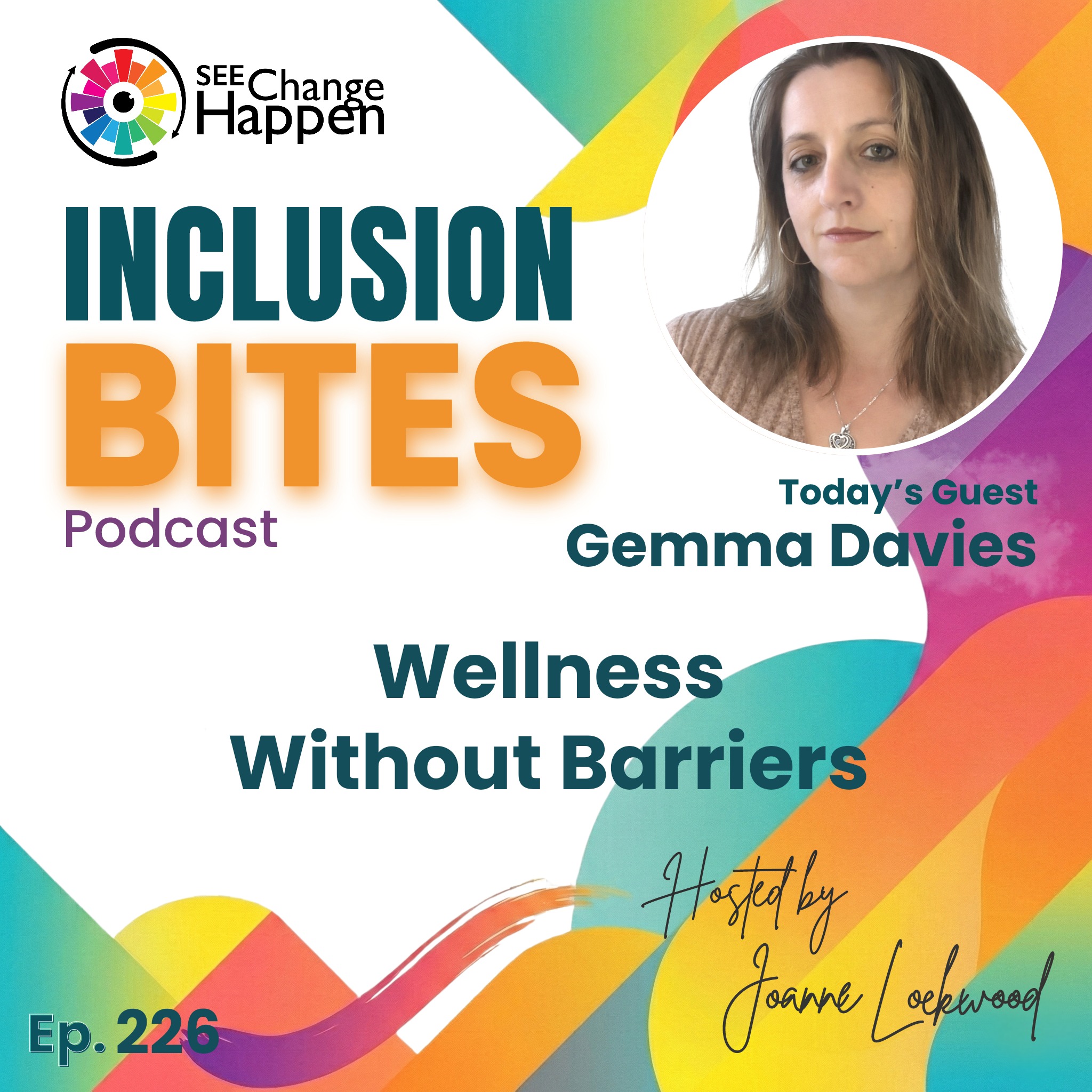
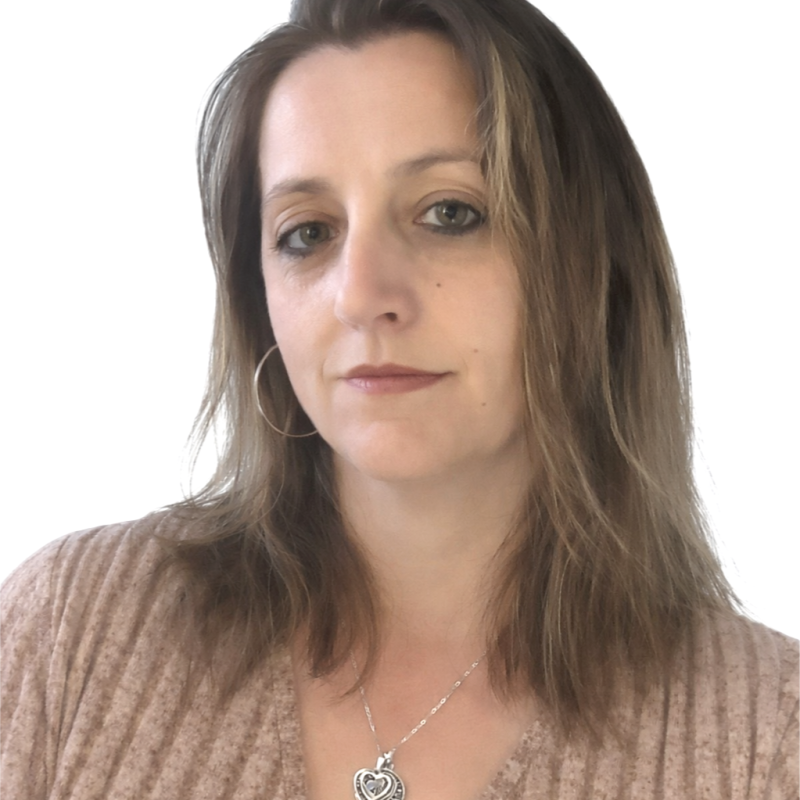
Welcome to Inclusion Bites, your sanctuary for bold conversationsthat spark change. I'm Joanne Lockwood, your guide on this journeyof exploration into the heart of inclusion, belonging and societaltransformation. Ever wondered what it truly takes to create aworld? Remember, everyone not only belongs, butthrives. You're not alone. Join me as we uncover the unseen,challenge the status quo and share stories that resonate deepwithin. Ready to dive in. Whether you're sipping your morning coffee orwinding down after a long day, let's connect, reflect andinspire action together. Don't forget, you can be part of theconversation too. Reach out tojo.lockwood@seechangehappen.co.uk to share yourinsights or to join me on the show. So adjust your earbudsand settle in. It's time to ignite the spark of inclusion withInclusion Bites.And today is episode 226 with thetitle Wellness Without Barriers. And I have the absolute honour andprivilege to welcome Gemma Davies. Gemma is the founder of WellnessWithout Barriers and she helps people living with chronic illnessdisability have fluctuating conditions to access gentler,more realistic and inclusive wellbeing support. When I asked Gemma to describe hersympath, she said that this is turning lived experience into connectionand support for others. Hello, Gemma, welcome to theshow.
Gemma Daviesguest
Hi, Jo, it's great to be here. Thank you for having me.
Joanne Lockwoodhost
Excellent. We were chatting away just now and I believe you're probably one of the closestgeographically guests I've had on the podcast for sometime. You're not far from me. Where are you based?
Gemma Daviesguest
I'm based in Wiltshire in the uk.
Joanne Lockwoodhost
Not far from Longley, apparently.
Gemma Daviesguest
No, it's literally just up the road from me.
Joanne Lockwoodhost
Yeah. If anyone listening to this somewhere else in the world, Longley is a big statelyhome and it's infamous for the lions of Longley. It's a big lion sanctuary,lion safari park. Is that stillgoing?
Gemma Daviesguest
That is still going. It's absolutely beautiful here as well.
Joanne Lockwoodhost
It is, yeah. I remember it was a childhoodholiday. Used to go there, I think several times in my. My younger days for day trips and things,I guess. It's a big draw. It's no theme wise, I just don't wantto. Adventure is. It's. It's more.
Gemma Daviesguest
It's an amazing place to go to.
Joanne Lockwoodhost
Yeah. You, you founded this, your organisation, Wellness WithoutBarriers, recently or not so long ago. Tell us the story abouthow. How it came to pass.
Gemma Daviesguest
Well, actually, Jo, it's come from lived experience. So five years agoI had a stroke, like episode and I was rushed into hospital with afast ambulance and I lost eight hours that day. So I was takenin. I had loads of tests done, MRIs, CT scans, bloods, ECGs,and everything came back normal. All I remember of that day is waking up inhospital and there was a physiotherapist in front of me, along with my partner,who I didn't know was my partner at the time. I'd lost all my memory and I was given aleaflet on something that was called fnd, which is functionalneurological disorder. And I was sent home. I was not able to walk, I was not able totalk. Me and my partner were just sent on our way to be told that we might havefnd, which is sad state of affairs for the healthcaresystem. But I've learned since then that FND is not widelyknown. So my own experience within the healthcare system allowed me torealise that wellness is not exactly accessible for all disabledpeople or chronically ill people. And that's where wellness without barriers has comefrom.
Joanne Lockwoodhost
So let me just ask you some questions about that because what's going through my headis. So you're in hospital, you're struggling to remember whoyou are or any, any, any significant facts around your near relationships, anything likethat. You're barely able to walk, talk andfunction as a, as you were before, and they're, they're sending youhome. Did they send you home a care package or any support or is thisliterally. Nope, just a bed. Just aleaflet.
Gemma Daviesguest
Yep, just a leaflet, provided my partner with a wheelchair and that wasit, I went home.
Joanne Lockwoodhost
Wow. No. A GP referral, a follow up appointment,anything?
Gemma Daviesguest
No, no. I had to chase that myself. Well, my partner did, he did the majorityof it. For the first two years we chased at the GP and got an appointment with aneurologist.
Joanne Lockwoodhost
That must have been quite scary.
Gemma Daviesguest
It was, it was very scary.
Joanne Lockwoodhost
My experience of the hospital environment and that, I think what you're talking about here is thisgap between fixing you physically andfixing you holistically was by my mother in law before she passedaway. She was clearly not well. She had a lack of wellbeing, but physically she wasokay. So they're almost saying, well, the hospital, the bed is there to treat youphysically, not holistically. And it's a real frustration that you could be in asituation where clearly you need support, but there's nothing to hand you overto.
Gemma Daviesguest
There is a big gap there. And that became very apparent very quickly to my partner and myfamily. So we had to reach out ourselves and do everythingourselves. My partner spent hours and hours researching functional neurologicaldisorder whilst I was led next to him having seizures and not being ableto speak and not being able to move. It was veryscary.
Joanne Lockwoodhost
So how was your partner feeling at thisstage? They must have been quite worried about you.
Gemma Daviesguest
He was, he was extremely worried, extremely frustrated and I think he wasa little bit overwhelmed with having to deal with everything and having to go from,you know, being at work himself to almost being a full timecarer. He had to take a lot of leave to look after me and he also tried tohide it as best he could from my daughters so that they didn't actually see any of the seizures oranything like that, as well as running a household. And he had his own medical issues aswell that he was also dealing with. So I think he was a little bit overwhelmed witheverything. But he powered on as he alwaysdoes. And I wouldn't know as much about FND now if he hadn'tbeen able to do that, all that research and everythinghimself.
Joanne Lockwoodhost
Does it remind me what FND stands for again?
Gemma Daviesguest
You said it earlier, it's Functional Neurologicaldisorder.
Joanne Lockwoodhost
And it's a purely neurological. There's no physicality, you'renot. Nothing's broken as such. It's justa. That the fuse is blown. Is it? Or something like that.
Gemma Daviesguest
Yeah. So how they describe it is a hardwareissue. So it's almost like your computerrebooting. So if you have an issue, a virus on your computer and itcompletely shuts down and it reboots, not everything isreconnected properly. So your brain fails to send signals tocertain parts of your body or it, it becomes verysensit. That would normally not be abother. Things actually are sooversensitized. So like your flight or fight modes, things likethat, they are over sensitised and you can become, your body canbecome overwhelmed very quickly and then it has an outlay and it canbe in the form of ticks, twitches, seizures, paralysis,blackouts. It can even be headaches, sleep disorders, things likethat. And that's why FND is such an big umbrella of a diagnosis, thatthere's so much that comes under that. I believe they've now putfibromyalgia under FND. So yeah, it's, it's, it's verywidely. It's a big diagnosis. There's a lot of varieties that comeunder it.
Joanne Lockwoodhost
So Tourette's maybe with tics?
Gemma Daviesguest
Yes, yep, that's, that's aconsideration. Even Parkinson's. So people that have tremors or handshakes,feet shakes. I've known people be wheelchair bound, paralysedbecause of it, and it can start at any age. We've recently hada young lady who we've learned about in an FND group that Igo to. She's 10 years old and she's just beendiagnosed.
Joanne Lockwoodhost
Yeah, well, so I'm gonna make an assumption here, because we're having this conversation thatyou have improved slightly since that initial hospitalisationand you've. Are you still improving or have you kind of plateaued or how are you onyour journey?
Gemma Daviesguest
I'm still learning every day about things that happen and as itprogresses, for me, it's new symptoms seem to comeout. So I've gone from having seizures, extremefatigue, and when I get extremely tired, my speech slurs and then I'm not ableto walk properly, my feet turn in, both pointing towards each other, so it's very hard towalk. 2. Having blackouts. I had a blackout behind the wheel of my car, crashed mycar, lost my driving licence. But I've learned over the last five years since thishappened, how to try and. How can I putit? Not. Not stop, but maintain a healthylifestyle. As I'm going, I know my limits. I listen to my body and when my body
Gemma Daviesguest
starts telling me that I'm getting a little bit fatigued or it's too much, it's toooverwhelming, it sends little signals and. But I'm still progressing everyday. I have good days and I have bad days. I'm quite lucky that today's a good day, butbecause of being interviewed for only the second time in my life, I'll probably beoverwhelmed after this and I'll probably have to sleep for a fewhours. So, yeah, it can differ every day, but my journey is still ongoingand because of that, I feel that I'm a good person to be running wellness withoutbarriers and helping others because of my livedexperience. That's currently still going.
Joanne Lockwoodhost
So is your. I'm going to say the word condition. Condition's the right word, Ihope. Is your condition recognised as a disability under the EqualityAct? Do you have social. Social support in terms of disabilitybenefits, those sort of things, or are you being literally told to get on withlife?
Gemma Daviesguest
It is known. It is a formal disability that's under the DisabilitiesAct. It is now. It wasn't a few years ago and I do get supportfrom. From the government as such. Some people are having issues withregards to PIP and Disability Living Allowance, but I'm quite lucky inmy own circumstances that I get that support. And I've had such great supportfrom my local job centre in Trowbridge. There's a lady who I work with there who hasbeen an absolute superstar. She's helped me build my business and she's evenincluded me on their internal Internet as adisabled entrepreneur who's working within my life andshe's been there every step of the way. So there is support outthere. You've just got to really know where to look and I can help withthat. You know, as someone that's been through it, that's where Istand. I can help people with advice, where to go and things likethat.
Joanne Lockwoodhost
Are there research projects underway or studies to look into thisin more detail, or are you kind of in this sort of vacuum where nothing's reallyhappening?
Gemma Daviesguest
I believe they're doing some research on MRIscans. It turns out that there are actual differences between somebody thathas. Is normal, let's say normal as normal canbe. To somebody who has been diagnosed with FND, there are slight neurologicalchanges within the brain that they have noticed, but it's not something thatthey really look out for. So if you go in presenting with stroke symptoms like Idid, they would look for the normal signs of a blood clot within the brain or ableed or something like that. So they don't really look for these specificchanges. But I do know there's research going on around making trainingavailable for neurologists or radiologists to have a look for those specificchanges. They're very, very small, but there arechanges. I don't know how far they are with that, but I read an article on that notlong ago and there's plenty of people out there who are doing apps that you canlog all your symptoms with and it's used for research and things like that,which are really, really helpful. I use one everyday. It's called NeuroLog by a gentleman called StephenPainter. He has FND himself and he created Neurolog using his own conditions,his own symptoms. So there are things that are out there, but because FND is notwidely known, there's not many people that are awareof.
Joanne Lockwoodhost
So whilst they don't know much about it, is there anykind of conjecture on the cause? Was it a ministroke? Was it a virus? Was it just one of thosethings? I mean, do they have any kind of what they think is the likelytrigger?
Gemma Daviesguest
So when I was first diagnosed, they put it down tostress. So I was under a lot of pressure in my job, in my Home life with thingsgoing on and it just got to the stage where my brain just gavein. But now they've realised that it can be a source of trauma they're puttingit down to. It can either be something that happened to you years and yearsago, or it can be something that happened quiterecently. It's not necessarily just a stress related issue or a mentalhealth issue. It can be from a fall. For example, if you fell over and hit yourhead, that can be a massive starting point forFND. They basically put it down to your brain's just had enough and it's justgone, no, no more. It completely down. And as it's rebooting, you kind of haveto teach it using. It's calledneuroplasticity. So you're kind of working with your nervous system to tryand make the brain remember how to deal with your flight or fight modes andthings like that. Just to train it again to try and get some normalityback. And it doesn't work for everybody. Talking therapies as well, they usethat a bit of cbt. Again, it depends on people's symptoms because everybodypresents differently. I mean, whereas I presented with what looked likestroke symptoms, somebody can probably fall out of their chair, hit theirhead and they present with differentsymptoms. Unfortunately, within the healthcare setting, because it's notwidely known, when doctors do find out that you have something likefunctional neurological disorder, unfortunately they try and puteverything underneath that umbrella, blame it on the FND every singletime. But that's just because of lack of education, Ibelieve.
Joanne Lockwoodhost
So this is now a lifelong, I'm trying to think of the right word to use acondition, a lifelong situation which you've had to come to terms over thelast five years going through, I would have thought, your own mental health aswell as the fnd. Your mental health journey has been quite a struggle to getgrips with as well as has.
Gemma Daviesguest
It has been very hard. It's almost like accepting that you have a disability when youwere perfectly healthy beforehand. It can bedifficult. I go through good days and bad days trying to remember the person who I wascompared to the person I am now is very, very hard. And it's taken a long time for me toeven accept the fact that I am a registered disabledperson. And I know some people would probably criticisethat. But I myself personally have always seen myself as a fit, healthyperson. And because I was practically bedridden for two years, I gainedweight. And that was something else that really messed with my mentalhealth. When I sought help for that. I was told to just join a slimmingclub. Even though I couldn't do half of the things that they do at a slimmingclub. Getting there and being surrounded by people was badenough. With the anxiety side of things, I've got better with the help of my partner,who's very understanding. My two daughters, they're very understanding and theylisten all the time. Even if they have no advice. I know I can talk tothem. And it just, it sounds silly, but kind of goes through one ear and out theother. They don't have an opinion, they don't try and fix it or anything likethat. They just listen. And that's what's needed for mesometimes. It's been a tough road, but I've come out on the other end and I want to bethat person for other people.
Joanne Lockwoodhost
So it really wasn't literally a case of on Tuesday morningyou were getting on with life and by Tuesday evening everything hadchanged.
Gemma Daviesguest
Yep, absolutely. And my whole life was turned upside down and my whole family's life wasturned upside down. It was a massive shock and it was extremelyscary. And it's not something that I would want anybody to go through or do ontheir own. Definitely not.
Joanne Lockwoodhost
You must have feelings of. It's not fair. Whyme?
Gemma Daviesguest
Yes. Yeah, I do all the time.
Joanne Lockwoodhost
But I guess by starting the business, becoming, you know, putting yourself intosupporting others, it's. It's a very cathartic way of, ofdealing with things because you're, you're dealing with yourself, but you're not focusing on yourself, you're focusing onothers. It allows you to heal yourself differently, doesn't it, without being sortof self focused?
Gemma Daviesguest
Yes, it does. And I actually find that some of the advice I give some of my clients as wellis I sit there and think maybe I need to take that advicemyself. I can help people all the time, but to take my ownadvice can be difficult. But there are times where it's a big eye openerand it gives me a lot of satisfaction knowing that there's support out there forsomebody that really needs it. And I'm glad it'sme. And I couldn't wish for a better business, to behonest.
Joanne Lockwoodhost
Yeah. Are there people out there like you helpingpeople like you that help you, if that makes sense. So you, you're part of a chain ofpeople. So you're not on your own through this network as well?
Gemma Daviesguest
Yes, I am. There's quite a few people that I'mwith. I'm actually a Trusted partner for a company called Ablepreneurs, so theyhelp disabled entrepreneurs build theirbusiness. I'm also a volunteer and I've just been accepted as partnership for agroup called FND Friends. They're in the southwest of the uk, so I'll be partneringwith them and being able to give their community help andsupport. But I also have my own therapy as such, so I have my own talking therapy, Ihave my own physiotherapy. I have a lot of people looking after me now, but I've hadto work hard to get those people, which is what I don't want for somebodyelse.
Joanne Lockwoodhost
You talked about physiotherapy, so part of it is keeping your musclesactive, dealing, as you mentioned, your feet point togethersometimes. It's recognising that and trying to keep yourself physicallyactive. You know, the use it or lose it mentality really, isn'tit? You've got to keep doing things.
Gemma Daviesguest
Yeah, absolutely. And it's also about teaching your brain muscle memory and things likethat. Distraction techniques are really, really good, especially if you feel likeyou're. If you're like me and you get a symptom before a seizure's coming on, youdo what I call grounding techniques. So you can look around, you can see colours,numbers and just say what you see, hear, feel, smell, things likethat, because it distracts you. Physiotherapy for me has been very hard,especially when my feet turn in because it's almost like I'm heading back to whereI was when it first happened five years ago. And trying to manipulate my feetback round to where they should be can sometimes takeweeks. I think I've only had one episode where they turn back to normal the dayafter and I was really, really happy because that never happenedbefore. But it's small wins, small changes everyday. And that's what my physios taught me. Muscle memory is, is key fortrying to get your limbs working like they shouldbe. But that has been the hardest for me is getting my limbs to dothat.
Joanne Lockwoodhost
Do you. Do you get an inkling that today is going to be a bad day typething? You think, yeah, I just need to prepare myself for a bad day or a badweek.
Gemma Daviesguest
Yes. My inkling is a heavy head. When I wake up, I could haveeight, nine, ten hours sleep and I'll only feel like I've hadtwo. And that for me is huge. I suffer quite bad withmigraine. Not just last week. I spent four days in a dark roombecause I Just had a horrific headache, but I didn't know thatheadache was coming on. But normally I get a heavy head when I wakeup. If I feel like I haven't had any sleep, sleep. I'm like, right, okay, today's a lowday. We're gonna keep it minimal. But that's because I've been taught to listen to mybody.
Joanne Lockwoodhost
Yeah, the only sort of relative experience I can give you on thatis that I had issues. My gallbladder, probably about six, seven yearsago. Actually, no, it's early Covid and I used to get these really bad attackswhere I'd be on my hands and knees throwing up in thetoilet. And I get an inkling about 20 minutes before and all of asudden I think it's going to be one of those situations and you get this crescendo ofpain. Arm going numb and you get pains and then it's shot downyour arms. And I'd be on my hands and knees, I'd end up being sick into thetoilet. And all of a sudden it cleared and then I was back to normalagain. And it was a really strange thing. So I was so glad to have my gallbladder out when it,
Joanne Lockwoodhost
when they took it out. It was instant relief. But yeah, I had probably two or three yearsof this randomness of debilitating pain in my chestthat always led me to throw up. I couldn't not throw up if youlike. So, yeah, I kind of get that feeling. And I still suffer now from quitebad acid, acid reflux, where I can be just getting on with life all ofsuddenly go, oh, in five minutes time, I'm going to end up this real badpain in my chest. And yet sure enough, it comes and then it'llpass. But then you get this ptsd, this post event sort ofpain where the trauma makes you feel really for five, six hoursmaybe. But that's obviously nowhere near as bad as what you'reexperiencing. But I kind of get that.
Gemma Daviesguest
No, but that's your body talking to you. That is your body talking toyou. The fact that you knew that before it was going to happen, that's your body sending you thatsignal. You've just got to learn to listen.
Joanne Lockwoodhost
Yeah. And I share your frustration that the medical professionalsjust. They give you an mri, they give you a ct, they give you this, they give youthat, you do the barium swallow, you go through their thing and they go, yeah,well, just have to live with it. You go, well, yeah, yeah, really,that. Take some Gaviscon and hope for the best. Andit's. That's the frustration when you realise you're now living with thispersistent randomness that can hit you at a moment'snotice.
Gemma Daviesguest
Yes, absolutely. And that's really scary to go through life likethat.
Joanne Lockwoodhost
Yeah. And I think once you. Once you understand the pattern, it's not sobad. I think the first few weeks of it, you. You try and you'redesperately thinking, was it something I ate, Was it the way I was sitting, was it the time ofday? And you. All these permutations go in your head and there'sactually. There is no correlation here. It justhappened.
Gemma Daviesguest
Yeah, absolutely. And it's soscary.
Joanne Lockwoodhost
Yeah. So you're living in a world and people talk aboutthe social model of disability versus the medical model. You must have come acrossa lot of society where you are not theproblem. It's the environment, it's the service provider, it's the way that you're notcatered for. It's the issue what, what things that kind of surprised you the most with that difficultone.
Gemma Daviesguest
So because of my symptoms are not day to day, they're not the same everyday. I can. Let's say, example, I've been on hikes,okay. I'm. I'm able, when I'm having good days, to do the things that Ienjoy that I used to do. So I go on hikes with my partner and we climb the Pen yFan in Wales. And it's not a massively high mountain, let's say,technically, if I was a whale person, it probably would have taken me anhour, but it took me nearly three hours to do it, so I was up and back down andI put it on social media. My achievement, because I've always wanted toclimb the Pen y Fan, always. And I got a lot of criticism forit. I got a lot of. But you don't look sick. I thought you werepoorly. I thought you couldn't walk. You know, a lot of peoplecriticising the fact that I had done it. What they didn't see was the threedays afterwards of me recovering in bed. Constant tiredness, my bonesaching, all of my joints aching, my feet turning in, unbelievably, notbeing able to walk, just the struggle for three solid daysafterwards. So, I mean, the phrase you don't look sick comes up a hell of a
Gemma Daviesguest
lot for me. I deal with that a lot in thepublic. I have my sunflower lanyard. Just the other day on the train, Iscanned my ticket and the gentleman on there was, oh, I need to See yourdisabled rail card? So I showed it to him and he just looked at me up and downand he was like, right, okay, and just walkedaway. So it differs. You can get some good receptives, you can get somebad, but you've just got to remain calm in it all the time and just rememberthat they're not seeing what goes on behind closeddoors. I don't look sick. I don't look sick evennow. But what you're not seeing behind closed doors is how overwhelmed Iam, how tired I am and also how excited I am because it's not alwaysshown.
Joanne Lockwoodhost
You'd think in 2026 we as a society would have come a long way orfar enough to understand that. What does not sick looklike? You know, what does having a disability look like, sound like, feellike? It's where. Why do we need to rush to judgement andhave an opinion on someone's ability or lack of ability and thensay, well, you're not, you're not disabled enough. You know, what does thatmean?
Gemma Daviesguest
It's difficult because, I mean, we've all probably done it through ourlife. We've seen someone park in a disabled bay at a supermarket and watch them get out of the carbecause you're looking for their disability. It's almost like you're looking forconfirmation that that person has a right to use that parkingspace. I don't know what looking sick looks like to otherpeople. It's difficult. Everybody has their own opinion on whatmakes you look sick. You can have somebody with cancer who looks normal, you know,looks perfectly healthy, just probably looks a bit tired, but they could be insideabsolutely in excruciating pain andeverything. You know, it depends on that individualthemselves. But it's a question I ask quite a lot. What does that looking sick look liketo you?
Joanne Lockwoodhost
And also, I think under the definition of being diagnosed with adisability, it has to be a condition that persists for a year or more,doesn't it? It can't be a short term. My wife recently had a totalknee replacement and she couldn't walk effectively or, well,for best part, two or three months. But she didn't qualify for a temporarydisabled badge because she wasn't disabled under the definition of being freeyear. And we struggled. You know, there were places at times where I couldn't park so that shecould go shopping or get out of the car. She was using a stick at thetime. So there's a hierarchy here ofbeing not longterm. And I always think there should be a consideration for people who are going througha recovery process where they have the same needs as somebody with long term disabilitiesbut need to support in the short term. And that's avery. Quite a frustration that I felt just being a carer for my wife forthose two or three months during that recoveryphase.
Gemma Daviesguest
Yeah, I believe that's absolutely true. There should be something, especially with somethinglike knee or hip operations. It's something that you are going to be disabledfor a period of time, but unfortunately a disability is only something that'sclassed as over 12 months, like you said. Do you think that does need to beaddressed? Definitely, yeah.
Joanne Lockwoodhost
Because I did inquire at the council whether we could get a temporary badge and they said no, under theEquality Act, we're not obliged. So it's almost like they're using the Equality Act as thejustification where they could have said, yeah, we understand that you've got a doctor's note, wecan see you've had that done. Yeah, here's a temporary badge for you, because each council could do itif they want to. The disability scheme, I understand, is run by each council, not centralgovernment. So everybody can make discretionary effort here and to support people, but theydon't.
Gemma Daviesguest
Absolutely, absolutely. And it's wrong that they don't. It reallyis. You shouldn't have to fight for it, especially someone that can barelywalk. You know, I've seen it where the council have hadsomebody in a wheelchair go back to work and it's like, how arethey supposed to do that? You know, there's no accessible things for them during their joband it's just not a possibility. You know what Imean? You go from somebody who can do a job, say, kneeling down and they have kneeoperation, that's all right. They can just go back to work and it's like, well, hangon. No, they can't. They've just had knee operation, you know, there needs to be something in place, I do believe,for the short term, for people going through something likethat. I agree.
Joanne Lockwoodhost
I mean, so it's just little things like getting in and out of a car, you know, being able to bendyour knee to such that you can actually hook it out, in and out of the door, thatit's. Once you're in the car, it's fine. Once you're out of the car, it'sfine. But that transition to standing up, to sitting down, you say kneeling down,bending over and even just getting used to being able to walkwithout, because it offers your gait, doesn't it, you're putting your pressure on your hips in a differentway, you're leaning differently. My wife suffered some strains andpulls to her back because she wasn't walking in the samealignment. There's a whole load of factors. It's not just the knee, it's holistic again,isn't? We talked about holistic well being and the hospitalsaid, yep, it's done, it's stitched up, look after it, put some cream on it, take the bandagesoff after two weeks and then get on with life. Okay, right, great, thankyou.
Gemma Daviesguest
That's it. That's it. That's. That's pretty much what happens all thetime. They, they simply think that you can just cope on your own and do things on yourown. You know, if you are a person that lives on their own, that becomes evenharder. It's just, it's not right. And I, I do think that sort of thing does need tobe addressed. They need to relook at the length of time that somebody could bedisabled. I mean, FND is, is put into twocategories. You've got acute and chronic. So acute is where they, it, itget symptoms, but it doesn't last very long. And chronic, which is the form of FND that I have,is where it becomes a lifetime. I remember in the early stages, I was told by aneurologist that the numbness down the left side of my body will go after seven days and here I amfive years later, still completely numb down the left side of mybody. But they do, they expect you to go home and do it all yourself without anyhelp. And I think that's where the NHS isfailing. And I don't specifically blame the NHS forthat. Maybe it's because they haven't got the resources for that or the people forthat. We just don't know.
Joanne Lockwoodhost
That is the challenge with chronic versus acute, isn'tit? I think, yes. Chronic is basically, it's your problem, get on withit. Acute, there's acute medicine, ward, there's dealing with it becauseit starts, it ends, whereas chronic, it's just like, well, we don't know what to do withyou. We can't keep looking after you forever. You just have to go on and manage ityourself. And that's where you are now with the chronic, isn't it?
Gemma Daviesguest
Yeah. So that's pretty much it. I mean, I had my last appointment with my neurologist lastyear and he was, he was quite abrupt with it, but he said tome, there's literally nothing else we can do for you. We have done everything foryou. And I was like, okay, so I'm supposed to just go home and just live withthis and deal with it myself? And he was like, yeah, pretty much, there's nothing more we cando. You've had talking therapy, you've had physiotherapy. And it actually turns out that when Iwent back to my GP with that, they referred me to a clinic called the Rosa BurdenCentre. Now they specialise in fnd and I'm now on the waiting list to beput in with them for three weeks to learn how to deal with my symptoms andhow to face them and cope. So it turns out there actually is something else that can bedone. It just means three weeks inside a hospital, but you're learningabout fnd, you're learning about the triggers, you're learning about copingmechanisms and everything else. So, you know, this wasa. A specialist consultant told me, no, nothing more we cando. And then within two weeks, I had a referral to the Rosa BurdenCentre.
Joanne Lockwoodhost
So, again, is this the problem with our healthcareprofessionals? They've got their playbook, they've got theirparameters. This is what we can do. Ifwe. You're the extent of where we are. If you need to go something else, you're going to have to go outside of whatwe. But there's no signposting, there's no. Actually, what we should do nowis you step out of the NHS into the private sector and this is your newpathway and the baton passes over to somebodyelse.
Gemma Daviesguest
Yes, that's how it should be. Absolutely. And that should have been done probably onthe day that I was sent home, rather than a few years down theline. But like I said, my partner is absolutely relentless when it comes to researchand he was the one that found the Rosa Burden Centre. And I believe there's one in Londonas well. I don't know what that one's called, but I believe there'sa. A centre in London where you go in to stay and they teach you about your symptoms andthey teach you how to cope, they teach you abouttriggers. And I've heard a lot of positive stories coming out of the Rosa Burden Centrethrough others who have been in, said it was a life changing experience and they managetheir symptoms a lot better. So there is further help outthere. You've just really got to know where to look. And I think this is wherehealthcare needs to be educated on that situation. And like I said, get to it at thebeginning rather than three quarters of the way down the line,yeah.
Joanne Lockwoodhost
I think when my mother in law went through her, she was eventually diagnosed withdementia, probably vascular dementia as a result of some blood loss and some lowblood pressure at one point. And she went through this real phase where we didn'trecognise who she was, she was completely out ofcharacter. But nobody was saying to us about these differentsymptoms. And there was. She used to get really bad symptoms at twilight andapparently there's something called sundowning which we didn't knowabout. And my father was in nursing home and he had a bad reaction to antibiotics andan infection and he started getting. Becoming delirious and reacting differentlysort of to venture like symptoms. And nobody prepares you forthis. No one says this is what it is. You're sitting there as a family member watchingyour loved one turn into a completely different humanbeing. And if someone said to us, oh yeah, this is what's known as sundowning, this iswhat's known as a reaction due to this, that your loved one is going to react likethis, don't worry about it, it will pass or it will be thesituation. There's no signposting. I often said at the time what we need in thiscountry or maybe other places in the world, I call it a personal caremanager. So someone's allocated to you to be your joined upprocess. So that they say, okay, we'll dip you intothis. Now we're pulling you out of that, dip you intothat. Because otherwise every time you move between the service, you get dropped onthe floor and you either have to pick yourself up or you have to find someone who'sprepared to reach in. There's no continuity. And I think the personal care managerin my idea was this person would be assigned to you for your lifetime, if you like, orthis role would be assigned to you. So you've always got someone you can dip in and dipout of and then they would do the signposting and theenablement.
Gemma Daviesguest
That's it. Exactly. And that's the thing you hit the nail on the head with being dropped in thatgap. It's so hard for people to pick you back up or for you to findsomebody to pick you back up and you find yourself saying the same things over andover and over again. And in the end you only seem to get help when peoplehave had enough from hearing from you. It's not a case of oh yeah, we really want to help, it'sthis person again, we really need to get them off our backs and that's when they Go, well, why don't youtry this? This is this. And that's. It's an awful situation, but that is the reality ofit.
Joanne Lockwoodhost
I want to say right at the beginning that I would like to be looked afterin the way you'll look after me when I get angry. How about we skip the getting angrybit and you just do what you would do before I get angry rather than after I getangry.
Gemma Daviesguest
Yeah, that is it. Exactly.
Joanne Lockwoodhost
That's the frustration.
Gemma Daviesguest
Yeah, yeah. I've lost count the amount of times that I got angry with healthcareprofessionals.
Joanne Lockwoodhost
Lost count, yeah. And you just want them to do what theydid, but without getting angry. That's all youneed. You know that somewhere.
Gemma Daviesguest
Yeah. If there was a solution, why didn't you give it to me in the first place?
Joanne Lockwoodhost
Yeah, yeah. Why did I have to get stressy? Why did my wellbeing have tosuffer? Why did I have to go home every night feeling likethis? And that's the frustration, because you end up getting angry becauseyou know, if you keep pushing, the solution is there, but there'sno. There's. Yeah, there's none of this continuity where someone's going togo, yes, we can do that, like signposting what you'reafter. There must be an index. I mean, I'm hoping that AI and technology willhelp because it'd be much easier to get onto your phone, type in, there's mysymptoms, and I just say, that's it. What can I donext? And then hopefully AI or technology will be your care manager enablesyou to signpost yourself or someone develop an app for it where you can checkyourself in and it will take you through thepathway.
Gemma Daviesguest
Yeah, that would be handy.
Joanne Lockwoodhost
Yeah. Yeah. So you mentioned the fact that you've got a numbness in your lefthand side. How is it to the point where is it justnumbness but you could still use it, you just don't know. You just got a lack of feeling, isit?
Gemma Daviesguest
Yeah. So to start with, it was I couldn't move the left side atall. But now, through physiotherapy, I've learned that Istill have to see what I'm doing, but I can still do normalthings. The only thing I don't really do too much is the cooking and thekitchen because I burnt my arm on the leftside. I've cut myself numerous times cutting vegetables and things likethat. So it's kind of been a risk assessment done with an occupational therapistso that I can't do things in the kitchen myself other People have to do it for me or I have to doit supervised. So it is complete numbness. It's almost. It's not liketingling. It's like when you have a localanaesthetic. It's there, but I can't feelit. But like I said, if. When I'm walking, I have to look at myfeet. I can't look up and look straight. I have to look at my feet to make sure I know where I'mstepping. If I pick something up, I've got to watch it because I don't know the strength of my own hand,because I can't feel it. Yeah, it's completenumbness. And it's almost like somebody's drawn a line right downmy body, the centre of my body and the left side. There's no feeling at all from your
Joanne Lockwoodhost
ears to your toes.
Gemma Daviesguest
Nothing at all.
Joanne Lockwoodhost
Wow. So it's a bit. It's definitely like going to the dentist, having an injection andthen trying to eat a sandwich when you get home. It's. You can't doit.
Gemma Daviesguest
No. No. There's a lot of things I can't do, but anything I do, I have to watch whatI'm doing, otherwise it doesn't happen. I don't know how many times I've gone to pick up abottle and I've missed it or I've knocked it over because I've not watched what I'mdoing. But as long as I can see, I'mfine.
Joanne Lockwoodhost
So your eyelids. You must chomp on the inside of yourcheeks. Do you, with your. You bite into yourself?
Gemma Daviesguest
Yes. Quite a lot. Quite a lot. I draw blood quite a lot aswell.
Joanne Lockwoodhost
I was just trying to contemplate that. And the realisation is thatit's. That's a lifelong condition as well. It's not a transientthing.
Gemma Daviesguest
No. And that's the thing I was told would come back within sevendays.
Joanne Lockwoodhost
I had a viral infection in my inner ear, or this is what they hypothesisedprobably about 10, 15 years ago, where I woke up one day and Iwas. I said I was deaf. I wasn't deaf. I became extremely hard ofhearing. My hearing reduced by 80 or 90%. I had to have subtitles on thetelly. I had to really listen to people. And Ijust. I went to the doctor and he said, well, it would just clear up withinsix weeks to 12 weeks and nothing we could do aboutit. And I was kind of. I got used to this idea that I was living in this muffledworld. It was like I had noise-cancelling headphones on all thetime. And I was quite, in a way it was quite comical because I had youngchildren at the time and they were watching me watch the telly with thesubtitles and they go, hey, you can't. Yeah. And I was out with my friendsand we were sort of joking about it and I was, I suppose, because I believedat the time it would clear itself within. Just had to sitout. It became a bit of a joke. Fortunately, I woke up one day and I went, wow,my hearing's back. Wow. And it literally was, it went away and it came backover and it was about six to 12 weeks and I don't know what I would have donehad it not come back. Maybe I'd have got used toit. But yeah, I know what you mean by this. Having to reorientate yourentire life around this change. I actually had people tell me that I wasn'treally deaf. I just had a hearing impairment because it wasn't terriblebecause I wasn't completely deaf. Hang on aminute. I think, is it an 80% degradation of hearing it classesdeafness? I was definitely 80%. Definitely80%. I could barely hear. Yeah.
Gemma Daviesguest
So that must have been quite scary
Joanne Lockwoodhost
people judgmental, aren't they?
Gemma Daviesguest
Yeah, they are, absolutely. But they're not living in.
Joanne Lockwoodhost
No, I think it wasn't, it wasn't. I was chairing a board of directors at thetime. During that, during that phase, I remember we had a board meeting and we decided to go tozero to Switzerland to have the board meeting because we could, you know, we decided to have an away weekend stay in a, ina chalet and had a, had a weekend long retreat in a chalet inSwitzerland. And I remember I couldn't hear and I was trying to chair this meeting and thepeople around the table and we were just laughing at each other because it was so comicaland I shouldn't joke about it, but at the time it was funny. I treated it as a, as a thingthat was humorous because I, I, I, I, I guess the gravitate, the gravity of it didn't sink in at the time,but I was chairing this board meeting and, and I said, look, this soundscrazy. I have absolutely no idea what you just said. Can we do thatagain? And having to repeat themselves all the time. And yeah, it was, I got,I got the best night's sleep ever. Cause I, I couldn't hear anything.
Gemma Daviesguest
Yeah, I bet you did.
Joanne Lockwoodhost
Yeah. But I mean I, I'm, I'm 61 years old. 61 and a half years old and I, Ithink it's hard to go through life without having somestories. Maybe I'm not unlucky or I've had some stories where I've got alot of empathy for where you are. Obviously not the long term chroniccondition you're managing at the moment, but I've been a dip in and dipout of the world you live in and had some experience of it being acuterather than chronic. And certainly seeing my father, my mother in lawand, and even my mother who is now 87 going through that stage of lifewhere she started to slow down. She needs more help, moresupport. Three years ago she could just go for a walk and we walkedaround. Now she's saying, I need to sit down, I can't do thisanymore. But to have that at your age, and I don't want to judge how old youare, but you're certainly not in your laterlife. You're still in that prime zone of your life life trying to come toterms with this.
Gemma Daviesguest
It's life changing. Absolutely is life changing.
Joanne Lockwoodhost
But you're happy, you're happy in a, in your life changed, aren'tyou? You've got a lot of life to live.
Gemma Daviesguest
I am, yes. Yeah. I make the most of, of what I got on my energydays. I always make note of how I feel in the morning and that will determine myday. But I think because I've come to terms with the fact that this is me now, this is my life,all I can do now is pass my experience and wisdom onto others and hopethat it helps them so. And that makes me veryhappy.
Joanne Lockwoodhost
So the experience and wisdom you pass on, what is that? What does that looklike? What is the wisdom you're telling people when they're faced withthis? My life has changed.How do you make that sound less bad?
Gemma Daviesguest
It depends on the situation, obviously. But it's a little bit like takingevery day as it comes, taking small steps, trying to guide people into notpushing themselves too far. I say the main thing that the hardest thing that I learned was acceptingthe fact that I had a disability. So I can't sit there and say to somebody, you need to accept this,your old life is gone. Because I know when I was told that it reallyupset me. So basically it's just a case of supporting them emotionallyand any questions they ask, being able to answer them to the full of myability. And like I said, it depends on people's different experiencesthemselves. Anyone that's even slightly similar to Me, I'll give them the advice that Ihad and I give them what I do on a dailybasis. I share my life quite, quite a lot with my clients and they're more thanhappy to hear the good days and the bad days. But I think it helps coming from somebodywho has lived it themself and who does things like they do,like cancel appointments, not socialise, because they don'tfeel. Feel up to it and not feeling guilty for it. My biggestmessage to people is to work with your energy, not againstit. That was the biggest thing for me.
Joanne Lockwoodhost
So if you're having one of those days, you're having one of those days. Don't fightit. No. You're not feeling it. Come backtomorrow.
Gemma Daviesguest
No. And don't feel guilty for it. Don't feel guilty for not doingit.
Joanne Lockwoodhost
Are you brave?
Gemma Daviesguest
I've been told I'm brave. I don't always feel like Iam. I do feel like a burden quite a lot. But I have been told by quite afew people that I am brave, especially for starting my own business in mycondition. So, yeah, 50. 50.
Joanne Lockwoodhost
I always find it's a very tricky thing, isn'tit? People give you that label of braveness, even though youdon't necessarily identify as braveyourself.
Gemma Daviesguest
Yeah, I definitely don't feel brave. I just. I see myself as justsomebody that can. That can help others and that's what life'sabout. It's about helping other people. It's about giving yourself thatwellbeing. Knowing that you've helped somebody.
Joanne Lockwoodhost
Permission to cry if you need to is fine, isn't it?
Gemma Daviesguest
Absolutely. Absolutely.
Joanne Lockwoodhost
I think. I think that's the brave thing, isn'tit? The brave thing is allowing yourself to be at one with how you feel,your emotions and.
Gemma Daviesguest
Yeah, yeah, yeah,absolutely.
Joanne Lockwoodhost
You have to grieve, you have to. You have to say, this isn'tfair. I feel aggrieved. I feel thatI've. I've. I've had something taken away from me that I thought was my right andmy. And my whole life has panned out and I'm allowed to be angry, I'm allowed to be upset, I'm allowedto cry.
Gemma Daviesguest
Yeah, absolutely.
Joanne Lockwoodhost
But I'm also allowed to get up again. I'm allowed to get up again.
Gemma Daviesguest
That's it. Exactly. And I'm a big believer inthat.
Joanne Lockwoodhost
You. You.
Gemma Daviesguest
Things happen for a reason. And I think that my stroke, like,episode was my reason to create wellness withoutbarriers.
Joanne Lockwoodhost
And now you do so much good using your. Yourbravery. If you want Your superpower to inspire othersand, and give it and give people hope. Because that's the important thing is it ishope. That's what you need. Can't fathom.
Gemma Daviesguest
That's it exactly.
Joanne Lockwoodhost
No, you need to hope that tomorrow is going to beokay.
Gemma Daviesguest
That's it. That is it exactly. Hit the nail on the head there,Gemma.
Joanne Lockwoodhost
Thank you so much for sharing your story. How can people get hold of you? I'm sure people would love to find outmore.
Gemma Daviesguest
Okay, so I am on LinkedIn under Gemma Davies onLinkedIn. You can find me on there. And I've got a really nice banner on there with Wellness Without Barrierswritten on it. I also have a Facebook page called Wellness Without Barriers and I have mywebsite, so. www.wellnesswithoutbarriers.co.uk
Gemma Daviesguest
Fantastic.
Joanne Lockwoodhost
I'll put all the links to those in show notes and I'm sure people will be in contact withyou. If you are listening to this, please do make contact with Gemma and don't tellher. She's brave. Just listen to her story and find out more about how you can helpothers. Or if you yourself feel that you know somebody or you or personally affected, thenreach out to Gemma. I'm sure you'd be more than willing to have a conversation, wouldn'tyou?
Gemma Daviesguest
More than willing, Absolutely.
Joanne Lockwoodhost
Gemma, thank you.
Gemma Daviesguest
Thank you very much for having me.
Joanne Lockwoodhost
As we bring this conversation to a close, I want to express my deepestgratitude to you, our listener, for lending your ear and heartto the cause of inclusion. Today's discussion struck achord. Consider subscribing to Inclusion Bites and become part ofour ever growing community driving realchange. Share this journey with friends, family andcolleagues. Colleagues, let's amplify the voices thatmatter. Got thoughts, storys or a vision toshare? I'm all ears. Reach out to
Joanne Lockwoodhost
joanne.lockwood@seechangehappen.co.uk and let's make your voiceheard. Until next time, this is Joanne Lockwood signing off with apromise to return with more enriching narratives that challenge,inspire and unite us all. Here's to fostering a more inclusive world oneepisode at a time. Catch you on the nextbite.
Lived Experience Fuelling Inclusive SupportThe Gap Between Medical and Holistic CareHidden Disabilities and Social PerceptionsAdvocacy and Empowerment by ExampleSystemic Barriers and the Need for Signposting
In this inspiring episode of The Inclusion Bites Podcast, Joanne Lockwood invites Gemma Davies to share her own lived experience with chronic illness and disability, challenging the boundaries of traditional wellness and accessibility. Their discussion reveals the reality of navigating a world where wellness support often overlooks those with fluctuating or invisible conditions. Joanne probes the gap between physical treatment and holistic support, exposing the ways society and health systems sometimes fall short for those living with disabilities. The conversation interrogates not only gaps in the NHS, but also social attitudes, the stigma of “not looking sick,” and the pressing need for more joined-up, person-centred care.
Gemma, founder of Wellness Without Barriers, is driven by her own sudden health transformation after a functional neurological disorder left her with long-term symptoms and profound life changes. She helps people with chronic illness and disability access gentle, realistic, and inclusive wellbeing support. Gemma’s mission is to turn her hard-won experience into tangible connection and advice for others who find themselves negotiating the often bewildering healthcare and social support landscapes. She collaborates with organisations such as Ablepreneurs and FND Friends, advocates for better signposting and support, and remains deeply committed to ensuring no one faces such challenges alone.
The episode moves beyond diagnosis and disability legislation, tackling social and attitudinal barriers, the importance of self-advocacy, and the value of recognising fluctuating conditions. Joanne and Gemma explore practical adjustments, such as energy management, and reflect on the difficult process of acceptance, self-care, and giving permission to grieve and seek community. Their exchange is filled with warmth, honesty, and practical wisdom for anyone affected by chronic health issues or supporting someone who is.
Show notes drafted with AI assistance and reviewed by Joanne.
The impact of sudden onset chronic illness and the lack of immediate healthcare support and aftercare.
The distinction between acute and chronic conditions, and the challenges of accessing both short- and long-term disability support.
Gaps in the current social and medical models of disability, with a focus on fluctuating symptoms and “invisible” disabilities.
The significance of self-advocacy, learning to listen to one’s body, and not feeling guilty for energy management or rest.
Social stigma faced by those with non-visible disabilities and how public perceptions can add an emotional burden.
The value of community, peer support, and the lived experience approach to helping others facing similar challenges.
Strategies for fostering hope, maintaining resilience, and reframing the narrative of disability through acceptance and purposeful action.
One thing to remember
Wellness support must be genuinely inclusive, holistic, and responsive to fluctuating or invisible disabilities—recognising that individual experiences are nuanced, ongoing, and shaped as much by societal barriers as by medical realities. Only by closing the gap between acute care and day-to-day lived experience can true belonging and wellbeing be achieved.
Questions this episode helps answer
What does truly inclusive wellbeing support look like for people living with fluctuating or invisible conditions?
How does the social model of disability challenge society’s expectations and assumptions about illness?
Why do so many with chronic or neurological disorders fall through the cracks in medical and social care systems?
Can lived experience be transformed into practical support and community for others on similar journeys?
What are the hidden barriers—both visible and invisible—that prevent disabled people from thriving?
How can individuals and institutions respond more holistically to fluctuating energy and ability?
Explore topics
Ideas from this episode
Lived Experience Fuelling Inclusive Support
How personal encounters with chronic illness and disability can inspire holistic, relatable wellbeing initiatives.
The Gap Between Medical and Holistic Care
Exploring the challenges when clinical treatment ends but daily and emotional needs persist.
Hidden Disabilities and Social Perceptions
Unpacking the misconceptions and societal judgements faced by those with non-visible, fluctuating conditions.
Advocacy and Empowerment by Example
Using hard-won wisdom to guide others towards self-acceptance, accessible support, and authentic self-care.
Systemic Barriers and the Need for Signposting
Highlighting the urgent need for interconnected, transparent pathways in disability and wellbeing services.
Learn
Frequently asked questions
What is Functional Neurological Disorder (FND)?
Functional Neurological Disorder is a condition where the brain’s ability to send and receive signals properly is disrupted, leading to symptoms such as paralysis, seizures, blackouts, and other neurological challenges in the absence of structural harm 07:06.
Why do barriers to accessible wellness exist for people with fluctuating or invisible disabilities?
Barriers persist due to inadequate healthcare support, societal misconceptions about what disability “looks like,” and a lack of holistic, individualised services during both acute and chronic phases 05:41, 26:36.
How can individuals manage fluctuating symptoms or unpredictable ‘bad days’?
By learning to listen to their bodies, recognising early warning signs such as overwhelming fatigue or headaches, and adapting activities rather than pushing against their energy limits, individuals can maintain better wellbeing 21:04, 46:39.
What is the difference between the social and medical models of disability?
The medical model focuses on the individual’s impairment as the problem, while the social model emphasises how environments and societal attitudes create disabling barriers, particularly for those with non-visible or variable needs 24:12.
Is there support available for people living with FND and similar chronic conditions?
Yes, there are resources like specialist clinics, peer groups, targeted benefits, accessible entrepreneurship support, and inclusive digital tools, though access may require persistent advocacy and self-navigation 13:12, 18:39.
How does sharing lived experience help others on similar journeys?
Peer support from those with direct experience fosters connection, dispels isolation, provides realistic advice, and offers hope by normalising the ups and downs of living with fluctuating or lifelong conditions 17:54, 46:06.
Share this episode
Heard something worth passing on? Send this conversation to someone who needs to hear it.